Vietnam’s international maritime routes are highly diverse, spanning from Asia to Europe and the Americas. To ensure efficient transportation along these routes, businesses should understand the characteristics of international shipping lanes and choose a reputable, experienced logistics provider.
1. What are international maritime routes?
International maritime routes (also known as international shipping lanes) refer to sea transport routes connecting countries, regions, or territories. These routes can be naturally formed or man-made (such as transoceanic canals).
International shipping routes play a crucial role in global trade, facilitating the exchange of goods between countries, opening opportunities for new industries, and contributing to economic growth.
>> See more: Shipping rates to the U.S.
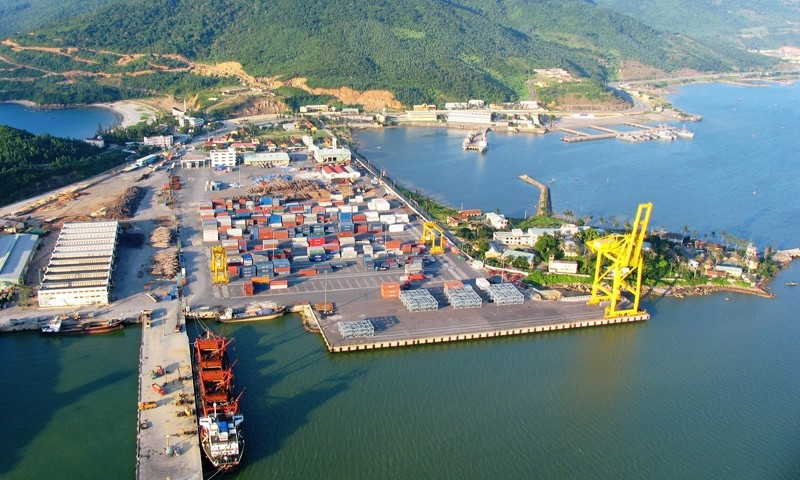
International maritime routes are among the most important cargo transport channels today
2. Major international maritime routes of Vietnam today
With its long coastline, Vietnam has leveraged this advantage to boost import-export activities via international sea routes. Currently, there are three main international maritime routes in Vietnam:
2.1. Vietnam – Europe maritime route
The maritime route from Vietnam to Europe is a long journey consisting of several stages:
Departing from the East Sea to Singapore, where vessels typically stop for refueling and documentation. The journey continues through Malaysian waters, across the Indian Ocean to the Red Sea, then via the Suez Canal into the Mediterranean Sea.
From there, vessels can reach countries such as France, Italy, and Bulgaria. Ships may also pass through the Istanbul Strait to ports like Constanta, Varna, and Odessa; through the Strait of Gibraltar to Northern Europe; or via the Kiel Canal into the Baltic Sea to ports in Germany, Finland, Poland, and Sweden.
[irp posts=”3368″ name=”3 things to know when transporting goods by sea”]
2.2. Vietnam – Americas maritime routes
There are three main maritime routes from Vietnam to the Americas:
– Route via the Suez Canal:
Distance: 11,600 nautical miles.
The route starts from Vietnam, passing through the Singapore Strait and Malacca Strait to southern Sri Lanka (Indian Ocean), then into the Red Sea, through the Suez Canal, across the Mediterranean Sea, through the Strait of Gibraltar, and across the Atlantic Ocean to the Americas.
This route stays relatively close to shore, allowing quicker response in case of incidents. However, costs are higher due to canal transit and congested straits. From June to September, the route may face strong winds, heavy rains, and storms.
– Route via the Cape of Good Hope:
Distance: 12,850 nautical miles.
Ships depart from Vietnam, sail south past Indonesia, cross the Jakarta Strait, and travel through the Indian Ocean to the Cape of Good Hope (South Africa), then across the Atlantic Ocean to East or Central America.
This route has lower costs due to less traffic. However, it is far from shore, making refueling and emergency handling more difficult. Weather conditions can be harsh, with strong winds, waves, and storms throughout the year.
>> See more: What is LCL logistics?
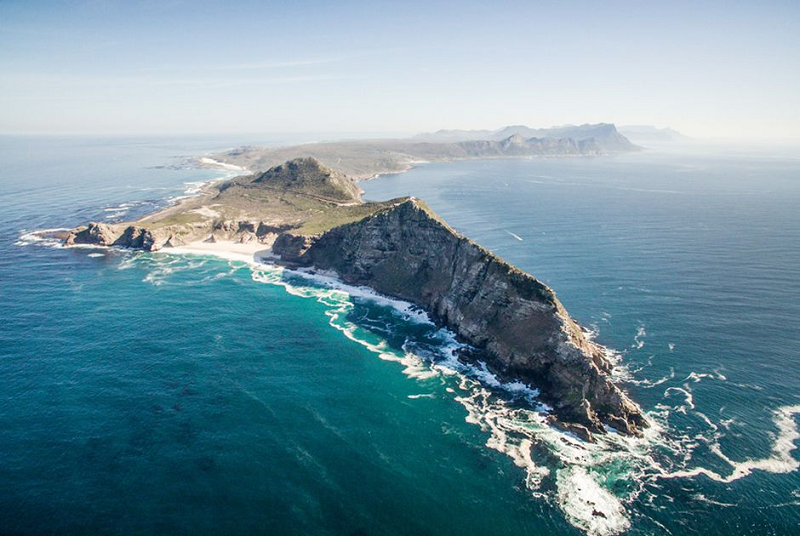
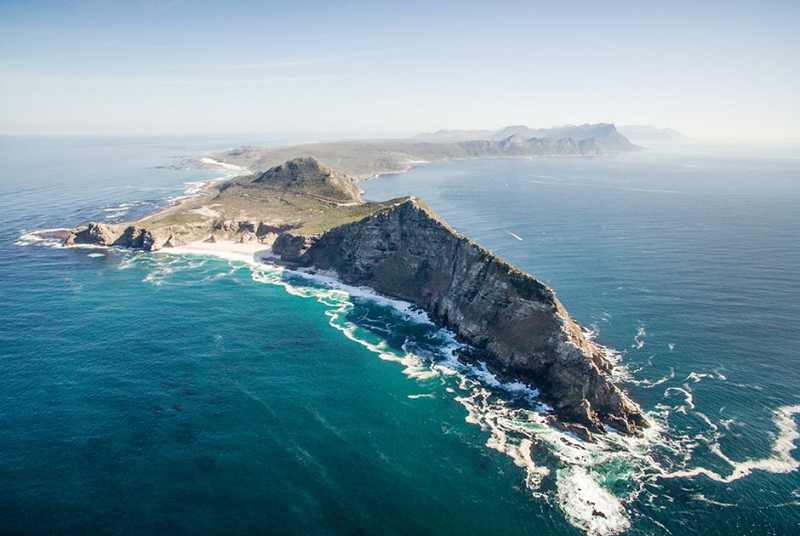
The Cape of Good Hope route benefits from Southern Hemisphere currents that can increase vessel speed
– Route via the Panama Canal:
Distance: 10,850 nautical miles.
Ships sail from Vietnam through the Philippines, cross the Pacific Ocean to the Panama Canal, and pass over a 26-meter elevation above sea level before reaching ports in Cuba or Central America. This is the shortest route among the three, with relatively simple navigation, lower canal fees, and favorable weather conditions year-round. However, there are limited ports along the way for refueling or handling emergencies, so careful preparation is required.
[irp posts=”3489″ name=”[Q&A] Which C/O form is required for exports to Canada?”]
2.3. Vietnam – Hong Kong – Japan maritime route
Weather conditions in Hong Kong waters are similar to Vietnam, with stable ocean currents and tides, which do not significantly affect navigation. However, moving northward, vessels may be affected by the Northeast monsoon, with rainfall in June–July, storms from November to March, and fog from November to April.
The waters around Japan are also influenced by the Northeast monsoon, with storms occurring in August–September. Additionally, this region is affected by two ocean currents and semi-diurnal tides with an amplitude of up to 2 meters.
3. Experience in shipping goods on international maritime routes
When transporting goods via international maritime routes, businesses should consider the following:
– Understand which types of cargo are permitted or restricted for sea transport to ensure safe and smooth shipping.
– Choose the appropriate shipping method: Full Container Load (FCL) or Less than Container Load (LCL).
– Carefully verify all shipment information to ensure smooth customs clearance and timely delivery.
– Select a reputable international ocean freight company to handle all import-export procedures efficiently and cost-effectively.
>> See more: Shipping agents

Businesses should choose experienced international shipping companies to ensure cargo safety, integrity, and on-time delivery
3W Logistics is a reliable international freight forwarder with many years of experience in ocean shipping that businesses should consider:
– Shipping to global markets such as the U.S., Canada, Asia, Europe, India, and the Middle East.
– 3W Logistics is an OTI-NVOCC with FMC and bond, enabling smooth cargo transportation to the U.S. and Canada—markets with strict regulatory requirements.
– Handling a wide range of cargo, including agricultural products, garments, consumer goods, and wood/furniture.
– Strong partnerships with major shipping lines ensure competitive rates and high service quality.
– Providing tailored ocean freight solutions at reasonable costs.
– Experienced staff capable of handling full customs clearance services.
Overall, international maritime routes in Vietnam are highly active, handling large volumes of import-export cargo annually, contributing significantly to business revenue and national economic growth.
| 1. SHIPPING SERVICES TO CANADA 2. OCEAN FREIGHT RATES 3. SEA FREIGHT TO THE U.S. 4. CONTAINER SHIPPING SERVICES |

Mr. William, Vietnamese name Vu Van Nho, is the CEO of 3W Logistics. In his leadership role, he is responsible for strategic development, business operations, and improving the company’s logistics service quality.
He has experience in logistics, import-export operations, and international transportation, especially in sea freight, air freight, inland transportation, customs procedures, and supply chain solutions for businesses.
With a practical business mindset and a customer-focused approach, Mr. William aims to develop 3W Logistics into a reliable, professional, and efficient logistics service provider for import-export companies in Vietnam.


