

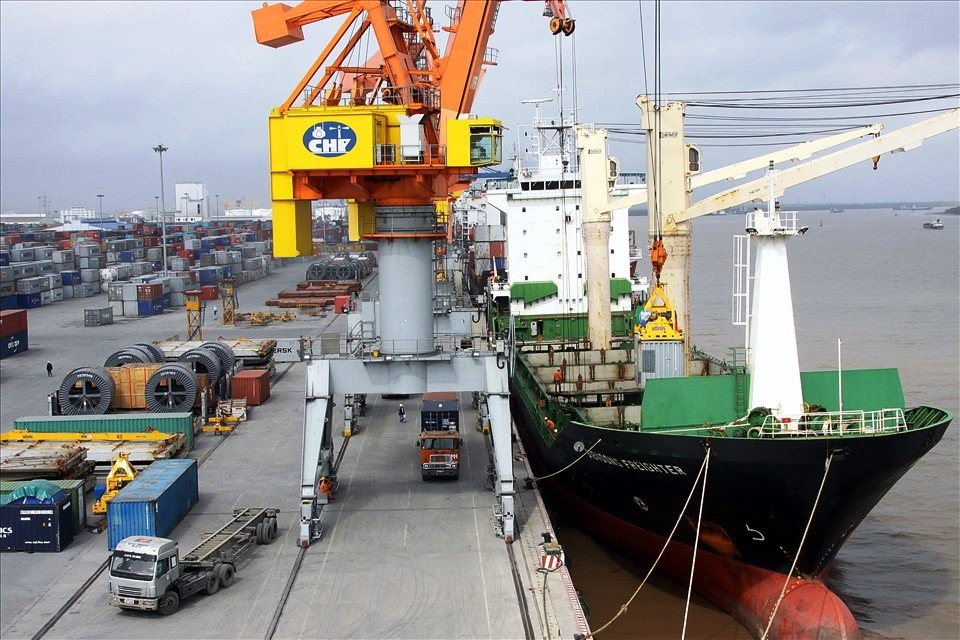
Sea freight rates are a key concern for many businesses, as they directly impact overall operations. The lower the shipping cost, the higher the potential profit. So, what exactly is ocean freight, how is it calculated on average, and what factors influence shipping costs? Let 3W Logistics explain everything in the article below!
1. Current situation of sea freight rates
During the period of 2020–2021, the impact of the Covid pandemic caused ocean freight rates to surge significantly. However, by mid-July 2022, shipping rates began to decline. Specifically, the cost of a 40-foot container from Vietnam to the U.S. once peaked at USD 21,000, but has now dropped to around USD 8,000–11,000.
Not only have sea freight rates “cooled down,” but the shortage of empty containers and the difficulty in booking vessel space have also eased considerably, no longer as severe as before. This is a positive signal for the logistics market. As shipping costs decrease, businesses face less pressure on export goods, gain more opportunities to participate in international shipping, and can achieve stronger growth expectations.
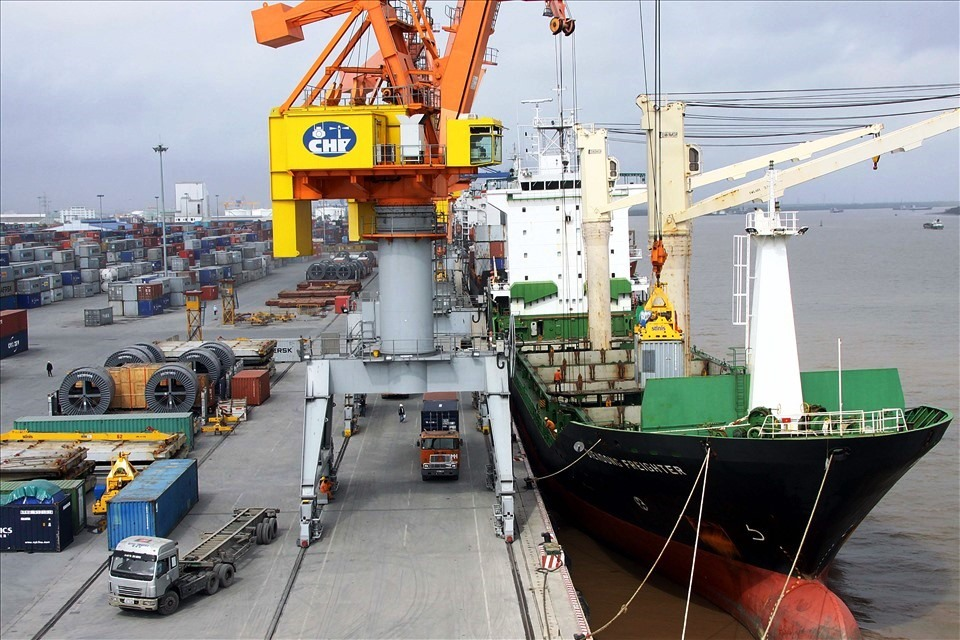
Lower sea freight rates help businesses reduce export cost pressure
>> See more: Container rental rates
2. International and domestic sea freight pricing
Ocean freight is the cost paid to transport goods from one location to another, and it is not fixed at a single rate. Instead, depending on whether the shipment is international or domestic, shipping costs are divided into different types of charges.
2.1 International sea freight
When shipping internationally by sea, businesses must pay Ocean Freight (OF). However, this only covers the base transport cost and does not include additional surcharges. For international shipments, these surcharges may include:
- THC (Terminal Handling Charge): A fee charged per container to cover port handling activities such as loading, unloading, and moving containers from CY to the vessel.
- Documentation Fee: A charge for preparing the bill of lading and export-related documents.
- AMS (Advanced Manifest System): A customs declaration fee for shipments to the U.S.
- AFS (Advance Filing Surcharge): A customs declaration fee for shipments to China.
- AFR (Advance Filing Rules): A customs declaration fee for shipments to Japan.
- BAF (Bunker Adjustment Factor): A surcharge reflecting fuel price fluctuations.
- EBS (Emergency Bunker Surcharge): A fuel surcharge (mainly applied to Asia routes).
- PSS (Peak Season Surcharge): A surcharge applied during peak shipping seasons.
- ISPS (International Ship and Port Facility Security Surcharge): A security-related surcharge.
- CIC (Container Imbalance Charge): A surcharge due to container imbalance.
- COD (Change of Destination): A fee incurred when the destination is changed.
- DDC (Destination Delivery Charge): A delivery charge at the destination port.
- D/O (Delivery Order fee): A fee for issuing the delivery order.
- ISF (Importer Security Filing): A security filing fee for shipments to the U.S.
- CFS (Container Freight Station fee): A handling and warehouse management fee for LCL shipments.
- Cleaning fee: Cleaning charge.
- Lift on / lift off: Container lifting charge.
- Seal: Sealing charge.
>> See more: Freight rates to the USA
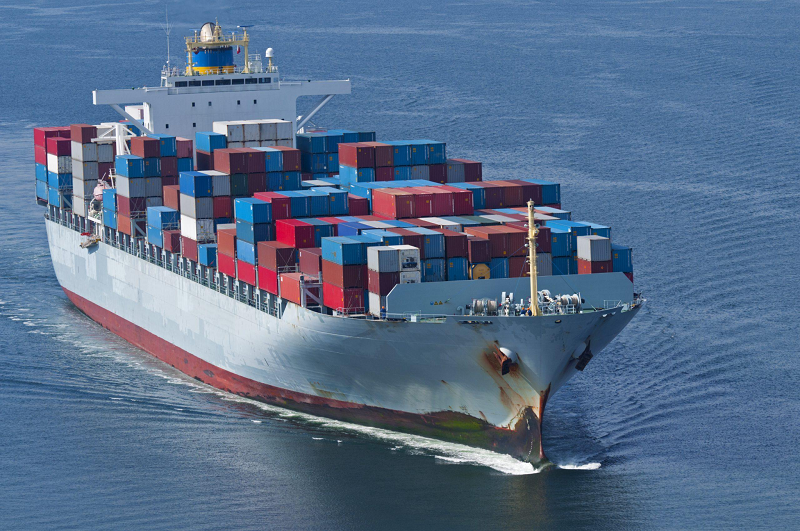
In addition to Ocean Freight, there are various surcharges such as THC, AMS, AFR, AFS, and CFS
In addition, depending on whether the shipment is LCL (less than container load) or FCL (full container load), the applicable sea freight surcharges may vary.
| LCL EXPORT LOCAL CHARGE – LOCAL CHARGES FOR LCL SHIPMENTS | |||||
| No. | Surcharge Name | Unit | Currency | Price | Note |
| 1 | THC (Terminal Handling Charge – Origin Port) | CBM | USD | 6 | – |
| 2 | EBS (Emergency Bunker Surcharge – Fuel Fee) | CBM | USD | 3 | – |
| 3 | BILL (Documentation Fee) | SET | USD | 25 | – |
| 4 | CFS (Container Freight Station – Origin Handling Fee) | CBM | USD | 8 | – |
| 5 | AFR (Advance Filing Rules – Japan Customs Filing Fee) | SET | USD | 10 | (For Japan only) |
| 6 | AMS (Advanced Manifest System – US Customs Filing Fee) | SET | USD | 10 | (For USA only) |
| 7 | AFS (Advance Filing Surcharge – China Customs Filing Fee) | SET | USD | 10 | (For China only) |
[irp posts=”3150″ name=”US import regulations for different product categories”]
FCL EXPORT LOCAL CHARGE – LOCAL CHARGES FOR FULL CONTAINER LOAD (FCL) | ||||||
| No. | Surcharge Name | Unit | Currency | Price | Note | |
| Cont 20′ | Cont 40′ | |||||
| 1 | THC (Dry) (Terminal Handling Charge – Dry cargo at origin) | – | USD | 120 | 180 | – |
| 2 | THC (RF) (Terminal Handling Charge – Reefer cargo at origin) | – | USD | 150 | 220 | – |
| 3 | SEAL (Sealing Fee) | UNIT | USD | 10 | 10 | – |
| 4 | BILL (Documentation Fee) | SET | USD | 40 | – | |
| 5 | TELEX RELEASE (Telex Release Fee) | SET | USD | 30 | If applicable | |
| 6 | AMS (Advanced Manifest System – US Customs Filing Fee) | SET | USD | 35 | (For USA only) | |
| 7 | AFS (Advance Filing Surcharge – China Customs Filing Fee) | SET | USD | 35 | (For China only) | |
| 8 | AFR (Advance Filing Rules – Japan Customs Filing Fee) | SET | USD | 35 | (For Japan only) | |
2.2 Domestic Sea Freight Charges
For domestic sea freight shipments, except for foreign customs declaration fees, businesses will pay similar charges as international sea freight. Notably, domestic surcharges are generally lower than international ones and may vary depending on shipping lines, container weight, and transportation distance. Accordingly, domestic sea freight surcharges include:
- D/O (Delivery Order fee): Delivery order fee.
- Cleaning fee: Cleaning fee.
- Lift on/ lift off: Container handling (lifting) fee.
3. Factors Affecting Sea Freight Rates
Fluctuations in sea freight rates are influenced by several factors such as:
- Cargo weight (heavy or light).
- Shipment size (compact or bulky).
- Cargo characteristics (oversized or overweight cargo may incur higher rates).
- Shipping time (peak season, off-season, holidays, or seasonal goods).
- Delivery terms (Door-to-Door, CY-CY, CY-Door).
- Nature of goods (general cargo, high-value goods, refrigerated goods, chemicals, fragile goods, special handling requirements).
- Shipping frequency (regular shipments may receive better pricing).
- Container type (standard, 20ft, 40ft, reefer, open top, flat rack, or special containers).
4. How to Calculate Sea Freight Rates
Depending on the type of sea freight service (FCL or LCL), businesses can calculate freight costs as follows:
4.1 For FCL shipments (Full Container Load)
Typically, FCL freight rates are calculated based on Container, Bill, or Shipment, using the following formulas:
- If charged per Container: Freight rate × number of containers.
- If charged per Bill or Shipment: Freight rate × number of bills or shipments.
4.2 For LCL Shipments (Less than Container Load)
Ocean freight charges for LCL shipments are calculated based on two main units:
- Actual cargo weight: Measured weight in kilograms (KGS).
- Actual cargo volume: (Length x Width x Height) x quantity – measured in cubic meters (CBM).
A common question is when to apply pricing based on KGS or CBM. In practice, businesses can estimate ocean freight costs using the following principle:
- 1 ton < 3 CBM: Heavy cargo – charged based on KGS.
- 1 ton ≥ 3 CBM: Light cargo – charged based on CBM.
This helps businesses accurately estimate budgets and plan financial costs for export shipments.
5. Important Notes on Ocean Freight Rates
Below are key considerations when evaluating ocean freight costs:
- Before signing a contract with a logistics provider, businesses should carefully review the rights and obligations of both parties, as well as ensure the freight rates align with their financial capacity.
- Purchase cargo insurance for high-value, fragile, or perishable goods to mitigate risks and receive compensation in case of damage or loss.
- Understand which goods are permitted or restricted for ocean transport to ensure smooth export processes and avoid unnecessary delays or costs.
- Choose the appropriate shipping method. For smaller shipments, LCL is a cost-effective solution to reduce ocean freight expenses.
- Prioritize working with reputable logistics companies to secure competitive and transparent freight rates.
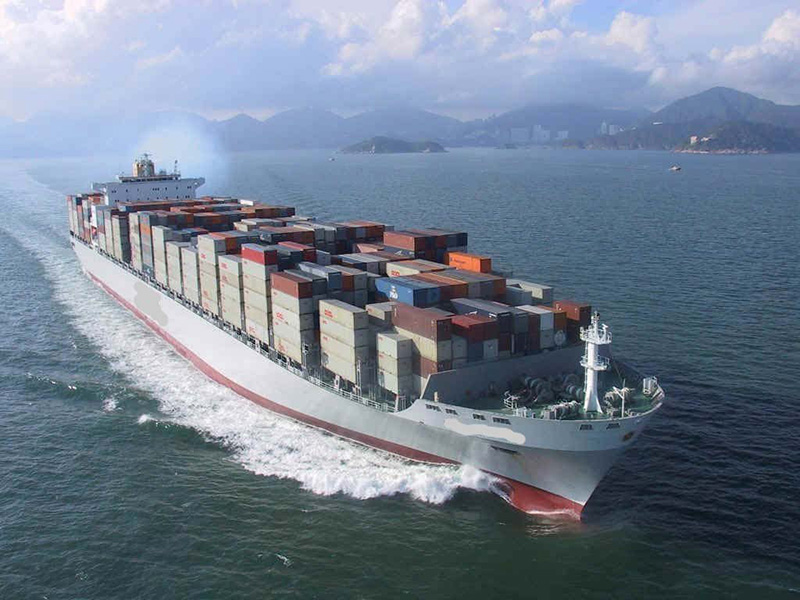
Choosing a reliable logistics provider helps businesses secure competitive ocean freight rates aligned with their financial plans
Currently, 3W Logistics is a trusted ocean freight provider offering cost-effective export solutions tailored to various business needs. Key advantages of using 3W Logistics include:
- Competitive ocean freight rates: 3W Logistics provides highly competitive pricing thanks to strong partnerships with major shipping lines such as Maersk Lines, SeaLand, ONE, Yang Ming, Evergreen, COSCO, Hyundai, and OOCL.
- Transit time: Flexible, fast, and aligned with business schedules. The company also provides real-time shipment tracking and proactively handles any issues during transit.
- Extensive experience: 3W Logistics has extensive experience handling a wide range of cargo, including agricultural products (coffee, tea, cashew nuts, seafood), consumer goods (noodles, rice vermicelli, confectionery), garments, wood, rubber, and furniture.
- Diverse shipping routes: Serving multiple global markets including the USA, Canada, Asia, Europe, India, and the Middle East. For the USA and Canada, 3W Logistics operates as an OTI-NVOCC with FMC license and bond, capable of issuing HBL and filing AMS/ISF (for USA) and E-Manifest (for Canada) using its own SCAC code.
- Service quality: 100% customer satisfaction driven by a professional team with deep market knowledge, always ready to support clients at any time.
In addition, 3W Logistics provides a fast and convenient online ocean freight quotation tool at HERE, enabling businesses to estimate shipping costs in advance. For further inquiries regarding ocean freight rates, please contact 3W Logistics via:
| Head Office: – Sohude Building, 2nd Floor, 29 Thang Long Street, Ward 4, Tan Binh District, Ho Chi Minh City, Vietnam. – Phone: +84 28 3535 0087. Hanoi Branch: – Ngoc Khanh Building, 5th Floor, 37 Nguyen Son Street, Ngoc Lam Ward, Long Bien District, Hanoi, Vietnam. – Phone: +84 243 202 0482. Hai Phong Branch: – Son Hai Building, 452 Le Thanh Tong Street, Van My Ward, Ngo Quyen District, Hai Phong, Vietnam. – Phone: +84 022 5355 5939. |
| EXPLORE OTHER SERVICES AT 3W 1. Shipping Services to Europe 2. Shipping Services to Canada 3. Container Shipping Services |

Mr. William, Vietnamese name Vu Van Nho, is the CEO of 3W Logistics. In his leadership role, he is responsible for strategic development, business operations, and improving the company’s logistics service quality.
He has experience in logistics, import-export operations, and international transportation, especially in sea freight, air freight, inland transportation, customs procedures, and supply chain solutions for businesses.
With a practical business mindset and a customer-focused approach, Mr. William aims to develop 3W Logistics into a reliable, professional, and efficient logistics service provider for import-export companies in Vietnam.


