


Reliable, cost-effective, and fast shipping services to Europe.
Nowadays, shipping goods to Europe has become a major focus for businesses. The reason is that Europe has become one of Vietnam’s largest export markets. However, it is also a demanding market with many complex procedures. To ensure a smooth shipping process, businesses should choose a reputable service provider and be well-informed about the necessary procedures outlined in this article.
1. Overview of Shipping Services to Europe
Since the Vietnam–EU Free Trade Agreement (EVFTA) was successfully implemented, shipping goods to Europe has grown rapidly, bringing positive changes to our economy and achieving remarkable records.
According to statistics from the Ministry of Industry and Trade, Vietnam’s total export turnover to the EU is estimated at over 336 billion USD (a 19% increase compared to 2020), marking six consecutive years of trade surplus with a surplus of about 4 billion USD. The top exported products include rice, cashew nuts, coffee, tea, rubber, and garments.
Through the EVFTA, the list of goods exported to Europe has expanded, with higher shipments of leather shoes and electronic components. This is a positive signal showing that Vietnam’s economy has recovered after the challenging period caused by the Covid-19 pandemic.
>> See more: Container shipping services

Shipping services to Europe have been increasingly utilized since Vietnam joined the EVFTA Free Trade Agreement
2. Goods Allowed and Prohibited for Shipment to Europe
Europe is a potential market for Vietnamese goods, but export procedures are very strict. To ensure smooth and low-risk shipping, businesses should note the following:
2.1 Goods Allowed for Shipment to Europe
- Parcels, including letters, documents, certificates, contracts, or important papers, as long as they do not contain harmful information.
- Personal items, including clothing, shoes, and accessories with clear labels/brands; blankets, pillows, mattresses, nets, or beds.
- Makeup tools and liquid cosmetics such as essential oils, creams, or perfumes.
- Dry food such as dried fish, dried shrimp, shredded meat, snacks, vegetables, or liquid food like cereals and juices.
- Wooden goods and furniture such as tables, chairs, cabinets; paintings, artworks, souvenirs, or electronic devices.
- Medications in blister packs, bottles, jars, topical creams, and pharmaceuticals with clear origin and source.
2.2 Goods Prohibited for Shipment to Europe
- Alcoholic beverages like beer and wine, stimulants such as drugs, cannabis, or opiates.
- Weapons, ammunition, live/wild animals, and flammable or hazardous materials.
- Precious metals, gold, silver, and gemstones.
- Perishable goods, seeds, or special stamps.
- Motorbikes, cars, or goods containing magnetic fields or batteries inside.
- Obscene cultural materials, publications, or documents with harmful content or inciting anti-government actions.
- Smuggled goods, items without origin, or counterfeit famous brands.
3. Methods of Shipping Goods to Europe
Shipping goods to Europe can be carried out using two main methods:
3.1 Air Freight to Europe
This method uses airplanes and is suitable for high-value items such as pharmaceuticals, gold, diamonds, or products from well-known global brands. Key advantages of air freight include:
- Fast shipping and delivery time.
- More secure compared to sea, rail, or road transport.
- No terrain limitations, easy to deliver to any European country.
- Minimized loss, damage, or theft of goods.
- Lower insurance and storage costs.
>> See more: Sea freight rates
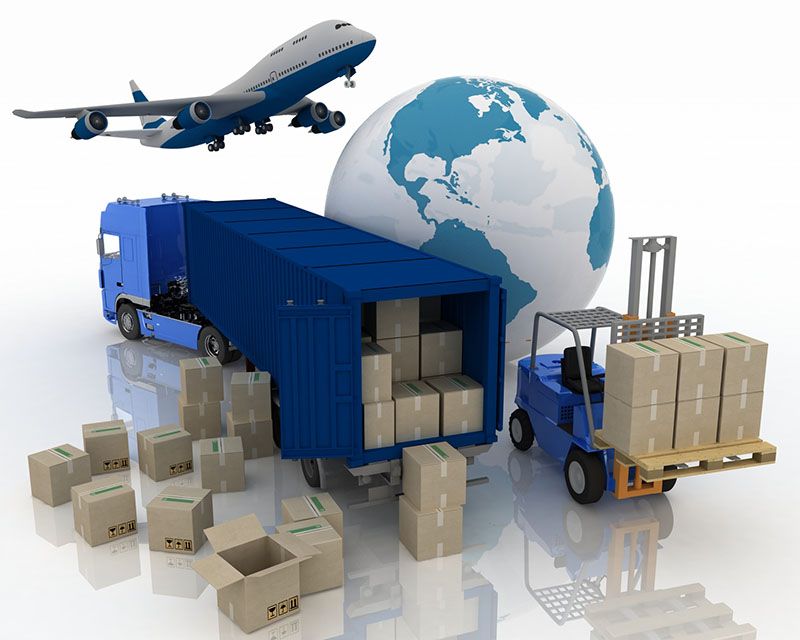
Air shipping to Europe ensures safety and fast delivery times
3.2 Sea Freight to Europe
This method uses maritime transport through ships and ports, suitable for large shipments, combined with port infrastructure. Key advantages of sea freight include:
- Cost-effective, as shipping by sea is cheaper than air freight.
- Natural and spacious routes, fewer traffic issues, ensuring safety and fewer collisions.
- Lower customs fees at ports compared to airports.
- Can transport all types of goods, including oversized or heavy industrial items, and goods sensitive to environmental conditions like agricultural and seafood products.
- Reduces risk of damage or loss because containers provide security and good preservation.
>> See more: International shipping services
4. How Long Does Shipping to Europe Take?
Depending on the port of origin and the EU country destination, average shipping times to Europe are:
- Le Havre (France): 22 days.
- Rotterdam (Netherlands): 24 days.
- Felixstowe (UK): 30 days.
- Hamburg (Germany): 31 days.
- Antwerp (Belgium): 34 days.
5. Shipping Costs to Europe
Shipping costs to Europe are not fixed and depend on several factors.
5.1 Factors Affecting Shipping Costs
- Quantity of goods: Companies usually offer discounts or promotions for bulk shipments or commercial purposes.
- Type of goods: Costs vary depending on whether the goods are standard, bulky, special, fragile, dry, or lightweight.
- Destination country: Although the general destination is Europe, costs vary depending on the specific country.
5.2 How to Calculate Shipping Costs to Europe
Businesses determine the dimensions and volume of the shipment, using the formula length × width × height ÷ 5000, converting units to kilograms. Then they compare the result with the shipping rate table for Europe to calculate the cost for each order.
Additionally, shipping fees also depend on the weight of goods and the chosen transport method. Customers calculate export shipping costs using the following formula:
– Air transport
Volumetric weight = Total volume of goods x volumetric weight constant (167 kgs/cbm).
– Sea transport
Volumetric weight = Total volume of goods x volumetric weight constant (1000 kgs/cbm).
>> See also: Shipping time by sea
5.3 Shipping rates to Europe
Shipping rates to Europe vary depending on the type of goods and transport method. Therefore, businesses should choose a reputable and experienced service provider for proper shipping solutions, ensuring smooth export processes and clear, optimized costs.
Get detailed shipping quotes to Europe HERE.
6. Procedures and processes for shipping goods to Europe
To ensure smooth customs clearance when shipping to Europe, businesses should pay attention to procedures and processes.
6.1 Shipping procedures to Europe
Below are some procedures when sending goods to countries in the European Union (EU):
– ENS declaration
For goods imported to Europe by sea, businesses must submit an ENS (Entry Summary Declaration) to ensure security and safety standards. ENS must be submitted electronically, connecting EU customs with shipping lines or freight forwarders (shipping agents).
ENS applies to all 27 EU member states and the following goods:
- Imported into the EU,
- Unloaded in the EU and transshipped to non-EU countries by other means.
- Not unloaded at an EU port, but the goods are on a ship docked at an EU port.
– Time, cost, and responsible party for ENS
The ENS declaration must be completed 24 hours before the ship departs from the loading port to Europe. Each bill of lading costs about USD 30, and the shipping agent submits the ENS electronically to EU customs.
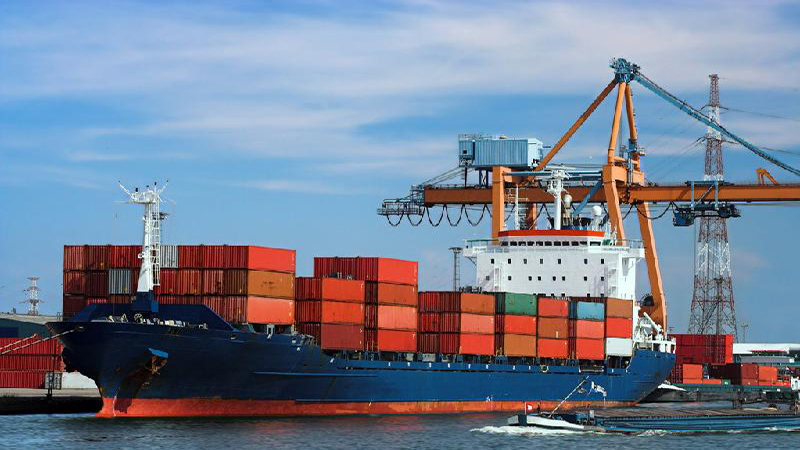
Businesses must submit an ENS if shipping goods to Europe by sea
– Detailed product description
Previously, exporters might list generic names on the bill of lading (B/L) such as garments, agricultural products, or furniture. Now, regulations require specifying detailed names like men’s shirts, 5% broken rice, outdoor wooden furniture, along with the 6-digit HS code.
– Shipper and consignee information
Exporters must clearly declare the shipper and consignee, including address, zip code, or tax reference, when preparing the detailed bill of lading.
>> See also: Customs procedure consultation
6.2 Shipping process to Europe
Steps for sending goods to Europe include:
- Step 1: Negotiate and sign contracts.
- Step 2: Reserve space with the shipping company.
- Step 3: Transport goods to the port.
- Step 4: Complete export customs procedures.
- Step 5: Issue B/L – Send documents – Receive documents.
- Step 7: Issue arrival notice.
- Step 8: Send delivery order.
- Step 9: Complete import customs procedures.
Step 10: Importers in Europe receive the goods.
7. Tips for shipping goods to Europe
To ensure efficient and fast shipping to Europe, businesses can follow tips shared by 3W Logistics.
7.1 Careful packaging
Depending on the type of goods, businesses should use appropriate packaging:
- Regular goods: Place goods in cartons and secure with tape for safe transport.
- Perishable food: Vacuum packaging to preserve value and nutrition.
- Fragile items: Use foam wrapping or wooden crates to ensure safe delivery.
- Parcels: Place in envelopes (small quantity) or small cartons (large quantity).
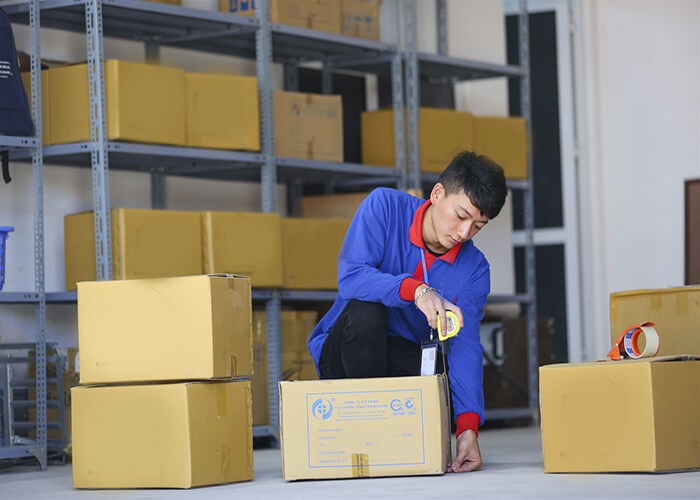
Depending on the type of goods, businesses should apply appropriate packaging to ensure safety and quality
7.2 Increase quantity to save shipping costs
Most shipments to Europe are expensive, especially by air. Increasing the shipment quantity reduces per-unit cost – this is standard practice for shipping from Vietnam to Europe or any country worldwide.
7.3 Choose a reputable shipping company
A reputable company has extensive experience shipping from Vietnam to Europe, handling complex paperwork efficiently, with competitive costs suitable for businesses.
3W Logistics has earned trust through the following advantages:
- Has shipped various products such as agricultural, apparel, and consumer goods, with strong expertise in agricultural exports, understanding proper storage and transport standards for safe delivery.
- Professional customs team provides guidance and ensures Certificate of Origin (C/O) compliance or renewal for tax reduction.
- Advises on suitable cargo insurance to minimize costs and protect against damage.
- Partnered with major shipping lines and airlines, offering competitive rates.
- Has agents in Europe to promptly handle issues and requests.
- Ensures transparent shipping process, on-time delivery, and meets business requirements.
>> See also: Shipping service to Canada

3W Logistics is a reputable shipping company to Europe, offering competitive rates, quality service, and safe delivery of goods
8. Frequently asked questions about shipping to Europe
Here are some common questions when shipping goods to Europe:
8.1 Can shipping be done online?
Customers who cannot visit the warehouse can ship goods to Europe online. They must provide complete recipient information and additional online forms. Then, the goods are brought to the warehouse via local delivery or pick-up service.
8.2 Which European countries are goods shipped to?
Top destinations include Germany (Hamburg), Netherlands (Rotterdam), Belgium (Antwerp), UK (Southampton), and France (Le Havre). Commonly shipped items by 3W Logistics include machinery, equipment, tools, textiles, footwear, seafood, and agricultural products.
Above is an overview of 3W Logistics’ shipping services to Europe. The company continuously strives to provide high-quality, reliable, fast, and cost-effective shipping services for businesses.
Contact 3W Logistics for consultation on exporting goods to Europe.
| OTHER PROCEDURES AND SHIPPING SERVICES 2. Agricultural export procedures 3. Wood export procedures 4. Less than Container Load (LCL) shipping 5. Standards for exporting agricultural products to Europe |

Mr. William, Vietnamese name Vu Van Nho, is the CEO of 3W Logistics. In his leadership role, he is responsible for strategic development, business operations, and improving the company’s logistics service quality.
He has experience in logistics, import-export operations, and international transportation, especially in sea freight, air freight, inland transportation, customs procedures, and supply chain solutions for businesses.
With a practical business mindset and a customer-focused approach, Mr. William aims to develop 3W Logistics into a reliable, professional, and efficient logistics service provider for import-export companies in Vietnam.


