Agricultural Export Standards to Europe: What You Need to Pay Attention To
Europe (EU) is considered a highly potential and continuously growing market for Vietnamese agricultural products. However, it is also a demanding market with strict regulations on food safety and hygiene. In addition to understanding the export standards for agricultural products to Europe, businesses should seek support from experienced service providers in this field. Currently, 3W Logistics offers agricultural export solutions to Europe with simplified procedures, fast processing, and competitive freight rates.
1. Key standards for exporting agricultural products to Europe that producers and exporters should pay attention to
To facilitate market access to the EU, Vietnamese enterprises should conduct thorough research, gain a deep understanding, and fully comply with all current agricultural export standards to Europe. Specifically:
1.1 Commercial quality requirements and labeling standards
The European Community requires imported fruits and vegetables to meet EU market standards regarding commercial quality (including variety, color, shelf life, external defects, or product shape), as well as labeling requirements (including relevant information such as product name, country of origin, variety, and quantity). Inspections are typically conducted by competent authorities or third countries at the point of import.
For detailed information on agricultural export standards to Europe, businesses may consult the Department for Environment, Food & Rural Affairs and visit www.export-help.cec.eu.int (the EU’s online export helpdesk for developing countries).
>> See more: Reliable, cost-effective, and fast shipping services to Europe
1.2 Food safety regulations
The European Community continues to lower the maximum residue levels (MRLs) permitted for plant protection products. Pesticides, herbicides, and fungicides can negatively affect consumer health and may result in shipment rejection upon entry into the EU. Therefore, businesses must strictly comply with food safety and hygiene regulations before exporting agricultural products to Europe.
– Only use chemicals registered for specific crops.
– Obtain an import license from an EU member state if MRLs for certain substances have not yet been established.
To check permitted pesticide residue levels in EU member states, businesses can visit HERE
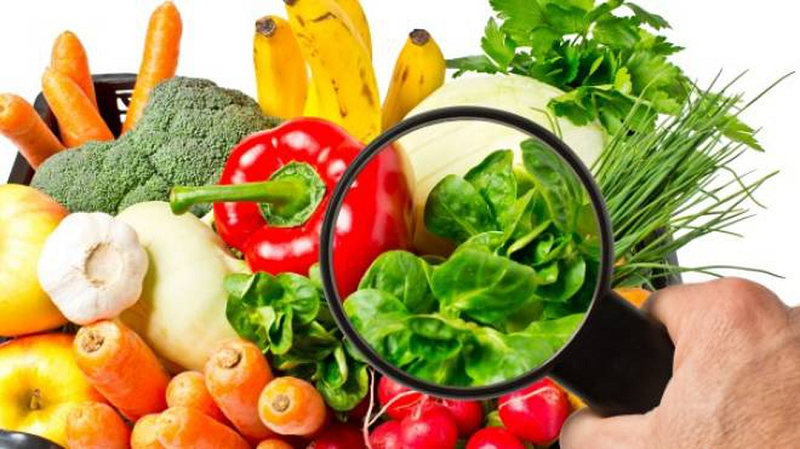
A key requirement for exporting agricultural products to Europe is ensuring full compliance with food safety standards
1.3 Traceability of agricultural products
The European Community requires exporting countries to provide information on product origin, record the status of agricultural products during harvesting, processing, and distribution, and clearly label identification codes on packaging.
The objective is to enable early detection and rapid recall of contaminated food, thereby meeting consumer expectations for safety and quality when purchasing Vietnamese agricultural products.
>> See more: Ocean freight rates and 5 things businesses should know
1.4 Phytosanitary regulations
Phytosanitary regulations are among the most critical standards for exporting agricultural products to Europe. They aim to ensure food quality and prevent the spread of pests and plant diseases across borders.
From September 1, 2019, the European Commission amended and strictly enforced phytosanitary requirements (Commission Implementing Directive 2019/523) for agricultural imports from non-EU countries as follows:
– Citrus fruits and fresh mangoes must be sourced from pest-free production areas (free from fruit flies).
– Information on pest-free areas must be clearly stated in the Phytosanitary Certificate to ensure traceability.
For more information on EU plant health regulations, please visit www.ippc.int/IPP/En/nppo.jsp
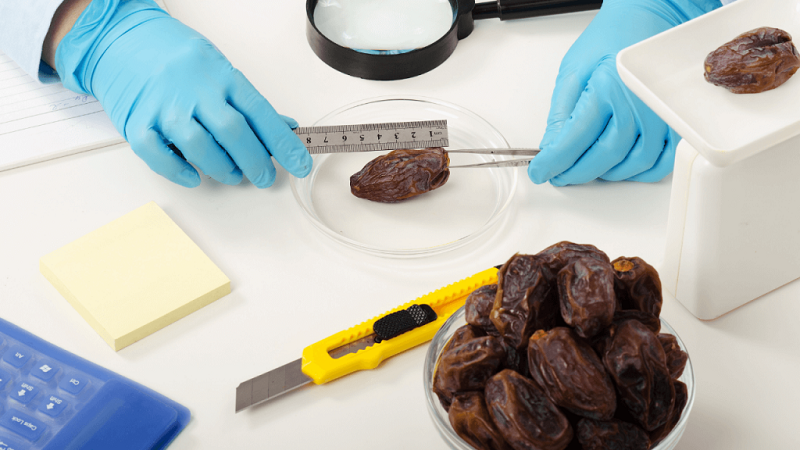
Phytosanitary inspection is a critical standard to ensure the quality of agricultural products before reaching consumers.
1.5 Customs declaration
To facilitate customs clearance, exporters must provide required information in customs declarations (commercial and transport documents) and pay relevant fees, such as import duties. However, the declaration process may take time. To save time, many EU countries allow pre-arrival customs declarations, meaning agricultural goods can be declared in the exporting country instead of upon arrival.
In addition, customs procedures within the EU may vary depending on each member state’s regulations. Most EU countries apply electronic customs systems to accelerate processing and maximize efficiency.
For more detailed information on customs procedures and tariff schedules by country, exporters can visit http://www.europa.eu.int/comm/taxation_customs.
[irp posts=”3220″ name=”Shipping services to Europe by 3W Logistics”]
1.6 Documentation requirements
Below are essential documents required for exporting agricultural products from Vietnam to Europe:
– Basic document set
To ensure smooth importation into Europe, exporters must prepare the following documents:
– Commercial Invoice: Must clearly describe the goods and delivery terms to determine shipment value, freight, and insurance.
– Bill of Lading.
– Certificate of Origin (C/O), required by importers or mandatory for certain goods. Agricultural products benefiting from GSP must have “C/O Form A.”
– Packing List.
– Shipper’s Export Declaration (for shipments valued over USD 2,500).
– Import License.
– Insurance Certificate.
– Pro-forma Invoice.
>> See more: How long does sea freight from Vietnam to India take?
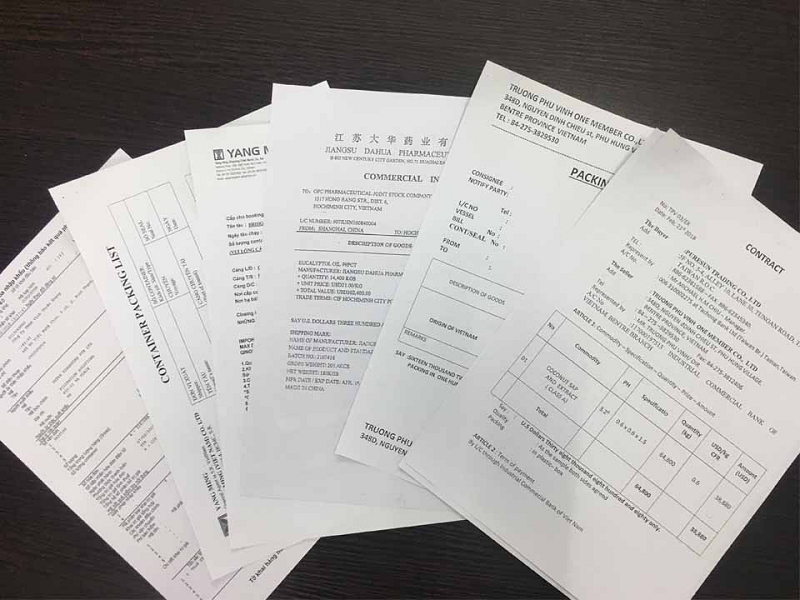
To export agricultural products to Europe successfully, businesses must prepare a complete set of relevant documentation.
– Environmental certifications
Below are some standards applicable to organic agriculture exports to Europe:
| Requirements for Crop Production | Requirements for Livestock Production |
| Select seeds with verified origin and compliant quality standards. | Ensure animal health and maintain optimal welfare conditions. |
| Maintain soil fertility and organic matter regeneration processes. | Ensure proper nutrition and implement free-range farming practices. |
| Strictly prohibit the use of genetically modified crops (GMOs). | Pay attention to transportation and slaughtering methods. |
| Promote crop diversification in cultivation. | |
| Ensure traceability, processing, and proper packaging. | |
| Prioritize the use of organic fertilizers and compounds for pest and weed control. |
– Certificate of Origin (C/O) Form EUR.1 under EVFTA
This is a certificate of origin issued under the Free Trade Agreement between Vietnam and the European Union (EVFTA), in accordance with Circular 11/2020/TT-BCT.
Accordingly, agricultural products such as rice, cashew nuts, cassava, and cassava-based products must be wholly obtained (i.e., grown and harvested in Vietnam). For tea, coffee, and pepper, the EVFTA allows the use of non-originating materials classified under a different HS code at the 4-digit level from the final product.
For rubber and rubber-based products, exporters may alternatively apply a value-based rule of origin, whereby the non-originating materials must not exceed 70% of the ex-works price.
– GlobalGAP Certification
One of the most important standards for exporting agricultural products to Europe is obtaining GlobalGAP certification. This standard reflects Good Agricultural Practices (GAP), ensuring that products comply with maximum residue limits (MRLs) for pesticides. It helps improve product quality, protect consumer health, preserve the environment, and facilitate smooth customs clearance into the EU.
>> See more: Reliable full-package container shipping services: 5 things to know
GlobalGAP certification is a key requirement for exporting agricultural products to Europe, supporting smooth and efficient customs clearance.
– Other certifications: International ISO 14001 certification and SA 800 (social compliance certification) are also recognized standards for exporting agricultural products to Europe.
With the above information, businesses are expected to gain a comprehensive understanding of the standards for exporting agricultural products to Europe. If the procedures seem complex or challenging, companies may seek support from experienced and reputable logistics providers such as 3W Logistics.
2. Advantages of 3W Logistics in exporting agricultural products
3W Logistics offers agricultural export solutions to Europe with competitive pricing, consistent service quality, and multiple advantages, including:
– Extensive experience in exporting agricultural products (including coffee, tea, cashew nuts, rice, and rubber) to the European market.
– Support in document preparation, licensing procedures, specialized inspections, and electronic customs declarations.
– Assistance in verifying or issuing valid Certificates of Origin (C/O).
– Flexible storage solutions ensuring appropriate temperature control for different types of agricultural products.
– Provision of diversified export solutions, including LCL (Less than Container Load) shipping and FCL shipments, customs brokerage services, and Door-to-Door services (covering pickup – international transportation – full customs procedures).
– A dedicated and highly experienced team in customs operations, ensuring smooth and timely clearance of shipments.
– Consultation on suitable insurance packages to help businesses optimize costs.
For more details on agricultural export procedures to Europe and to receive detailed quotations for each service, businesses can contact 3W Logistics for the most effective support.

Mr. William, Vietnamese name Vu Van Nho, is the CEO of 3W Logistics. In his leadership role, he is responsible for strategic development, business operations, and improving the company’s logistics service quality.
He has experience in logistics, import-export operations, and international transportation, especially in sea freight, air freight, inland transportation, customs procedures, and supply chain solutions for businesses.
With a practical business mindset and a customer-focused approach, Mr. William aims to develop 3W Logistics into a reliable, professional, and efficient logistics service provider for import-export companies in Vietnam.


