

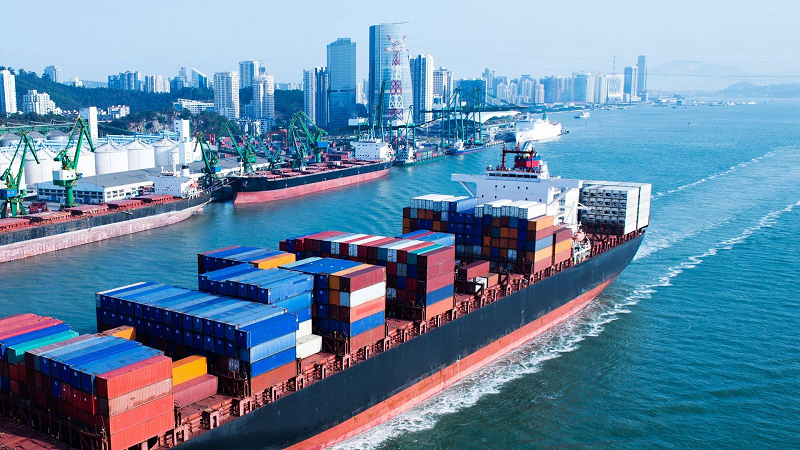
Affordable, Reliable, and Fast Shipping Services to the USA
The United States is Vietnam’s largest export market, driving continuous growth in demand for cargo shipping services to the U.S. However, to ensure a smooth export process, a professional freight forwarding company is needed to handle customs documentation and coordinate shipment schedules for on-time delivery. 3W Logistics is one of Vietnam’s leading companies specializing in reliable freight forwarding services to the U.S., trusted by numerous businesses.
1. Overview of Freight Shipping Services to the U.S.
Freight shipping services to the U.S. have been growing strongly over the past few years. According to the latest statistics from the General Department of Customs, Vietnam’s export turnover to the U.S. reached USD 9.76 billion, an increase of 16.6%, with the world’s largest economy continuing to be Vietnam’s top export market.
Notably, the main commodity groups shipped to the U.S. — including agricultural products, consumer goods, garments and footwear, wood and furniture, machinery and equipment, and electronics and components — each recorded export turnover of USD 1 billion or more. This has contributed to improving the trade balance, stabilizing exchange rates, and presenting a more positive outlook for Vietnam’s overall economy.

Freight shipping services to the U.S. have become a key strength for Vietnamese enterprises and Vietnam’s economy as a whole.
2. What Are the Modes of Cargo Transportation to the U.S.?
Freight shipping services to the U.S. are available in two modes: sea freight and air freight.
| Criteria | Sea Freight to the U.S. | Air Freight to the U.S. |
| Definition | This is a mode of cargo transportation via sea/ocean routes, utilizing large-capacity vessels. | This is a mode of cargo transportation by aircraft. |
| Service Types | LCL (Less than Container Load): A sea freight service for loose cargo, applicable when the cargo volume is less than 15 cubic meters. FCL (Full Container Load): A full container load sea freight service, applicable when the cargo volume exceeds 15 cubic meters. | |
| Cargo Types | Sea freight to the U.S. can accommodate all types of cargo, including oversized and overweight shipments, industrial goods of excessive dimensions, goods with specific physical or chemical properties, and environmentally sensitive cargo such as agricultural and aquatic products, spices, tea, and coffee. | Air freight to the U.S. is suitable for high-value goods such as pharmaceuticals, gold, diamonds, and products from world-renowned fashion brands and cosmetics. |
| Transit Time | Sea freight transit time to the U.S. averages approximately 30–45 days. | Depending on the service selected (express, standard, or economy), air freight transit time to the U.S. ranges from 3 to 7 days. |
| Cost | Low cost, providing financial savings for businesses. | Air freight rates are significantly higher. |
> See also: International Air Freight Services
3. How Long Does It Take to Ship Cargo to the U.S.?
In addition to the mode of transport (sea or air freight), transit time for shipments to the U.S. is also determined by the service tier selected by the shipper. Specifically:
- Express Shipping Service to the U.S.: 3–5 business days.
- Priority Shipping Service to the U.S.: 5–7 business days.
- Standard Shipping Service to the U.S.: 7–10 business days.
- Economy Shipping Service to the U.S.: 2–3 working weeks.
4. Freight Costs for Cargo Shipments to the U.S.
The freight rates for shipping to the U.S. are a key concern for businesses. In general, shipping costs depend on specific factors within each shipment.
4.1 Factors Affecting Freight Rates
- Type of Commodity: Depending on the goods being shipped to the U.S. (food products, apparel, footwear, bulky or compact goods, special cargo), freight costs may be higher or lower accordingly.
- Destination in the U.S.: Freight rates vary by state. Deliveries to central urban areas generally incur lower rates compared to suburban or remote locations.
- Volume/Quantity of Cargo: Businesses shipping in large volumes or on a recurring basis may qualify for preferential rates from freight carriers, helping reduce costs and improve profit margins.
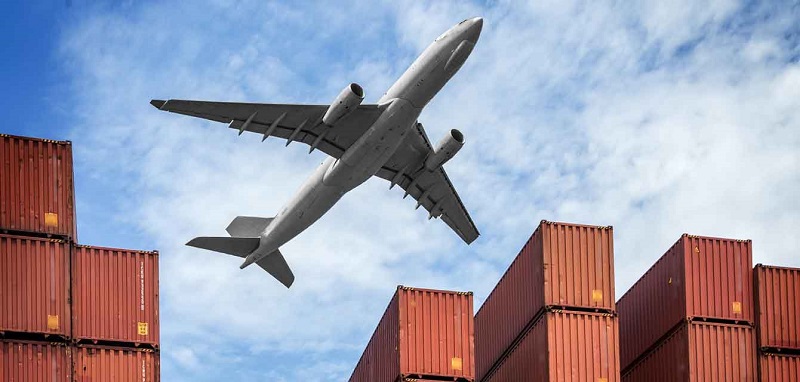
Freight costs to the U.S. depend on the commodity type, destination, and cargo volume/quantity.
4.2 How to Calculate Freight Rates to the U.S.
To calculate freight rates for shipping to the U.S., the applicable formula depends on the mode of transport (sea or air freight):
For sea freight to the U.S., the rate is calculated based on the cargo volume:
- Volume = Length (m) × Width (m) × Height (m). The unit of measurement is cubic meters (CBM), and the freight rate is charged per CBM.
For air freight to the U.S., the rate is calculated based on chargeable weight, comprising two components:
- Volumetric Weight (K1) = Length (cm) × Width (cm) × Height (cm) / 5,000.
- Actual Weight (K2) is the gross weight of the shipment after weighing. The higher value between K1 and K2 is used as the chargeable weight for freight calculation.
4.3 Surcharge Schedule for Shipments to the U.S.
In addition to base freight rates, additional surcharges may apply during the shipping process. For sea freight, please refer to the surcharge schedule below:
LCL EXPORT LOCAL CHARGES – LCL SURCHARGES | |||||
| No. | Surcharge Name | Unit | Currency | Rate | Remarks |
| 1 | THC (Terminal Handling Charge – Origin) | CBM | USD | 6 | – |
| 2 | EBS (Emergency Bunker Surcharge) | CBM | USD | 3 | – |
| 3 | BILL (Bill of Lading Fee) | SET | USD | 25 | – |
| 4 | CFS (Container Freight Station Charge – Origin) | CBM | USD | 8 | – |
| 5 | AMS (Automated Manifest System Filing Fee – U.S.) | SET | USD | 10 | (For American only) |
FCL EXPORT LOCAL CHARGES – FCL SURCHARGES | ||||||
| No. | Surcharge Name | Unit | Currency | Rate | Remarks | |
| 20′ Container | 40′ Container | |||||
| 1 | THC (Dry) (Terminal Handling Charge – Origin, Dry Cargo) | – | USD | 120 | 180 | – |
| 2 | THC (RF) (Terminal Handling Charge – Origin, Reefer Cargo) | – | USD | 150 | 220 | – |
| 3 | SEAL (Seal Fee) | UNIT | USD | 10 | 10 | – |
| 4 | BILL (Bill of Lading Fee) | SET | USD | 40 | – | |
| 5 | TELEX RELEASE (Telex Release Fee) | SET | USD | 30 | If applicable | |
| 6 | AMS (Automated Manifest System Filing Fee – U.S.) | SET | USD | 35 | (For American only) | |
5. Best Practices for Shipping Cargo to the U.S.
To ensure a smooth customs clearance process for cargo shipments to the U.S., businesses should refer to the following five practical guidelines:
5.1 Permitted and Prohibited Goods for Importation into the U.S.
While the U.S. is Vietnam’s largest import market, customs regulations governing cargo are extremely stringent. Businesses must have a clear understanding of which commodities are permitted and which are prohibited from being shipped to the U.S. in order to minimize risks:
– Goods Permitted for Importation into the U.S.
- Documents under 2 kg, including: dossiers, contracts, invoices, household registration books, marriage certificates, national ID cards, passports, notarized copies, or sponsorship papers.
- Food products, including processed fruit and vegetable products (jams, confectionery, dried fruits, salted pickles); processed seafood (dried fish, dried squid, dried shrimp, fish sauce); kitchen condiments (seasonings, chili sauce, ketchup); snacks or Vietnamese specialty foods.
- Cosmetics and personal care products such as nail care tools, skincare, haircare, and body care items.
- Household appliances such as rice cookers, blenders/juicers, electronic devices, and handicrafts.
- Pharmaceutical products such as eye drops, dietary supplements, blister-packed medications with physician prescriptions, hygiene solutions, herbal remedies in leaf form, and herbal teas.
– Goods Prohibited from Importation into the U.S.
- Controlled substances including alcohol, cannabis, opium, or narcotics.
- Weapons, ammunition, or dangerous military equipment such as firearms, explosives, and combat knives.
- Obscene publications, printed materials, or documents containing harmful content or content that incites subversive activities against the state.
- Radioactive materials, biological weapons, flammable/explosive substances, or environmentally hazardous materials.
- Vietnamese currency, foreign currency, or bank-issued negotiable instruments.
- Precious metals, gold, silver, and gemstones.
- Fresh produce and processed livestock or poultry products.
- Abortifacients, sedatives, or self-compounded powder medications.
- Contraband, goods without proof of origin, or counterfeit branded products.

To ensure smooth freight shipments to the U.S., businesses should familiarize themselves with permitted and prohibited export commodities.
5.2 Proper Cargo Packaging
Given the considerable geographic distance between Vietnam and the U.S., cargo must be packed carefully prior to shipment. Packaging specifications may vary depending on the type of goods being transported:
- Standard Cargo: Pack items into small bags, then arrange them into sturdy corrugated carton boxes to prevent damage during transit.
- Bulky/Oversized Cargo: Remove unnecessary accessories and store the goods securely in containers to ensure safe delivery.
- Fragile Cargo: Store in wooden crates to keep goods intact and prevent breakage throughout the transit process.
5.3 Preparation of Required Documentation
One of the most important best practices for shipping cargo to the U.S. is ensuring all relevant documentation is prepared in advance to complete customs clearance procedures. The key documents required for shipments to the U.S. include:
- Tax payment receipt;
- Commercial invoices and supporting documents for high-value goods and branded items;
- Cargo insurance certificate (if the shipment is of high value and the business has registered cargo insurance);
- Phytosanitary certificate, rabies vaccination records, or microchip documentation if shipping live animals;
- FDA certification for food and pharmaceutical products;
- Certificate of Origin (C/O) for the goods.
5.4 AMS and ISF Filing
When shipping cargo to the U.S., exporters are required to complete both AMS and ISF filings.
– AMS Filing
AMS (Automated Manifest System) is an automated customs declaration system established for cargo imported into and exported from the U.S. The parties responsible for AMS filing include the actual carrier and NVOCCs (Non-Vessel Operating Common Carriers).
AMS filing must be completed at least 48 hours prior to the vessel’s departure for the U.S. Filing fees range from USD 25 to USD 35 depending on the carrier’s regulations. The filing process is primarily conducted through authorized software applications or may be handled by a third-party service provider.
– ISF Filing
ISF (Importer Security Filing) is a security declaration required of the importer upon receiving cargo shipped to the U.S. from an export origin. Also referred to as “10+2,” it is a filing mandated by U.S. Customs and Border Protection (CBP) to document import information for shipments moving from one point to another.
The ISF filing requires 12 key data elements, as follows:
- Name and address of the supplier (or manufacturer).
- Name and address of the seller/exporter.
- Name and address of the importer of record.
- Name and address of the carrier.
- Name and address of the consolidator/stuffing party.
- Container stuffing location.
- Importer of record number.
- Consignee number.
- Country of origin.
- Commodity HTS (Harmonized Tariff Schedule) code for each item in the shipment.
- Vessel stowage plan (for ocean carriers).
- Container status notification (for ocean carriers).
ISF filing is typically submitted concurrently with AMS filing and must be completed no later than 48 hours before the vessel departs for the U.S. The ISF filing fee is approximately USD 25.
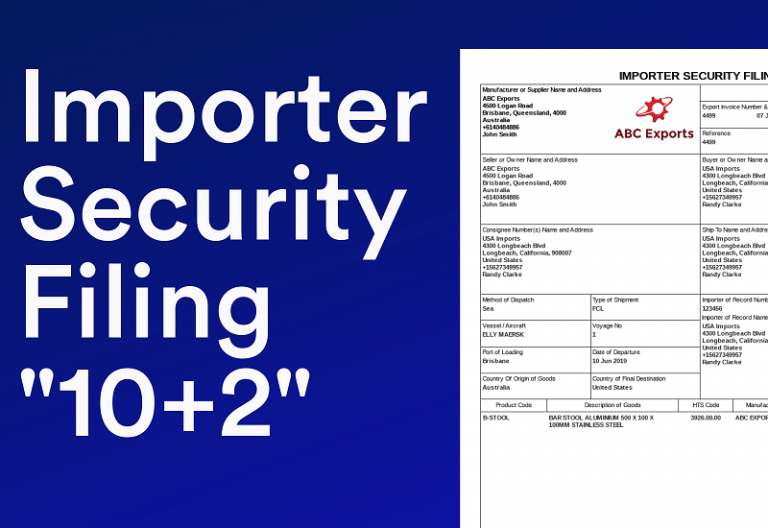
Prior to customs clearance and importation into the U.S., cargo must have its ISF filed within 48 hours of vessel departure.
5.5 Providing Accurate Shipment Information
To ensure smooth delivery to the U.S. and avoid issues such as lost cargo, returns, or unrecoverable shipments, businesses should provide complete and accurate information, including:
- Name, address, and contact number of the shipper/consignor;
- Name, address, and contact number of the consignee;
- Complete description of the shipment contents (home appliances/electronics; general merchandise; high-value goods; fragile glassware);
- Quantity and gross weight of the shipment.
5.6 Selecting a Reputable Freight Forwarder to the U.S.
With the growing demand for freight shipments to the U.S., choosing a qualified export service provider is a critical factor in ensuring on-time, safe, and intact delivery. Key criteria for selecting a reliable freight forwarding company include transparent and clearly disclosed company information, address, contact details, and rate schedules; dedicated and professional customer service; and proven expertise in the export industry.
6. 3W Logistics – A Trusted and Competitive Freight Forwarder to the U.S.
With the motto “We here to serve you there,” 3W Logistics is committed to delivering high-quality, professional, and cost-effective freight forwarding services to the U.S., supported by the following key strengths:
– 3W Logistics handles freight shipments to numerous countries worldwide, with the U.S. market being a core competency of the company. Exporting to the U.S. requires an FMC license, which is complex to obtain and held by only a limited number of companies. 3W Logistics is currently an OTI-NVOCC holding an FMC license and bond, with the capability to self-issue House Bills of Lading (HBL) and independently file AMS/ISF using 3W’s own SCAC code. This means that exporting cargo to the U.S. through 3W Logistics is faster and more streamlined.
– The company has extensive experience in shipping agricultural and aquatic products, garments, consumer goods, and wood and furniture to the U.S. Its in-depth knowledge of cargo characteristics and transportation methods enables 3W Logistics to efficiently resolve operational issues and ensure smooth cargo movement.
– The company offers cargo insurance procurement services at competitive rates, protecting shipments against risks of damage and loss.
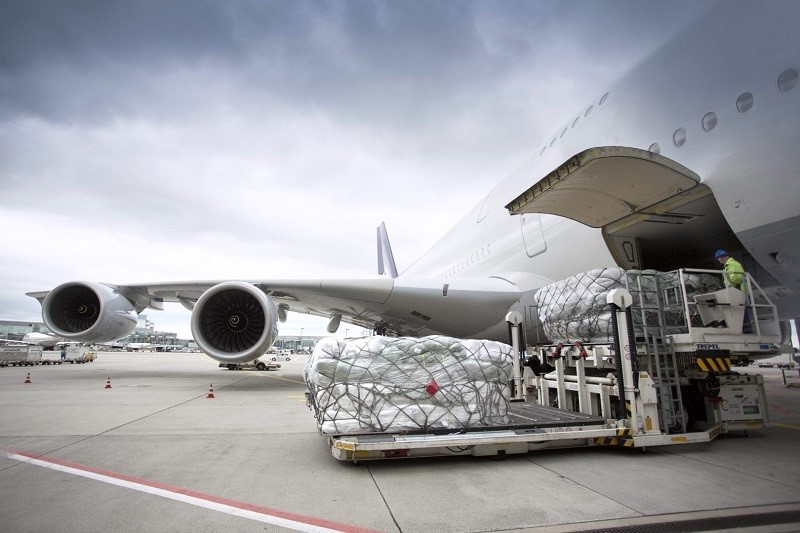
Cargo shipped to the U.S. is guaranteed to arrive safely, at the correct destination, and on schedule.
– 3W Logistics has a dedicated in-house customs brokerage team, eliminating the need for third-party outsourcing. The team operates with a high level of professionalism, providing thorough advisory support to clients and efficiently resolving any arising issues.
– The company has established contracts with major shipping lines and, leveraging its deep understanding of carrier operations, is able to secure competitive freight rates, maintain consistent service quality, and arrange optimal shipping schedules for clients.
– 3W Logistics has a local agent in the U.S., enabling prompt, timely, and effective handling of client requests and operational challenges related to U.S.-bound shipments.
– The company ensures full transparency throughout the freight forwarding process, consistently meets client requirements, and provides shipment tracking schedules so businesses can monitor their cargo in real time.
7. Freight Forwarding Process to the U.S. at 3W Logistics
3W Logistics, as a trusted U.S. freight forwarding company, ensures a transparent and clearly defined shipping process consisting of 10 steps:
- Step 1: Negotiation and contract signing.
- Step 2: Space booking with the carrier.
- Step 3: Cargo delivery to the port/terminal.
- Step 4: Export customs clearance.
- Step 5: Bill of Lading issuance – Document dispatch – Document receipt.
- Step 6: AMS (Automated Manifest System) filing and ISF (Importer Security Filing). These are mandatory procedures for all exports to the U.S. and must be filed with U.S. Customs at least 48 hours prior to vessel departure.
- Step 7: Arrival notice.
- Step 8: Delivery order issuance.
- Step 9: Import customs clearance.
- Step 10: Cargo receipt by the importer.
Contact 3W Logistics for detailed consultation on freight forwarding services to the U.S.:
Head Office:
– Sohude Building, 2nd Floor, No. 29 Thang Long Street, Ward 4, Tan Binh District, Ho Chi Minh City
– Phone: +84 28 3535 0087
Hanoi Branch:
– Ngoc Khanh Building, 5th Floor, No. 37 Nguyen Son Street, Ngoc Lam Ward, Long Bien District, Hanoi
– Phone: +84 243 202 0482
Hai Phong Branch:
– Son Hai Building, No. 452 Le Thanh Tong Street, Van My Ward, Ngo Quyen District, Hai Phong City
– Phone: +84 022 5355 5939
Email: info@3w-logistics.com
> See also: Ocean Freight Rates to the U.S.

Mr. William, Vietnamese name Vu Van Nho, is the CEO of 3W Logistics. In his leadership role, he is responsible for strategic development, business operations, and improving the company’s logistics service quality.
He has experience in logistics, import-export operations, and international transportation, especially in sea freight, air freight, inland transportation, customs procedures, and supply chain solutions for businesses.
With a practical business mindset and a customer-focused approach, Mr. William aims to develop 3W Logistics into a reliable, professional, and efficient logistics service provider for import-export companies in Vietnam.


