
Blog
Whether importing wood requires a permit is a common concern for many businesses today. Wood is a high-value commodity, reaching up to 300 USD/m³, but its customs procedures are complex and require all necessary permits to be fully prepared. To better understand the regulations governing wood import and export, businesses can refer to the article below.
1. Overview of the wood import sector
In recent years, raw wood imports have increased significantly to meet the demand for export processing as well as boost domestic consumption. In the first four months of the year, the import volume of large timber species was considerably higher than the same period in 2021. Among them, pine, ironwood, oak, rosewood, eucalyptus, huong wood, beech, and spruce are commonly imported into Vietnam thanks to their excellent heat resistance, load-bearing capacity, termite resistance, durability, and suitability for furniture manufacturing.
>> See more: Agricultural Export Procedures
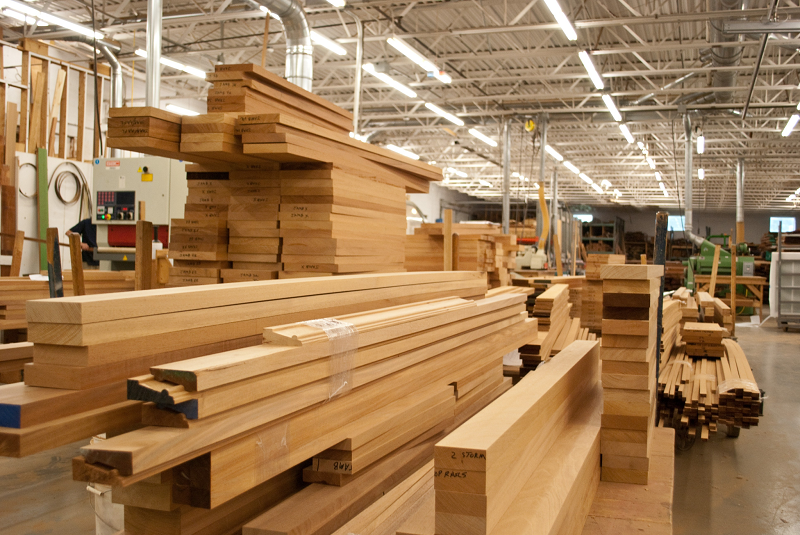
Wood imports into Vietnam are increasingly growing to meet both export and domestic consumption demand
2. Does wood import require permits?
Wood importation is a complex process that requires businesses to prepare all necessary permits, including:
2.1 CITES Permit
CITES (Convention on International Trade in Endangered Species of Wild Fauna and Flora) is a permit issued by the Vietnam CITES Management Authority for the export, import, or re-export of specimens of plant and animal species.
In practice, in addition to obtaining the CITES certificate, businesses must also verify the scientific name in the CITES appendices to determine whether the intended timber species is allowed to be imported into Vietnam.
– If the timber product is not listed in the CITES Appendices, the company may import it without applying for a permit from the Vietnam CITES Authority.
– If oak timber falls under Appendix I of CITES, the business is not allowed to import it.
– If oak timber falls under Appendix II or III of CITES, an import permit issued by the Vietnam CITES Authority is required prior to importation.
[irp posts=”3641″ name=”Explore 12 famous international shipping lines in the world”]
2.2 FLEGT License
The FLEGT license is a document issued by the competent authority under the Vietnam CITES Management Authority to support the export, temporary import, or re-export of timber products to the European Union (EU). The benefit of preparing a FLEGT license is that it certifies the legality and quality compliance of timber or timber products.
Under current wood import-export regulations, the FLEGT license must be bilingual, signed, and stamped by the Vietnam CITES Authority. In addition, businesses are not allowed to erase or alter any information on the document. The maximum validity period of a FLEGT license is 06 months from the date of issuance.
>> See more: Seafood Export Procedures

Wood imports require permits, especially CITES and FLEGT licenses
2.3 Import Phytosanitary Permit
The phytosanitary certificate is an official document issued by the plant protection organization of the exporting country to the plant protection authority of the importing country. This ensures that no harmful pests or diseases are spread during transportation. For timber products, businesses are granted an import phytosanitary permit when:
– The wood is considered free from quarantine pests.
– It complies with current phytosanitary regulations.
– The timber product is included in the list of permitted imports.
– The entire shipment is inspected in accordance with applicable regulations.
[irp posts=”3764″ name=”[Explained] What is CFS fee in import-export?”]
2.4 Certificate of Origin (C/O)
The Certificate of Origin is a document issued by a competent authority to verify that the goods have a clear origin, lawful tariff treatment, and comply with legal regulations between countries.
Therefore, regarding the question of whether wood import requires permits, the answer is definitely YES. Businesses should carefully study and fully prepare all required documentation to ensure a smooth import process and successful customs clearance.
3. Customs clearance procedures for wood imports
Similar to export customs procedures for timber, the import process into Vietnam must include all 3 steps below:
Step 1: Register for phytosanitary inspection once the goods arrive at port
– If this is the first time using a country’s national single window system, the business should register an account at http://www.vnsw.gov.vn/
– Upload a dossier to the system including: registration form as provided by the system, original phytosanitary certificate, quarantine permit (if any), Bill of Lading, commercial contract, commercial invoice, and packing list.
– Submit the same set of documents to the quarantine authority, with the phytosanitary certificate required in original form from the exporting country.
– Wait for the quarantine officer to inspect the shipment at the port. Then wait for the result to be updated in the system. Finally, print the phytosanitary result and submit it to customs together with the customs clearance dossier.
>> See more: Wood Export Procedures
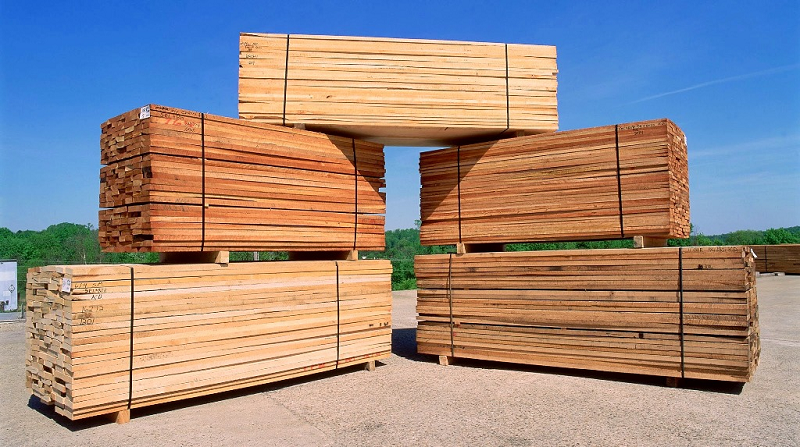
Registering for cargo quarantine is the first critical step in the process of importing wood into Vietnam
Step 2: Carry out customs procedures
After the timber shipment obtains the phytosanitary result, the business may either handle the process itself or outsource a customs clearance service as usual by preparing the following dossier:
– Phytosanitary certificate issued by the competent authority.
– Customs declaration printed from the software system.
– Sales contract, commercial invoice, Bill of Lading, and packing list.
In addition, under wood import-export regulations (Article 7 of Decree 102/2020/NĐ-CP), besides the above documents, the importer must submit to customs the original imported timber list (Form No. 01 or Form No. 02, Appendix I of the Decree), together with one of the following three documents:
– If the timber falls under the CITES Appendix, the business must submit a copy of the export or re-export CITES permit issued by the competent CITES authority of the exporting or re-exporting country; and a copy of the import CITES permit issued by the Vietnam CITES Authority.
– If the timber is imported from a country that has signed a Voluntary Partnership Agreement with the EU and operates a FLEGT licensing system, the business must prepare a copy of the export FLEGT license issued by the competent authority of the exporting country.
– If the imported timber shipment does not fall under either of the above cases, the business must supplement a declaration of imported timber origin according to Form No. 03, Appendix I of the Decree.
[irp posts=”3515″ name=”Vietnam’s current international sea routes”]
Step 3: Customs clearance and cargo release
After completing customs procedures for imported timber, the business should arrange cargo discharge at the port and exchange the delivery order for transport to the warehouse. For taxable shipments, the importer must pay all applicable duties in full before taking delivery.
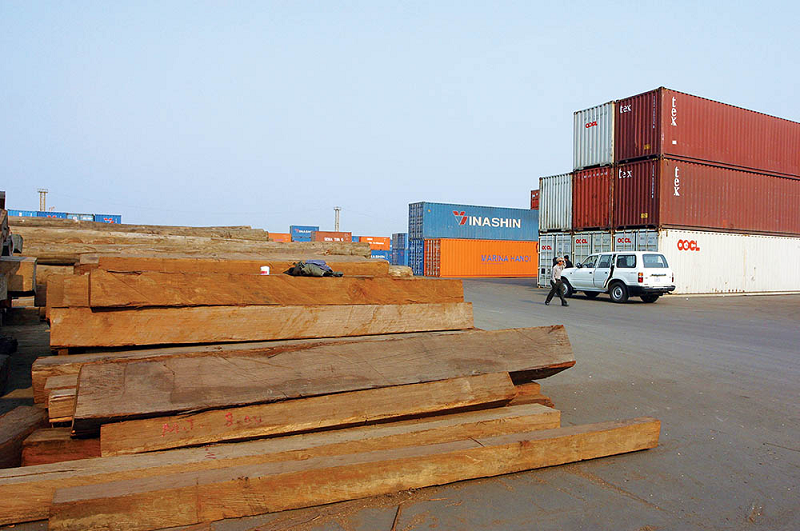
If the imported timber shipment is subject to tax, the business must ensure full payment before cargo release
4. General requirements for imported timber
Besides understanding whether wood import requires permits, businesses should also be aware of several general requirements when importing natural timber into Vietnam:
– Ensure the timber is legally imported, with no prohibited wood species or unclear origin.
– Timber products must undergo import procedures under the inspection and supervision of Customs authorities.
– The quantity and timber species inside the container during cross-border transportation must match the documentation. If the actual cargo differs from the paperwork, customs officers may suspend importation, shift the declaration to red channel, and request container inspection.
– No other goods may be transported together in the timber container. Violations may lead to penalties or even legal liability if prohibited goods are involved.
– Determine the correct HS Code for the timber product to clearly identify applicable tax rates and required import procedures into Vietnam.
>> See more: Cashew Export Procedures
Above is the full answer to whether wood import requires permits, along with wood import-export regulations for businesses to reference. It is forecast that imported raw timber supply may continue to grow in order to meet current domestic and international demand for wooden furniture production and consumption.
| EXPLORE MORE 3W SERVICES 2. CONTAINER TRANSPORTATION SERVICES |


