

What Is a Shipping Container? Roles and Common Types Explained
Containers are widely used today and play an essential role in the transportation process. However, not everyone clearly understands what a container is and how many types of containers are available. Businesses can refer to the article below from 3W Logistics to gain the most comprehensive knowledge about containers.
1. What is a Container?
A container is a large rectangular empty steel box, equipped with double doors and a locking mechanism used for sealing and protecting the cargo inside. Containers come in various sizes with excellent load-bearing capacity and are commonly used in containerized cargo transportation services.
Currently, there are many types of containers, but in general, they all share a similar structure as follows:
- Frame: Constructed with 4 corner posts, 2 top side rails, 2 bottom side rails, 1 bottom cross member, 1 top front cross rail, and 1 top rear cross rail.
- Base and flooring: Includes cross members connected to the two bottom side rails to form the container frame. The floor is made from durable solid wood with excellent load-bearing strength.
- Roof panel: Made from a corrugated metal sheet of aluminum or steel with anti-rust properties to protect the cargo.
- Side walls: Consist of joined metal panels that enhance the container’s structural strength while preventing rainwater accumulation.
- Front end: Designed with pressed corrugated steel sheets in square profiles.
- Rear end and container doors: The container doors are made from two flat metal panels attached firmly to the frame with durable hinges.
- Corner fittings: Manufactured from steel and welded to the upper and lower corners of the container. These fittings are used for lashing, lifting, and cargo handling operations.
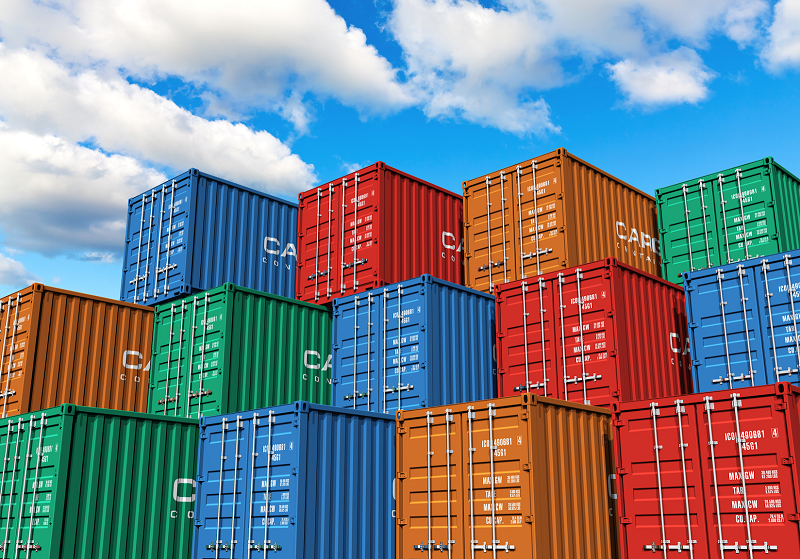
Containers are designed with high-strength and durable materials, ensuring safe and efficient cargo storage and transportation.
2. Understanding Container Dimensions
After understanding the definition of a container, you should also learn about container dimensions. Each type of container is designed for specific applications and therefore has different dimensions as follows:
| Length (m) | Width (m) | Height (m) | Volume (m3) | |
| 20-foot container | 5.898 | 2.352 | 2.385 | 33.2 |
| 20-foot reefer container | 5.485 | 2.286 | 2.265 | 28.4 |
| 40-foot standard container | 12.032 | 2.350 | 2.392 | 67.6 |
| 40-foot high cube container | 12.023 | 2.352 | 2.698 | 76.3 |
| 40-foot reefer container | 11.572 | 2.296 | 2.521 | 67.0 |
| 45-foot special container | 13.716 | 2.500 | 2.896 | 99.3 |
>> See more: Most Common Container Dimensions Today
3. Popular Container Types in Today’s Market
Currently, the most common container types in the market are 20ft and 40ft containers, each designed for specific cargo applications.
3.1 General Purpose Container
This type of container is used for dry cargo transportation. General purpose containers include 20ft, 40ft, and 40ft high cube containers, commonly used for carton boxes, packaged cargo, furniture, and general merchandise. Among them, the 40ft high cube offers the largest loading capacity.
Standard dimensions of general purpose containers:
| Technical Specifications | 20ft | 40ft |
| Internal length | 5.9m/19.4ft | 12.03m/39.5ft |
| Internal width | 2.35m/7.8ft | 2.4m/7.9ft |
| Internal height | 2.39m/7.9ft | 2.39m/7.9ft |
| Tare weight | 2,300kg/5,071.5 lbs | 3,750kg/8,268.8 lbs |
| Max payload | 25,000kg/55,126.9 lbs | 27,600kg/61,200 lbs |
| Cubic capacity | 33.2 m3/1,172 cu ft | 67.7 m3/2,389 cu ft |
3.2 High Cube Container
High cube containers have the same length and width as standard dry containers, but the height is increased to accommodate oversized cargo requirements.
Standard dimensions of high cube containers:
| Technical Specifications | 20ft | 40ft |
| Internal length | 5.9m/19.4ft | 12.03m/39.5ft |
| Internal width | 2.35m/7.8ft | 2.4m/7.9ft |
| Internal height | 2.39m/7.9ft | 2.39m/7.9ft |
| Tare weight | 2,300kg/5,071.5 lbs | 3,750kg/8,268.8 lbs |
| Max payload | 25,000kg/55,126.9 lbs | 27,600kg/61,200 lbs |
| Cubic capacity | 33.2 m3/1,172 cu ft | 67.7 m3/2,389 cu ft |
3.3 Reefer Container
A reefer container is equipped with an integrated refrigeration system or clip-on refrigeration units mounted at the front. This type of container is used to transport cargo such as food products, agricultural goods, pharmaceuticals, or any commodities that require strict temperature-controlled conditions during transit.
Standard dimensions of reefer containers:
| Technical Specifications | 20ft | 40ft |
| Internal length | 5.44m/17.9ft | 11.56m/37.9ft |
| Internal width | 2.29m/7.5ft | 2.28m/7.5ft |
| Internal height | 2.27m/7.5ft | 2.25m/7.4ft |
| Tare weight | 3,080kg/6,791.4lbs | 4,800kg/10,584lbs |
| Max payload | 27,700kg/61,078.5 lbs | 29,520kg/65,080 lbs |
| Cubic capacity | 59.3m3/2,093.3 cu ft | 67.3m3/2,380 cu ft |
3.4 Open Top Container
This type is also known as an open-top container because it does not have a solid roof and requires a tarpaulin cover to protect the cargo. The open-top design makes it suitable for loading oversized cargo such as machinery, construction equipment, and large timber products.
Standard dimensions of open-top containers:
| Technical Specifications | 20ft | 40ft |
| Internal length | 5.89m/19.4ft | 12.03m/39.5ft |
| Internal width | 2.35m/7.8ft | 2.4m/7.9ft |
| Internal height | 2.35m/7.8ft | 2.34m/7.8ft |
| Tare weight | 2,260kg/5,982 lbs | 3,980kg/8,774 lbs |
| Max payload | 28,220kg/62,214 lbs | 26,500kg/58,422 lbs |
| Cubic capacity | 32.7m3/1,155 cu ft | 66.7m3/2,356 cu ft |
3.5 Flat Rack Container
Flat rack containers are suitable for transporting oversized and heavy cargo such as large machinery, steel structures, and industrial equipment. This type of container has no side walls or roof, only a strong base floor with two fixed or collapsible end walls, making loading and unloading more convenient.
Standard dimensions of flat rack containers:
| Technical Specifications | 20ft | 40ft |
| Internal length | 5.94m/19ft | 12.13m/39.8ft |
| Internal width | 2.35m/7.7ft | 2.14m/7ft |
| Tare weight | 2,360kg/5,203.8lbs | 5,000kg/11,025 lbs |
| Container weight | 2,360kg/5,203.8lbs | 5,000kg/11,025lbs |
| Max payload | 30,140kg/66,458.7 lbs | 40,000kg/88,200 lbs |
| Cubic capacity | 32.7m3/1,154.3 cu ft | 62.2m3/2,195.7 cu ft |
3.6 Modified Container
A modified container is designed by replacing two steel side walls with tarpaulin panels, making it easier to open and close for more convenient cargo handling. This type is commonly used for transporting motorcycles, automobiles, beverages, and similar cargo.
3.7 Tank Container
This is a steel container made with corrosion-resistant materials, specifically designed for the safe transportation of liquid cargo.
Standard dimensions of tank containers:
| Technical Specifications | 20ft |
| External length | 6.058m |
| External width | 2.438m |
| Capacity | 21,000 liters |
| Max gross weight | 26,290kg |
4. The Role of Containers in Cargo Transportation
So, what is the role of containers? In addition to daily applications such as offices, housing, and storage, containers are also widely used for cargo transportation with many practical benefits:
- Facilitates more convenient domestic cargo distribution by rail and truck.
- Prevents theft as cargo is securely protected inside the container.
- Saves storage, insurance, transportation, and cargo handling costs.
- Improves cargo handling efficiency.
- Allows higher cargo loading capacity.
- Promotes the development of global trade.
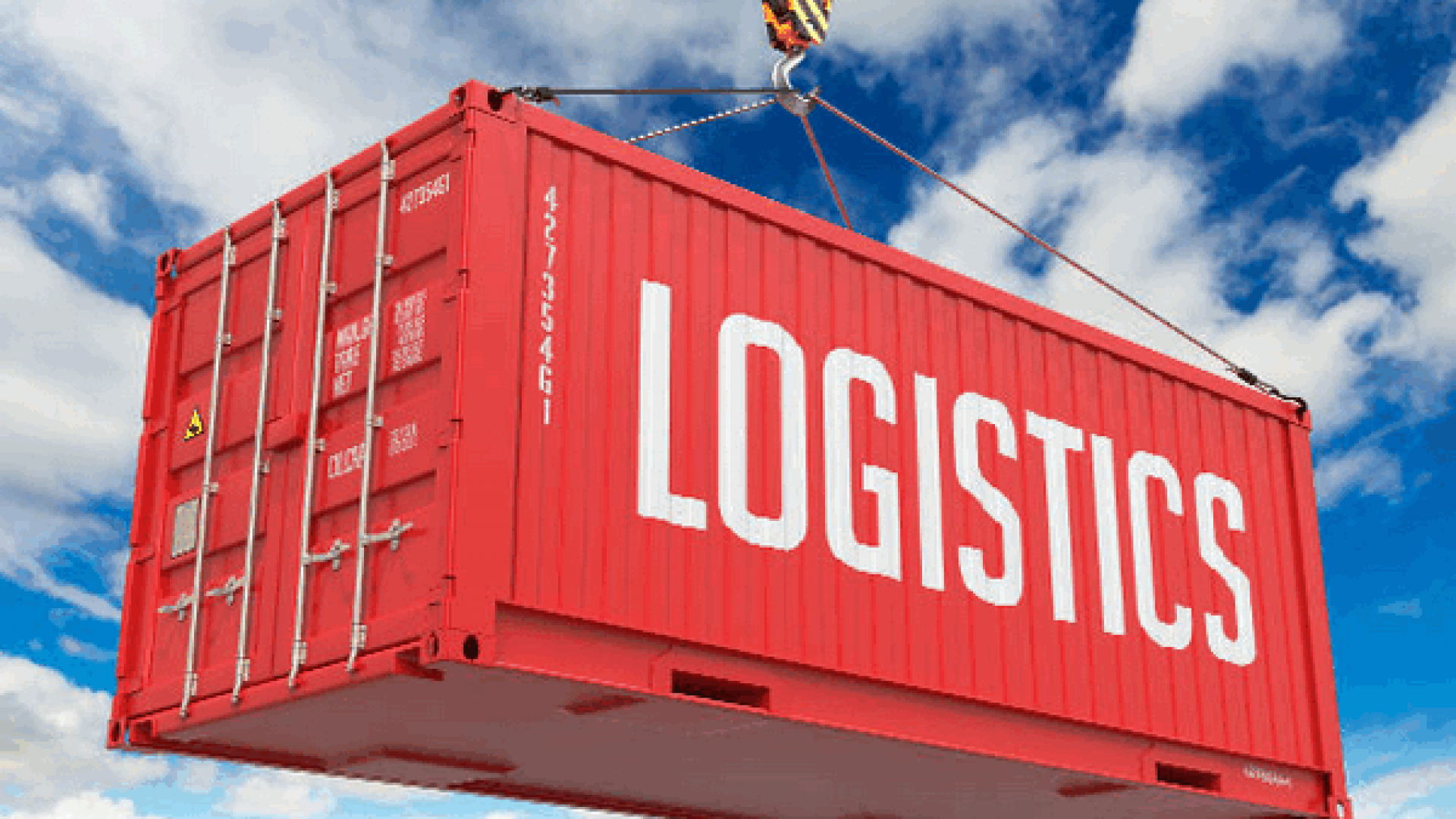
What is the role of containers? Containers are widely used in daily life and bring significant convenience to cargo transportation.
In addition, you may refer to the container rental rates for cargo transportation in the table below:
| Container Type | Rental Rate |
| 10-foot container | VND 1,000,000 – 1,200,000/container |
| 20-foot container | VND 1,500,000 – 8,350,000/container (road transport) and VND 2,150,000 – 5,750,000/container (sea freight) |
| 40-foot container | VND 1,350,000 – 9,350,000/container (road transport) and VND 3,450,000 – 6,750,000/container (sea freight) |
In addition, when renting containers for cargo transportation, you should keep the following points in mind to ensure a smoother import-export process:
- Choose a container type that matches your cargo storage and transportation requirements.
- Inspect the container’s condition and quality carefully.
- Select a reputable container leasing provider to ensure reliable and safe rental services.
At present, 3W Logistics is one of the leading container leasing providers, recognized for top-quality containers and professional, dedicated customer service.
3W Logistics maintains strong partnerships with major shipping lines and transport carriers, enabling the company to offer competitive and cost-effective freight rates. By choosing 3W Logistics, businesses receive maximum support from a highly experienced team with deep market knowledge, always ready to advise on the most suitable container dimensions. In parallel, the company also supports container repositioning to the required location, making the import-export process easier, safer, and more efficient.
 Contact 3W Logistics for container consultation and receive a detailed quotation HERE.
We hope all the information above has helped you better understand what a container is, along with its classifications and related pricing. At the same time, you should carefully choose a reputable container rental provider that offers high-quality equipment to ensure peace of mind throughout your cargo transportation process.
| 1. CONTAINER TRANSIT TIME FROM VIETNAM TO THE USA 2. INTERNATIONAL OCEAN CONTAINER FREIGHT 3. BULK CARGO CONTAINER |

Hello, I’m Nguyen Phuong Nhan (Ms. Nina)
I currently serve as Trade Lanes Supervisor at 3W Logistics, with more than 10 years of experience in international logistics and freight forwarding.
My primary responsibility is developing and managing global logistics partnerships, building strategic trade lanes, and working closely with overseas agents to provide reliable and competitive transportation solutions for customers.
I regularly collaborate with agents and logistics partners worldwide to explore new business opportunities, negotiate freight rates, develop trade routes, and support import-export shipments. I also work closely with our sales team to design logistics solutions tailored to specific markets and customer requirements.
My expertise includes Ocean Freight, Air Freight, Trade Lane Development, Global Agent Network Management, International Logistics Solutions, and Import-Export Support.
Through the articles I share on the 3W Logistics website, I aim to provide practical insights into the international logistics industry, global transportation trends, overseas agent cooperation, and effective logistics strategies that help businesses optimize their supply chain operations.
I believe that strong global partnerships and well-developed trade lanes are essential to delivering sustainable logistics solutions and long-term value to customers worldwide.


