
Blog
The demand for cashew exports has been increasing due to strong growth in recent years, prompting businesses to accelerate their export activities. To ensure a smooth and on-schedule shipping process, companies should seek support from international freight service providers for consultation on cashew export procedures. In this regard, 3W Logistics is a reputable provider trusted by many enterprises.
1. Overview of cashew exports
The cashew tree is a tropical plant originating from northeastern Brazil and is widely cultivated in tropical regions such as India, Côte d’Ivoire, Pakistan, and Vietnam. Cashew nuts have high economic value due to their rich nutritional content and benefits, including cancer prevention, skin and hair nourishment, and bone health support.
Cashew exports have become a highly promising sector in Vietnam’s economic structure in recent years. Notably, export turnover reached an impressive figure of USD 3.64 billion in 2021. Major export markets include the United States, China, Taiwan, Japan, and others.
According to Decree 69/2018/ND-CP guiding the Law on Foreign Trade Management, cashew nuts are not subject to export licensing requirements. In terms of tax policy, cashews are classified under HS code 08013100 (in-shell cashews) and 08013200 (shelled cashews). Additionally, cashews are exempt from export duties and VAT.
>> Read more: Standards for exporting agricultural products to Europe
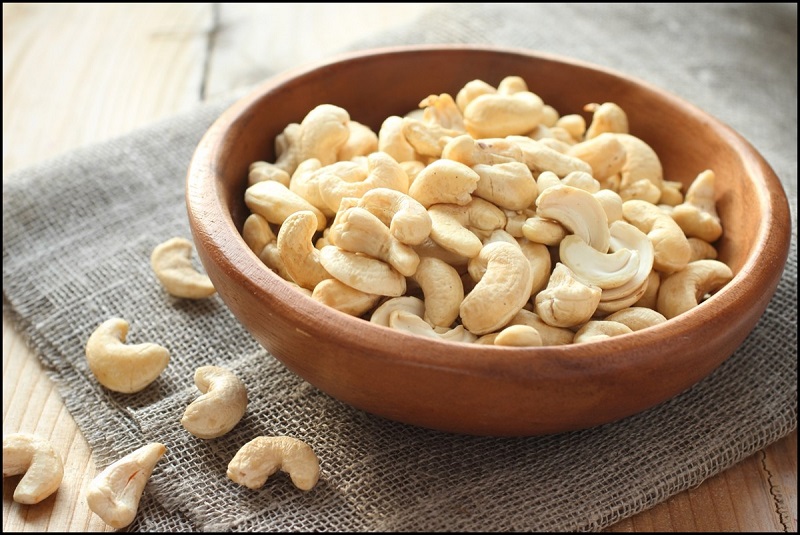
Businesses must apply the appropriate HS code based on the type of cashew product
2. Important notes for cashew export procedures
When exporting cashew nuts, businesses need to prepare the following documents:
2.1 Application for Phytosanitary Certificate
The Phytosanitary Certificate confirms that the cashew shipment has been inspected for safety, is free from pests and diseases, and complies with the importing country’s requirements. The application process is as follows:
– Submit one application dossier to the nearest plant quarantine authority.
– The authority receives and reviews the application in accordance with regulations. If the dossier is incomplete or incorrect, it must be supplemented accordingly.
– After reviewing the documents, the authority determines the inspection location (at the production site, place of origin, storage facility, or export checkpoint) and assigns officers to inspect the shipment.
– The plant quarantine authority issues the Phytosanitary Certificate. In cases where the shipment does not meet the importing country’s phytosanitary requirements, the certificate will not be granted.
*Note: The Phytosanitary Certificate is issued per export shipment; therefore, a separate certificate must be obtained for each individual shipment.
2.2 Required documents for customs declaration when exporting cashews
– Invoice (Commercial Invoice).
– Packing List.
– Sales Contract.
– Bill of Lading (B/L).
– Phytosanitary Certificate.
In addition, customs procedures at the export checkpoint must be completed via the ECUS5-VNACCS electronic customs system. After submitting the declaration electronically, you must print the declaration along with the document set and submit it to the customs authority for registration. The declaration will then be classified into one of three channels:
– Green channel: Only requires declaration clearance and vessel loading confirmation; the system automatically grants customs clearance.
– Yellow channel: Physical documents must be submitted to customs for inspection.
– Red channel: Both documents and the actual cargo will be subject to customs inspection.
Therefore, to avoid errors, exporters should carefully review regulations on food safety, phytosanitary requirements, and quality inspection standards of the importing country prior to shipment.
>> Read more: Sea freight to Canada
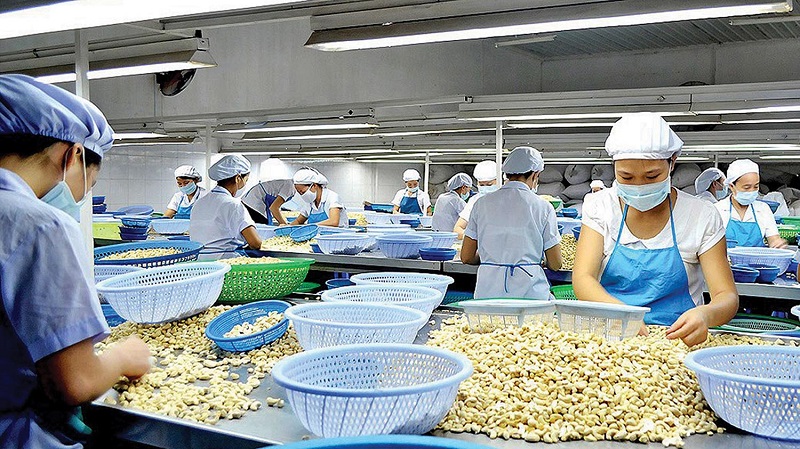
The cashew export procedure is relatively straightforward
3. Are cashew exports subject to taxes?
There are two main types of taxes to consider: VAT and export duty. However, under current export regulations, cashew nuts are not subject to either VAT or export tax.
Although the cashew export procedure is not overly complicated, to save time and ensure shipment schedules, businesses—especially first-time exporters—should seek support from reputable logistics providers. Accordingly, 3W Logistics is a reliable freight service provider with many years of experience in cashew exports, a deep understanding of shipping processes, and strong cooperation with carriers to ensure safe transportation.
The company has a dedicated team specializing in agricultural export procedures, professionally handling all required documentation, supporting HS code classification, and assisting with phytosanitary certification for businesses. Moreover, 3W Logistics partners with major shipping line agents, offering competitive pricing and high-quality services to customers.
3W Logistics operates a global cashew distribution network to markets such as the United States, Canada, Europe, Asia, and India–Middle East regions. Notably, for the U.S. and Canada trade lanes, 3W Logistics is currently an OTI-NVOCC with FMC license and bond, facilitating smooth cargo transportation into these markets.
>> Read more: LCL (Less than Container Load) shipping

3W Logistics offers a diverse transportation network and extensive partnerships, enabling competitive shipping rates
The above information outlines the procedures for exporting cashew nuts. With the support of professional logistics service providers, cashew exporters can streamline the process, ensuring faster operations and safe, on-time delivery of goods.
| IMPORT–EXPORT REGULATIONS AND PROCEDURES FOR VARIOUS INDUSTRIES AT 3W LOGISTICS |


