
Blog
According to statistics from Q2/2022, pangasius exports achieved outstanding growth with a turnover of over 1 billion USD (up 97% compared to 2021). Shrimp reached 1.4 billion USD (up over 45% compared to 2021). Tuna reached 380 million USD (up 63% compared to 2021).
Overall, seafood exports by Q2/2022 reached over 3.6 billion USD (up 47.3% compared to the same period in 2021). This shows that Vietnam’s seafood export market is recovering and beginning to grow again. For businesses intending to export these products, let’s take a closer look at the latest seafood export procedures in the article below.
1. Regulations on seafood export procedures
Seafood exports must comply with the following procedural regulations:
1.1. Procedures for exporting fresh seafood
- Traditional customs procedures
Regulated under Article 12 of Circular No. 128/2013/TT-BTC dated September 10, 2013, by the Ministry of Finance, governing customs procedures, inspection and supervision, export/import taxes, and tax management for exported goods.
Regulated under Decision No. 1171/QĐ-TCHQ dated June 15, 2009, on issuing customs procedures for commercial export goods.
- Electronic customs procedures
Regulated under Circular No. 22/2014/TT-BTC dated February 14, 2014, by the Ministry of Finance.
Regulated under Decision No. 988/QĐ-TCHQ dated March 28, 2014, on issuing electronic customs procedures for commercial export goods.
1.2. Procedures for exporting frozen seafood
- Traditional customs procedures
Regulated under Circular No. 38/2015/TT-BTC dated March 25, 2015, by the Ministry of Finance on customs procedures, inspection, supervision, export/import taxes, and tax management for exported goods.
Regulated under Joint Circular No. 44/2013/TTLT-BCT-BKHCN dated December 31, 2013, by the Ministry of Industry and Trade and the Ministry of Science and Technology, regarding domestic production quality management.
Regulated under Decision No. 1171/QĐ-TCHQ dated June 15, 2009, on issuing customs procedures for commercial export goods.
- Electronic customs procedures
Regulated under Circular No. 22/2014/TT-BTC dated February 14, 2014, by the Ministry of Finance.
Regulated under Decision No. 988/QĐ-TCHQ dated March 28, 2014, on issuing electronic customs procedures for commercial export goods.

Seafood export procedures must comply with the regulations above
2. Understanding the process and procedures for seafood exports
Export procedures for frozen seafood and fresh seafood include the following steps:
Step 1: Check the seafood products for export
Before exporting, businesses must check whether their seafood products are included in the list of allowed exports based on Clause 2, Article 31 of Circular 04/2015/TT-BTC dated February 12, 2015, by the Ministry of Agriculture and Rural Development.
Seafood not listed in the prohibited export appendix (Appendix 1) may proceed with customs procedures (for CITES-controlled seafood, follow Vietnam CITES regulations).
Seafood listed in the conditional export appendix (Appendix 2) may proceed with customs procedures if conditions are met (for CITES-controlled seafood, follow Vietnam CITES regulations).
Step 2: Determine the HS code of the seafood
Next, businesses must determine the HS code for their seafood products. This helps classify goods and allows customs authorities to apply the correct tax rate. For example, the HS codes are: pangasius 0302.89.19, basa fish 0302.72.90, lobster 0306.31.10, crab 0306.24.10, field frog 0106.90.00, freshwater grouper 0301.11.99, etc.
To quickly find HS codes, businesses can use the official Vietnam Customs website for accurate identification.
Step 3: Register for animal quarantine
Both frozen and fresh seafood exports require a Health Certificate (HC). The registration process is as follows:
Prepare documents
Frozen seafood:
- Quarantine registration application.
- Importing country’s quarantine requirements (if any).
- Sample health certificate from the competent authority of the importing country (if any).
Fresh seafood:
- Quarantine registration application.
- Permit from the competent aquaculture authority for species listed under conditional export or prohibited seafood.
- Permit from Vietnam CITES for seafood/products under the list of endangered, rare, or precious species according to Vietnam regulations or CITES appendices.
- Quarantine criteria requirements from the importing country authority (if any).
- Sample health certificate according to importing country authority requirements (if any).
- Other documents such as regional certificates, safe disease-free farm certificates (if any), etc.
Submit documents
Businesses submit the documents to the Department of Animal Health. Officers will carefully inspect the goods, checking quantity, type, and taking samples for testing.
Receive documents and results
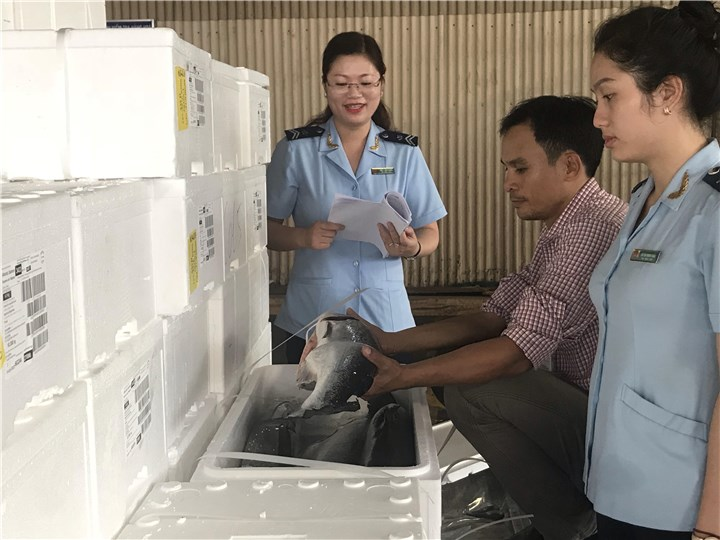
Animal quarantine registration is an important procedure when exporting seafood
Officials from the Department of Animal Health will check the validity of the submitted documents. If the documents meet the requirements, the officers will notify the results and provide an appointment to collect the health certificate. If the documents are incomplete, the business must provide the requested additional paperwork.
Step 4: Complete customs procedures at the port/airport
The necessary documents for customs declaration include:
- Invoice.
- Packing list.
- Certificate of Origin (CO).
- Health Certificate (HC).
- Weighing slip.
- Customs declaration form.
3. What businesses need to pay attention to when exporting frozen and fresh seafood
To ensure goods arrive safely and intact, businesses must be careful during the packaging process.
- Fresh seafood: Place fresh seafood in foam boxes with dry ice at the bottom to maintain freshness, or use specialized waterproof seafood cartons for optimal preservation.
- Frozen seafood: Wrap seafood in plastic bags or place them in foam boxes. Maintain storage temperature around -20°C for stability.
Businesses must carefully time container unloading to avoid additional port charges.
Ensure product quality is maintained intact and consistent, maximizing profitability.
Pay attention to ice glaze ratios for frozen seafood/products (below 5%); crustaceans with shells removed or processed products (below 7%); whole frozen crustaceans (below 14%); other farmed seafood/products (below 8%).
4. 3W Logistics – Professional seafood export procedure service provider
3W Logistics is a trusted company providing services for exporting fresh and frozen seafood, chosen by many businesses. With a professional customs consulting team, experienced and knowledgeable about procedures, they help businesses complete all necessary documents for fast customs clearance. Additionally, the company provides reliable warehousing solutions, supporting storage, transportation, and distribution of quality goods to partners and customers.
Moreover, 3W Logistics has experience in transporting fresh and frozen seafood through partnerships with major shipping lines and airlines, offering competitive rates. The company also exports goods to multiple markets worldwide, including Asia, Europe, India – Middle East, and especially the US and Canada.
With 3W Logistics, clients receive support for all tasks related to seafood export procedures, ensuring smooth transportation while minimizing unnecessary costs such as container storage or electricity fees.
Contact 3W Logistics for consultation on seafood export procedure services HERE.
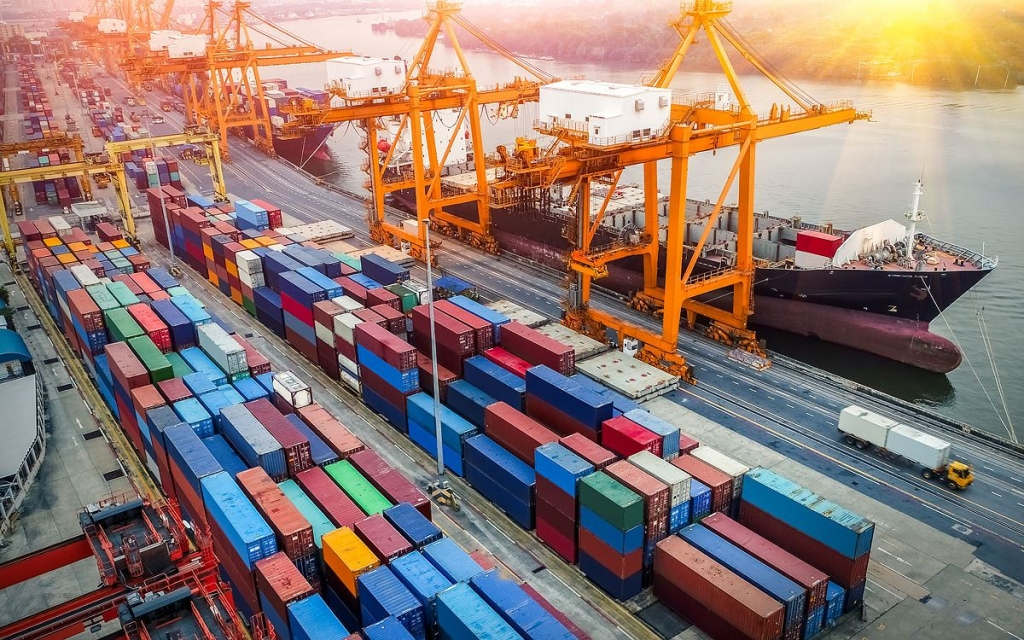
3W Logistics provides optimal seafood export solutions for businesses
The above article provides information on seafood export procedures. For smooth exports, businesses should choose a reputable provider for customs procedures and international shipping to ensure goods arrive on time, in good condition, and cost-effectively.
>> SEE MORE PROCEDURES FOR EXPORTING OTHER PRODUCTS:
| 1. AGRICULTURAL EXPORT PROCEDURES 2. CASHEW EXPORT PROCEDURES 3. AGRICULTURAL EXPORT STANDARDS TO EUROPE 4. WOOD EXPORT PROCEDURES |


