
Blog
Are you looking for a reliable, all-in-one, cost-effective container transportation service for your cargo? 3W Logistics Co., Ltd. specializes in providing containerized shipping solutions for import-export cargo, domestic North–South shipments packed in containers via road or sea, as well as full door-to-door services for customers. With our extensive partnerships with shipping lines and a highly professional operations team, you can rest assured that your cargo will be delivered on schedule, efficiently, and at the most competitive freight rates.
Below, 3W Logistics provides essential information to help customers prepare thoroughly and choose the most suitable transportation mode for their shipments.
1. Benefits of using container transportation services
To meet cargo transportation demands for business operations, trade, buying, selling, and goods exchange by individuals and enterprises, there are currently many shipping methods available such as truck transport, rail freight, container shipping, air freight, and more. Among them, container transportation services are one of the most common and widely used methods because of the following advantages:
1.1. Large cargo capacity
Today, container trucks are available in multiple container types such as 20-foot tank containers, 20-foot reefer (RF), 20-foot open-top (OT), 40–45 foot high-cube (HC), along with large trailer dimensions up to 12 meters in length. Therefore, they can transport cargo volumes 2–3 times greater than conventional methods and are ideal for oversized long cargo such as aluminum, steel sheets, box steel, utility poles, and more.
1.2. Fast transit time
Container trucks mainly operate on highways at an average speed of 70–80 km/h. This allows fast transit, helping save transportation time, especially on long North–South routes.
1.3. Cargo safety and quality assurance
Before loading into containers, all goods are carefully packed using foam wrapping, specialized cartons, or suitable protective packaging. Once loaded, cargo is classified and arranged systematically. In addition, throughout the journey, at every stop point, staff regularly inspect cargo conditions. Therefore, customers choosing a reliable container transportation service can be confident that their goods will not be broken, damaged, or displaced.
>> See more: Ocean Freight Transit Time

Containers provide large cargo space and high payload capacity, allowing multiple shipments to be transported simultaneously.
2. Understanding today’s container transportation services
2.1. Road container transportation services
Using containers for road transportation is highly common and practical. Specifically:
- For export cargo, the trucking unit picks up the empty container from the depot and brings it to the warehouse for stuffing. The loaded container is then hauled back to the port for vessel loading to the destination port. At destination, the container truck delivers the cargo to the importer’s warehouse, completing the international shipping cycle.
- For imported cargo, the process is reversed. Once the vessel arrives at a Vietnam port, the container is discharged, customs clearance is completed, and then it is hauled to the consignee’s warehouse by container truck.
Although the freight cost is relatively high, road container transportation services are considered highly convenient and flexible because they can move directly from warehouse to warehouse, or from production site to consumption site. In addition, this mode adapts well to different weather and terrain conditions and provides strong economic efficiency over short and medium distances.
2.2. Ocean container transportation services
Along with road container shipping, sea container transportation is equally essential. This combination ensures service continuity, strong connectivity, and forms an integrated chain within multimodal transport and logistics services. There are 2 main categories:
- Domestic sea freight: Domestic routes mainly operate on the North–South corridor. When using domestic ocean container services on this route, customers should check space availability before confirming the schedule and placing the booking, especially during peak seasons when vessel schedules are dense.
- International sea freight: Serving import-export demand through Vietnam’s major international seaports such as Hai Phong, Da Nang, Cat Lai, and Cai Mep – Thi Vai. Since this involves international trade, cargo must comply with more complex procedures including customs clearance, import-export permits, and specialized inspections.
>> See more: Ocean Freight Services

Sea transport routes are highly open with less congestion, ensuring safe containerized shipping and minimizing collision risks.
3. Types of cargo suitable for container shipping
Understanding which cargo types are suitable for container transportation helps you organize and classify shipments more effectively.
3.1. Common containerized cargo types
- Agricultural goods and general consumer products: Rice, tea, coffee, cashew nuts, sugarcane, cassava, animal feed, confectionery, etc.
- Seafood products: Shrimp, crab, fish, clams, oysters, snails, mussels.
- Meat products: Poultry meat and processed meat products – fresh or frozen.
- Fresh fruits and processed fruit products.
- Textile products: Garments, leather shoes, handbags.
- Liquid cargo: Drummed chemicals, water-based paint.
- Construction materials: Cement, bricks, gravel, sand, coal, metals.
- Packaging paper, carton products, cosmetics, etc.
3.2. Cargo types less suitable for container shipping
Although container trucks offer super-wide loading space and can handle a wide range of shipments from loose cargo and consolidated cargo to oversized goods, some commodities with unique characteristics are not suitable for container transportation services:
- High-value goods requiring urgent delivery: Jewelry, gold, gemstones, etc. are better suited for air freight rather than containerization.
- Very high-volume bulk cargo (tens of thousands of tons or more): Ore, lime, fertilizers, etc. are more suitable for breakbulk or large bulk carriers.
- Cargo requiring specialized vessels: Crude oil, liquefied gas, automobiles. However, certain shipments may still be transported using specialized containers depending on the cargo profile.
>> See more: EU Agricultural Export Standards
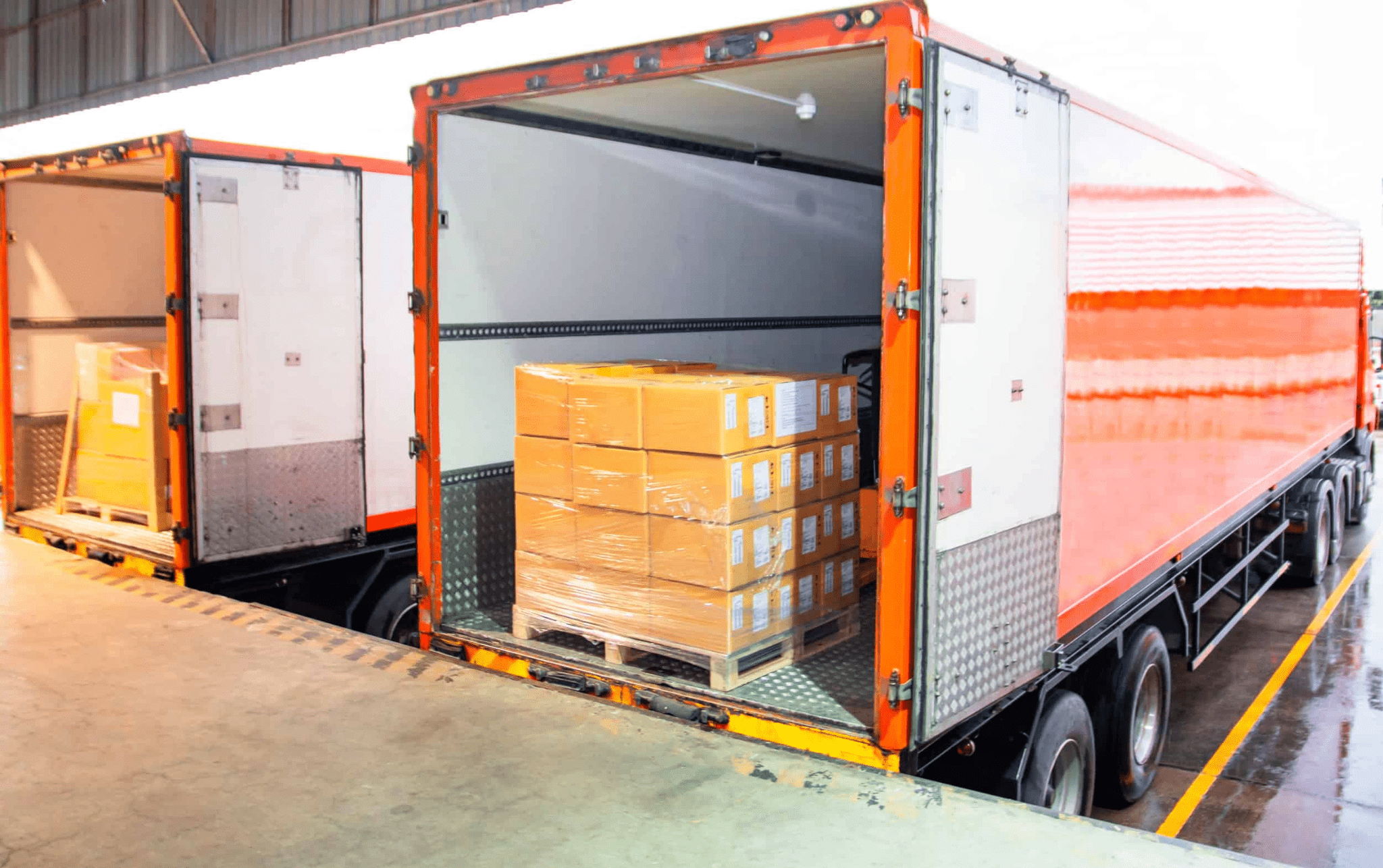
To avoid cargo damage or loss when using container transportation services, businesses should carefully assess cargo characteristics.
4. Container cargo transportation process
Step 1: Receive shipment information
The logistics provider will collect shipment details including:
- Customer contact information.
- Cargo type, quantity, and weight.
- Pickup and delivery locations.
- Required shipping timeline.
- Packing and loading requirements.
Step 2: Consultation and planning
The logistics company will then advise customers on shipping options such as warehouse-to-warehouse, door delivery, warehouse-to-door, or door-to-warehouse. A detailed quotation will also be provided based on the selected transport method.
For oversized cargo, high shipment volumes, or cases where customers face difficulties determining shipment dimensions and weight, the company will assign staff to conduct an on-site cargo survey and develop the most optimized transport solution.
Step 3: Contract signing
Once both parties agree on all terms and conditions, the next step is contract execution. This document serves as legal proof of the mutual voluntary agreement. After signing, both the logistics provider and the client must strictly comply with all agreed clauses.
>> See more: Ocean Freight Rates to the USA

Once container shipping terms are agreed, both you and the logistics provider will proceed with the service contract signing.
Step 4: Shipment execution
The company will arrange and dispatch trucks to the requested pickup address. The shipper may assign an escort representative to accompany the cargo if necessary. All goods, equipment, and cargo items will be loaded and transported using containers with suitable payload capacity. If any cargo loss, breakage, or damage occurs during transportation, the company will take full responsibility for compensation based on customer requirements.
5. Container transportation pricing
There is no fixed standard rate for North–South or international container transportation services. Pricing depends on factors such as cargo quantity, cargo characteristics, weight, volume, origin point, destination point, and the type of container equipment selected by the customer.
For more details on other routes or for exact rates based on each period and commodity type, please submit a quotation request HERE, or contact our Hotline: 028 3535 0087 for detailed consultation.
Recommendation: If you are a large enterprise with frequent shipping demand, it is advisable to sign a long-term contract with a transport company to receive the best discount structure.
In summary, if you need to transport large cargo volumes but are unsure which container transportation company to choose for safe, loss-free shipping, contact 3W Logistics. Our professionally trained and experienced team will build the most suitable transport routing plan for your cargo flow needs with competitive pricing, high safety standards, and guaranteed space availability at all times.
In particular, we have extensive experience transporting cargo such as food products (vermicelli, pia cakes, packaged rice noodles, milk, or noodles), agricultural products (coffee, cashew nuts, rice, sugar), garments and handicrafts, wood, rubber, and furniture. Therefore, we can quickly handle unexpected incidents throughout the full-container-load shipping process.
| EXPLORE MORE SHIPPING SERVICES FROM 3W LOGISTICS 2. International Freight Services |


