
What is pipeline transport? Concept, characteristics, and role
Every day, millions of tons of crude oil, natural gas, and industrial fluids move silently beneath the ground, across the ocean floor, and through deserts – with no drivers, no shipping schedules, and no transshipment ports. This is pipeline transportation: a mode of transport rarely discussed yet serving as the backbone of the global energy industry and many critical heavy industries.
This article provides everything you need to know about pipeline transportation: its definition, classifications, advantages and disadvantages, how industrial pipeline systems operate, the types of cargo they carry, and the real role this mode plays in energy and industrial logistics chains – helping you understand why it matters far more than most people realize.
1. What Is Pipeline Transportation?
Pipeline transportation is a method of moving cargo in liquid, gas, or liquid-solid mixture (slurry) form through a fixed network of pipes installed underground, on the seabed, or above ground. Rather than using moving vehicles like trucks, ships, or trains, industrial pipeline systems use pressure and mechanical pumps to push liquids or gases continuously from origin to destination in a defined direction.
This is the most specialized mode of transport in all of logistics – unsuitable for general cargo but indispensable and irreplaceable for energy, chemicals, and heavy industries that depend on continuous supply, high volumes, and low unit costs.
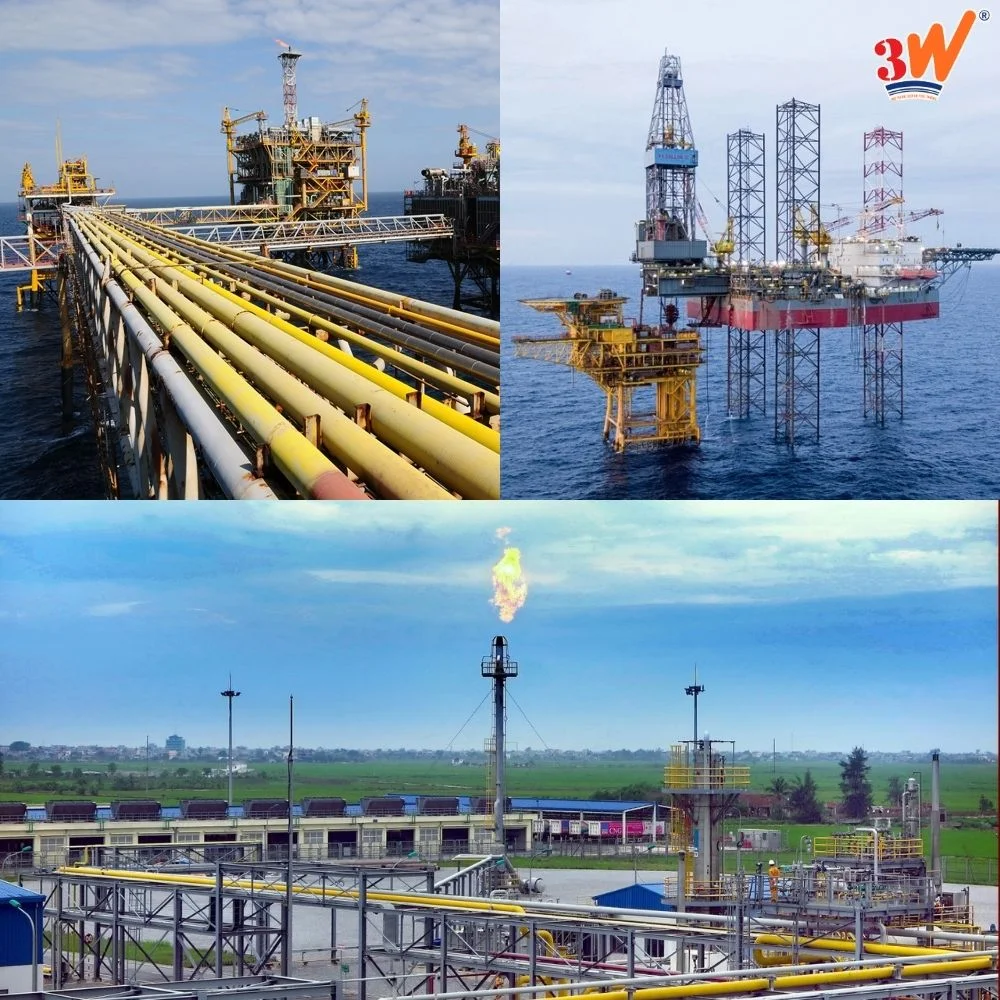
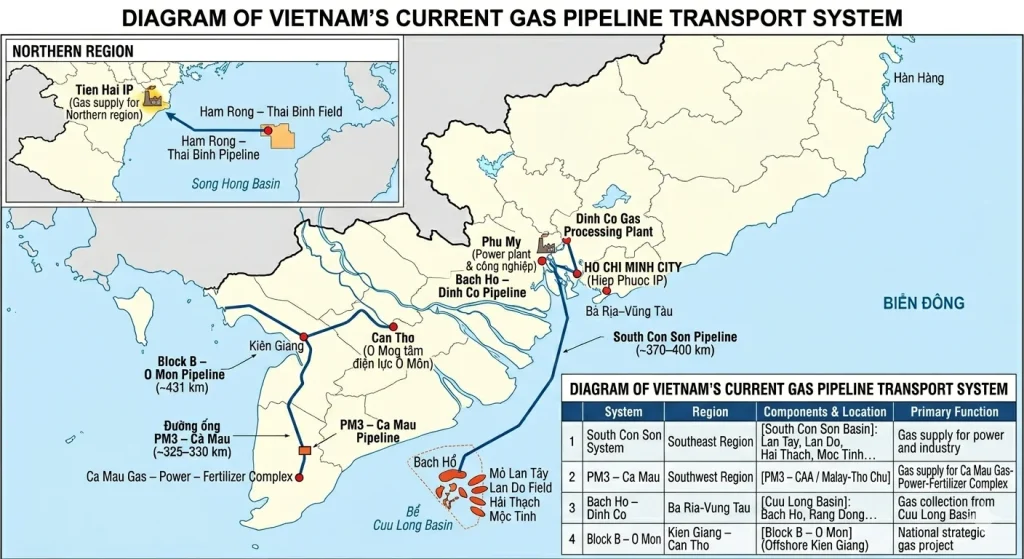
In terms of scale, global pipeline transportation currently operates over 3.5 million kilometers of pipelines across all continents – with the United States, Russia, and Canada holding the world’s largest pipeline networks. In Vietnam, the pipeline network operated by PVN (Vietnam Oil and Gas Group) connects offshore gas fields to onshore power plants and fertilizer plants, playing a direct role in national energy security.
2. Advantages and Disadvantages of Pipeline Transportation
Advantages
- Lowest operating cost of all transport modes: Once initial infrastructure investment is complete, the cost per ton-km of oil pipeline logistics is lower than sea, rail, and road transport. No driver wages, no vehicle fuel, no peak-season surcharges.
- Continuous 24/7 operation, weather-independent: Unaffected by storms, traffic congestion, or shipping schedules. Industrial pipeline systems operate reliably 365 days a year, delivering a continuous and predictable supply that no other transport mode achieves at the same level.
- High throughput capacity for massive volumes: A large-diameter oil pipeline logistics system can move hundreds of thousands of barrels per day a continuous volume that even a fleet of tankers would struggle to match.
- High cargo integrity – no handling risk: Cargo is never unloaded, reloaded, or transshipped throughout the journey. No risk of impact damage, spillage, or cargo loss as with conventional transport modes.
- Lower emissions than road and air transport: No diesel vehicles or aircraft emit during operation. The CO₂ footprint per ton-km of pipeline transportation is among the lowest of all transport modes – second only to sea freight for bulk volumes.
- Highly automated, minimal labor dependency: Modern industrial pipeline systems are operated and monitored entirely remotely via SCADA (Supervisory Control and Data Acquisition), minimizing human error and enabling rapid incident response.
Disadvantages
- Very high initial capital investment: Building an inter-regional oil and gas pipeline solution can cost billions of dollars. This enormous barrier to entry means pipeline transportation is only viable for energy corporations, governments, or national-scale joint ventures.
- Limited to specific cargo types: Crude oil, natural gas, refined petroleum products, water, and select liquid chemicals, that is the scope of industrial fluid transportation by pipeline. General cargo, containers, or dry bulk cannot be transported this way.
- Fixed routes, zero flexibility: Once a pipeline is built, its direction and endpoints are permanently fixed. Unlike trucks or vessels, routes and destinations cannot be changed. This is a major strategic disadvantage when market demand shifts.
- Leak risk and severe environmental consequences: A single oil pipeline logistics failure can trigger an environmental disaster lasting years and costing billions. Monitoring, pipeline maintenance services, and emergency response are ongoing and non-negotiable obligations.
- Geopolitical and land-use dependencies: Cross-border pipelines frequently become geopolitical instruments – subject to closure, disputes, or targeting in conflicts. This is a unique risk not found in most other transport modes.
- Long construction timelines and complex approvals: An inter-provincial or cross-border pipeline construction project can take 5–10 years from survey to commissioning, navigating environmental approvals, land rights negotiations, and regulatory procedures.
3. Common Types of Industrial Pipeline Systems
1. Crude Oil Pipelines
The most widespread and large-scale type globally. Crude oil is pumped directly from wellheads or import terminals to refineries as part of integrated oil pipeline logistics networks.
Notable examples: The Trans-Alaska Pipeline System (TAPS), spanning 1,287 km, transports oil from Alaska’s North Slope to the port of Valdez; the Druzhba (“Friendship”) Pipeline, over 5,500 km long – the world’s longest oil pipeline – connects Russia to Eastern and Western Europe.
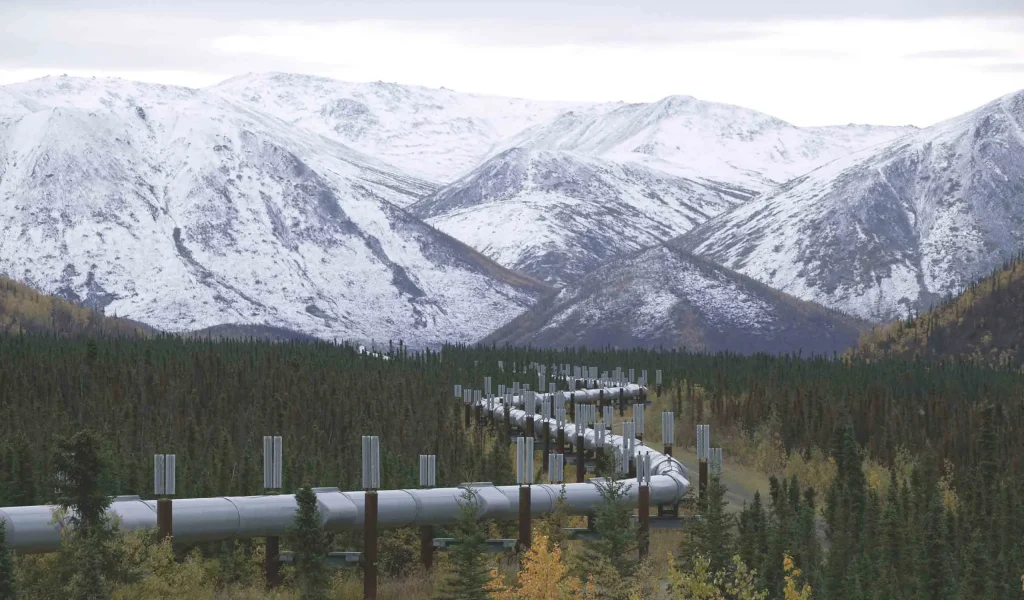
Technical specifications: Pipe diameters typically range from 20-120 inches. High operating pressures are required. Intermediate pump stations are positioned every 80-160 km to maintain pressure along the line.
2. Natural Gas Pipeline Transportation
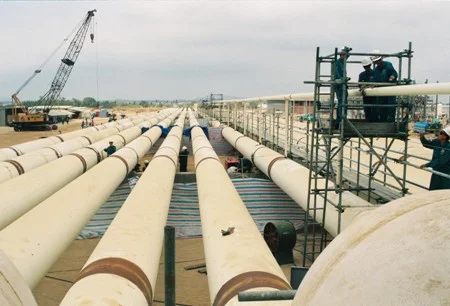
Natural gas is transported in gaseous form under high pressure through sealed pipeline systems. Gas pipeline transportation infrastructure is the most critical energy backbone for most of Europe, North America, and the Middle East.
Vietnam example: The Nam Con Son Gas Pipeline (~399 km long, 26-inch diameter) connects the offshore Lan Tay and Lan Do gas fields to the Phu My power plant and Phu My fertilizer plant onshore – supplying fuel for approximately 40% of southern Vietnam’s electricity generation for many years.
Technical specifications: Requires compressor stations rather than pump stations as used in oil pipelines. Demands extremely stringent safety standards given the flammability of natural gas.
3. Refined Product Pipelines
These pipelines transport post-refinery products – gasoline, diesel, kerosene, and jet fuel – from refineries to regional fuel depots and airports, forming a key link in oil and gas pipeline solutions.
Unique characteristic: A single product pipeline can carry multiple product types in successive “batches,” with the boundary between each batch carefully managed to prevent product contamination.
4. Water and Wastewater Pipelines
Domestic water supply, industrial water, and wastewater systems – the densest pipeline network in every city and industrial zone worldwide. While not typically regarded as “transport” in the commercial sense, this is the form of pipeline transportation that every person uses daily.
5. Chemical Pipeline Systems and Slurry Pipelines
Certain industrial liquid chemicals (acids, alkalis, solvents) and mineral slurries (finely crushed ore mixed with water) are transported through dedicated chemical pipeline systems. These typically connect a fixed extraction point to a fixed processing facility.
4. Pipeline Transportation in Modern Logistics
To understand the true position of pipeline transportation, it must be placed alongside other transport modes within the same overall picture. In energy and industrial logistics chains, modes typically work together in the following patterns:
- Extraction → Pipeline → Export Terminal: Crude oil from production fields is moved via oil pipeline logistics to a port, then loaded onto tankers for sea freight export to international markets. This is the standard energy supply chain model for most oil-exporting nations.
- Import Terminal → Pipeline → Refinery: Imported crude oil is pumped via pipeline from the port to domestic refineries — far more efficient than road tankers or rail wagons at the required scale.
- Refinery → Product Pipeline → Regional Depot → Road Tanker → End User: This chain clearly illustrates how industrial pipeline systems work in tandem with road transport to complete the journey from production to consumption.
While rail freight and sea freight can handle diverse cargo types and flexibly reroute as market conditions change, pipeline transportation holds an absolute advantage on one criterion: continuous movement of a single liquid or gas in extreme volumes at the lowest possible cost on a fixed corridor. This is why these modes complement rather than compete with each other in a total logistics chain.
5. How Industrial Pipeline Systems Operate
Step 1: Cargo Receipt at the Origin Terminal
Crude oil, natural gas, or industrial fluids from production wells or import vessels are received at the origin terminal. Here, cargo quality is verified – water content, impurities, pressure, and temperature – before entering the pipeline.
Step 2: Pumping Into the Pipeline and Pressure Maintenance
High-capacity pumps (for liquid pipelines) or compressors (for gas pipeline transportation) push cargo into the pipeline and sustain the pressure required for continuous flow. Along long-distance routes, intermediate pump or compressor stations are spaced at regular intervals to compensate for pressure loss.
Step 3: Real-Time Remote Monitoring via SCADA
The entire journey is monitored in real time through SCADA systems tracking pressure, temperature, flow rate, and leak detection at every point along the line. The system can automatically isolate a failed pipe segment within minutes to prevent widespread environmental damage.
Step 4: Cargo Delivery at the Destination Terminal
At the delivery terminal, cargo is accurately measured for volume and quality, then transferred to storage tanks. Depending on end use, cargo may continue through branch pipelines or be transported onward by road tanker to final consumption points.
Step 5: Inspection, Pipeline Maintenance Services, and Integrity Management
Pipeline maintenance services are continuous and non-negotiable. Intelligent Pigging (ILI – Inline Inspection) tools are regularly run through the inside of pipelines to detect corrosion, cracks, and wall deformation before they escalate into serious incidents.
6. Pipeline Transportation vs. Other Transport Modes
The table below compares pipeline transportation against common alternatives across the most critical criteria:
Pipeline Transportation vs. Other Transport Modes – Comparison Table
| Criteria | Pipeline | Sea Freight | Rail Freight | Road Freight |
|---|---|---|---|---|
| Operating cost / ton-km | Lowest | Low | Medium | High |
| Initial capital investment | Very high | High | High | Low |
| Operational continuity | 24/7 continuous | Schedule-based | Schedule-based | Relatively flexible |
| Route flexibility | Fully fixed | High | Moderate | Highest |
| Cargo type range | Very narrow (liquid/gas) | Very broad | Broad | Broad |
| Operational emissions | Lowest | Low | Low | High |
| Throughput capacity | Very high (continuous) | Very high | High | Low per trip |
Note: No single mode excels across all criteria. Pipeline transportation dominates on operating cost and continuity but is completely inflexible on routing and cargo range. Understanding the strengths of each mode is the key to designing an optimized logistics chain.
7. The Role of Pipeline Transportation in Energy Security and Economic Infrastructure
For the Energy Industry
Pipeline transportation is the lifeblood of the global oil and gas industry. Without oil and gas pipeline solutions, crude oil from fields in the Middle East, Russia, or the United States could not reach refineries cost-effectively. Without gas pipeline transportation, millions of European households would have no heating fuel in winter. Pipelines are not merely transport infrastructure – they are the foundation of national and international energy security.
For the Chemical and Petrochemical Industry
Large-scale petrochemical and chemical complexes rely entirely on internal chemical pipeline systems to move raw materials and intermediate products between process units. Without pipelines, the economics of operating such facilities would be unviable.
For Urban Infrastructure and Agriculture
Water supply and wastewater systems – the most widespread and essential form of industrial fluid transportation – are the indispensable foundation of every city and irrigated agricultural zone. This is the form of pipeline transportation that everyone uses every day, even if they never think of it that way.
8. Frequently Asked Questions (FAQ) About Pipeline Transportation
Question 1: Can pipeline transportation be used to move general cargo?
Technically, no. Pipeline transportation is only suitable for liquids, gases, and liquid-solid slurries. Packaged goods, dry bulk, or containers cannot be transported through pipelines. For general cargo, sea freight, rail freight, and road freight remain far more appropriate and flexible options.
Question 2: Why is pipeline transportation considered the cheapest transport mode?
Because the operating costs of industrial pipeline systems consist almost entirely of electricity for pumps and compressors, remote monitoring staff, and scheduled pipeline maintenance services – no vehicle fuel, no driver wages, no port surcharges or seasonal fees. After recouping the initial capital investment (typically 10–20 years), the cost per ton-km is extremely low compared to every other transport mode.
Question 3: What is the difference between gas pipeline transportation and oil pipeline systems?
The key difference lies in the pressure technology: oil pipelines use pumps because crude oil is an incompressible liquid; gas pipeline transportation systems use compressors because natural gas is compressible. Additionally, gas pipelines require higher safety standards due to the flammability of natural gas compared to crude oil.
Question 4: What happens when a pipeline leaks?
The SCADA monitoring system detects abnormal pressure drops and immediately isolates the affected segment by automatically closing valves. Emergency response teams are deployed to contain the leak, remediate the environment, and carry out repairs. The cost of responding to a major oil pipeline logistics incident can reach hundreds of millions of dollars – which is precisely why preventive monitoring and pipeline maintenance services are the top operational priority.
Question 5: How does pipeline transportation relate to 3W Logistics services?
Not directly. 3W Logistics does not operate pipelines. However, within the logistics chains of oil, gas, and chemical corporations, cargo typically moves through multiple coordinated modes: from pipeline transportation to port, then via international sea freight, then by rail or road to final consumption points. 3W Logistics supports the sea freight, air freight, and integrated logistics stages within energy and industrial supply chains – including shipments where part of the journey moves through oil and gas pipeline solutions.
Conclusion – 3W Logistics and the Role in Integrated Logistics Chains
Pipeline transportation is the clearest demonstration of a core principle in modern logistics: no single transport mode is perfect for every cargo type and every route. Pipelines dominate in energy and chemical industrial fluid transportation; sea freight dominates in international commodity trade; rail optimizes bulk cargo over medium distances; road and air handle the flexibility and speed that no other mode can.
Understanding each mode precisely is the first step to designing an optimal logistics chain for your business.
3W Logistics, with years of experience in international multimodal transport, is ready to advise and organize the most suitable logistics solution for each cargo type and specific route.
Head Office – 3W Logistics Ho Chi Minh City
Address: 34 Bach Dang Street, Tan Son Hoa Ward, Ho Chi Minh City
Hotline: +84 28 3535 0087
____________________________
3W Logistics Hanoi Branch
Address: 81A Tran Quoc Toan Street, Cua Nam Ward, Hanoi
Hotline: +84 24 3202 0482
____________________________
3W Logistics Hai Phong Branch
Address: 8A Lot 28 Le Hong Phong Street, Gia Vien Ward, Hai Phong
Hotline: +84 225 355 5939
____________________________
3W LOGISTICS CO., LTD – We here serve you there!
Email: quote@3w-logistics.com
Website: www.3w-logistics.com

Ms. Apple is the CCO (Chief Commercial Officer) at 3W Logistics, with over 10 years of experience in sales and business operations management.
At 3W Logistics, Ms. Apple is responsible for commercial strategy, corporate customer development, managing a team of more than 50 sales professionals, and improving business performance in the logistics sector.
With practical experience in sales management and market development, Ms. Apple shares professional insights on business logistics solutions, international transportation, freight forwarding, customer management, trade lane development, and growth strategies in the logistics industry.


