

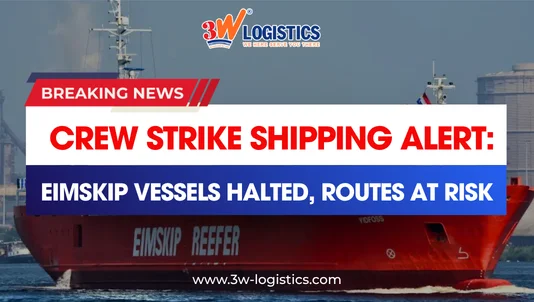
Crew Strike Shipping: 3 Eimskip vessels halted on North Atlantic routes
A crew strike shipping vessels operated by Icelandic carrier Eimskip officially began on Monday, May 25, 2026, after wage negotiations between the company and the Icelandic Seamen’s Union (SÍ) collapsed without agreement. Three vessels were immediately immobilized, putting North Atlantic sailing schedules under direct threat.
This article covers the latest developments, identifies the affected ships, maps the supply chain risks for importers and exporters, and provides a clear action checklist for businesses with cargo booked on Eimskip services.
1. Eimskip Crew Strike: Key Facts at a Glance
The crew strike on Eimskip shipping operations was called by the Icelandic Seamen’s Union (Sjómannasamband Íslands – SÍ) and declared indefinite, meaning there is no fixed end date. The industrial action began after multiple rounds of wage talks failed to produce a deal acceptable to both sides.
The strike involves bosuns and able seamen — two critical deck crew roles without which commercial vessels cannot legally or safely depart port. Eimskip confirmed it had prepared contingency measures in advance and committed to keeping customers informed as the situation evolves.
Mediated negotiations remain ongoing, with Iceland’s State Mediator involved in facilitating talks between the union and the Confederation of Icelandic Enterprise (SA), which represents Eimskip in the dispute.
2. Three Vessels Halted: Brúarfoss, Dettifoss & Selfoss
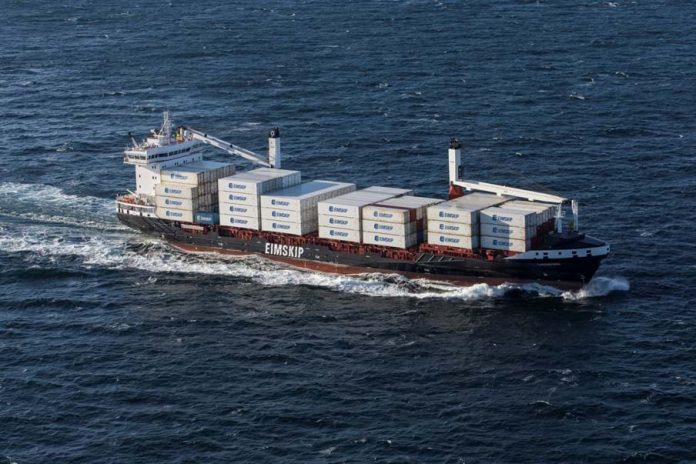
The strike directly affects three Eimskip-owned container vessels operating on North Atlantic trade lanes. These ships connect Iceland with key ports in North America and Northwest Europe.
| Vessel Name | Vessel Type | Current Status | Primary Trade Lane |
|---|---|---|---|
| Brúarfoss | Container / Reefer | Halted – crew strike | North Atlantic |
| Dettifoss | Container / Reefer | Halted – crew strike | North Atlantic |
| Selfoss | Container / Reefer | Halted – crew strike | North Atlantic |
Note: Chartered vessels within the Eimskip fleet have not been confirmed as affected at the time of writing. Shippers should contact their Eimskip agent or freight forwarder directly to verify the status of individual bookings.
3. Sundahöfn Port: Shore Operations Continue Normally
Not all Eimskip operations are at a standstill. Terminal and port-side activities at Sundahöfn — Iceland’s primary container port in Reykjavik — are proceeding normally, following a separate labor agreement reached just before the vessel strike began.
Last week, the Confederation of Icelandic Enterprise (SA), acting on behalf of Eimskip, and the Seamen’s Union SÍ reached a wage agreement covering harbor employees at Sundahöfn. As a result, the previously announced strike at the port was called off.
This means cargo already delivered to the terminal is being handled and processed without disruption. The problem lies with sea transport capacity — ships waiting to depart, or scheduled sailings that can no longer proceed as planned.
Real-world example: A refrigerated seafood shipment staged at Reykjavik port for departure on May 26, 2026, faces an indefinite hold because the Dettifoss — its assigned vessel — cannot sail without a full crew complement.
4. Crew Strike Shipping Impact: 5 Risks for Cargo Owners
The Eimskip crew strike is not purely an Icelandic labor story. Eimskip operates a scheduled liner network connecting Iceland with Halifax, Boston, New York, Rotterdam, Hamburg, and Antwerp. A prolonged stoppage will ripple across multiple supply chain nodes.
Key risks businesses need to monitor immediately:
- Schedule delays: Cargo booked on Brúarfoss, Dettifoss, or Selfoss faces indefinite postponement until the strike is resolved or Eimskip arranges replacement tonnage.
- Demurrage and detention charges: Containers staged at port awaiting departure may exceed free time allowances, generating unexpected DEM/DET costs.
- Equipment imbalance: When vessels do not sail, the container rotation on North Atlantic lanes breaks down, creating equipment shortages at origin ports.
- Reefer cargo risk: Eimskip specializes in refrigerated and perishable cargo (seafood, frozen goods). Extended delays are especially damaging for temperature-sensitive shipments.
- Alternative routing costs: Diverting cargo to other carriers typically incurs higher freight rates and longer transit times, directly impacting landed cost calculations.
5. Wage Negotiations: Timeline & Parties Involved
Talks over pay and working conditions for bosuns and able seamen are ongoing under the mediation of Iceland’s State Mediator — a statutory role in Icelandic labor law that facilitates dispute resolution before legal enforcement becomes possible.
| Party | Role | Current Position |
|---|---|---|
| Icelandic Seamen’s Union (SÍ) | Represents striking crew | Demanding improved wages and working conditions |
| Confederation of Icelandic Enterprise (SA) | Employer representative for Eimskip | Negotiating; no agreement reached on vessel crew |
| Iceland State Mediator | Neutral mediator | Active in talks; no binding authority to impose settlement |
| Eimskip | Shipowner / carrier | Contingency plans activated; updating customers regularly |
Eimskip stated it regrets that an agreement was not reached before the strike began and hopes a resolution will come soon. However, based on comparable port and vessel strikes globally, mediated settlements can take anywhere from a few days to several weeks depending on the gap between union demands and employer offers.
6. Who Is Eimskip? Role on North Atlantic Routes
Eimskip (Eimskipafélag Íslands) is Iceland’s oldest shipping company, founded in 1914. The carrier specializes in container, reefer, and general cargo services across the North Atlantic, with a network spanning Iceland, North America, and Northwest Europe.
While not a mega-carrier, Eimskip holds a near-monopoly position on several Iceland-centric trade lanes — particularly for frozen seafood, perishables, and specialized cargo originating from or destined for Iceland. There is no straightforward like-for-like replacement available at short notice, which makes this crew strike disruption harder to absorb than a delay on a heavily-served mainline route.
Read more: 3W Logistics Ocean Freight Services – North America & Europe
7. How to Respond: 4-Step Action Plan for Shippers
Businesses with cargo linked to Eimskip services should act now — not wait for the strike to resolve. Early action limits financial exposure and keeps supply chain options open.
- Verify booking status immediately – Contact your Eimskip agent or freight forwarder to confirm whether your specific vessel sailing is affected and what contingency options Eimskip is offering.
- Review Force Majeure clauses – Labor strikes are typically recognized as Force Majeure events under international trade contracts and cargo insurance policies. Notify your counterparties and insurer in writing without delay.
- Assess alternative routing – Explore options including transhipment via other North Atlantic carriers, air freight for time-critical cargo, or temporary storage at origin while awaiting strike resolution.
- Monitor Eimskip updates daily – The carrier has committed to ongoing customer communication. Check official channels every 24 hours; the situation can change rapidly once mediation produces progress.
8. Frequently Asked Questions: Eimskip Crew Strike
8.1 When did the Eimskip crew strike start?
The strike began on Monday, May 25, 2026. It was called by the Icelandic Seamen’s Union (SÍ) after wage negotiations with Eimskip failed to produce an agreement. The action is declared indefinite with no set end date.
8.2 Which Eimskip vessels are affected by the crew strike?
Three Eimskip-owned vessels are directly affected: the Brúarfoss, Dettifoss, and Selfoss. All three operate on North Atlantic routes. Terminal and shore-side operations at Sundahöfn port in Iceland remain unaffected.
8.3 Is Sundahöfn port operating normally during the strike?
Yes. A separate wage agreement was reached for harbor employees at Sundahöfn, and the planned port-side strike was called off. Cargo handling, container movements, and terminal operations at Sundahöfn continue as normal.
8.4 Does a shipping crew strike qualify as Force Majeure?
In most cases, yes. Labor strikes are typically listed as Force Majeure events in international shipping contracts and marine cargo insurance policies. Shippers should review their specific contract terms and notify all counterparties as soon as possible in writing.
8.5 What should I do if my cargo is booked on an affected Eimskip vessel?
Contact your freight forwarder or Eimskip agent immediately to confirm booking status. Evaluate alternative routing options and assess potential demurrage exposure. Review Force Majeure provisions in your sales contract and notify your cargo insurer if shipment delays may cause loss or damage.
8.6 How long could the Eimskip strike last?
There is no confirmed timeline. Iceland’s State Mediator is involved in ongoing talks, but mediation does not carry binding authority. Based on precedents from comparable crew strikes in the shipping industry, resolution timelines typically range from several days to a few weeks.
Conclusion: 4 Actions to Take Right Now
- Confirm your booking status with your freight forwarder or Eimskip agent today.
- Invoke Force Majeure provisions in relevant contracts and notify counterparties in writing.
- Evaluate alternative routing — transhipment, air freight, or temporary storage — before options narrow.
- Follow daily updates from Eimskip and industry news sources until the strike is fully resolved.
Article sourced from Container News (container-news.com), published May 26, 2026. All operational details reflect information available at time of writing.
3W Logistics: Your Partner When Shipping Markets Are Disrupted
Crew strikes, vessel delays, and abrupt schedule changes are precisely the scenarios where having an experienced NVOCC partner makes the difference between a managed disruption and a costly crisis. 3W Logistics is a leading international freight forwarder and NVOCC operator in Vietnam, with proven capabilities in rerouting cargo, controlling demurrage exposure, and finding alternative capacity at short notice across North American and European trade lanes.
- International shipping expertise: Over 15 years managing ocean freight on US, Canada, and Northern Europe routes. When disruptions like the Eimskip strike occur, the 3W team identifies alternative carriers and notifies customers within 24 hours — minimizing delay and cost impact.
- Global NVOCC network: Active partnerships with 20+ major carriers and thousands of port agents across North America, Europe, and Asia — enabling fast alternative booking when primary routes are disrupted.
- Demurrage & detention control: 3W Logistics proactively monitors container free time and coordinates with terminals and carriers to minimize DEM/DET exposure when vessel schedules are disrupted without prior notice.
For businesses requiring ocean freight solutions to or from North America and Europe — including contingency planning during market disruptions — contact 3W Logistics today for a complete logistics solution.
CONTACT INFORMATION:
Head Office – 3W Logistics Ho Chi Minh City Branch
Address: 34 Bach Dang, Tan Son Hoa Ward, Ho Chi Minh City
Hotline: +84 28 3535 0087
3W Logistics Hanoi Branch
Address: 81A Tran Quoc Toan, Cua Nam Ward, Hanoi
Hotline: +84 24 3202 0482
3W Logistics Hai Phong Branch
Address: 8A Lot 28 Le Hong Phong, Gia Vien Ward, Hai Phong
Hotline: +84 225 355 5939
3W LOGISTICS CO., LTD – We here serve you there!
Email: quote@3w-logistics.com
Website: www.3w-logistics.com

Hello, I’m Nguyen Phuong Nhan (Ms. Nina)
I currently serve as Trade Lanes Supervisor at 3W Logistics, with more than 10 years of experience in international logistics and freight forwarding.
My primary responsibility is developing and managing global logistics partnerships, building strategic trade lanes, and working closely with overseas agents to provide reliable and competitive transportation solutions for customers.
I regularly collaborate with agents and logistics partners worldwide to explore new business opportunities, negotiate freight rates, develop trade routes, and support import-export shipments. I also work closely with our sales team to design logistics solutions tailored to specific markets and customer requirements.
My expertise includes Ocean Freight, Air Freight, Trade Lane Development, Global Agent Network Management, International Logistics Solutions, and Import-Export Support.
Through the articles I share on the 3W Logistics website, I aim to provide practical insights into the international logistics industry, global transportation trends, overseas agent cooperation, and effective logistics strategies that help businesses optimize their supply chain operations.
I believe that strong global partnerships and well-developed trade lanes are essential to delivering sustainable logistics solutions and long-term value to customers worldwide.


