

What is air cargo? Costs, Process & Key Air Freight Insights
What is air cargo? Air cargo (Air Freight) is the method of transporting goods by aircraft across international and domestic routes. Although it accounts for only 1–2% of total global cargo volume by weight, air cargo contributes to over 35% of global trade value – a clear indication that this method is best suited for high-value, time-sensitive shipments that cannot afford delays.
If you are considering between air cargo and other transportation methods, or looking to optimize logistics costs for your business, this article provides a comprehensive overview: from definition, classifications, advantages and disadvantages, step-by-step process, required documents, freight calculation, to practical insights to help you avoid risks and make the right decisions.
1. What is air cargo?
Air cargo refers to the transportation of goods from one location to another via a network of commercial flights and dedicated freighter aircraft, utilizing airport infrastructure, cargo terminals, and supporting aviation logistics systems.
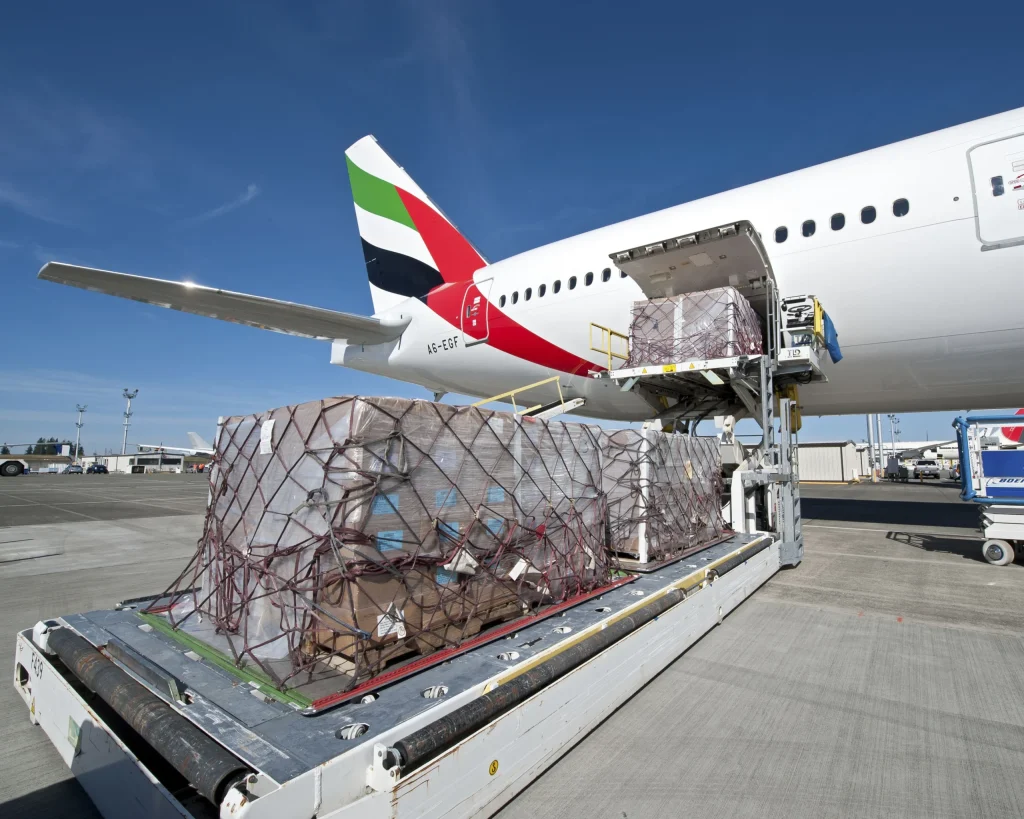
Unlike passenger transport, air cargo operations are carried out in two main forms: belly cargo (goods transported in the cargo hold of passenger aircraft) and freighter aircraft such as Boeing 747F, Boeing 777F, or Airbus A330F — specifically designed to maximize capacity and handle oversized or specialized cargo, including dangerous goods.
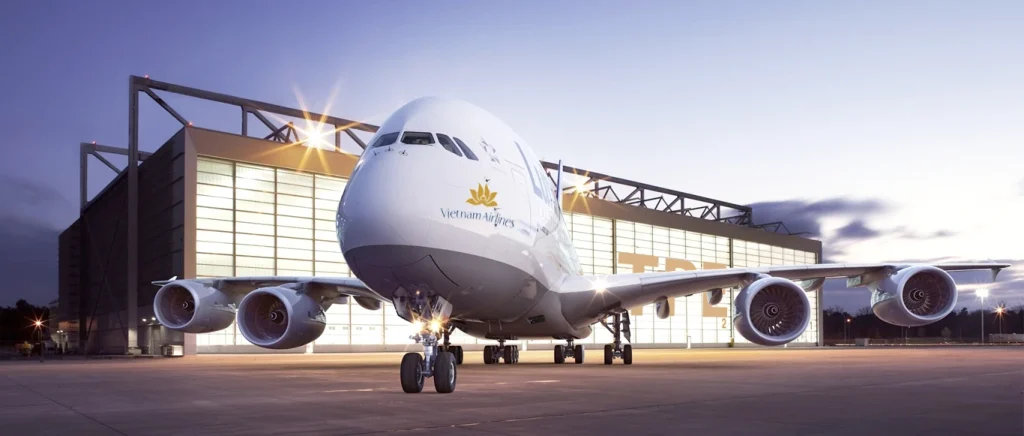
Historically, commercial air cargo expanded rapidly after World War II when military aircraft were converted for civilian use. A major turning point came in the 1970s with the introduction of the Boeing 747, which significantly increased cargo capacity and reduced costs — laying the foundation for modern air cargo logistics.
In Vietnam, air cargo import and export activities mainly operate through two major gateways: Tan Son Nhat International Airport (Ho Chi Minh City) and Noi Bai International Airport (Hanoi). Additionally, Da Nang International Airport is becoming increasingly important for cargo in Central Vietnam.
2. Advantages and disadvantages of air cargo
Advantages:
- Unmatched speed — the number one advantage: This is the main reason why many businesses are willing to pay 4–6 times more than sea freight. Shipments from Ho Chi Minh City to Los Angeles take only 1–2 days by air compared to 18–22 days by sea.
- High reliability and punctuality: Flights operate on strict schedules and are less affected by weather conditions compared to sea transport (except in extreme cases). This enables more accurate supply chain planning.
- Cargo safety — low damage rate: Goods are handled by trained professionals at cargo terminals and packaged according to IATA standards. Shorter storage time and fewer handling stages reduce the risk of damage.
- Global connectivity: Aircraft can reach almost any country worldwide, including remote or hard-to-access regions.
- Faster customs clearance: Procedures at airports are typically quicker and more streamlined than at seaports, helping goods reach recipients sooner.
Disadvantages:
- High cost — the biggest limitation: Air freight rates are 4–6 times higher than sea freight for the same shipment. This makes it unsuitable for low-value, bulky, or large-volume goods.
- Weight and size limitations: Each aircraft has payload restrictions. Oversized and heavy cargo (industrial equipment, large machinery) may be difficult or impossible to transport by air.
- Restrictions on cargo types: Many dangerous goods (lithium batteries, flammable liquids, compressed gases) are restricted or prohibited on passenger aircraft. IATA Dangerous Goods Regulations (DGR) are very strict.
- Dependence on flight schedules: Not all routes have daily direct flights. Some destinations require 1–2 transit hubs, increasing time and cost.
- Higher environmental impact: Air cargo emits 20–30 times more CO₂ per ton-km compared to sea freight — an increasingly important factor for ESG-focused businesses.
3. Common types of air cargo services
3.1 Charter Flight
Charter flight refers to renting an entire aircraft (or a large portion of its capacity) exclusively for a specific shipment or client group.
When to choose charter flight:
- Urgent shipments with no suitable commercial flights
- Cargo requiring special handling (medical supplies, vaccines, luxury goods)
- Events requiring transport of full equipment or exhibition goods
Advantages: Maximum flexibility in schedule, origin, and destination. Fastest possible transit.
Disadvantages: Very high cost. Suitable only for large or high-value shipments.
3.2 Consolidation (LCL Air)
Similar to LCL in sea freight, this method consolidates shipments from multiple shippers into one flight. The forwarder acts as a consolidator, issuing House Airway Bills (HAWB) for each customer and a Master Airway Bill (MAWB) with the airline.
When to choose consolidation:
- Small shipments not large enough for full charter
- Need to reduce cost while maintaining air speed
- Samples or small e-commerce shipments
Advantages:
- Much lower cost than chartering
- Suitable for SMEs
- Forwarder handles all procedures
Disadvantages:
- Dependent on forwarder’s schedule
- Slightly longer transit time
- Less control over handling conditions
3.3 Express / Courier
Express services such as DHL, FedEx, UPS, TNT are integrated air cargo providers managing the entire logistics chain door-to-door.
When to choose express:
- Small parcels, documents, samples
- Need real-time tracking and strict delivery commitment
- B2C international e-commerce
Advantages:
- Fastest delivery
- Simple procedures
- Clear SLA commitments
Disadvantages:
- Highest cost
- Strict size and weight limits
- Multiple surcharges
Air cargo compared with other transport methods
Besides air cargo, there are many other transportation methods to move goods globally. Each method suits different types of cargo and timing requirements.
| Cargo Type | Recommended Option |
|---|---|
| High-value, lightweight, urgent goods | Air cargo |
| Large volume, low–medium value, not urgent | Sea freight |
| Domestic or cross-border (short distance) | Road transport |
| Need balance between speed and cost | Sea-Air (combined) |
Consider sea freight or a sea–air combined shipping method (Sea-Air) to effectively optimize transportation costs.
4. Air cargo process
Step 1: Booking with airline / forwarder
The shipper or forwarder contacts the airline to book space on a suitable flight. Required details: cargo type, gross weight (GW), dimensions, origin airport, destination airport, and ready date.
Step 2: Cargo preparation and packaging (IATA standards)
Cargo must be securely packed to withstand handling and pressure. Dangerous goods must comply with IATA DGR regulations.
Step 3: Delivery to cargo terminal and export customs clearance
Cargo must arrive before cut-off time (usually 4–6 hours before departure). Forwarder handles customs declaration and documentation.
Step 4: Security screening
All shipments must pass X-ray or physical inspection as required by aviation authorities.
Step 5: ULD loading
Cargo is loaded into Unit Load Devices (ULDs) and secured based on load planning.
Step 6: Transportation and tracking
Cargo is transported to destination, possibly via transit hubs. AWB allows real-time tracking.
Step 7: Import customs clearance
Forwarder or agent handles import procedures and duties.
Step 8: Final delivery
Cargo is delivered to consignee’s address.
5. Air cargo documents
Airway Bill (AWB) — the most important document in air cargo, serving as contract, receipt, and customs document.
This is the most important document in air cargo, serving as a contract of carriage, a receipt of goods, and a customs document. There are two types:
- Master Airway Bill (MAWB): Issued by the airline to the forwarder. The forwarder is listed as both shipper and consignee.
- House Airway Bill (HAWB): Issued by the forwarder to the actual shipper. It shows the real shipper and consignee of the shipment.
The AWB is not a document of title (non-negotiable) — unlike the Bill of Lading in sea freight. The consignee can receive the goods by presenting the original HAWB and valid identification.
Commercial Invoice
This is a commercial transaction document between seller and buyer, showing: product description, quantity, unit price, total value, Incoterms, and seller/buyer information. Customs authorities use this document to calculate import duties.
Packing List
Details each package: item number, gross weight (GW), net weight (NW), dimensions, and quantity of goods in each package. It must match the actual shipment accurately.
Certificate of Origin (CO)
Certifies the origin of goods and serves as the basis for applying preferential tariff rates under Free Trade Agreements (FTAs). Examples include Form D (ASEAN), Form E (ASEAN–China), and Form A (GSP for EU, US markets).
Shipper’s Declaration for Dangerous Goods
Mandatory for all shipments containing Dangerous Goods (DG). It must declare: UN Number, Proper Shipping Name, Packing Group, quantity, and packaging type. Both forwarders and airlines have the right to reject shipments with incomplete or incorrect DG declarations.
6. Air cargo freight calculation
Air cargo rates are calculated based on Chargeable Weight (CW): the greater value between Gross Weight and Volumetric Weight.
Volumetric Weight formula
Volumetric Weight = (Length cm × Width cm × Height cm) / 6,000
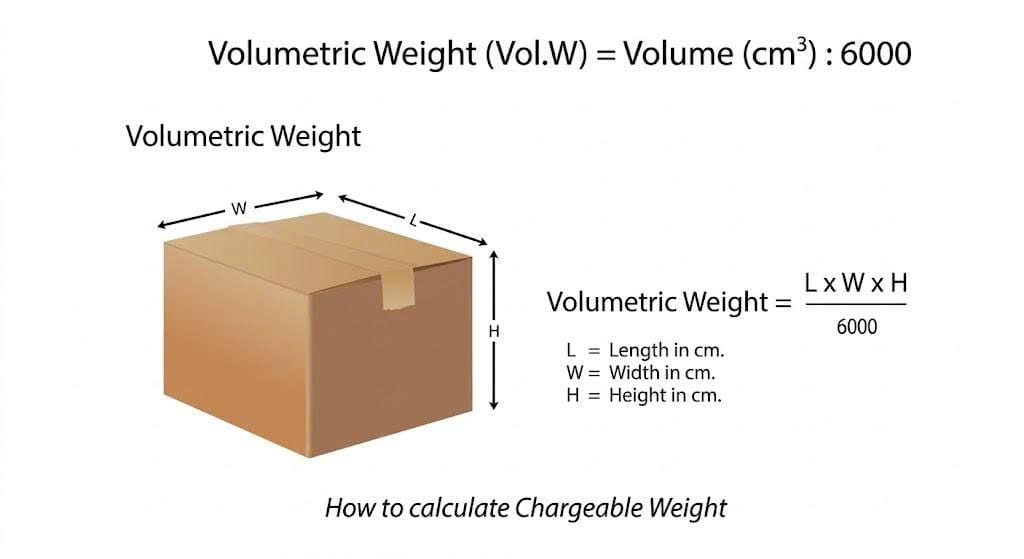
Volumetric weight formula
Example:
An electronics shipment with 10 cartons, each measuring 60×50×40 cm and weighing 8 kg:
- Gross Weight (GW) = 10 × 8 = 80 kg
- Volumetric Weight per carton = (60 × 50 × 40) / 6,000 = 20 kg
- Total Volumetric Weight = 10 × 20 = 200 kg
- Chargeable Weight = 200 kg (higher than 80 kg)
If the air freight rate from Ho Chi Minh City to Tokyo is 3.5 USD/kg:
Total freight = 200 kg × 3.5 USD = 700 USD
7. Common air cargo surcharges
| Charge Name | Code | Description | Unit |
|---|---|---|---|
| Air Freight Charge | A/F or AFR | Basic air cargo transportation cost | Kg (Chargeable Weight) |
| Fuel Charge | FSC/MYC | Fuel surcharge applied by airlines. It may be included in the base rate or charged separately depending on the quotation. | Kg (Chargeable Weight) |
| Air Waybill Fee | AWB | Fee for issuing the airway bill by airlines or logistics providers | Per AWB |
| Screening Fee | X-ray | Security screening fee at the airport, calculated based on Gross Weight | Kg (Gross Weight) |
| Terminal Handling Charge | THC | Handling fee at cargo terminals (both origin and destination) | Kg (Gross Weight) |
8. 3W Logistics – Your air cargo partner
Air cargo is the best choice when businesses require speed, reliability, and global connectivity. While it is more expensive than sea freight, it is often the most economical decision for high-value goods, seasonal products, samples, or urgent shipments that must meet contractual deadlines.
3W Logistics provides international air cargo services from Vietnam to over 50 countries, including:
- Weekly consolidation services to key markets: USA, Canada, Europe, Japan, Korea, Australia
- Door-to-door service from shipper’s warehouse to consignee
- Dangerous Goods (DG) handling support in compliance with IATA standards
- Consultation on optimal shipping methods (air, sea, or sea-air)
- Teams in Ho Chi Minh City, Hanoi, and Hai Phong — response within 2 working hours
📞 Contact 3W Logistics now to receive an air cargo quotation within 2 hours:
- HCMC: 028 3535 0087
- Email: info@3w-logistics.com
- Website: www.3w-logistics.com
9. Frequently asked questions about air cargo
Which items are prohibited in air cargo?
Loose lithium batteries (not installed in devices), flammable liquids beyond permitted limits, compressed gases, radioactive materials, and certain hazardous chemicals are restricted or prohibited on passenger aircraft. Some items are only allowed on freighter aircraft under strict declaration and packaging requirements according to IATA DGR.
How much does air cargo from Vietnam to the USA cost?
Air cargo rates from Ho Chi Minh City or Hanoi to the USA range from approximately 3.5–7 USD/kg depending on route, airline, season, and service type. Additional surcharges such as FSC, SSC, and airport fees may apply. Contact 3W Logistics for an exact quotation based on your shipment details.
How long does air cargo from Vietnam to the USA take?
Flight time (direct or with one transit): 1–2 days. However, including cargo preparation, export customs clearance in Vietnam, transit at hubs, and import clearance in the USA, the total delivery time is typically 3–5 working days.
What is the difference between MAWB and HAWB?
MAWB (Master Airway Bill) is issued by the airline to the forwarder — representing the contract between airline and forwarder. HAWB (House Airway Bill) is issued by the forwarder to the actual shipper — representing the contract between forwarder and customer. In consolidation shipments, each customer has a separate HAWB, while the entire shipment is covered by one MAWB with the airline.

Ms. Apple is the CCO (Chief Commercial Officer) at 3W Logistics, with over 10 years of experience in sales and business operations management.
At 3W Logistics, Ms. Apple is responsible for commercial strategy, corporate customer development, managing a team of more than 50 sales professionals, and improving business performance in the logistics sector.
With practical experience in sales management and market development, Ms. Apple shares professional insights on business logistics solutions, international transportation, freight forwarding, customer management, trade lane development, and growth strategies in the logistics industry.


