


Vietnam’s export sector is continuing to grow strongly, with a diverse product portfolio and many impressive achievements. As a result, business owners are actively accelerating export activities, expanding the presence of Vietnamese goods across global markets. The article below highlights 8 of Vietnam’s key export commodities.
1. Mobile Phones and Components
Mobile phones and components rank first among Vietnam’s key export commodities, maintaining strong growth momentum and stable performance despite barriers caused by the Covid-19 pandemic.
Export turnover in 2021 reached USD 57.54 billion (up 12.4% compared to 2020). Accordingly, exports of phones and components to China reached USD 15.18 billion (up 23%), the U.S. market reached USD 9.69 billion (up 10.3%), and the EU market (27 countries) reached USD 7.89 billion (down 9.1%)…
Major electronics and phone manufacturers in Vietnam include Samsung, LG, and Microsoft. Among them, Samsung is the largest corporation, generating outstanding revenue of USD 74.2 billion (up 14% compared to 2020) and export turnover of USD 65.5 billion (up 16% compared to 2020).
Experts stated that Vietnam will continue to tap into high-potential export markets for phones and components in the EU such as Hungary, Poland, the Czech Republic, as well as Africa, Latin America, the Middle East, and India.
[irp]
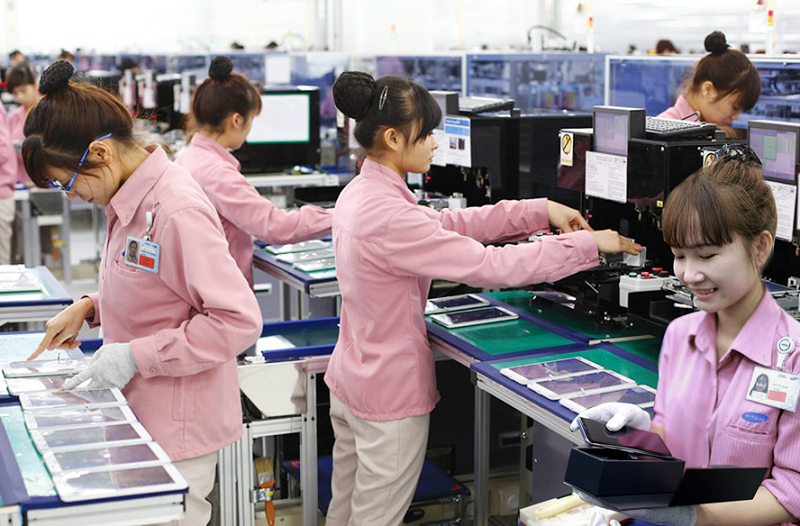
Mobile phones and components are expected to continue growing in the coming years
2. Computers, Electronic Products, and Components
Ranking second are computers, electronic products, and components, with export turnover in 2021 reaching USD 51.013 billion (up 14.4% compared to 2020). This product group is increasingly diversified to meet consumer demand, while many major electronics companies such as Samsung, LG, Foxconn, LG Display Hai Phong, and Fukang Technology have also established facilities in Vietnam. This has significantly boosted the growth rate of this export category.
The main export markets for this category are China, the United States, the EU, Hong Kong, South Korea, and ASEAN, accounting for 83.46% of the country’s total export turnover for this commodity group. Of these, exports to China reached USD 1.41 billion (up 41%), the U.S. market exceeded USD 1.19 billion (up 21.58%), and Hong Kong (China) reached USD 740.91 million (up 28.26%).
In the coming period, enterprises manufacturing computers, electronics, and components need to focus on improving product quality, building long-term development strategies, expanding export markets, and effectively leveraging existing FTAs.
>> Read more: Agricultural Export Standards to Europe
3. Machinery, Equipment, Tools, and Spare Parts
Machinery, equipment, tools, and spare parts rank third among Vietnam’s key export commodities. Export turnover in 2021 reached USD 38.35 billion (up 41% compared to 2020), showing remarkable growth and contributing significantly to the country’s overall export turnover.
The export markets for this category include the U.S., EU, Japan, South Korea, China, India, and Hong Kong, accounting for 65% of the country’s total export turnover for this group. Specifically, the U.S. was the largest export market with USD 17.82 billion (up 45.93%), the EU reached USD 4.05 billion (up 46.83%), while China accounted for 7.5%, Japan 6.69%, South Korea 6.64%, ASEAN 6.05%, and Hong Kong (China) 2.1%.
In addition, exports of machinery and equipment to several other markets also surged, such as Chile (up 285.94%), Finland (up 201.15%), Norway (up 184.47%), Pakistan (up 141.74%), Bangladesh (up 118.49%), Germany (up 90.2%), and Russia (up 74.32%).

Machinery, equipment, tools, and spare parts have shown highly impressive export growth
4. Textiles and Garments
Textiles and garments rank fourth among Vietnam’s key export commodities, with export turnover reaching USD 32.742 billion (up 9.8% compared to 2020). In addition to traditional textile products, other items such as fabrics, yarns, garment accessories, geotextiles, and common apparel products like clothing, protective wear, sweaters, and underwear have also maintained strong growth momentum.
The main export markets for textiles and garments are the U.S., EU, Japan, and South Korea, while efforts are also being made to further penetrate markets such as China, Russia, Cambodia, Indonesia, and Thailand.
This product category is expected to continue developing and account for a large export share, representing over 83% of Vietnam’s total textile and garment industry exports in the future.
>> Read more: Garment Export Procedures
5. Footwear
Footwear ranks fifth among Vietnam’s key export commodities. Export turnover in 2021 reached USD 17.615 billion (up 4.9% compared to 2020). This commodity group has maintained stable growth (12.1% annually during 2016–2019). Vietnam is the world’s second-largest footwear exporter, although the Covid-19 pandemic caused export value declines and recovery will require time.
Vietnamese footwear is exported to more than 150 countries worldwide, especially the U.S., EU, China, Japan, and the UK.
6. Wood and Wood Products
Wood and wood products hold the sixth position among Vietnam’s key export commodities. Export turnover in 2021 reached USD 14.812 billion (up 19.7% compared to 2020). In recent years, exports of wood and wood products have shown positive developments, generating significant revenue for many enterprises.
The export market for wood and wood products has maintained stable growth, focusing on countries such as China, the U.S., EU, Japan, and South Korea. Among them, the U.S. is Vietnam’s largest market for wood and wood products, reaching USD 2.29 billion (up 77.02%), accounting for 61% of the industry’s total export turnover. This is followed by China, Japan, and South Korea with growth rates of 8.22%, 9.71%, and 8.98%, respectively. In addition, exports to Canada, France, Australia, and the Netherlands have also grown strongly.
Some wood-related products recorded higher export values, such as wood chips (up 18.4%), wood pellets (up 17.4%), timber materials (up 1.1%), and finished wood products (up 401.6%).
>> Read more: Wood Export Procedures
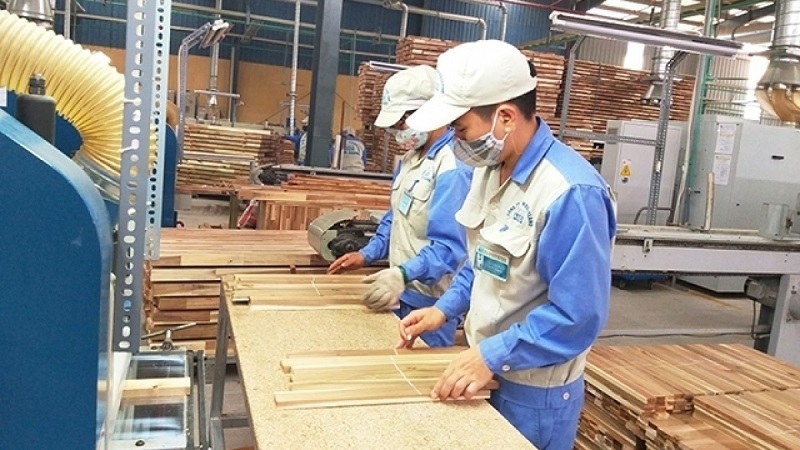
Wood and wood products require technological upgrades, product diversification, and long-term strategies to continue growing in the coming years

Hello, I’m Nguyen Phuong Nhan (Ms. Nina)
I currently serve as Trade Lanes Supervisor at 3W Logistics, with more than 10 years of experience in international logistics and freight forwarding.
My primary responsibility is developing and managing global logistics partnerships, building strategic trade lanes, and working closely with overseas agents to provide reliable and competitive transportation solutions for customers.
I regularly collaborate with agents and logistics partners worldwide to explore new business opportunities, negotiate freight rates, develop trade routes, and support import-export shipments. I also work closely with our sales team to design logistics solutions tailored to specific markets and customer requirements.
My expertise includes Ocean Freight, Air Freight, Trade Lane Development, Global Agent Network Management, International Logistics Solutions, and Import-Export Support.
Through the articles I share on the 3W Logistics website, I aim to provide practical insights into the international logistics industry, global transportation trends, overseas agent cooperation, and effective logistics strategies that help businesses optimize their supply chain operations.
I believe that strong global partnerships and well-developed trade lanes are essential to delivering sustainable logistics solutions and long-term value to customers worldwide.


