
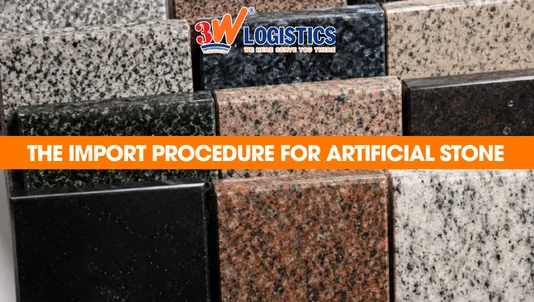
The import procedure for artificial stone is often assumed to require only customs declaration, since artificial stone does not require an import licence and is not on the prohibited goods list. In reality, artificial stone used for cladding and flooring is a construction material subject to quality management under technical regulation QCVN 16:2023/BXD. From 01/07/2026, this management approach changed significantly: medium-risk goods no longer require pre-clearance state inspection, but mandatory conformity certification and declaration of conformity must be completed before the goods are placed on the market.
Specifically, the import procedure for artificial stone is now governed by Circular 41/2026/TT-BXD issued by the Ministry of Construction, under which cladding stone (natural and artificial) falls under Annex III – the medium-risk group. In addition, import duty on artificial stone is relatively high (approximately 35% at the MFN preferential rate) with a significant difference between goods with and without a preferential Certificate of Origin (C/O). VAT is currently 8% until 31/12/2026 under Resolution 204/2025/QH15. Declaring the wrong HS code or neglecting the declaration of conformity requirement can result in goods being barred from sale on the market.
This article presents 3W Logistics’ complete guide to the import procedure for artificial stone under current regulations – from legal conditions, HS codes, duties, and documentation to the step-by-step process and real-world risks, from the perspective of a freight forwarder with over 10 years of experience handling construction materials and heavy import cargo.
1. Legal Conditions for the Import Procedure for Artificial Stone
Artificial stone does not require an import licence. However, the critical aspect of the import procedure for artificial stone lies in the quality management requirements for imported construction materials under the Law on Product and Goods Quality (as amended by Law No. 78/2025/QH15), Decree 37/2026/NĐ-CP, and Circular 41/2026/TT-BXD, effective from 01/07/2026.
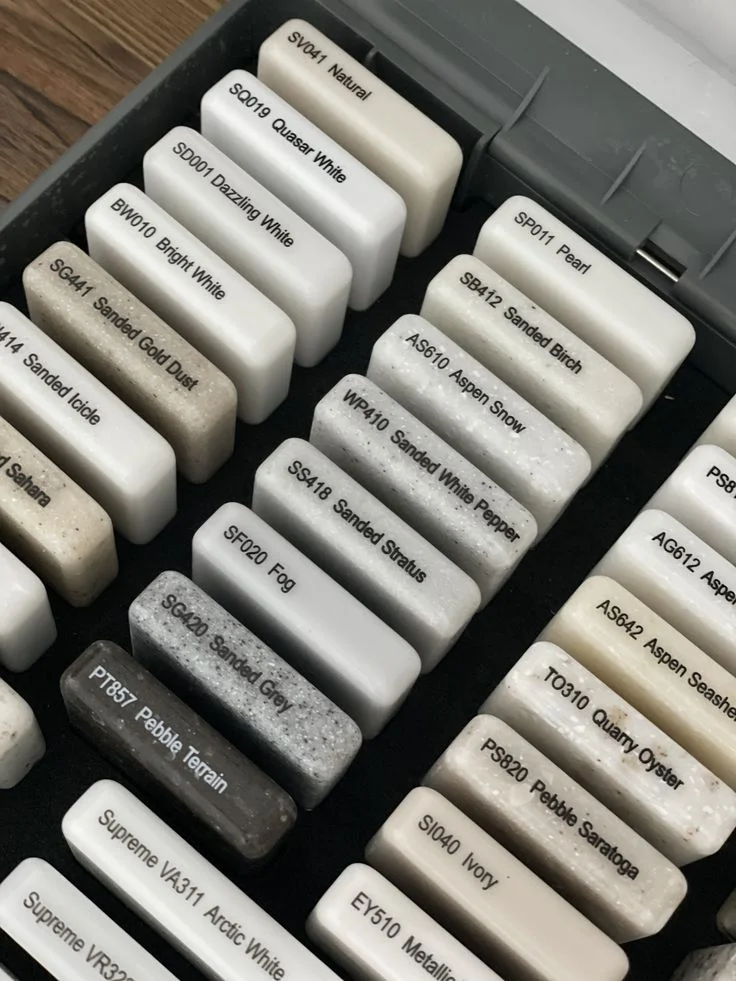
| Condition | Details |
|---|---|
| Importer eligibility | A business with a valid business registration in the relevant sector, tax code, digital signature, and a VNACCS electronic customs declaration account; artificial stone is not on the prohibited import list and does not require an import licence |
| Risk level classification | Cladding stone (natural and artificial), including HS codes 6810.19.10 and 6810.19.90, falls under Annex III – the medium-risk group of Circular 41/2026/TT-BXD |
| Pre-clearance state quality inspection | Medium-risk goods are not required to register for state quality inspection at the time of import; only high-risk goods (Annex II) must undergo inspection at the Department of Construction before customs clearance |
| Conformity certification and declaration | Mandatory conformity certification under QCVN 16:2023/BXD (assessment method 2, 5, or 7) and a declaration of conformity must be completed before goods are placed on the market (Article 12 of Circular 41/2026/TT-BXD and Circular 14/2026/TT-BKHCN) |
| Exemptions | Under Article 86 of Decree 37/2026/NĐ-CP, medium-risk imported goods meeting the required conditions (same product type and manufacturer) do not need to re-declare conformity for each consignment; certificates issued before 01/07/2026 that remain valid continue to be accepted |
| Goods labelling | Imported goods must carry the original label and a Vietnamese supplementary label containing all required information under the goods labelling regulations (Decree 43/2017/NĐ-CP and its amending instruments) |
| HS code scope | The conformity obligation is tied to the HS code list in Annex III; artificial stone products outside that list, or ceramic tiles (heading 6907), must have their applicable policy determined separately based on the actual nature of the goods |
Practical note: Many businesses accustomed to the old regulations can easily become confused when handling the import procedure for artificial stone. From 01/07/2026, artificial cladding stone is no longer subject to mandatory pre-clearance state inspection as it previously was, but this does not mean quality requirements have been lifted: the conformity certificate and declaration of conformity remain mandatory conditions for selling goods on the market. Goods that have cleared customs but have not yet completed the declaration of conformity may not be circulated.
2. HS Code and Import Duty for Artificial Stone
Artificial stone falls under heading 6810 of Chapter 68 (articles of cement, concrete, or artificial stone). In the import procedure for artificial stone, the two most important codes are 6810.19.10 (tiles) and 6810.19.90 (other), which are also the codes within the conformity scope of Circular 41/2026/TT-BXD. The MFN preferential import duty on artificial stone is approximately 35%, but this can fall to 0% with a valid preferential C/O from ASEAN, China, or India.
| Product Type | Reference 8-Digit HS Code | MFN Import Duty | Quality Management |
|---|---|---|---|
| Artificial stone tiles, artificial cladding stone | 6810.19.10 | 35% | Medium risk; declaration of conformity required |
| Other artificial cladding stone products (slabs, panels, etc.) | 6810.19.90 | Refer to current tariff schedule | Medium risk; declaration of conformity required |
| Other artificial stone products (some sources cite HS 6810.99.00) | 6810.99.00 | approx. 35% (reference) | Determine based on actual nature of goods |
Important note on HS codes for artificial stone: When declaring under the import procedure for artificial stone, the description must accurately reflect the product type (tiles, slabs, finished tabletops), composition (quartz, cement-based, polyester resin, etc.), dimensions, thickness, and intended use. Artificial cladding stone is distinguished from natural stone (heading 6802) and ceramic tiles (heading 6907). The HS codes and duty rates in the table above are for reference only and must be verified against the current tariff schedule at the time of lodging the customs declaration.
Import Duty on Artificial Stone by Country of Origin
Country of origin has a major impact on costs in the import procedure for artificial stone. For HS code 6810.19.10, the reference duty rates are as follows:
| Country of Origin | Applicable C/O | Import Duty | Notes |
|---|---|---|---|
| ASEAN | C/O Form D (ATIGA) | 0% | Applicable when goods satisfy ASEAN rules of origin |
| China | C/O Form E (ACFTA) or RCEP | 0% (ACFTA) / 17.5% (RCEP) | Where the supplier can provide both, select the form offering the lower rate |
| India | C/O Form AI (AIFTA) | 0% | Under the AIFTA agreement, when rules of origin are met |
| USA and countries without an FTA | Not applicable | 35% (MFN) | MFN preferential duty applies; the standard (non-MFN) rate is approximately 52.5% |
VAT on Artificial Stone
In the import procedure for artificial stone, VAT on artificial stone is currently 8% under Resolution 204/2025/QH15 (reduced from 10%), applicable from 01/07/2025 to 31/12/2026; artificial stone is not in the excluded categories such as telecommunications, finance, real estate, metal products, mining, or goods subject to excise tax. From 01/01/2027, VAT returns to 10% unless an extension policy is introduced.
| Tax Type | Rate | Tax Base | Notes |
|---|---|---|---|
| MFN preferential import duty | approx. 35% | CIF value | HS code 6810.19.10 |
| FTA preferential import duty | possibly 0% | CIF value | Requires a valid C/O (Form D, E, AI, etc.) |
| Standard (non-preferential) import duty | approx. 52.5% | CIF value | When no preferential rate applies |
| VAT | 8% (until 31/12/2026) | CIF value + import duty | Returns to 10% from 01/01/2027 unless an extension policy is introduced |
3. Documentation for the Import Procedure for Artificial Stone
The documentation set for the import procedure for artificial stone consists of the standard customs documents and the quality compliance documents (conformity certificate and declaration of conformity). The product name, type, dimensions, manufacturer, and country of origin must be consistent across all documents.
| Document | When to Prepare | Key Notes |
|---|---|---|
| Sales Contract | Before placing a deposit | Must clearly specify product type, composition, dimensions, thickness, manufacturer, Incoterms, and the obligation to provide C/O and test report |
| Commercial Invoice | Before shipment | Full product description, unit (m², panels, packages), unit price; must match the contract and test report |
| Packing List | Before shipment | Number of packages, panels, dimensions, weight, and packing method (A-frame rack, wooden crate) |
| Bill of Lading | After cargo is loaded | Cargo description and consignee must match the contract and invoice |
| Certificate of Origin (C/O) | Before shipment | Critically important: Form D, Form E, Form AI, etc. can reduce import duty from approximately 35% to 0% when conditions are met |
| Catalogue, test report, technical documents | Before customs clearance | Basis for HS code determination, conformity assessment under QCVN 16:2023/BXD, and supporting explanation if customs requests clarification |
| Conformity Certificate – QCVN 16:2023/BXD | Before goods are placed on the market | Issued by a designated certification body under assessment method 2, 5, or 7; method 5 requires the factory to hold ISO 9001; certificates issued before 01/07/2026 that remain valid continue to be accepted |
| Declaration of Conformity | Before goods are placed on the market | Prepared by the business itself or an authorised party, in accordance with Article 12 of Circular 41/2026/TT-BXD and Circular 14/2026/TT-BKHCN |
| Original label and Vietnamese supplementary label sample | Before goods arrive | Label must include product name, country of origin, and manufacturer; conformity mark must be affixed before sale |
| Electronic customs declaration (VNACCS) | When all documents are ready | Declare the correct 8-digit HS code, goods description, and C/O reference number; declare duty correctly according to the HS code and country of origin |
4. Step-by-Step Import Procedure for Artificial Stone
Below are the six standard steps of the import procedure for artificial stone that 3W Logistics applies for clients importing artificial stone into Vietnam:
Step 1: Identify the product type, HS code, and risk group
Before placing an order, the business must identify the product type (tiles, slabs, finished tabletops), composition, 8-digit HS code, and check whether the product falls under Annex III of Circular 41/2026/TT-BXD. This step determines whether the import procedure for artificial stone will carry conformity obligations.
Step 2: Sign the contract and request C/O and quality documents
At this stage of the import procedure for artificial stone, the contract must clearly specify the obligation to provide a C/O in the correct form for preferential duty, as well as the test report and ISO 9001 factory certificate if assessment method 5 is chosen. The C/O must be issued before the goods are shipped; it cannot be obtained retrospectively after the goods have been loaded.
Step 3: Obtain conformity certification and prepare the declaration of conformity
The business works with a designated certification body to have the product assessed against QCVN 16:2023/BXD, then prepares the declaration of conformity before the goods are placed on the market. For medium-risk goods, pre-clearance state inspection registration at the Department of Construction is not required; if a valid conformity certificate already exists for the same product, it should be reused to save time.
Step 4: Transport the artificial stone
In the import procedure for artificial stone, artificial stone is a heavy and fragile cargo that requires loading on A-frame racks or in wooden crates with proper lashing inside the container. The freight forwarder advises on a suitable sea freight arrangement and container load balancing, and recommends purchasing cargo insurance given the high risk of breakage and chipping.
Step 5: Customs declaration
When the goods arrive at port, the forwarder lodges a VNACCS declaration with the correct HS code, goods description, and C/O reference number. An accurate customs declaration from the outset helps avoid a red-channel routing, price consultation, and retroactive duty assessment.
Step 6: Pay duties, clear customs, and complete the declaration of conformity before distribution
Once the documentation is complete, the business pays the applicable import duty (if any) and VAT, receives the delivery order, and moves the goods to the warehouse. Before selling on the market, the business finalises the declaration of conformity, affixes the conformity mark, and retains all records. This is the final step of the import procedure for artificial stone.
5. How to Calculate Import Duty on Artificial Stone
In the import procedure for artificial stone, the MFN import duty of approximately 35% means that a valid C/O has a very significant impact on costs. For example, for a consignment of artificial stone tiles (HS 6810.19.10) with a CIF value of VND 1 billion, the comparison between no preferential C/O (MFN 35%) and a preferential C/O (assumed 0% duty), with VAT at 8%, is as follows:
| Tax / Cost Item | No Preferential C/O (MFN 35%) | With Preferential C/O (assumed 0%) |
|---|---|---|
| CIF Value | VND 1,000,000,000 | VND 1,000,000,000 |
| Import Duty | 35% × VND 1,000M = VND 350,000,000 | 0% × VND 1,000M = VND 0 |
| VAT (8%) | 8% × (1,000 + 350)M = VND 108,000,000 | 8% × (1,000 + 0)M = VND 80,000,000 |
| Total Tax Payable | VND 458,000,000 | VND 80,000,000 |
| Savings with a Preferential C/O | VND 378,000,000 on a single VND 1 billion consignment – from one C/O obtained from the supplier. If VAT returns to 10% from 01/01/2027, VAT on the C/O consignment would be VND 100 million. | |
In the import procedure for artificial stone, beyond duties there are also conformity compliance costs and the risk of price consultation: customs may require justification if the declared value is below market levels, prolonging clearance time and incurring container storage and port storage fees.
From 3W Logistics’ practical experience: With artificial stone, we see two mistakes repeated most often. The first is failing to require the supplier to provide the correct C/O form from the outset – on a VND 1 billion consignment, the additional duty can be nearly VND 400 million. The second is assuming that medium-risk goods require no conformity compliance and placing goods on the market without completing the declaration of conformity, leading to regulatory action. Both can be avoided entirely by reviewing the import procedure for artificial stone at the supplier selection stage. – Ms. Apple, CCO, 3W Logistics
6. Common Risks in the Import Procedure for Artificial Stone
Based on practical experience handling construction materials, the risks below arise most frequently in the import procedure for artificial stone – and all can be prevented early:
| Risk | Symptoms | Prevention |
|---|---|---|
| Selling goods without completing the declaration of conformity | Goods have cleared customs but the conformity certificate and declaration of conformity are not yet in place; subject to enforcement action during market inspection and potential recall | Complete conformity certification and declaration before selling; make use of any existing valid certificate |
| No C/O or wrong C/O form | Loss of preferential duty; full MFN duty of approximately 35% applies; the difference can amount to hundreds of millions of VND per consignment | Require C/O in the contract; verify the form and rules of origin before goods are shipped |
| Incorrect HS code | Confusion between heading 6810 (artificial stone), 6802 (natural stone), and 6907 (ceramic tiles); incorrect duty and incorrect applicable policy | Provide a full description of composition, type, and dimensions; consult an experienced forwarder or request a pre-classification ruling before filing |
| Price consultation by customs | Declared value is below market levels; customs requests justification, re-assesses the dutiable value, and raises additional duty | Prepare catalogue, quotations, contracts, and proof of payment; declare a value that accurately reflects the transaction |
| Incorrect Vietnamese supplementary label | Goods labelling is missing mandatory information; required to remedy the situation or subject to a fine | Prepare the supplementary label template before goods arrive; affix the conformity mark in accordance with regulations |
| Breakage and chipping during transit | Stone slabs crack and chip due to inadequate packing or lashing; disputes with the supplier and shipping line | Require proper packing on A-frame racks or in wooden crates, photograph the packing process, and purchase cargo insurance |
FAQ – Frequently Asked Questions About the Import Procedure for Artificial Stone
Question 1: Does importing artificial stone require an import licence?
Artificial stone does not require an import licence and is not on the prohibited goods list. However, artificial cladding stone falls under the medium-risk group under Circular 41/2026/TT-BXD, so conformity certification and a declaration of conformity must be completed before the goods are circulated. This is a mandatory element of the import procedure for artificial stone.
Question 2: Does imported artificial stone require state quality inspection registration?
No. From 01/07/2026, only high-risk construction materials are required to register for pre-clearance state inspection at the Department of Construction. Artificial cladding stone falls under the medium-risk group and is therefore not subject to port-of-entry inspection, but a declaration of conformity must still be completed before goods are placed on the market – as required by the import procedure for artificial stone.
Question 3: What is the import duty on artificial stone?
The MFN preferential import duty on artificial stone under HS code 6810.19.10 is currently approximately 35%, and the standard (non-preferential) rate is approximately 52.5%. Goods with a valid C/O Form D (ASEAN), Form E (China), or Form AI (India) may qualify for 0% duty. VAT is 8% until 31/12/2026, reverting to 10% thereafter unless an extension policy is introduced.
Question 4: Must the declaration of conformity for artificial stone be completed before or after customs clearance?
The declaration of conformity must be completed before goods are placed on the market; it is not a condition for customs clearance for medium-risk goods. That said, businesses should prepare the conformity certificate early in the import procedure for artificial stone to avoid delays in selling after the goods have been received.
Question 5: Can a conformity certificate issued before 01/07/2026 still be used?
Yes. Conformity certificates issued under QCVN 16:2023/BXD before 01/07/2026 that remain valid continue to be accepted under the transitional provisions of Circular 41/2026/TT-BXD. Businesses must still ensure that the product information and manufacturer details match the imported consignment.
How Does 3W Logistics Support the Import Procedure for Artificial Stone?
As a freight forwarding company registered as an OTI-NVOCC with an FMC bond (Federal Maritime Commission) in the United States and with over 10 years of experience handling construction materials and heavy import cargo, 3W Logistics provides a comprehensive end-to-end service for businesses navigating the import procedure for artificial stone – from HS code and duty advice through to warehouse delivery. Businesses may also find our article on the import procedure for construction glass useful for a comparison of construction material management frameworks.
- HS code advice and actual duty calculation before ordering: Identify the 8-digit HS code by product type and calculate import duty and VAT by country of origin – giving businesses an accurate cost figure before contract negotiations.
- Guidance on obtaining the correct C/O form from the supplier: Coordination with suppliers on Form D, Form E, and Form AI; C/O verification before loading to confirm validity.
- Conformity certification and declaration review: Cross-referencing the product against Annex III of Circular 41/2026/TT-BXD, and connecting businesses with designated certification bodies so that goods meet all distribution requirements immediately after clearance.
- Ocean freight for heavy cargo: Advice on A-frame packing, container loading, and load balancing; real-time shipment tracking throughout the voyage.
- Electronic customs declaration via VNACCS: Accurate HS code, goods description, and C/O reference number filing; prompt handling when customs requests additional documents or initiates a price consultation.
- Cargo insurance advice: Assistance in arranging appropriate insurance coverage for fragile cargo and coordination with surveyors in the event of a loss.
Why choose 3W Logistics for your artificial stone import shipment? The import procedure for artificial stone requires managing multiple layers simultaneously: correct HS code classification, C/O optimisation, conformity obligations under Circular 41/2026/TT-BXD, and safe transport of heavy, fragile cargo. A single error in documentation or country of origin can cost a business hundreds of millions of VND on a single consignment. We support you from supplier selection through to warehouse delivery. Contact 3W for specific advice before signing your purchase contract.
Address: 34 Bach Dang Street, Tan Son Hoa Ward, Ho Chi Minh City
Hotline: +84 28 3535 0087
____________________________
3W Logistics Hanoi Branch
Address: 81A Tran Quoc Toan Street, Cua Nam Ward, Hanoi
Hotline: +84 24 3202 0482
____________________________
3W Logistics Hai Phong Branch
Address: 8A Lot 28 Le Hong Phong Street, Gia Vien Ward, Hai Phong
Hotline: +84 225 355 5939
____________________________
3W LOGISTICS CO., LTD – We here serve you there!
Email: info@3w-logistics.com
Website: www.3w-logistics.com

Ms. Apple is the CCO (Chief Commercial Officer) at 3W Logistics, with over 10 years of experience in sales and business operations management.
At 3W Logistics, Ms. Apple is responsible for commercial strategy, corporate customer development, managing a team of more than 50 sales professionals, and improving business performance in the logistics sector.
With practical experience in sales management and market development, Ms. Apple shares professional insights on business logistics solutions, international transportation, freight forwarding, customer management, trade lane development, and growth strategies in the logistics industry.


