
Construction glass import procedures are one of the building material import processes that have been most noticeably tightened in the past two years. Float glass, tempered glass, laminated safety glass, and sealed insulating glass units all fall under a high-risk goods category that must be registered for state quality inspection at the Department of Construction before clearance. From July 1, 2026, this mechanism operates under Circular 41/2026/TT-BXD and Decree 37/2026/ND-CP, completely replacing the earlier Circular 10/2024/TT-BXD.
Besides this, construction glass import procedures are also affected by anti-dumping duties on clear float glass from Indonesia and Malaysia (effective from June 14, 2026), significant differences in import tax by HS code and origin, and the VAT reduction policy to 8% through December 31, 2026. Applying the wrong HS code, missing a certificate of conformity, or omitting the C/O causes the goods to be held at port, incurring storage fees and significantly increasing the import cost.
In this article, 3W Logistics presents the complete construction glass import procedure under current regulations – from legal conditions, HS codes, the layers of tax, documentation, the step-by-step process, through to practical risks, from the perspective of a forwarder with over 10 years of experience handling imported construction materials.
1. Legal Conditions for Construction Glass Import Procedures
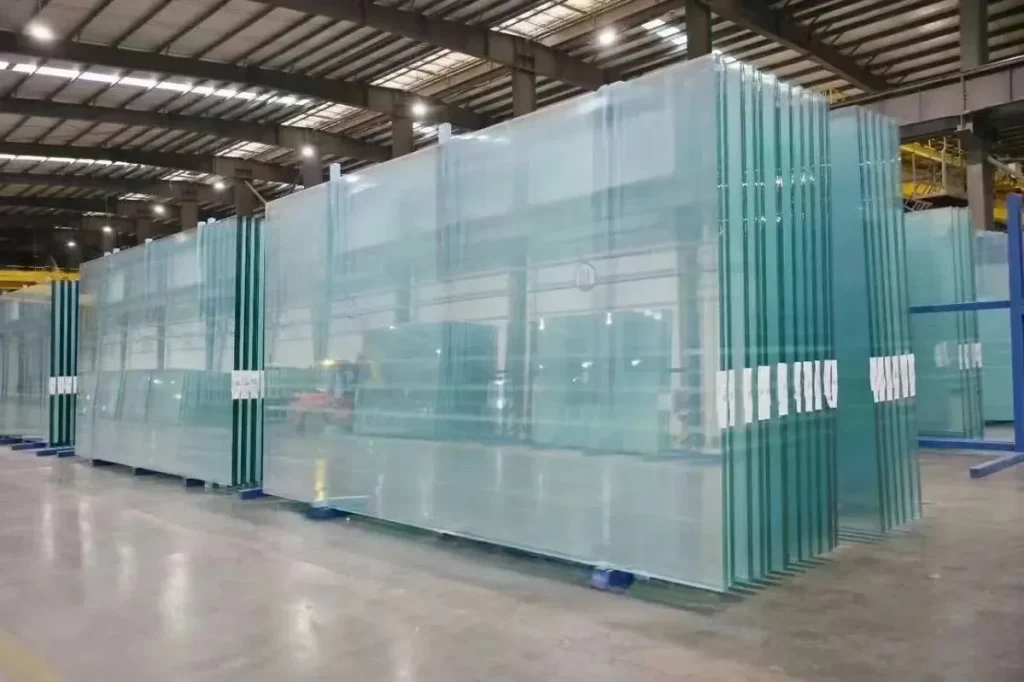
Unlike many goods categories requiring an import permit, construction glass is not prohibited and does not require a separate import permit. However, this is the most important hurdle in construction glass import procedures: the goods must undergo state quality inspection under the Law on Product and Goods Quality (as amended by Law No. 78/2025/QH15), Decree 37/2026/ND-CP, and Circular 41/2026/TT-BXD.
| Condition | Detailed Content |
|---|---|
| Importer status | A business with a business registration in the relevant industry, a tax code, a digital signature, and a VNACCS electronic customs declaration account. Construction glass is not on the prohibited import list and does not require a separate import permit |
| Risk-level classification | Construction glass is on Appendix II – the List of High-Risk Goods of Circular 41/2026/TT-BXD, in the same group as white asbestos, fly ash, steel slag, and gypsum board |
| State quality inspection | The importer must register for state inspection under Article 83 of Decree 37/2026/ND-CP at the Department of Construction (where the business is registered, where the border checkpoint is, or where customs procedures are carried out); clearance is only granted after receiving a Notice confirming the goods meet the quality requirements |
| Certificate of conformity | The glass must conform to QCVN 16:2023/BXD, assessed by a designated certification body under method 2, 5, or 7 (Circular 14/2026/TT-BKHCN). Method 5 requires the manufacturing plant to hold a valid ISO 9001 certificate |
| Goods labeling | Imported goods must have the original label and a Vietnamese-language supplementary label with the mandatory content under current goods labeling regulations (Decree 43/2017/ND-CP and its amending documents) |
| Anti-dumping duty | Clear float glass originating from Indonesia and Malaysia (HS 7005.29.20, 7005.29.90) is subject to an additional anti-dumping duty under Decision 1400/QD-BCT dated June 12, 2026 |
| Exemption or reduction of inspection | In construction glass import procedures, sample goods, goods for temporary import for re-export, transit goods, goods displayed at trade fairs, etc. are exempted under Article 86 of Decree 37/2026/ND-CP; a shipment with 3 consecutive imports meeting the requirements is eligible for reduced inspection for 2 years |
Practical note: The biggest change in construction glass import procedures from July 1, 2026 is that the inspection mechanism has shifted to a risk-based grouping. Medium-risk categories such as ceramic tiles, stone tiles, or sanitary ware are no longer subject to pre-clearance inspection, but construction glass remains a high-risk category, so registering for inspection is still mandatory. Many businesses accustomed to the old regulation easily become complacent and only remember this step once the goods have already arrived at port.
2. HS Code and Import Tax on Construction Glass
Correctly determining the 8-digit HS code is the step that determines the tax cost in construction glass import procedures. Construction glass falls under Chapter 70, mainly divided into three groups: heading 7005 (unworked float glass), heading 7007 (safety glass, including tempered glass and laminated glass), and heading 7008 (sealed insulating glass units). The tax rate differs greatly between groups: float glass is subject to a preferential rate of around 40%, while safety glass is only around 15%.
| Glass Type | Reference 8-Digit HS Code | Reference Preferential (MFN) Import Tax |
|---|---|---|
| Clear float glass (transparent glass) | 7005.29.20 / 7005.29.90 | about 40% |
| Heat-absorbing tinted float glass, reflective-coated glass, low-emissivity coated glass (Low-E) | 7005.10.90 / 7005.21.90 | about 40% |
| Toughened (tempered) flat glass | 7007.19.90 | about 15% |
| Laminated glass and laminated safety glass | 7007.29.90 | about 15% |
| Sealed insulating glass units | 7008.00.00 | about 25% |
Important note on construction glass HS codes: When declaring customs in construction glass import procedures, the glass type, thickness, dimensions, whether it is coated, whether it is tempered or laminated, the brand, and the manufacturer must all be fully described. Simply declaring tempered glass under the float glass code (or vice versa) shifts the import tax from 15% to 40% and causes a mismatch in the quality inspection documentation. The tax rates in the table are reference levels per the current tariff schedule; check against the schedule at the time the declaration is filed.
Construction Glass Import Tax Rates by Origin
The tax rates applicable by origin when carrying out construction glass import procedures are as follows (reference levels; safety glass under heading 7007 has the clearest preferential treatment):
| Origin | Applicable C/O | Import Tax | Notes |
|---|---|---|---|
| ASEAN (Thailand, Malaysia, Indonesia, etc.) | C/O Form D (ATIGA) | 0% | Applies to both float and safety glass when the origin conditions are met; clear float glass from Indonesia and Malaysia is additionally subject to the anti-dumping duty |
| China | C/O Form E (ACFTA) / RCEP | 0% (7007 glass) | Safety glass enjoys a 0% rate; float glass under heading 7005 has almost no meaningful preference, remaining at around 40% |
| South Korea, India, Australia | Form AK/KV, AI, AANZ, or RCEP | 0% (7007 glass) | The preference applies to safety glass; float glass needs to be checked separately by HS code |
| EU | C/O Form EUR.1 (EVFTA) | about 1.8% (7007 glass) | Safety glass from the EU still has a small tax under the EVFTA schedule |
| United States and countries without an FTA | Not applicable | 15% – 40% (MFN) | Subject to the preferential MFN rate by glass category; no agreement-based preference |
Anti-Dumping Duty on Clear Float Glass
This is the most easily overlooked point in construction glass import procedures in 2026. Under Decision 1400/QD-BCT dated June 12, 2026 of the Ministry of Industry and Trade, an anti-dumping duty officially applies to clear, non-wired float glass without an absorbing or reflective coating, that is not optical glass, originating from Indonesia and Malaysia. The duty took effect from June 14, 2026 and lasts for 5 years.
| Origin | Anti-Dumping Duty Rate | Applicable HS Code | Effective Period |
|---|---|---|---|
| Indonesia | 32.78% – 43.78% | 7005.29.20 / 7005.29.90 | From June 14, 2026, for 5 years |
| Malaysia | 41.07% – 63.39% | 7005.29.20 / 7005.29.90 | From June 14, 2026, for 5 years |
The specific rate depends on each manufacturer and exporter, so the documentation must accurately state the factory name. The anti-dumping duty is an additional charge, and Form D C/O does not exempt it. In addition, VAT currently stands at 8% under Resolution 204/2025/QH15 and is in effect through December 31, 2026.
3. Documentation for Construction Glass Import Procedures
The documentation set for construction glass import procedures has two layers: standard commercial-customs documentation and the state quality inspection registration file. Consistency in the goods name, type, thickness, dimensions, manufacturer, and origin across all documents is a mandatory requirement.
| Document | When to Prepare | Important Notes |
|---|---|---|
| Sales Contract | Before making a deposit | Clearly state the glass type, thickness, dimensions, manufacturer, Incoterms, and a clause requiring the C/O and quality documentation |
| Commercial Invoice | Before the goods are shipped | Detailed description of each glass type, quantity (m², sheets, or crates), unit price; matching the contract and the certificate of conformity |
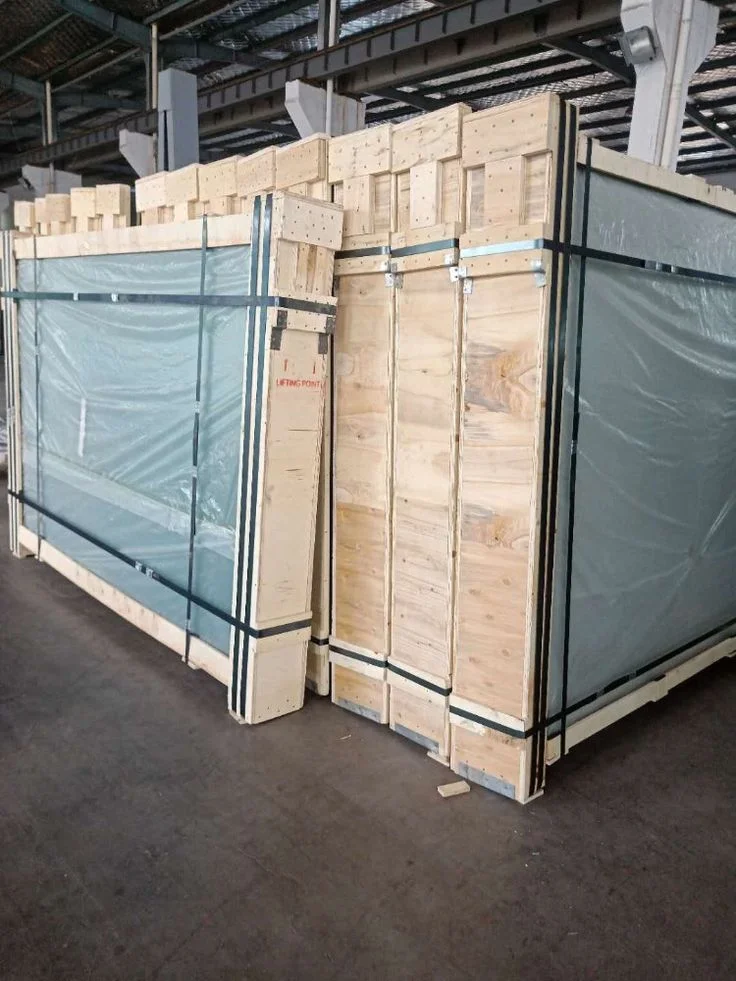
| Packing List | Before the goods are shipped | States the number of crates, packaging specification (A-frame rack, wooden crate), weight; the basis for cross-checking during a physical inspection and handling damage |
| Bill of Lading | After the goods are loaded onto the vessel | The goods description and consignee must match the contract, invoice, and inspection registration form |
| C/O (Certificate of Origin) | Before the goods are shipped | Form D, Form E, Form EUR.1, etc. depending on origin; for float glass from Indonesia or Malaysia, the manufacturer must be stated correctly since the anti-dumping duty rate is calculated per manufacturer |
| State inspection registration form (Template No. 1, Appendix VII) | Before or at the same time as customs procedures | Submitted via the National Single Window Portal, together with photos or a description of the goods, the main label content, and the Vietnamese supplementary label template |
| Certificate of Conformity to QCVN 16:2023/BXD | Before the goods arrive, or supplemented afterward per the regulations | Issued by a designated certification body; if issued per shipment, it must have complete shipment information, the declaration, and the invoice. The certificate is valid for up to 5 years if properly monitored |
| The factory’s ISO 9001 certificate | Before placing the order | Needed when conformity certification is done under method 5; the certificate must be valid and in the correct field of glass manufacturing |
| Electronic customs declaration (VNACCS) | Once the documentation is complete | Declares the correct 8-digit HS code, origin, manufacturer; declares the anti-dumping duty if applicable |
4. Step-by-Step Construction Glass Import Procedure
Below are the six standard steps of construction glass import procedures that 3W Logistics applies for customers importing glass into Vietnam:
Step 1: Determine the glass type, HS code, layers of tax, and the certification body
Before signing the contract, the business accurately determines the glass type (float glass, tempered glass, laminated glass, insulating glass unit), checks the 8-digit HS code, the tax rate by origin, and whether the goods are subject to anti-dumping duty. At the same time, work early with the designated certification body to choose the appropriate conformity assessment method. This step determines whether the entire construction glass import procedure goes smoothly.
Step 2: Sign the contract, require the C/O and quality documentation from the supplier
At this stage of construction glass import procedures, the contract needs to clearly state the obligation to provide the C/O in the correct form, the factory’s ISO 9001 certificate, test results, and technical documentation. The C/O must be issued before the goods ship and cannot be requested retroactively once the goods are on the vessel. The supplier needs to print full label information so the business can prepare the Vietnamese supplementary label.
Step 3: Register for state quality inspection at the Department of Construction
At the core step of construction glass import procedures, the business files the registration form per Template No. 1 via the National Single Window Portal. An incomplete file can be supplemented within 7 working days; if the file is complete and appropriate, the inspection authority issues the Notice of quality compliance within 1 working day for customs clearance procedures.
If the shipment does not yet have a certificate of conformity, the business can still register for inspection and proceed with bringing the goods to a storage location, while contacting the certification body for a conformity assessment.
Step 4: Ship the glass by sea
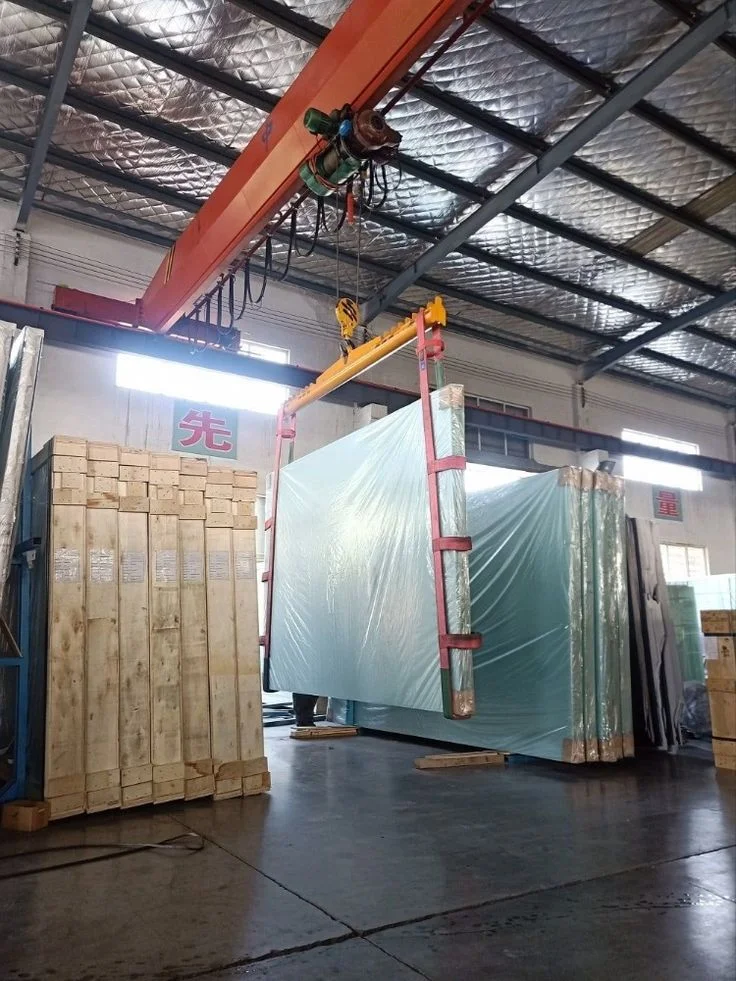
In construction glass import procedures, construction glass is typically loaded in a 20′ or 40′ container on an A-frame rack or in wooden crates, requiring careful securing to prevent cracking. The forwarder advises on the loading method, sailing schedule, and appropriate sea transport conditions, and recommends purchasing cargo insurance since the risk of glass breakage is much higher than for many other goods categories.
Step 5: File the customs declaration and handle procedures at the port
When the goods arrive at the port (Cat Lai, Hai Phong, Cai Mep, or others), the forwarder files the VNACCS declaration with the full HS code, origin, manufacturer, and C/O number. The quality inspection registration file and the result from the Department of Construction are cross-checked against the declaration. Filing the electronic customs declaration correctly from the start helps avoid being channeled red and retroactive tax collection.
Step 6: Pay tax, clear customs, receive the goods, and retain post-inspection records
After receiving the passing Notice and paying the full import tax, anti-dumping duty (if applicable), and VAT, the business receives the goods and brings them to the warehouse. The goods continue to be subject to circulation quality inspection under Article 88 of Decree 37/2026/ND-CP, so the full documentation set must be retained.
Once 3 consecutive imports have met the requirements, the business is eligible for reduced inspection for 2 years but must report periodically once every 3 months. This is the final step to complete construction glass import procedures.
5. How to Calculate Construction Glass Import Tax
When carrying out construction glass import procedures, imported construction glass is subject to import tax and VAT, plus the anti-dumping duty for clear float glass from Indonesia and Malaysia. For example, for a shipment of tempered glass (HS 7007.19.90) imported from China, with a CIF price of VND 1 billion, compare the case without a Form E C/O (subject to the 15% MFN tax) and with a Form E C/O (0% tax), with 8% VAT:
| Tax / Cost Item | Without Form E C/O (MFN 15%) | With Form E C/O (0%) |
|---|---|---|
| CIF price | VND 1,000,000,000 | VND 1,000,000,000 |
| Import tax | 15% × 1,000M = VND 150,000,000 | 0% × 1,000M = VND 0 |
| VAT (8%) | 8% × (1,000 + 150)M = VND 92,000,000 | 8% × (1,000 + 0)M = VND 80,000,000 |
| Total tax payable | VND 242,000,000 | VND 80,000,000 |
| Savings with Form E C/O | VND 162,000,000 – from a single C/O Form E obtained from the supplier alone. This is why the C/O is always the first thing checked when advising on construction glass import procedures. | |
For clear float glass from Malaysia, the difference is even larger: the anti-dumping duty alone, at its lowest rate of 41.07%, amounts to about VND 411 million on a shipment with a VND 1 billion CIF value, before even counting import tax and VAT. Note that the 8% VAT only applies through December 31, 2026; absent an extension policy, VAT returns to 10% from January 1, 2027.
From 3W Logistics’ practical experience: With the construction glass category, we see two mistakes recurring most often. First, importing float glass from Indonesia or Malaysia without checking the anti-dumping duty and the manufacturer’s name in advance, causing the actual cost to run much higher than the initial quote. Second, not yet having the certificate of conformity and not yet registering for state inspection by the time the goods arrive at port, leading to the shipment sitting at the yard and accruing storage fees. Both are preventable if construction glass import procedures are reviewed right from the supplier selection stage. – Ms. Apple, CCO, 3W Logistics
6. Common Risks in Construction Glass Import Procedures
Based on practical experience handling construction materials, the risks below appear most frequently in construction glass import procedures and all have early prevention methods:
| Risk | Symptom | Prevention |
|---|---|---|
| Not registering for state inspection or submitting the certificate late | The goods cannot clear customs or are handled under the regulations for goods not meeting quality requirements; the goods sit at the yard, accruing container storage fees | Register for inspection on the National Single Window Portal early; contact the certification body as soon as the contract is signed |
| Overlooking the anti-dumping duty | Not checking the origin and manufacturer of float glass from Indonesia or Malaysia, resulting in retroactive tax collection after clearance | Check Decision 1400/QD-BCT; state the manufacturer’s name correctly on the contract, invoice, and C/O |
| No C/O or the wrong C/O form | Losing the 0% tax preference and having to pay the 15% – 40% MFN tax; many cases mistakenly assume Chinese float glass qualifies for ACFTA | Require the C/O directly in the contract; check the actual preference by HS code before ordering |
| Applying the wrong HS code | Confusing float glass (7005), safety glass (7007), and insulating glass units (7008); mismatched tax and incorrect quality inspection documentation | Confirm the HS code based on an accurate technical description; consult a forwarder experienced in the construction materials category |
| Missing the Vietnamese supplementary label | The goods label lacks the mandatory content; the inspection authority requires correction within up to 5 working days before issuing the passing notice | Prepare the supplementary label template before the goods arrive; send the template to the inspection authority together with the registration file |
| Breakage, scratching, or shortage during transport | Glass cracks due to inadequate packing or securing; disputes with the supplier and the shipping line | Require standard packing, photograph the goods during loading, purchase cargo insurance, and arrange a survey when there is a loss |
FAQ – Frequently Asked Questions About Construction Glass Import Procedures
Question 1: Does importing construction glass require a permit?
Construction glass does not require a separate import permit but must be registered for state quality inspection since it is a high-risk category under Circular 41/2026/TT-BXD. This is a mandatory part of construction glass import procedures; the shipment can only clear customs once the passing Notice is issued.
Question 2: What taxes apply to imported construction glass?
When carrying out construction glass import procedures, the business must pay the following taxes:
- Import tax: from 0% (with a valid C/O) to about 40% (float glass under heading 7005 at the preferential rate);
- Anti-dumping duty: 32.78% – 63.39% for clear float glass from Indonesia and Malaysia;
- VAT: 8% through December 31, 2026, then returning to 10% absent an extension policy.
Question 3: Is float glass imported from Malaysia or Indonesia subject to anti-dumping duty?
Yes. In construction glass import procedures, this duty applies if the goods are clear, non-wired float glass without an absorbing or reflective coating, under HS code 7005.29.20 or 7005.29.90. The duty took effect from June 14, 2026 for 5 years, with the specific rate depending on the manufacturer. Other glass types such as tempered glass or laminated glass are not subject to this.
Question 4: How long does the quality inspection for imported glass take?
Under Decree 37/2026/ND-CP, an incomplete file can be supplemented within 7 working days; if the file is complete and appropriate, the inspection authority issues the result notice within 1 working day. The actual time for construction glass import procedures also depends on whether the shipment already has a certificate of conformity and on the testing time at the designated organization.
Question 5: When is a shipment eligible for reduced quality inspection on imported glass?
For construction glass import procedures, when the goods have the same name, brand, model, technical characteristics, production facility, and origin, and are imported by the same business, 3 consecutive imports meeting the quality requirements make the business eligible for reduced inspection for 2 years, while still reporting periodically once every 3 months. This regime is suspended if goods in circulation are found not to conform to the standard.
How Does 3W Logistics Support Construction Glass Import Procedures?
As a freight forwarding company registered as an OTI-NVOCC with an FMC (Federal Maritime Commission) bond in the United States, with over 10 years of experience handling imported construction materials, 3W Logistics provides an end-to-end service for businesses on construction glass import procedures – from HS code and tax consulting through to when the glass arrives at the warehouse.
- HS code consulting and calculating the actual tax before ordering: Determining the 8-digit HS code for each glass type, fully calculating import tax, anti-dumping duty, and VAT by origin – giving the business an accurate cost figure before negotiating the contract.
- Guidance on obtaining the correct C/O form from the supplier: Coordinating with the supplier on Form D, Form E, Form EUR.1; checking the C/O before the goods are loaded to ensure validity.
- Coordinating state inspection registration and conformity certification: Preparing the registration file on the National Single Window Portal for construction glass import procedures, connecting with the designated certification body, and monitoring the result so the shipment doesn’t get stuck at port.
- Sea freight shipping for glass: Advising on the loading method, container stacking, and sailing schedule to Cat Lai, Hai Phong, and other ports; tracking the shipment’s journey in real time.
- Electronic customs declaration (VNACCS): Declaring the correct HS code, origin, manufacturer; quickly handling any customs request for additional documentation or explanation.
- Cargo insurance consulting and loss handling: Assisting with purchasing suitable insurance for fragile goods and coordinating a survey when there is damage.
Why choose 3W Logistics for imported construction glass shipments? Construction glass import procedures require handling multiple layers of issues at once: state inspection under Circular 41/2026/TT-BXD, conformity certification to QCVN 16:2023/BXD, the anti-dumping duty, and optimizing the C/O. A single mistake in documentation or origin can cost a business hundreds of millions of VND and many weeks of waiting at port. We accompany the business from the supplier selection stage through to when the glass arrives at the warehouse. Contact 3W for specific guidance before signing the glass purchase contract.
Address: 34 Bach Dang, Tan Son Hoa Ward, Ho Chi Minh City
Hotline: +84 28 3535 0087
____________________________
3W Logistics Hanoi Branch
Address: 81A Tran Quoc Toan, Cua Nam Ward, Hanoi
Hotline: +84 24 3202 0482
____________________________
3W Logistics Hai Phong Branch
Address: 8A Lot 28 Le Hong Phong, Gia Vien Ward, Hai Phong
Hotline: +84 225 355 5939
____________________________
3W LOGISTICS CO., LTD – We here serve you there!
Email: info@3w-logistics.com
Website: www.3w-logistics.com

Ms. Apple is the CCO (Chief Commercial Officer) at 3W Logistics, with over 10 years of experience in sales and business operations management.
At 3W Logistics, Ms. Apple is responsible for commercial strategy, corporate customer development, managing a team of more than 50 sales professionals, and improving business performance in the logistics sector.
With practical experience in sales management and market development, Ms. Apple shares professional insights on business logistics solutions, international transportation, freight forwarding, customer management, trade lane development, and growth strategies in the logistics industry.


