
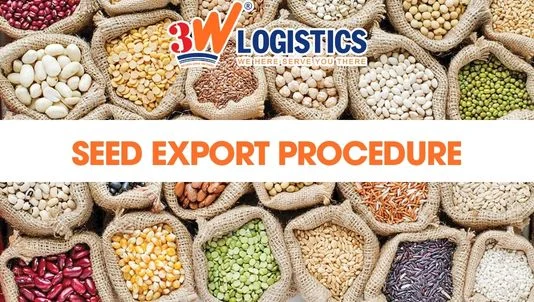
Seed Export Procedure: Requirements, Documents, Process
This article provides everything you need to know about the seed export procedure: from legal requirements and HS codes to the complete documentation checklist and a practical 5-step customs clearance process — updated to reflect the latest regulations.
A missing Phytosanitary Certificate can get an entire seed shipment held at port, or worse, returned or destroyed entirely. Unlike standard agricultural commodities, seeds face dual regulatory control: quality oversight from the Ministry of Agriculture and Rural Development (MARD) and mandatory plant quarantine inspection before export. A single missed step can derail your entire shipping schedule and jeopardize your contract with the overseas buyer.
1. Seed Export Policy and Legal Requirements
Before preparing any customs declaration or documentation, exporters must fully understand the legal framework governing seed exports. Seeds are a specialty-managed commodity subject to parallel oversight from both customs authorities and MARD — meaning even a minor documentation error can halt an entire shipment.
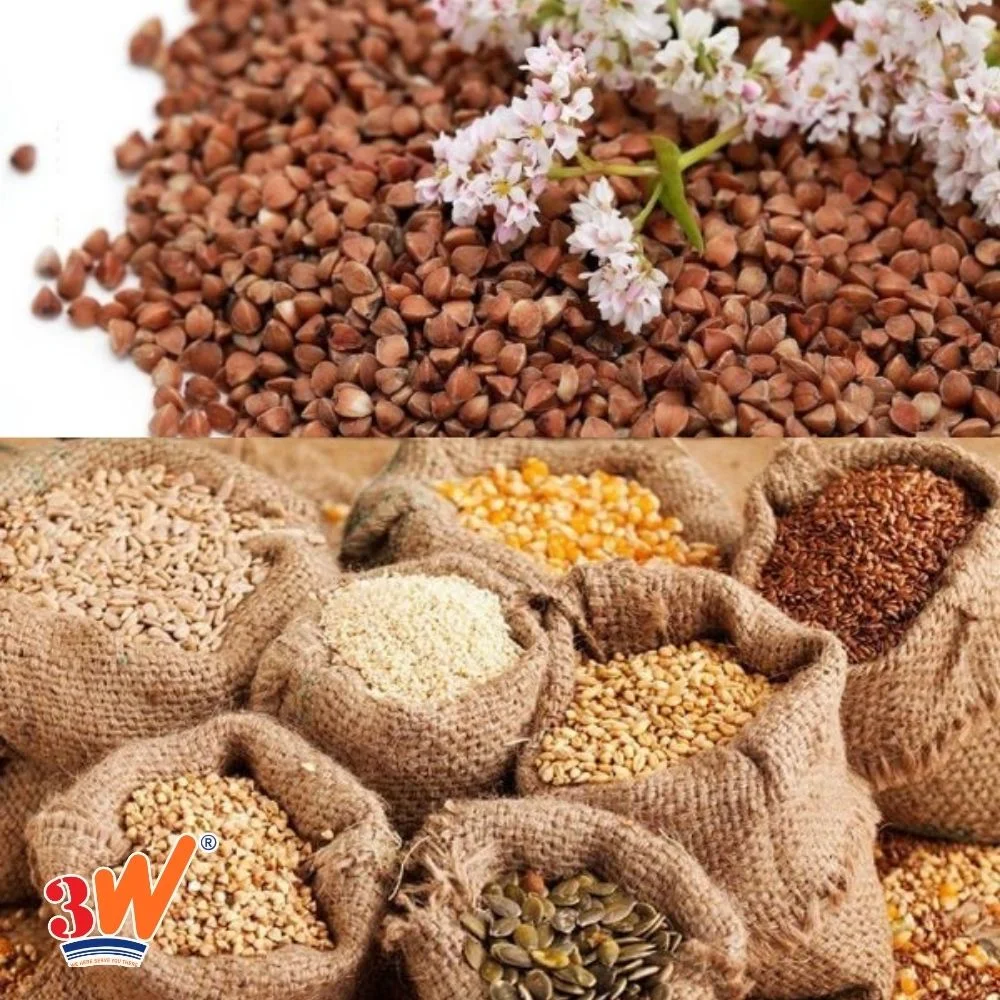
1.1 Do Seed Exports Require a License?
The answer depends on the type of seed you intend to export. Vietnamese traders who are not foreign-invested enterprises are generally permitted to export seeds without restrictions on their registered business activities — except for seeds listed under prohibited or conditional export categories.
- Seeds officially recognized for circulation in Vietnam: No separate seed export license is required from the Department of Crop Production. Standard customs and plant quarantine procedures apply.
- Unregistered seeds or new varieties: Exporters must obtain written approval from the Department of Crop Production (MARD) prior to export.
- Seeds for research, exhibitions, or trade fairs: A supporting contract or official invitation letter from the overseas partner is required as the basis for customs declaration.
Important note: Exported seeds must meet minimum technical standards — including germination rate, purity, moisture content, and cleanliness — as these are the criteria used by the Plant Quarantine Authority when reviewing export documentation.
1.2 Legal Documents Required Before Export
Before moving into shipment-level documentation, exporters must ensure the following foundational legal prerequisites are in place:
- Valid Business Registration Certificate (or Household Business Registration) with relevant business activities
- Active tax identification number registered with the customs authority
- Account on the VNACCS/VCIS electronic customs clearance system
- Registered account on the PQS (Plant Quarantine Services) software at the regional Plant Quarantine Sub-Department — a mandatory requirement for applying for the Phytosanitary Certificate
Key legal references governing seed export regulations: Circular 43/2018/TT-BNNPTNT on import and export of plant varieties; Circular 33/2014/TT-BNNPTNT (amended by Circular 15/2021/TT-BNNPTNT) on plant quarantine for exports; and Circular 38/2015/TT-BTC on customs procedures for exported goods.
2. HS Codes and Export Tax for Seeds
Correctly identifying the HS code is the first and most critical step — it determines the applicable tax policy, licensing requirements, and specialized inspection conditions for the entire shipment. Seed classification requires particular attention, as multiple sub-codes exist within the same chapter.
2.1 Seed HS Code Lookup
Seeds for planting fall under Chapter 12 of Vietnam’s Import-Export Commodity Nomenclature (Circular 31/2022/TT-BTC): “Oil seeds and oleaginous fruits; miscellaneous grains, seeds and fruit; industrial or medicinal plants; straw and fodder.”
HS CODE TABLE FOR COMMON SEED TYPES
| Seed Type | Description / Common Varieties | HS Code |
|---|---|---|
| Vegetable seeds | Chili, cucumber, melon, pumpkin, tomato, onion, garlic seeds | 1209.91.90 |
| Flower seeds | Chrysanthemum, orchid, carnation, lily seeds (Seed form and plant form carry different HS codes) | 1209.99.90 0602 |
| Grass / other seeds | Alfalfa, clover, other planting seeds | 1209.21.00 1209.22.00 |
| Industrial crop seeds | Coffee, rubber, soybean seeds | 1209.99.90 |
| Tubers / planting stock | Seed potato, sweet potato, onion sets | 0601.10.00 0701.10.00 |
Each seed variety and intended use may carry a different HS code — never assume the code based on the product name alone. Recommended lookup resources:
- Vietnam General Department of Customs: customs.gov.vn — search by name or code
- VNACCS/VCIS System: Direct lookup during electronic customs declaration
- Pre-classification Ruling: Exporters may submit a written request to the provincial Customs Department for an advance HS code confirmation — avoiding disputes later
- HS Code Lookup Tool: https://caselaw.vn/tra-cuu-ma-hs
Note: An incorrect HS code can result in tax recovery, shipment detention pending reclassification, and increased storage costs. If uncertain, exporters may formally request an advance HS ruling from the General Department of Customs.
2.2 Export Tax and VAT at 0%
- Export tax: Most agricultural seed types carry a 0% export tax rate. However, the applicable rate must be verified against the specific HS code at the time of export.
- VAT (Value Added Tax): Exported goods — including seeds — are subject to a 0% VAT rate. Exporters are entitled to a full refund of input VAT paid during production, procurement, and processing prior to export.
- Certificate of Origin (C/O): Not mandatory under Vietnamese regulations, but frequently required by the importing party to qualify for preferential tariff rates under FTAs that Vietnam has signed (EVFTA, CPTPP, RCEP, VJEPA, etc.).
3. Seed Export Documentation (Complete & Specialized)
Seed export requirements include two layers of documentation: standard commercial documents and a set of specialized certificates unique to the seed industry. Missing any document in the second group will prevent customs clearance.
3.1 Standard Commercial Documents
- Sales Contract: Outlines terms of sale, pricing, delivery conditions (Incoterms), and payment method.
- Commercial Invoice: Declares the shipment value and serves as the basis for tax calculation and international payment.
- Packing List: Details the quantity, weight, and dimensions of each package. Must match the Shipping Marks on the outer cartons.
- Bill of Lading / Airway Bill: Issued by the carrier upon acceptance of the cargo.
- Electronic Customs Declaration: Filed on the VNACCS/VCIS system before the cargo enters the customs supervised area.
- Certificate of Origin — C/O (if required): Applied for at the regional Export-Import Management Office (Ministry of Industry and Trade) or VCCI, depending on the C/O form required.
3.2 Specialized Seed Export Documents
These documents apply specifically to seed shipments — and are typically the main reason a shipment is delayed or held at port:
- Phytosanitary Certificate (P/C): The most critical document in the seed export process, issued by the regional Plant Quarantine Sub-Department. It certifies that the seed consignment is free from pests and diseases and complies with the importing country’s plant quarantine requirements. Download Phytosanitary Certificate Template
- Certificate of Analysis (CoA) / Seed Quality Certificate: Reports key quality indicators including germination rate, moisture content, purity, and cleanliness of the seed lot.
- Fumigation Certificate: For certain seed types, fumigation is mandatory to eliminate insects and mold during transit.
- Seed Export License (for unregistered varieties): If the plant variety has not yet received an official recognition decision or self-declared circulation status in Vietnam, the exporter must obtain prior authorization from the Department of Crop Production.
- Heat Treatment or Irradiation Certificate (if applicable): Required by certain importing countries with specific plant quarantine entry requirements (e.g., Australia, Japan).
4. The 5-Step Seed Export Process
Below is the actual step-by-step seed export process in chronological order — from cargo preparation through to shipment departure from Vietnam.
Step 1: Prepare Documentation and Register for Plant Quarantine Inspection
Register for plant quarantine inspection through the PQS software at the regional Plant Quarantine Sub-Department responsible for your area. Submit complete shipment information. Within 4 hours, the quarantine authority will send a draft certificate to your email for confirmation.
Step 2: File the Electronic Customs Declaration
Once the draft quarantine certificate has been confirmed, proceed to file the electronic customs declaration on the VNACCS/VCIS system. Enter complete and accurate information: HS code, commodity description, quantity, weight, value, Incoterms, and destination port. Be sure to reference the correct plant quarantine registration number in the declaration to link both systems.
Step 3: Submit Plant Quarantine Documents, Obtain P/C, and Receive Customs Clearance Lane Assignment
Submit the complete documentation package to the receiving office of the regional Plant Quarantine Sub-Department, including: the quarantine registration form, Commercial Invoice, Packing List, and physical samples. A quarantine officer will conduct a physical inspection of the shipment. If the lot meets all requirements, the Phytosanitary Certificate (P/C) is issued on the same day. After transmitting the customs declaration with the P/C attached, the system assigns a clearance lane: Green (immediate clearance), Yellow (document review), or Red (physical cargo inspection).
Step 4: Move Cargo Through the Customs Supervised Area and Complete Export
Transport the cargo to the customs supervised area at the port or airport. Present the complete documentation to customs officers: the accepted customs declaration, original P/C, and Packing List. For Red Lane shipments, a company representative or licensed customs broker must be present to facilitate the physical inspection. Once cleared, the cargo is loaded onto the transport vessel and departs Vietnam.
Step 5: Finalize Post-Clearance Documents and Send to the Buyer
After the shipment has departed: collect the original Bill of Lading (B/L) from the carrier, complete the full international payment document set (B/L, Commercial Invoice, Packing List, P/C, C/O if applicable), and transmit to the overseas buyer in accordance with the agreed payment terms (T/T, L/C, etc.). Retain all original documents for a minimum of 5 years for reference in the event of a tax authority or customs audit.
5. Frequently Asked Questions (FAQ) — Seed Export Regulations
Question 1: Is approval from the Department of Crop Production required for all seed exports?
Not in all cases. If the seed variety is already listed in Vietnam’s approved catalog of plant varieties permitted for production and trade (or has received official recognition from the Department of Crop Production), no additional export permit is required. Only varieties that have not yet been officially recognized in Vietnam, or seeds being exported for special purposes (research, exhibitions), require prior written authorization.
Question 2: What is a Phytosanitary Certificate and where is it issued?
A Phytosanitary Certificate (P/C) is an official document certifying that a consignment has been inspected and found free from quarantine pests in accordance with the importing country’s requirements. For seed exports, the P/C is a mandatory document under international seed trade regulations. In Vietnam, P/C certificates are issued by 9 regional Plant Quarantine Sub-Departments under the Plant Protection Department (MARD), with applications submitted via the PQS software. Note that P/C certificates are valid for 14 days only — timing must be closely coordinated with the vessel schedule.
Question 3: Are seed exporters eligible for VAT refunds?
Yes. Exported goods — including seeds — are subject to a 0% VAT rate under Vietnamese tax law. Exporters are entitled to a full refund of input VAT paid during seed production, sourcing, and processing prior to export. Complete input VAT invoices and export documentation must be retained to support the VAT refund claim with the tax authority.
Question 4: Can seeds be exported via postal or express courier services?
Yes, but full plant quarantine and customs declaration procedures still apply — regardless of shipment size. Many small businesses and individuals mistakenly assume that sending seeds as international parcels exempts them from these requirements. In practice, this still constitutes a seed export and is subject to full agricultural seed export compliance. Seeds shipped via courier without a valid P/C will be detained or destroyed at the destination country.
Question 5: Is it mandatory to use a licensed customs broker?
It is not legally required. Exporters may self-declare if they have trained personnel on staff. However, for first-time exporters or larger shipments, engaging a customs broker with experience in seed and agricultural commodity exports can save significant time and reduce the risk of documentation errors — particularly in coordinating the P/C issuance timeline with the vessel schedule.
6. End-to-End Seed Export Solutions at 3W Logistics
With years of experience in agricultural and plant variety import-export logistics, 3W Logistics provides a complete seed export service — from documentation advisory and Phytosanitary Certificate processing to electronic customs declaration and international freight — ensuring your seed shipment clears customs efficiently, in full compliance, and at optimized cost.
Head Office – 3W Logistics Ho Chi Minh City Branch
Address: 34 Bach Dang Street, Tan Son Hoa Ward, Ho Chi Minh City
Hotline: +84 28 3535 0087
3W Logistics Hanoi Branch
Address: 81A Tran Quoc Toan Street, Cua Nam Ward, Hanoi
Hotline: +84 24 3202 0482
3W Logistics Hai Phong Branch
Address: 8A Lot 28 Le Hong Phong Street, Gia Vien Ward, Hai Phong
Hotline: +84 225 355 5939
3W LOGISTICS CO., LTD – We here serve you there!
Email: quote@3w-logistics.com
Website: www.3w-logistics.com

Ms. Apple is the CCO (Chief Commercial Officer) at 3W Logistics, with over 10 years of experience in sales and business operations management.
At 3W Logistics, Ms. Apple is responsible for commercial strategy, corporate customer development, managing a team of more than 50 sales professionals, and improving business performance in the logistics sector.
With practical experience in sales management and market development, Ms. Apple shares professional insights on business logistics solutions, international transportation, freight forwarding, customer management, trade lane development, and growth strategies in the logistics industry.


