

Rice export packaging specifications are mandatory technical requirements that every enterprise, milling facility, or trading company involved in rice export must strictly comply with before container stuffing — especially given that the Philippines, which accounts for nearly 40% of Vietnam’s rice export volume, has been continuously tightening quality control and traceability regulations since early 2026.
In this article, 3W Logistics compiles the complete set of rice export packaging specifications that meet current Vietnamese legal standards — from Decree 107/2018/ND-CP as amended by Decree 01/2025/ND-CP, to TCVN 5646:1992 on rice packaging, labeling, preservation, and transport, through to the practical requirements of key import markets — from the perspective of a forwarder with more than 10 years of experience shipping agricultural exports.
1. Why are rice export packaging specifications a top priority?
Rice is a strategic agricultural commodity for Vietnam, with export volumes exceeding 8 million tonnes for several consecutive years. However, it is also a commodity highly sensitive to moisture, insects, and mechanical impact throughout long sea voyages — from Ho Chi Minh City or Can Tho port to Manila averaging 3-5 days, and to the Middle East or Africa taking 20-30 days. Throughout that journey, correctly specified packaging is the decisive factor in ensuring rice does not become damp or moldy, torn with resulting shortage, or infested with insects by the time it reaches the buyer.
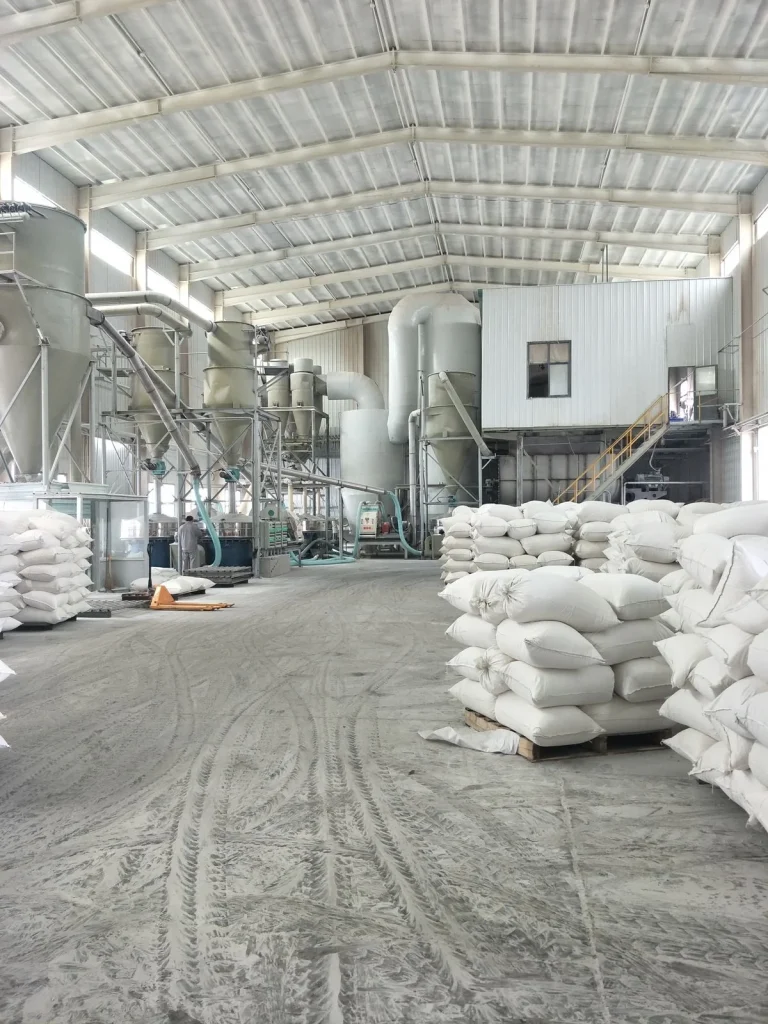
Beyond preservation, rice export packaging specifications must simultaneously satisfy three groups of legal and commercial requirements:
- Domestic legal requirements: Compliance with the rice export procedure under Decree 107/2018/ND-CP on rice export business, as amended and supplemented by Decree 01/2025/ND-CP (effective from March 1, 2025), together with Circular 30/2018/TT-BCT providing detailed guidance.
- Technical standard requirements: Compliance with TCVN 5646:1992 on rice packaging, labeling, preservation, and transport, together with TCVN 5644:2008 on technical requirements for white rice — the two foundational standards that most Vietnamese rice foreign trade contracts still reference.
- Importing country requirements: Each market has its own regulations on labeling, bag weight, and accompanying documentation — the Philippines in particular has been tightening control over import weight and quality management since 2026, despite having lifted its import ban.
Important note: Under Decree 01/2025/ND-CP amending Decree 107/2018/ND-CP, a trader holding a Certificate of Eligibility for Rice Export Business may only entrust export to, or accept entrustment from, another trader that also holds such a certificate. Businesses newly entering the market need to carefully verify legal standing before signing contracts, since correctly specified rice export packaging becomes meaningless if the shipment does not meet customs clearance conditions from the business certification stage onward.
2. Quality standards for rice before packaging
Rice export packaging specifications only matter once the rice going into the bags has met the quality standard under TCVN 5644:2008 on white rice — a step that many small facilities still skip, resulting in shipments being returned by partners or having price reductions demanded upon inspection at the destination port.
| Criterion | Standard Requirement | Rejected / Downgraded When |
|---|---|---|
| Moisture content | Maximum 14% for regular white rice; 14.5% for parboiled rice; dried to standard at least 24 hours before bagging to stabilize temperature | Moisture exceeding 15% — risk of dampness and mold, with insects breeding inside sealed containers over long voyages |
| Broken rice ratio | Per contract grade (5% broken, 10% broken, 15% broken, 25% broken…); each grade packed separately, without mixing batches of different broken ratios | Uneven broken ratio between bags within the same batch — violates the contract and declared quality standard |
| Foreign matter | Maximum 0.2-0.5% depending on grade; paddy, damaged grains, sand, and husk removed before bagging | Foreign matter exceeding the threshold, or mixed paddy/weed seeds detected — likely to be held for inspection at the destination port |
| Pesticide residue | Meets the MRL limit set by the importing country; test report from an accredited laboratory required before packing large batches | Residue exceeding the destination market’s MRL threshold — the EU and Japan in particular impose very strict controls on active ingredients in rice |
| Phytosanitary condition | No live insects, insect eggs, or mold; meets fumigation requirements before container stuffing | Detection of harmful insects on the importing country’s quarantine list — the shipment is rejected or forced into re-treatment |
3. Packaging standards for rice export
This is the core section of rice export packaging specifications, detailed under TCVN 5646:1992 and widely applied in current commercial practice, with woven PP bags now standard in place of traditional jute bags.
| Packaging Parameter | Specific Requirement | Reason / Note |
|---|---|---|
| Bag material | 100% virgin woven PP (Polypropylene), unused; or jute bags per traditional requirements under TCVN 5646:1992 if specified by the partner | Virgin PP bags offer good tensile strength and are odorless, not affecting rice quality; recycled bags become brittle and tear easily under impact during handling |
| Bag weight | Commonly 5 kg, 10 kg, 25 kg, and 50 kg per bag depending on contract; actual weight deviation from the declared value must not exceed ±0.3% of net weight | 50 kg bags are common for large-volume rice exports to the Philippines and Africa; 5-10 kg bags are used for retail markets such as the EU, US, and Australia |
| Bag closure technique | Machine-sewn using twisted jute thread or doubled synthetic thread; two parallel stitch lines or a folded base seam for 25-50 kg bags | Hand-sewing is only used when no machine is available, and must wrap the two ears at least 3 times with thread to prevent bursting or tearing when stacked |
| Inner lining (woven PP bags) | Add an inner PE liner bag inside the woven PP bag for shipments with long sea voyages or markets requiring high moisture resistance (Middle East, Africa) | Woven PP bags are breathable but not fully moisture-proof — the PE liner helps limit moisture penetration when humidity inside the container fluctuates |
| Bag stacking in container | Stacked in a brick-bond (block stowage) pattern, staggered between layers; wooden pallets or moisture-resistant floor lining inserted; airflow space left at both ends of the container | Stacking without staggering easily collapses when the vessel rolls; failing to line the floor leaves bags in direct contact with the damp container floor, causing mold at the base |
| Printing on packaging | Gravure printing on BOPP film for retail bags; screen printing or direct offset printing on woven PP bags for bulk bags | Ink must meet food-safety standards and must not fade or smear when the bag comes into contact with moisture during long-distance transport |
4. Mandatory labeling requirements on rice export bags
Labels on rice bags must comply simultaneously with TCVN 5646:1992 and the goods labeling regulations under Decree 43/2017/ND-CP (as amended and supplemented by Decree 111/2021/ND-CP), plus any additional requirements from the importing country:
| Label Information | Mandatory Content | Practical Note |
|---|---|---|
| Product name and rice variety | Specific rice type (long-grain white rice, ST25 fragrant rice, Jasmine rice, sticky rice…) in Vietnamese and English or the importing country’s language | Do not label generically as “Rice” — the specific type and grade (5% broken, 25% broken…) must be stated in accordance with the foreign trade contract |
| Business name and address | Name of the producing/packing facility or exporting trader; full address and tax code as per the Certificate of Eligibility for Rice Export Business | Only traders holding a Certificate under Decree 107/2018/ND-CP (as amended by Decree 01/2025/ND-CP) may be listed as the direct exporter |
| Country of origin | “Product of Vietnam”; specific growing region noted as well if the contract requires geographic traceability | The origin stated on the label must match the C/O declared to customs so the partner can benefit from tariff preferences under FTAs such as ASEAN and RCEP |
| Net weight | Net weight (kg) printed clearly, without fading or peeling; actual weight deviation from the declared value must not exceed ±0.3% under commercial standards | The weight on the label must match the customs declaration — a large discrepancy found during inspection weighing at the destination port is easily treated as trade fraud |
| Production/packing date and shelf life | Specific date (DD/MM/YYYY); recommended shelf life of 12 months from the packing date under dry storage conditions | Mandatory under the food labeling regulations of most importing markets, and supports traceability in the event of a quality complaint |
| Storage instructions and traceability code | Clearly state “store in a cool, dry place, away from direct sunlight”; include a QR code or GS1 barcode for batch traceability | Many markets such as the EU, Japan, and retail chains in the Philippines increasingly require traceability codes to control import quality |
5. Rice export packaging specifications by market segment
Rice export packaging specifications vary significantly by market segment and sales format — a point businesses need to align with partners early in contract negotiation to avoid incurring repackaging costs later.
Bulk bag export
Common for the Philippines, Africa, and the Middle East — where rice is packed in 25 kg or 50 kg bags and loaded directly into dry cargo containers of 20 feet or 40 feet without secondary packaging. A standard 20-foot container typically holds around 18-20 tonnes of rice in 50 kg bags (roughly 360-400 bags), while a 40-foot container holds 26-28 tonnes.
Wholesale bag export through distributors
Applies to rice packed in 5-10 kg bags, typically exported to markets such as the EU, US, Australia, and South Korea through supermarket systems or distributors. This packaging requires higher aesthetic standards, with professional printed designs, retail barcodes, and full nutritional information in accordance with each market’s food labeling regulations.
Organic and specialty rice export
Under Decree 01/2025/ND-CP, traders specializing in exporting organic rice, parboiled rice, or micronutrient-fortified rice are exempted from certain warehousing conditions and from the requirement to hold a Certificate of Eligibility for Rice Export Business. However, packaging for this category must still fully meet international organic certifications (USDA Organic, EU Organic…) printed on the label, along with the licensed production facility code.
From 3W Logistics’ practical experience: Among the rice shipments we have handled to the Philippines and African markets, the most frequent issues arising at the destination port do not stem from rice quality but from three packaging and documentation errors: bags tearing at the mouth due to substandard sewing during repeated handling, actual weight deviating beyond the permitted margin from the customs declaration, and inconsistency between the origin stated on the label and the C/O presented. All three of these are entirely preventable if packaging control procedures are carried out rigorously before the goods leave the warehouse. — Ms. Apple, CCO, 3W Logistics
6. Common errors in rice export packaging specifications
| Common Error | Actual Consequence | Prevention |
|---|---|---|
| Using recycled or previously used PP bags | Bags tear easily during repeated handling, causing rice spillage and shortage; violates food packaging regulations and harms brand reputation | Use only 100% virgin PP bags; check the packaging’s origin documentation from the supplier before use in production |
| Substandard bag mouth closure | Bags burst open when stacked in the container or during repeated crane handling at transshipment ports, causing shortage and partner complaints | Machine-sew using firmly twisted jute thread; randomly check the strength of stitching before container loading |
| No fumigation or substandard fumigation | Insects detected during quarantine inspection at the destination port — the shipment is held for re-treatment or returned, incurring container and storage demurrage costs | Schedule fumigation and obtain the Fumigation Certificate through the correct process before container stuffing, cross-checked against the importing country’s specific requirements |
| Bags stacked in the container without staggering or lining | Bags collapse when the vessel rolls at sea; bottom bags in direct contact with the damp container floor develop mold, affecting the entire load above | Stack in a staggered brick-bond pattern between layers; line the container floor with pallets or moisture-resistant paper before loading |
| Missing label information or incorrect origin | Importing country’s customs holds the goods to cross-check the label against the C/O; prolongs clearance time and may result in denial of FTA tariff preferences | Review labels against the C/O and foreign trade contract before mass printing; ensure compliance with Decree 111/2021/ND-CP |
FAQ – Frequently asked questions about rice export packaging specifications
Question 1: Must rice export packaging be jute bags, or can woven PP bags be used?
Under TCVN 5646:1992, jute bags are the traditional standard, but the standard also allows PP bags by agreement between the parties. In current commercial practice, virgin woven PP bags are used far more commonly thanks to their high mechanical strength, reasonable cost, and good compliance with food safety requirements — as long as the bags are 100% new and unused.
Question 2: What certification does a business need before exporting bagged rice?
Under Decree 107/2018/ND-CP (as amended and supplemented by Decree 01/2025/ND-CP, effective from March 1, 2025), a trader must hold a Certificate of Eligibility for Rice Export Business issued by the Ministry of Industry and Trade, except for traders specializing in exporting organic rice, parboiled rice, or micronutrient-fortified rice, who are exempted from this condition. In addition, a Phytosanitary Certificate and a Fumigation Certificate must be prepared for each shipment.
Question 3: What are the common bag weights for rice export, and what deviation is permitted?
Common weights include 5 kg, 10 kg, 25 kg, and 50 kg per bag depending on the contract and destination market — 50 kg bags are typically used for large-volume shipments to the Philippines and Africa, while 5-10 kg bags suit retail markets. The actual weight deviation from the value declared on the label and customs declaration should not exceed ±0.3%.
Question 4: What is the HS code for exported rice, and what is the current export tax?
Rice falls under HS group 1006, with detailed codes by type such as 1006.20 (husked/brown rice), 1006.30 (semi-milled or wholly milled rice), and 1006.40 (broken rice). Under the current export tariff schedule, all items in group 1006 are subject to a 0% export tax rate, allowing businesses to focus resources on packaging and quality improvement rather than tax cost optimization.
How does 3W Logistics support rice exports?
As a freight forwarding company registered as an OTI-NVOCC with an FMC Bond (Federal Maritime Commission) in the United States, with more than 10 years of experience shipping agricultural exports, 3W Logistics provides end-to-end service for businesses, milling facilities, and rice export traders — from advising on rice export packaging specifications through to customs clearance and delivery to the buyer’s warehouse in the importing country.
Full-package rice export solutions from 3W Logistics:
- Packaging specification consultation and documentation review before stuffing: Reviewing packaging, labels, weight, and phytosanitary documents before container loading — catching errors early rather than discovering them at the destination port.
- Container booking and stowage optimization: Precisely calculating bag quantity by weight to optimize the load of 20-foot and 40-foot containers; advising on staggered stacking and moisture-resistant floor lining appropriate to each route.
- Ocean freight to the Philippines, Africa, the Middle East, and other markets: Optimizing route, transit time, and cost for each market and each rice product segment.
- Customs declaration and coordination of quarantine and fumigation processing: Preparing the complete export document set including C/O, Phytosanitary Certificate, and Fumigation Certificate; coordinating with Vietnam’s plant quarantine authorities to resolve issues quickly as they arise.
- Support in handling quality and shortage claims: Maintaining full records of packaging photos, weight tickets, and documentation for each batch to support fast resolution when importing partners raise complaints about weight or packaging quality.
Why choose 3W Logistics for your rice export shipment? Correctly specified rice export packaging is only a necessary condition — the sufficient condition is that the entire logistics chain, from the packing warehouse to the buyer, must be controlled consistently in terms of documentation, timing, and preservation conditions. A perfectly packaged rice shipment can still be held at the destination port if the label does not match the C/O or a valid fumigation certificate is missing. We control the entire chain, not just book the vessel and print the declaration. Contact 3W for specific advice on route and cost before the harvest season begins.
Address: 34 Bach Dang, Tan Son Hoa Ward, Ho Chi Minh City
Hotline: +84 28 3535 0087
____________________________
3W Logistics Hanoi Branch
Address: 81A Tran Quoc Toan, Cua Nam Ward, Hanoi
Hotline: +84 24 3202 0482
____________________________
3W Logistics Hai Phong Branch
Address: 8A Lo 28 Le Hong Phong, Gia Vien Ward, Hai Phong
Hotline: +84 225 355 5939
____________________________
3W LOGISTICS CO., LTD – We here serve you there!
Email: info@3w-logistics.com
Website: www.3w-logistics.com

Ms. Apple is the CCO (Chief Commercial Officer) at 3W Logistics, with over 10 years of experience in sales and business operations management.
At 3W Logistics, Ms. Apple is responsible for commercial strategy, corporate customer development, managing a team of more than 50 sales professionals, and improving business performance in the logistics sector.
With practical experience in sales management and market development, Ms. Apple shares professional insights on business logistics solutions, international transportation, freight forwarding, customer management, trade lane development, and growth strategies in the logistics industry.


