
Vietnam’s coffee export procedure is entering its most challenging phase in many years, as the European Union’s Deforestation Regulation (EUDR – Regulation EU 2023/1115) officially becomes mandatory from December 30, 2026 for large and medium enterprises, with micro and small enterprises given an additional 6 months to prepare.
As the world’s second-largest coffee producer with 31.7 million bags in the 2025/2026 crop year (accounting for 18% of global output, second only to Brazil), and with the EU consuming 40-50% of Vietnam’s annual coffee export turnover, the coffee export procedure is no longer simply a matter of HS codes, tariffs, or phytosanitary quarantine – it now also requires businesses to build a complete traceability system and growing-area data to meet increasingly stringent market standards.
The article below summarizes all the legal basis, HS codes, tax policies, procedures, costs, and common risks in the coffee export procedure, updated according to the latest current regulations.
1. Vietnam’s Position and Main Coffee Export Markets
Vietnamese coffee – mainly robusta with a portion of arabica – is concentrated in the Central Highlands (Dak Lak, Lam Dong, Dak Nong, Gia Lai), and exported to more than 80 countries and territories. Besides the EU, other major markets include the US, China, Japan, South Korea, and the ASEAN region, each with its own requirements for quarantine, food safety, and traceability in the coffee export procedure.
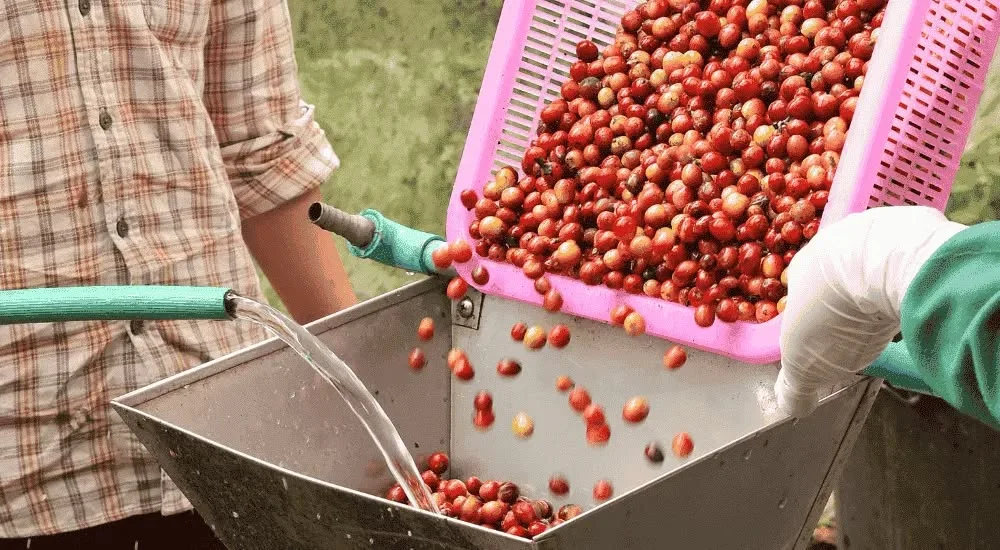
Exported coffee exists in several segments: green coffee beans (robusta, arabica) account for the largest share, followed by whole roasted/ground coffee and instant coffee – a product group the EU has just officially added to the list of goods subject to EUDR regulation alongside traditional green coffee beans.
2. Legal Basis Governing the Coffee Export Procedure
| Legal Document | Regulatory Content |
|---|---|
| Decree 69/2018/ND-CP | Coffee is not on the list of goods banned from export or requiring an export license |
| Regulation (EU) 2023/1115 (EUDR) | The EU’s deforestation regulation, mandatory for coffee, wood, rubber, cocoa, and derivative products exported to the EU from December 30, 2026 (large/medium enterprises) and 6 months later for small/micro enterprises |
| GACC Decree 280 (effective from June 1, 2026) | Regulations on registration and management of food processing enterprises exporting to China under a new risk assessment mechanism, replacing Order 248 |
| Circular 38/2015/TT-BTC, amended by Circular 39/2018/TT-BTC | Customs procedures, customs inspection and supervision for exported goods |
The most important new point currently: EUDR requires every shipment of coffee exported into the EU to prove it is “deforestation-free” after December 31, 2020, accompanied by a Due Diligence Statement (DDS) and growing-area geolocation data: polygon coordinates for plots larger than 4ha, point coordinates for plots smaller than 4ha. The core principle is that only shipments fully meeting the data requirements are eligible for export to the EU – businesses cannot purchase shipments with unclear origins to bring into this market. This is a regulation on data and supply chain governance, unrelated to market access or product quality.
3. Conditions for Coffee Exporting Businesses
| Condition | Issuing/Managing Authority | Notes |
|---|---|---|
| Traceability system, GPS coordinates for growing areas (EU market) | Built by the business itself, in coordination with farming households and plot owners | Mandatory condition to submit the Due Diligence Statement (DDS) on the EU’s system |
| Exporter registration code (GACC/CIFER code, China market) | Plant Protection Department (focal point), approved by GACC | Mandatory for roasted/ground coffee and instant coffee; green coffee beans register via documentation sent to the Plant Protection Department |
| Food Safety and Hygiene Certificate | Local Food Safety and Hygiene Sub-Department | Mandatory for roasted/ground and instant coffee processing facilities |
| Sustainability Certification (Rainforest Alliance, 4C, UTZ…) | Independent certification body | Not legally mandatory but a major advantage for meeting EUDR requirements and appealing to large roasters |
4. HS Code and Coffee Export Tax
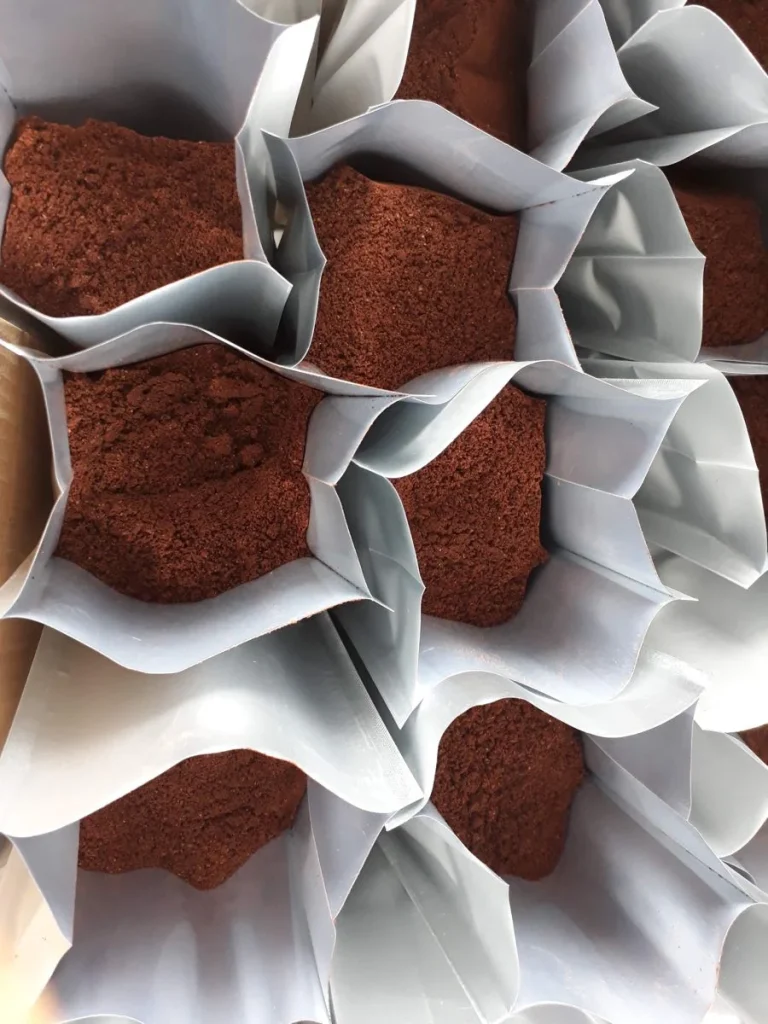
Coffee falls under Chapter 09 – “Coffee, tea, maté, and spices,” with heading 09.01 for green coffee beans, while instant coffee falls under heading 21.01. Correctly determining the HS code is a mandatory requirement in the coffee export procedure, as many markets (especially China) manage classification down to 10-13 digits under the CIQ code system.
| Product Type | HS Code (Vietnam) | Vietnam Export Tax | Notes |
|---|---|---|---|
| Unroasted, non-decaffeinated green coffee beans | 0901.11 | 0% | The most common code group, accounting for the majority of Vietnam’s green coffee bean export turnover |
| Roasted, non-decaffeinated coffee | 0901.21 | 0% | Applies to whole roasted coffee beans or ground coffee |
| Instant Coffee | 2101.11 | 0% | Just added by the EU to the list of products subject to EUDR regulation |
Practical note: Vietnam’s coffee export tax is currently 0% for most HS codes, as the state encourages exports of this strategic agricultural commodity. For the US market specifically, businesses should also account for the general reciprocal tariff the US applies to Vietnamese goods (approximately 20% from August 7, 2025) when calculating selling prices, although coffee is not subject to a separate anti-dumping duty like some other agricultural products.
5. Specific Requirements by Coffee Export Market
| Market | Main Requirement | Notes |
|---|---|---|
| EU | EUDR compliance: growing-area geolocation data, Due Diligence Statement (DDS) | Mandatory from December 30, 2026 (large/medium), 6 months later for small/micro enterprises |
| United States | General reciprocal tariff of approximately 20%, no special registration requirement specific to coffee | Requires continuous monitoring as tariff policy may be adjusted over time |
| China | Registration under GACC Decree 280 (for processed coffee) | Transitioning from an administrative management mechanism to risk-level-based assessment |
| Japan, South Korea | Control of pesticide residue levels, quality standards under TCVN/Codex | Stable requirements, changing less than in other markets |
6. Documentation Set for the Coffee Export Procedure
| Document | When to Prepare | Important Notes |
|---|---|---|
| Sales Contract | Before production and packaging | Clearly state Incoterms, packaging specifications, and coffee type (beans/roasted-ground/instant) |
| Due Diligence Statement (DDS) with growing-area GPS data | Before exporting to the EU | Mandatory under EUDR, submitted via the EU’s information system before the shipment clears customs in the EU |
| Phytosanitary Certificate | Before the goods leave the port/border gate | Applies to green coffee beans as a raw plant material |
| Fumigation Certificate | After container loading, before yard drop-off | Helps prevent pests and insects, avoiding mold damage during long-haul transport |
| Business registration code (GACC/CIFER, for the China market) | Before the first export shipment | Verify the code’s validity before each shipment as required under Decree 280 |
| Certificate of Origin (C/O) | After the export declaration is issued | Necessary to enjoy tariff preferences under FTAs (EVFTA, CPTPP, RCEP, ACFTA…) corresponding to the destination market |
| Export Customs Declaration (VNACCS) | Before customs clearance | Declare the correct HS code according to the coffee type: beans/roasted-ground/instant |
7. Coffee Export Procedure Step by Step
Step 1: Build Growing-Area Traceability Data
Businesses coordinate with farming households and cooperatives to collect GPS coordinates for growing areas and confirm the legality of the cultivated land – this is currently the most fundamental and urgent step in the coffee export procedure, especially for businesses planning to export to the EU.
Check the coffee quality standards for the output to ensure compliance with the destination market.
Step 2: Determine the Product Type and Register the Export Code (If Needed)
For processed coffee (roasted-ground, instant) exported to China, businesses register a code on GACC’s CIFER system under Decree 280; green coffee beans register through documentation sent to the Plant Protection Department.
Step 3: Sign the Contract, Produce, and Package According to the Order
Once all necessary documentation is in place, the business signs the sales contract and produces and packages the coffee according to the specifications agreed with the importer.
Step 4: Register for Phytosanitary Quarantine and Fumigation
For raw green coffee beans, the business registers for quarantine to obtain the Phytosanitary Certificate; after container loading, fumigation is carried out to prevent harmful insects throughout the journey.
Step 5: Submit the Due Diligence Statement (For the EU Market)
The business submits the DDS along with growing-area geolocation data via the EU’s information system before the coffee shipment is permitted to clear customs at European ports.
Step 6: Finalize the Documentation Set and File the Export Customs Declaration
The business or forwarding company prepares the Invoice and Packing List, files the electronic customs declaration on the VNACCS system, and attaches the quarantine certificate, export registration code (if applicable), and the appropriate C/O for the destination market.
Step 7: Transport and Import Clearance at the Destination Country
Once the declaration clears customs, the goods are handed over to the carrier by sea (most common), by road through border gates (for China), or by air for small, high-value shipments.
8. Common Risks in the Coffee Export Procedure
| Risk | Manifestation | Prevention Method |
|---|---|---|
| No growing-area data meeting EUDR requirements | Shipment rejected for customs clearance in the EU once the regulation officially takes effect | Proactively build a traceability system and collect GPS coordinates starting now, rather than waiting until the deadline approaches |
| Incorrect HS code/CIQ code among coffee types | Tax arrears collection, delayed customs clearance, need to amend the declaration | Carefully cross-check the HS code with customs or an experienced forwarder in coffee shipments |
| Purchasing shipments with unclear origin | The entire shipment is excluded from eligibility for export to the EU | Only purchase from growing areas that already have complete geolocation data and legal documentation |
| Pesticide residue exceeding the threshold | Assessed as high risk, increased inspection frequency, or import rejection | Control the growing area, comply with pesticide pre-harvest interval periods |
9. FAQ – Frequently Asked Questions About the Coffee Export Procedure
Question 1: How does EUDR affect the coffee export procedure to the EU?
From December 30, 2026, every coffee shipment (including instant coffee, which has just been added) exported to the EU must be accompanied by a Due Diligence Statement (DDS) and growing-area geolocation data, proving no connection to forest land cleared after December 31, 2020.
Question 2: Are small businesses given extra time to prepare for EUDR?
Yes. Large and medium enterprises must comply from December 30, 2026, while micro and small enterprises have an additional 6 months to prepare; however, this remains a very short window, so building a data system should begin now.
Question 3: What is the current coffee export tax in Vietnam?
All types of coffee (HS codes under headings 0901 and 2101) enjoy a 0% export tax rate in Vietnam. Businesses should also account for the US reciprocal tariff and the specific requirements of each market when calculating total costs.
Question 4: Do green coffee beans and processed coffee follow the same registration procedure for export to China?
Not entirely the same. Unroasted green coffee beans typically register through documentation sent to the Plant Protection Department, while roasted-ground coffee and instant coffee fall under the processed food category and must register on the CIFER system under GACC Decree 280.
How Does 3W Logistics Support the Coffee Export Procedure?
As a freight forwarding company registered as an OTI-NVOCC with an FMC bond in the US, holding a SCAC Code to self-file AMS/ISF directly, along with experience handling agricultural exports to diverse markets, 3W Logistics provides a comprehensive service for businesses regarding the coffee export procedure – from EUDR compliance consulting and export registration code applications to the goods clearing customs in the importing country.
- Consulting on EUDR updates and new regulations from the EU, GACC: Guiding businesses to prepare documentation and data in line with new management mechanisms, minimizing the risk of export disruption.
- Support connecting for Phytosanitary and Fumigation Certificates: Coordinating with plant quarantine authorities so coffee shipments are sampled, inspected, and certified on schedule.
- Accurate HS code/CIQ code cross-checking by coffee type and market: Helping businesses correctly classify green coffee beans, roasted-ground, and instant coffee for accurate declaration from the outset.
- Multimodal booking and transport: Arranging sea, road, or air transport depending on volume and coffee type, to destinations worldwide.
- Electronic customs declaration (VNACCS) and import clearance procedures at the destination country: A professional customs declaration team handles export declarations and HS code verification; as an OTI-NVOCC with FMC and SCAC Code status, 3W Logistics independently issues House Bills of Lading (HBL) and self-files AMS/ISF directly for shipments to the US.
Why choose 3W Logistics for your coffee export route: Unlike many intermediary forwarders, 3W Logistics is an OTI-NVOCC with a bond and direct FMC certification in the US, holding a SCAC Code that enables self-filing of AMS/ISF – helping shorten documentation processing time and reduce delay risk across the entire agricultural goods portfolio. With offices in Ho Chi Minh City, Hanoi, and Hai Phong, along with a team that stays closely updated on policy changes from the EU, GACC, and the US, 3W Logistics is a suitable choice for businesses that want to ensure their coffee shipments clear customs on time and to standard amid increasingly stringent international regulations. – Ms. Apple, CCO 3W Logistics
Head Office – 3W Logistics Ho Chi Minh City Branch
Address: 34 Bach Dang, Tan Son Hoa Ward, Ho Chi Minh City
Hotline: +84 28 3535 0087
____________________________
3W Logistics Hanoi Branch
Address: 81A Tran Quoc Toan, Cua Nam Ward, Hanoi
Hotline: +84 24 3202 0482
____________________________
3W Logistics Hai Phong Branch
Address: 8A Lot 28 Le Hong Phong, Gia Vien Ward, Hai Phong
Hotline: +84 225 355 5939
____________________________
3W LOGISTICS CO., LTD – We here serve you there!
Email: info@3w-logistics.com
Website: www.3w-logistics.com

Ms. Apple is the CCO (Chief Commercial Officer) at 3W Logistics, with over 10 years of experience in sales and business operations management.
At 3W Logistics, Ms. Apple is responsible for commercial strategy, corporate customer development, managing a team of more than 50 sales professionals, and improving business performance in the logistics sector.
With practical experience in sales management and market development, Ms. Apple shares professional insights on business logistics solutions, international transportation, freight forwarding, customer management, trade lane development, and growth strategies in the logistics industry.


