
Blog
The various types of warehouses in logistics play a vital role in supply continuity and cargo quality preservation. This is also why every business should seek a reputable warehouse leasing service provider to improve management and inventory control. Currently, 3W Logistics is an experienced company in warehousing and distribution solutions, helping businesses secure storage facilities at competitive rates with stable service quality.
1. What is a warehouse in logistics?
A warehouse is a designated facility used for storing and preserving various types of goods, including raw materials, finished goods, or semi-finished products, with the purpose of ensuring timely supply to the consumption market while effectively supporting business operations.
Goods stored in warehouses are generally less affected by short-term market price fluctuations. In addition, with clearly segmented functions, warehouse systems in logistics perform essential roles such as:
– Storing goods and ensuring stable market supply.
– Preserving cargo in compliance with transportation standards.
– Supporting input materials for production activities.
– Consolidating cargo at a single location.
– Breaking down shipments into smaller lots.
>> Read more: Container rental rates
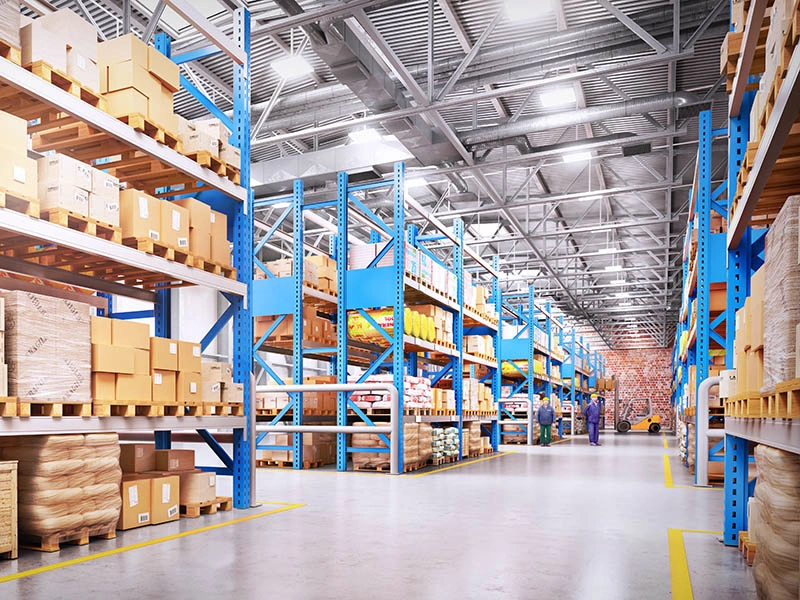
Logistics warehouses are facilities for cargo storage, preservation, and rapid product distribution to end consumers
2. The importance of warehouse systems in logistics
As a critical link in the logistics supply chain, warehouse types directly impact storage efficiency and cargo safety. With effective warehouse management, businesses can gain numerous benefits as follows:
– Warehouse facilities in logistics support manufacturing, transportation, and distribution to end users, helping reduce operating costs.
– Warehousing helps businesses maintain stable inventory levels and stay ready to ship whenever customers place orders.
– It facilitates smoother transportation processes, ensuring cargo is delivered to the right place at the committed time.
– Large warehouse networks combined with significant storage capacity are major advantages that help businesses stand out and strengthen their competitive position in the market.
[irp]
3. How many types of warehouses are there in logistics management today?
Below are the most common warehouse types in the logistics supply chain:
3.1 Public Warehouse
A public warehouse is owned by an individual or an authorized organization. This type of facility is highly suitable for businesses with short-term warehousing demand. It is also ideal for SMEs or companies that are not yet able to own a private warehouse due to financial constraints, allowing them to store goods at stable and cost-effective rates.
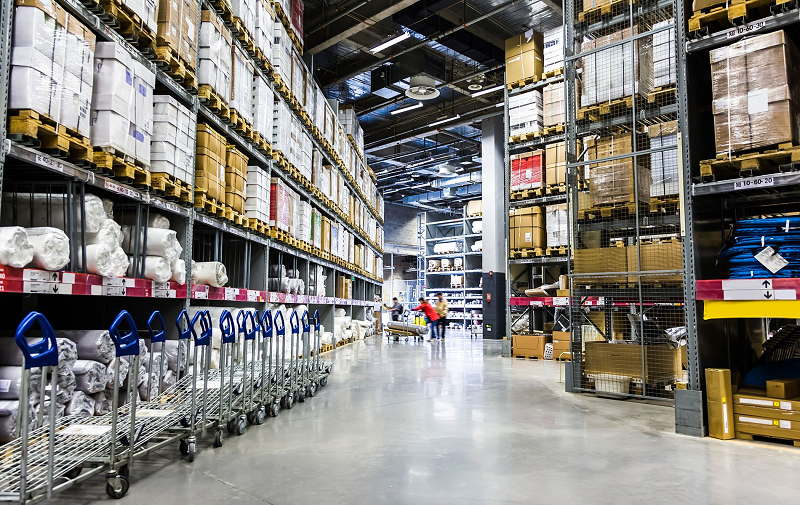
A public warehouse is suitable for businesses that cannot yet own private facilities or only need short-term storage
3.2 Private Warehouse
A private warehouse (also known as a dedicated warehouse) is owned and managed by large-scale retail groups. Due to the high construction cost, the number of private warehouses remains limited. In addition, for production convenience, these facilities are usually located adjacent to factories or processing plants.
3.3 Bonded Warehouse
Among all warehouse types in logistics, bonded warehouses play an extremely important role. These are facilities established within Vietnam’s territory but physically separated from surrounding areas, used for the temporary storage and preservation of imported cargo from overseas or domestic goods brought into the facility under a bonded warehouse lease agreement.
For goods stored here, cargo owners may perform certain activities such as:
– Packaging and repacking.
– Cargo classification, reinforcement, and maintenance.
– Customs clearance procedures for goods entering or leaving the bonded warehouse.
– Transferring ownership rights to another party, or moving cargo between warehouses or border gates.
>> Read more: Standards for exporting agricultural products to Europe
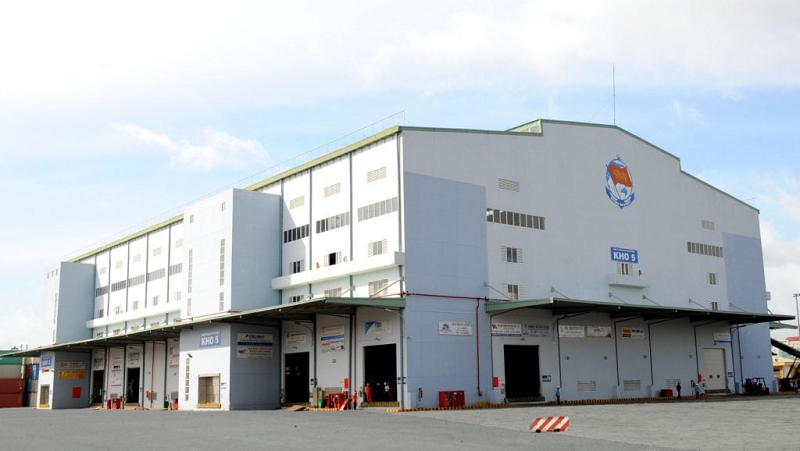
A bonded warehouse stores imported cargo from overseas or domestic goods moved into the bonded area
3.4 CFS Warehouse (Container Freight Station)
A CFS warehouse (also known as a less-than-container-load consolidation facility) is used when exporters do not have enough cargo to fill a full container. CFS services include:
– Packing or repacking, sorting or resorting export cargo awaiting shipment.
– Moving transit cargo into the warehouse for segregation, consolidation, and stuffing into export containers, either independently or together with Vietnam-origin export cargo.
– Breaking down import shipments pending customs procedures.
– Consolidating containers with other export cargo for onward transportation to a third country.
3.5 Off-Airport Terminal
An off-airport terminal is a warehouse facility located away from the airport but close to industrial zones, export processing zones, or high-tech parks (where products often require air freight transportation). The advantage of this facility is reduced airport processing time, enabling faster customs clearance, minimizing congestion, and accelerating export speed to overseas markets.
3.6 Cross-Docking Warehouse
This is a specialized warehouse type with no storage function. Instead, cross-docking focuses on immediate receiving and distribution activities.
Its main advantage is helping businesses speed up product flow to end consumers while significantly reducing warehousing costs. This is because cargo dwell time is extremely short—typically no more than one hour or one day. In addition, implementing a cross-docking model requires a relatively stable market environment and sufficiently large shipment volumes.
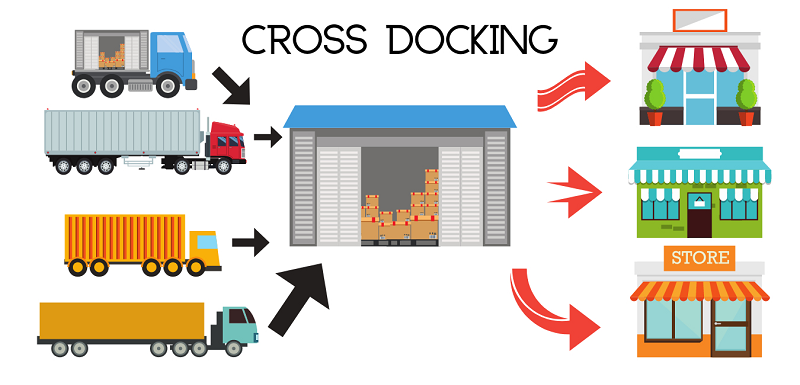
Among warehouse types in logistics, cross-docking has no storage function. Instead, it is designed for receiving and distributing cargo to stores and retail outlets
3.7 Climate-Controlled Warehouse
A climate-controlled warehouse is equipped with temperature regulation and humidity balancing systems, specifically designed for preserving food products and other temperature-sensitive cargo such as seafood, fruits, and vegetables. This ensures that products delivered to customers maintain their original freshness and full quality.
3.8 Automated Warehouse
Today, automated warehouses are the preferred choice for many businesses, thanks to the use of intelligent warehouse management software that helps automate all operations such as inventory control, order tracking, packing, sorting, and cargo movement, instead of relying heavily on manual labor as before.
In addition, automated warehouses are equipped with a wide range of modern handling equipment to support storage operations, such as forklifts and pallets. This not only ensures fast processing efficiency but also provides high flexibility while minimizing operational errors.
>> Learn more: Shipping Line Agency

Automated warehouses utilize intelligent management software to accelerate operations and deliver optimal efficiency
3.9 Tax Suspension Warehouse
A tax suspension warehouse is a facility used to store imported raw materials and supplies that have already been customs cleared but for which duties and taxes have not yet been paid. Ownership of the tax suspension warehouse belongs to the enterprise. Therefore, each business is responsible for coordinating with customs authorities to facilitate inspection and supervision of warehouse operations.
4. Important Considerations When Leasing Logistics Warehousing
In addition to understanding the different types of warehouses in logistics, businesses should also pay attention to the following factors to ensure effective warehouse leasing and cost optimization:
4.1 Pay Attention to Warehouse Leasing Costs
Warehouse rental cost is one of the most common concerns among businesses today. In practice, rental pricing varies depending on the warehouse location as well as the condition of its facilities and infrastructure.
Example: For warehouses equipped with machinery and handling equipment such as cranes, forklifts, pallets, or fire protection systems, the rental cost is significantly higher than that of a standard warehouse. To receive a detailed quotation and secure a cost-effective solution, businesses should choose a reputable provider with extensive industry experience.
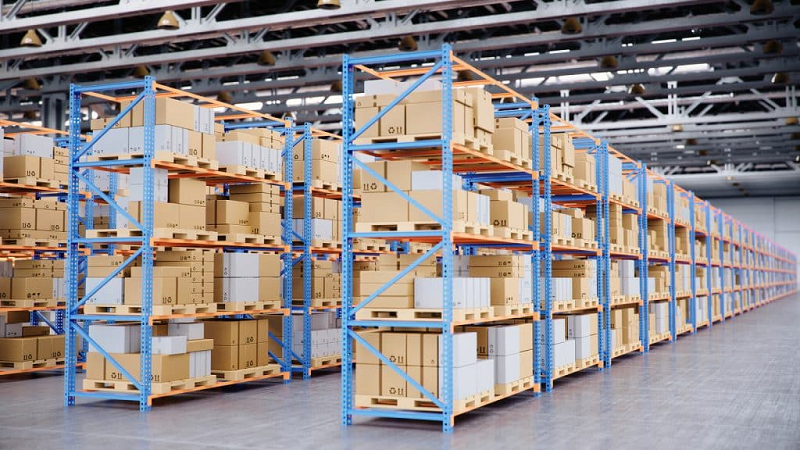
Businesses should choose a reputable and professional provider to secure warehouse leasing at a reasonable cost
4.2 Select the Right Warehouse Leasing Model
For each leasing model, whether by square meter or by tonnage, businesses should calculate the cargo volume that needs to be stored and assess actual demand in order to choose a warehouse facility with the most suitable capacity.
4.3 Determine the Warehouse Leasing Duration
Different logistics warehouse types offer different leasing periods. Therefore, based on operational needs and current financial capacity, businesses should decide whether short-term or long-term leasing is the better option before signing the contract.
4.4 Find a Reliable Warehouse Leasing Partner
Currently, 3W Logistics is a highly experienced provider in warehouse management and cargo distribution. We deliver flexible warehousing solutions, bringing businesses key benefits such as:
– Highly competitive warehouse leasing costs, thanks to 3W Logistics’ strategic partnerships with major warehouse operators in the market.
– Flexible warehouse solution design, helping businesses distribute cargo to end consumers quickly, consistently, and on time.
– For warehousing services, 3W Logistics supports businesses with inventory management, inbound and outbound cargo counting, barcode printing, repacking, labeling, loading & unloading, lifting operations, and cargo quality monitoring.
– For distribution services, 3W Logistics provides well-structured distribution solutions, ensuring cargo is delivered according to schedule and to the correct destination. Our distribution services include order processing, product barcoding, returns handling, and domestic cargo transportation to retail stores, while also supporting special order handling based on enterprise requirements.
– A dedicated, dynamic, and highly experienced logistics team, always ready to answer customer inquiries at any time.
Above is the complete overview of the different warehouse types in logistics. Overall, warehousing is a critical link in the supply chain. In addition to proper warehouse management, businesses should partner with a trusted provider offering flexible warehousing and distribution services like 3W Logistics to secure cost-effective leasing while maintaining cargo quality.
“We here to serve you there” – At 3W Logistics, we are committed to delivering well-structured warehousing solutions that maximize cost savings and ensure the highest level of customer satisfaction. Contact us for service consultation and the most detailed quotation.
| OTHER SERVICES AT 3W LOGISTICS 1. OCEAN FREIGHT SERVICES |


