
Blog
Today, as logistics continues to develop, shipping cargo from the Far East to European countries and overseas markets is becoming increasingly common. Therefore, many businesses and traders choose export models from Vietnam to foreign countries, especially the United States. Given this situation, many people naturally wonder how long it takes to ship goods to the U.S. and how to do it quickly and cost-effectively. Let’s explore the article below for a better understanding.
1. How long does shipping to the U.S. take?
Depending on the transportation mode you choose, the transit time will vary as follows:
1.1. Air freight transportation
Air freight transportation (shipping by aircraft) offers very fast transit times. This mode is suitable for medium-weight and lightweight cargo with high value, such as jewelry, gemstones, pharmaceuticals, or products from world-famous fashion and cosmetics brands. There are two typical air service options:
- Express air service: With this option, it only takes around 2–4 days for cargo to be transported from Vietnam to the U.S.
- Standard air service: If you choose standard service, transit time will be longer, around 5–7 days, but the cost is more economical than express service.
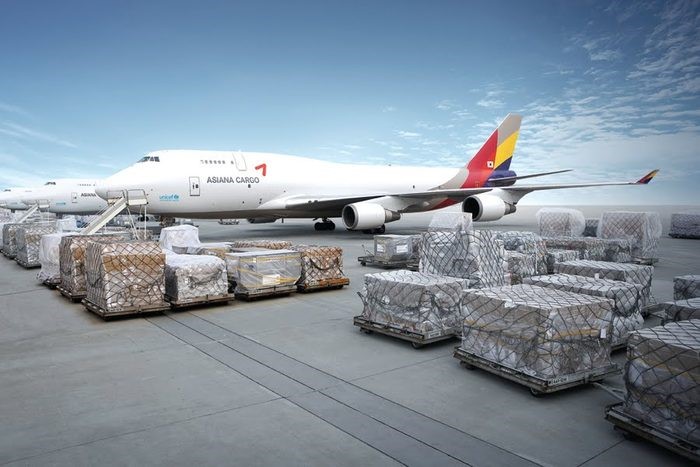
Air freight transportation helps save significant shipping time
1.2. Ocean freight transportation
Ocean freight takes considerably longer, around 30–45 days (depending on the destination port), because the sea route from Vietnam to the U.S. is relatively long. Therefore, this shipping method is suitable for oversized cargo, heavy shipments, industrial goods in large quantities, or products subject to high import duties.
>> See more: How long does container shipping from Vietnam to the U.S. take?
2. Factors affecting shipping time to the U.S.
For the question of how long shipping to the U.S. takes, there is no absolutely fixed answer. This is because the export process can be affected by multiple factors, such as:
- Delivery destination: The U.S. is geographically vast, so the actual transit time depends on the arrival port. For example, shipping from Vietnam to the Port of Los Angeles may take only about 25 days, while shipments to Chicago may require 35–40 days.
- Shipping period: It is not always possible to export immediately after handing over the goods to the logistics provider. To optimize costs, carriers often consolidate cargo in warehouses until sufficient volume is reached before export. Therefore, you should estimate additional warehouse dwell time for a more accurate schedule.
- Cargo characteristics: Depending on the nature of the goods, you can select the most suitable transport method. For urgent shipments, air freight is commonly preferred. If the cargo is less time-sensitive, you may choose the method that best matches your budget and operational needs.
- Weather conditions: One common factor affecting transit time is weather. If conditions are favorable, cargo may arrive on time or even earlier. On the other hand, bad weather can significantly extend shipping time.
- Logistics provider: Choosing a reputable and experienced shipping company to the U.S. helps accelerate the export process, while also offering more competitive ocean freight rates to the U.S.. These providers usually have extensive export experience and broad carrier relationships, allowing them to handle risks more effectively.
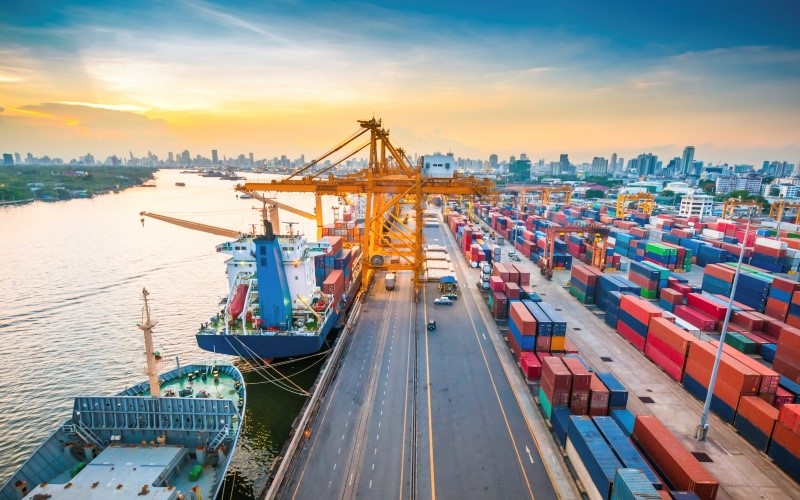
In addition to standard transit time, you should also account for other potential operational factors
3. Tips for faster shipping to the U.S.
To ship cargo to the U.S. faster and more efficiently, you may refer to the following best practices:
3.1. Clearly understand the list of goods allowed and prohibited into the U.S.
Not all commodities are allowed to be imported into the United States. Therefore, before export, you must clearly identify which products are permitted and which are prohibited. Items such as weapons, fireworks, military equipment, used consumer goods (electronics, refrigeration appliances, medical devices, household products, etc.), and cultural products prohibited in Vietnam are among the restricted import categories in the U.S.
3.2. Know how to pack cargo according to standards
To avoid delays during export, you should understand standard packaging rules:
- Use sturdy corrugated cartons with strong load-bearing capacity.
- Each package should not exceed 30kg, with a maximum length of 152cm and maximum width/height of 76cm.
- Use separate partitions when packing multiple components.
- Cartons must be tightly stuffed with no empty gaps to avoid collision during transit. Fragile goods should be cushioned with foam, bubble wrap, or wooden crates. For liquids, the bottle caps should be sealed tightly with plastic wrapping.
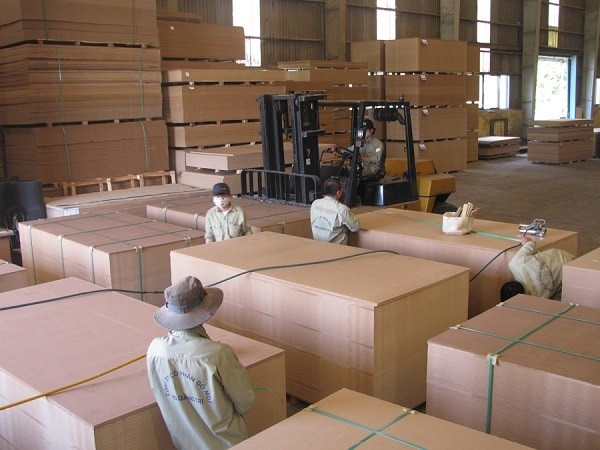
You should follow standard packaging requirements to reduce cargo inspection time during export
3.3. Carefully verify shipment information
Before export, you should carefully verify all shipment information to avoid cargo loss. Specifically, make sure to accurately provide the consignee’s details (full name, address, postal code, phone number, etc.) and place product origin documents and invoices inside the carton. In addition, the cargo composition and declared value inside the shipment must be stated truthfully.
3.4. AMS/ISF filing for ocean freight shipments
For ocean freight shipments exported from Vietnam to the U.S., AMS (Automated Manifest System) and ISF (Importer Security Filing) declarations are mandatory.
- AMS filing: AMS is a mandatory cargo control declaration procedure. Export shipment information must be submitted to U.S. Customs at least 48 hours before departure. To complete this procedure quickly, the fee may be around USD 25 per shipment.
- ISF filing: In addition to the exporter, the importer must also provide information such as exporter/importer details, stuffing location, HS code, carrier information, and more.
>> See more: Ocean shipping to the U.S.
3.5. Choose a reputable logistics company
To ensure safe long-haul export operations and minimize risks, you should work with reputable logistics providers. In this regard, 3W Logistics is a highly experienced forwarder specializing in agricultural products, seafood, wood and furniture, consumer goods, and garments through multiple transportation modes such as ocean and air freight. Furthermore, 3W Logistics is an FMC-licensed OTI-NVOCC with bond coverage, fully capable of issuing its own HBL (House Bill of Lading) and independently filing AMS/ISF using 3W’s SCAC code, making ocean shipping to the U.S. highly efficient.
In addition, 3W Logistics maintains strong partnerships with shipping lines and trucking partners. Besides securing competitive ocean freight rates to the U.S., this helps optimize costs while also offering schedule flexibility that aligns both customer requirements and export operational procedures. With extensive experience and a strong track record of successful export shipments, 3W Logistics understands the operational mechanisms of shipping lines and airlines, enabling flexible adjustments while maintaining high service quality. Throughout the export process, all shipment updates are continuously shared so customers can closely monitor the route and promptly address any potential issues. Most importantly, 3W has its own highly professional in-house customs clearance team, ensuring full compliance, minimizing risks, and accelerating customs release.
Above is the full overview of how long shipping to the U.S. takes and the key factors affecting the export process. Overall, transporting cargo from Vietnam to the United States is no longer unfamiliar, but to avoid unexpected risks that may impact transit time, you should thoroughly understand potential variables and choose a reputable logistics partner that best fits your needs.


