

Importing wooden furniture into Vietnam is subject to dual management — it is both ordinary merchandise requiring standard customs procedures, and a forestry-origin product that must prove legality under the Vietnam Timber Legality Assurance System (VNTLAS). This is what makes this product category considerably more complex than furniture made from other materials such as metal or plastic.
However, not every business fully understands the wooden furniture import procedure, especially the difference between furniture made from natural wood (requiring phytosanitary quarantine and proof of forestry origin) and furniture made from engineered wood (a much simpler procedure).
In this article, 3W Logistics presents the complete wooden furniture import procedure under the current legal regulations and the latest tariff schedule — from legal conditions, HS codes, tax calculation, documentation, a step-by-step process, to real-world risks, from the perspective of a forwarder experienced in handling imported wooden furniture.
1. Legal conditions for importing wooden furniture into Vietnam
Wooden furniture is not on the list of goods prohibited from import; however, if made from natural wood, businesses must simultaneously comply with phytosanitary quarantine regulations and the Vietnam Timber Legality Assurance System under Decree 102/2020/ND-CP.
| Condition | Detailed Content |
|---|---|
| Phytosanitary quarantine | Mandatory for furniture with a frame/components made of natural wood, requiring a Phytosanitary Certificate issued by the competent authority in the exporting country |
| Proof of legal wood origin | Under Decree 102/2020/ND-CP, requires either an imported timber declaration form (Form No. 01/02, Appendix I) or a timber origin declaration form (Form No. 03), depending on the specific case |
| CITES permit (if applicable) | Mandatory if the furniture is made from a wood species listed under a CITES Appendix (per Decree 06/2019/ND-CP), requiring a copy of the CITES export/re-export permit from the exporting country |
| Engineered wood furniture | A significantly simpler procedure — no phytosanitary quarantine or forestry origin documentation to the same rigorous degree as natural wood; only standard commercial documents are required |
| Product labeling | A Vietnamese supplementary label under Decree 43/2017/ND-CP and 111/2021/ND-CP: material, dimensions, origin, care instructions |
Practical note: The most important point in the wooden furniture import procedure is clearly determining from the outset whether the product is made from natural wood or engineered wood (MDF, plywood, particle board) — this is the deciding factor for the entire volume of legal documentation to be prepared. For natural wood furniture made from rare species such as Hopea (huong), Afzelia (go), rosewood (cam), or Sindora (gu), businesses need to carefully check whether the wood species falls under a CITES Appendix before signing the contract, as CITES documentation processing time can extend up to 30 days if consultation with a scientific authority is required.
2. 8-digit HS code and import duty for wooden furniture
Wooden furniture mainly falls under heading 9403 (Other furniture and parts thereof) and partly under heading 9401 (Seats) in the export-import tariff schedule, classified according to intended use and specific construction.
| Product Type | 8-Digit HS Code | Detailed Description | Import Duty (MFN) |
|---|---|---|---|
| Wooden office furniture | 9403.30.00 | Wooden desks, filing cabinets, and document shelves used in an office | 20–25% |
| Wooden living room/dining room furniture | 9403.60.90 | Dining tables, coffee tables, TV stands, and other household wooden tables not falling under the bedroom/kitchen/office category | 20–25% |
| Wooden bedroom furniture | 9403.50.00 | Wooden beds, wardrobes, and dressing tables used in a bedroom | 20–25% |
| Seats with a wooden frame | 9401.61.00 | Upholstered seats with a wooden frame (wooden-frame sofas, padded dining chairs), distinguished from metal-frame seats (9401.71/79) | 20–25% |
| Furniture of rattan, bamboo, or wicker | 9403.89.00 | Furniture made from rattan, wicker, bamboo, and similar materials — not part of the solid wood category | 20% |
Important note on HS code and duty: HS code classification in the wooden furniture import procedure should be based on the product’s actual intended use (office, bedroom, living room) rather than the wood material alone — this is a point many businesses get confused about, leading to an incorrect declaration and retroactive tax collection. For goods with a valid C/O from China (ACFTA/RCEP), ASEAN (ATIGA), or other FTA countries, import duty can be significantly reduced from the common MFN rate of 20-25%. In addition, certain wooden furniture products from specific markets may be subject to anti-dumping duty under separate decisions from the Ministry of Industry and Trade; businesses should check this carefully before importing large volumes.
3. Documentation for the wooden furniture import procedure
The documentation package for the natural wooden furniture import procedure includes an additional layer — phytosanitary quarantine and forestry origin documentation — compared to ordinary goods.
| Document | When to Prepare | Important Note |
|---|---|---|
| Sales Contract | Before placing a deposit | Must clearly state wood type, dimensions, origin, Incoterms, and the provision terms for the C/O and Phytosanitary Certificate |
| Commercial Invoice & Packing List | Before the goods are shipped | Must clearly state the goods value, Incoterms, packing specifications, and quantity for each product type |
| Bill of Lading | After the goods are loaded onto the vessel | Wooden furniture is typically shipped in 20’/40′ dry containers, with careful cushioning packing to prevent scratches and impact damage |
| Phytosanitary Certificate | Before the goods are shipped | Mandatory if the furniture has a natural wood frame, issued by the competent authority in the exporting country |
| Imported timber declaration / Timber origin declaration form | Before customs declaration | Per Form No. 01/02 or 03, Appendix I of Decree 102/2020/ND-CP, depending on whether the wood falls under CITES/FLEGT |
| CITES permit (if applicable) | Before the goods are shipped | A copy of the CITES export/re-export permit if the wood species falls under a CITES Appendix per Decree 06/2019/ND-CP |
| C/O (Certificate of Origin) | Before the goods are shipped | To enjoy special preferential import duty under the relevant FTA if the agreement’s conditions are met |
| Electronic customs declaration (VNACCS/VCIS) | Once documentation is complete | Declare the correct HS code under heading 9403/9401, noting the C/O number and quarantine registration number (if applicable) on the declaration |
4. Step-by-step wooden furniture import procedure
Step 1: Determine the wood type and check the CITES list
Determine whether the furniture is made from natural or engineered wood; if natural wood, check whether the species falls under a CITES Appendix per the Vietnam CITES Management Authority’s notification, in order to prepare the corresponding documentation.
Step 2: Negotiate the contract and determine the HS code
Sign the contract to purchase the wooden furniture, clearly stating wood type, dimensions, and intended use, to correctly determine whether the HS code falls under heading 9403 or 9401; require a Phytosanitary Certificate and C/O in the contract terms.
Step 3: Transport the goods to a Vietnamese port
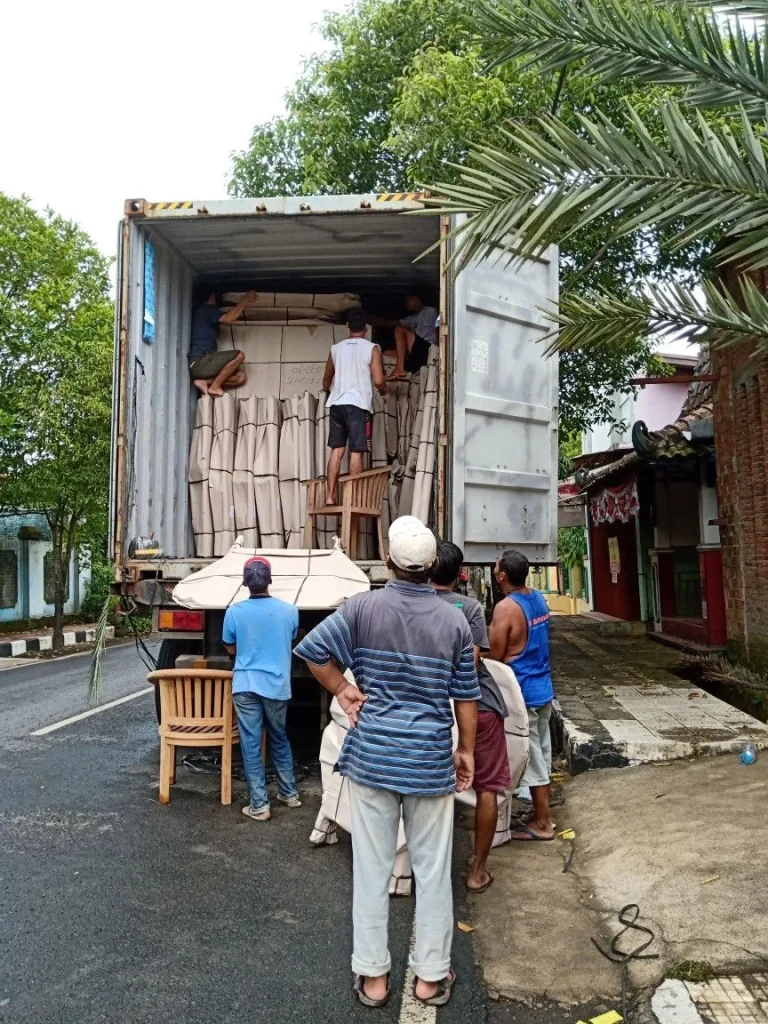
Wooden furniture is typically shipped in standard dry containers; must be carefully cushioned to prevent scratches and impact damage during long-distance transport, especially for products with a high-end painted/varnished surface.
Step 4: Register for phytosanitary quarantine (for natural wood)
Once the goods reach port, register for phytosanitary quarantine with the relevant authority, submitting the Phytosanitary Certificate and the timber origin declaration form per the template specified in Decree 102/2020/ND-CP.
Step 5: Customs declaration and clearance
Open the VNACCS/VCIS declaration with the complete HS code, C/O number, and quarantine registration number. Once customs confirms the documentation is valid and the quarantine results are satisfactory, the business pays the import duty and VAT to clear the declaration.
Step 6: Receive the goods and transport them to the distribution warehouse
Once customs procedures are complete, the business unloads the goods at port, exchanges the delivery order, and transports the goods to the warehouse. For dutiable shipments, all tax obligations must be paid in full before formal receipt of the goods.
5. How to calculate import duty for wooden furniture
Wooden furniture is not subject to special consumption tax, only import duty and VAT. For example, take a shipment of natural wooden dining furniture imported from China (HS code 9403.60.90), with a CIF value of VND 400 million, comparing the case with and without a C/O Form E:
| Tax / Cost Item | No C/O (MFN 25%) | With C/O Form E (5%) |
|---|---|---|
| CIF Value | VND 400,000,000 | VND 400,000,000 |
| Import duty | 25% × 400M = VND 100,000,000 | 5% × 400M = VND 20,000,000 |
| VAT (10%) | 10% × (400+100)M = VND 50,000,000 | 10% × (400+20)M = VND 42,000,000 |
| Total tax payable | VND 150,000,000 (~150 million) | VND 62,000,000 (~62 million) |
| Savings with a C/O | ~VND 88,000,000 — a very significant difference from just one valid C/O document, especially meaningful for businesses importing large volumes for a chain of furniture showrooms. | |
From 3W Logistics’ real-world experience: With wooden furniture, the most common mistake we see isn’t about tax — it’s businesses failing to clearly determine whether the wood species falls under a CITES Appendix before placing a large order. If discovered too late, the time to obtain a CITES permit can extend up to 30 days due to the need for scientific authority consultation, seriously impacting import timelines. In addition, a missing timber origin declaration form in the correct format specified under Decree 102/2020/ND-CP is also a common cause of rejected documentation, forcing businesses to start over while the goods are already sitting at port. – Ms. Apple, CCO, 3W Logistics
6. Common risks in the wooden furniture import procedure
| Risk | Manifestation | Prevention |
|---|---|---|
| Overlooking a CITES-listed wood species | Importing rare wood without a CITES permit — goods held at port, risk of confiscation or forced re-export | Carefully check the CITES list before signing a contract to purchase natural wood, and apply for the permit early if needed |
| Missing Phytosanitary Certificate | Unable to register for phytosanitary quarantine due to a missing certificate from the exporting country — goods cannot clear customs | Require the Phytosanitary Certificate directly in the contract terms with the supplier before shipment |
| Wrong HS code by product function | Confusion between living room, bedroom, and office furniture — customs reclassifies and collects the duty difference retroactively | Clearly determine the product’s actual intended use before declaring the HS code; consult a forwarder experienced in wooden furniture imports |
| Missing timber origin declaration in the correct format | Failure to prepare the correct Form No. 01/02/03, Appendix I of Decree 102/2020/ND-CP — documentation rejected, delaying customs clearance | Determine the applicable case (CITES/FLEGT listed or not) in order to prepare the correct corresponding declaration template |
| Damage or scratches during transport | Painted/varnished surface scratched, corners chipped due to substandard packing on the long journey | Require the supplier to use cushioning packing that meets international shipping standards, and purchase full cargo insurance before shipment |
FAQ – Frequently asked questions about the wooden furniture import procedure
Question 1: What documents does the wooden furniture import procedure require?
The complete documentation package for the wooden furniture import procedure includes: the Sales Contract; Commercial Invoice and Packing List; Bill of Lading; C/O (if seeking FTA preference); Phytosanitary Certificate (for natural wood); the imported timber declaration form under Decree 102/2020/ND-CP; a CITES permit (if the wood species is listed under an Appendix); and the VNACCS/VCIS electronic customs declaration.
Question 2: Does engineered wood furniture require phytosanitary quarantine?
Usually not to the same extent as natural wood. Furniture made entirely from engineered wood (MDF, plywood, particle board) has a significantly simpler procedure than natural wood, not requiring phytosanitary quarantine or rigorous forestry origin documentation. This is an important point to clarify when planning the wooden furniture import procedure.
Question 3: How many types of tax must be paid when importing wooden furniture?
Wooden furniture is subject to only two layers of tax: (1) Import duty, calculated on the CIF value, with a common MFN rate of 20-25% depending on the product type, which can be reduced to 0-5% with a valid FTA C/O; and (2) 10% VAT, calculated on the total CIF plus import duty. Wooden furniture is not subject to special consumption tax, though certain products from specific markets may be subject to a separate anti-dumping duty.
Question 4: How long does the wooden furniture import procedure take?
The total time from signing the contract to the goods arriving at the warehouse is typically 25-50 days for standard natural wood, and can extend to 60-80 days if a CITES permit is needed. Within this: transport from Asia takes 7-15 days, from Europe takes 25-35 days; quarantine registration and clearance take 3-7 days; processing CITES documentation (if needed) can take up to 30 days if consultation with a scientific authority is required.
How does 3W Logistics support the wooden furniture import procedure?
With experience handling a wide range of imported wooden furniture and forestry products, and registered as an OTI-NVOCC with an FMC bond (Federal Maritime Commission) in the United States, 3W Logistics provides a full-package service for businesses on the wooden furniture import procedure — from forestry origin advisory through to the goods arriving at the distribution warehouse.
Full-package logistics service at 3W Logistics:
- Advisory on determining wood type and checking the CITES list: Reviewing the wood species before signing the contract, avoiding the risk of mid-process delays from needing to apply for a CITES permit.
- Accurate HS code determination by product function: Correctly classifying between heading 9403 and 9401, avoiding the risk of reclassification and retroactive tax collection.
- Support preparing legal wood origin documentation: Preparing the correct declaration format under Decree 102/2020/ND-CP, and coordinating phytosanitary quarantine registration in compliance with regulations.
- Support obtaining the correct FTA-form C/O from the supplier: Guiding Chinese suppliers in applying for Form E, and ASEAN suppliers in applying for Form D, to optimize import duty costs.
- Electronic customs declaration via VNACCS/VCIS and resolving issues at the border: Declaring the correct HS code, coordinating to submit quarantine and wood origin documentation on time.
Why choose 3W Logistics for your wooden furniture import shipment? The wooden furniture import procedure requires simultaneously handling phytosanitary quarantine regulations, proving legal forestry origin under Decree 102/2020/ND-CP, and accurate HS code classification by product function. We stand alongside you from the wood-type determination step through to the goods arriving at the warehouse — helping your business shorten customs clearance time and avoid unnecessary additional costs. Contact 3W for specific advice before signing your import contract.
Address: 34 Bach Dang, Tan Son Hoa Ward, Ho Chi Minh City
Hotline: +84 28 3535 0087
____________________________
3W Logistics Hanoi Branch
Address: 81A Tran Quoc Toan, Cua Nam Ward, Hanoi
Hotline: +84 24 3202 0482
____________________________
3W Logistics Hai Phong Branch
Address: 8A Lot 28 Le Hong Phong, Gia Vien Ward, Hai Phong
Hotline: +84 225 355 5939
____________________________
3W LOGISTICS CO., LTD – We here serve you there!
Email: info@3w-logistics.com
Website: www.3w-logistics.com

Ms. Apple is the CCO (Chief Commercial Officer) at 3W Logistics, with over 10 years of experience in sales and business operations management.
At 3W Logistics, Ms. Apple is responsible for commercial strategy, corporate customer development, managing a team of more than 50 sales professionals, and improving business performance in the logistics sector.
With practical experience in sales management and market development, Ms. Apple shares professional insights on business logistics solutions, international transportation, freight forwarding, customer management, trade lane development, and growth strategies in the logistics industry.


