

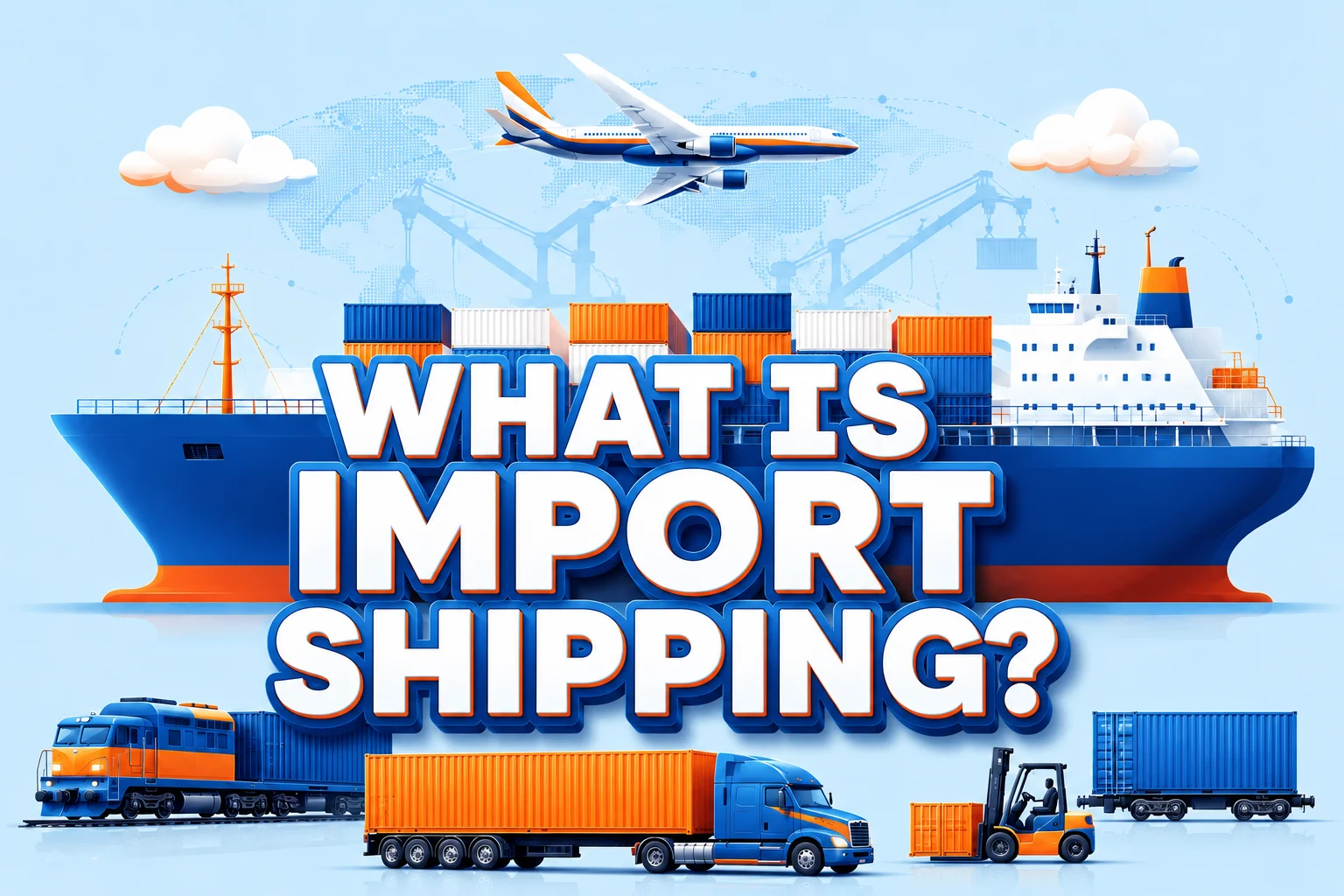
What Is Import Shipping? What Is Importing Goods?
What is Import Shipping? This is one of the fundamental concepts that every company involved in international trade should understand before signing its first foreign trade contract to purchase goods from overseas.
This article explains what import shipping is, how it differs from export shipping, its role in logistics, and the responsibilities of an importer throughout the international shipping and supply chain process.
1. What Is Import Shipping?
1.1 What Is Import Shipping?
Import shipping refers to the process of purchasing and transporting goods or services from another country into the domestic market for consumption, business operations, or manufacturing. In international trade, import shipping is one of the two core pillars of global commerce, alongside export shipping.
From a legal perspective in Vietnam, the Law on Foreign Trade Management No. 05/2017/QH14 defines imported goods as goods brought into the territory of Vietnam from foreign countries or from designated customs-controlled areas within Vietnam. In practice, import shipping is only considered complete after the shipment has successfully cleared customs and received customs clearance through the VNACCS electronic customs system.
Businesses conducting import shipping in Vietnam must comply with the 2014 Customs Law, the 2017 Law on Foreign Trade Management, and other regulations issued by the Ministry of Industry and Trade.
Real-world example: A garment manufacturer in Binh Duong signs a contract to purchase 15 containers of fabric from China for production. This transaction is classified as import shipping, and the Vietnamese company acts as the importer throughout the entire process.
1.2 What Does Import Shipping Mean in Logistics?
Import shipping in logistics refers to the complete operational process of moving cargo from a foreign country to the importer’s warehouse or factory. It covers international transportation, warehousing, customs clearance, regulatory inspections, and domestic delivery after customs release.
Unlike the commercial side of importing, which focuses on contract negotiation and purchasing, import shipping emphasizes the physical movement of cargo throughout the logistics chain.
A typical import shipping process includes international transportation to a Vietnamese seaport or airport, customs declaration through VNACCS, specialized inspections (when required), payment of import duties and taxes, and inland transportation from the port to the final destination. Freight forwarders and logistics providers support importers by managing these operational procedures.
Important: For ocean import shipping, importers should carefully monitor container free time at the port and customs tax payment deadlines to avoid unnecessary DEM/DET (Demurrage and Detention) charges, which are among the most common hidden costs in international shipping.
2. The Role of Import Shipping in International Trade
Import shipping plays a vital role in international trade by ensuring a stable supply of raw materials, machinery, equipment, and consumer products that may not be produced domestically or are insufficient to meet market demand. It enables businesses to access advanced technologies, maintain uninterrupted production, and remain competitive in global markets.
Import shipping is also closely connected to Vietnam’s network of Free Trade Agreements (FTAs), including CPTPP, EVFTA, UKVFTA, and RCEP. These agreements determine the preferential import duty rates available to imported goods when the shipment is accompanied by a valid Certificate of Origin (C/O) issued by the overseas exporter.
In day-to-day logistics operations, import shipping also involves several essential concepts, including HS Codes, customs valuation, import declaration codes within the VNACCS system, and NVOCC (Non-Vessel Operating Common Carrier), a logistics provider frequently used by importers to optimize international ocean freight costs.
3. Import shipping methods
Choosing the appropriate transportation method is essential for cost efficiency, delivery performance, and customs compliance. The three most common import shipping methods are ocean freight, air freight, and cross-border trucking.
3.1 Ocean Freight Import Shipping
Ocean freight services are the most common solution for import shipping because they offer the lowest transportation cost for large cargo volumes. Ocean freight is suitable for Full Container Load (FCL), Less than Container Load (LCL), bulk cargo, and project shipments arriving at major seaports.
Because ocean transit generally requires more time than air freight, importers should prepare customs documentation early and complete duty payment promptly to avoid container storage and detention charges.
3.2 Air Freight Import Shipping
Air freight services are ideal for high-value, time-sensitive, or temperature-controlled cargo such as pharmaceuticals, electronics, spare parts, and product samples.
Although air freight costs more than ocean transportation, it significantly reduces delivery time and supports urgent manufacturing or commercial requirements.
3.3 Cross-Border Trucking
Cross-border trucking services provide efficient transportation for cargo imported through neighboring countries such as China, Laos, and Cambodia. These services connect border checkpoints with warehouses, factories, and distribution centers while supporting regional cross-border supply chains.
The operations team at 3W Logistics continuously monitors shipment progress, coordinates the most suitable transportation methods, and optimizes transit schedules to ensure a smooth and efficient import logistics process.
4. Advantages and Disadvantages of Import Shipping
Import shipping allows businesses to access a wider range of products, advanced technologies, and competitive global suppliers. However, it also involves challenges such as exchange rate fluctuations, import duties, customs compliance, and regulatory requirements. Understanding both the benefits and risks helps companies build a sustainable import strategy.
| Aspect | Advantages | Disadvantages |
|---|---|---|
| Supply Chain & Production | Provides access to raw materials, machinery, and products that may not be available domestically. | Dependence on overseas suppliers makes businesses vulnerable to global supply chain disruptions. |
| Foreign Currency & Exchange Rates | Enables sourcing from countries with lower production costs and competitive pricing. | Exposure to foreign exchange fluctuations and international payment risks. |
| Free Trade Agreement Benefits | Eligible for reduced or zero import duties when valid Certificates of Origin (C/O) are provided. | Failure to meet origin requirements or documentation standards may result in the loss of tariff benefits. |
| Technology & Product Quality | Provides access to advanced manufacturing equipment and high-quality products from global markets. | Higher initial investment and additional training may be required for imported equipment. |
| Transportation & Logistics | Multiple transportation options including ocean freight, air freight, and cross-border trucking. | International shipping costs, delivery delays, and demurrage/detention charges may occur without effective logistics planning. |
5. Import Shipping vs. Export Shipping
Import shipping and export shipping represent two opposite directions of international cargo movement. The table below highlights their key differences.
| Criteria | Import Shipping | Export Shipping |
|---|---|---|
| Direction of Cargo Movement | From overseas into the destination country | From the domestic market to overseas destinations |
| Responsible Party | Importer | Exporter |
| Primary Documents | Import customs declaration and Certificate of Origin (C/O) | Export customs declaration and export Certificate of Origin |
| Trade Balance Impact | Increases imports and foreign currency spending | Generates export revenue and foreign exchange earnings |
| Common Taxes | Import duty, VAT, and other applicable taxes | Export duty (for specific commodities only) |
6. What Is an Importer?
An importer is an individual or company legally responsible for importing goods into a country. The importer appears on the customs declaration and is accountable for HS code classification, customs valuation, duty payment, regulatory compliance, and the overall legality of the imported shipment.
In international shipping documents, the importer is commonly identified as the Consignee or the Importer of Record (IOR). This party assumes legal responsibility before customs authorities, even when a third-party logistics company or customs broker handles the import process on the importer’s behalf.
6.1 Key Responsibilities of an Importer
- Prepare import documentation: including the sales contract, commercial invoice, packing list, and customs declaration.
- Verify the Certificate of Origin (C/O): ensure the document complies with the applicable Free Trade Agreement to qualify for preferential tariffs.
- Obtain import permits and regulatory approvals: when importing controlled products such as food, pharmaceuticals, or medical devices.
- Pay all applicable duties and taxes: including import duty, VAT, and any other required government charges.
6.2 The Role of an Importer in Import Shipping
The importer provides essential shipment information, including product descriptions, HS codes, Incoterms®, destination ports, and supporting documentation. This information enables the import shipping agent to arrange transportation, customs clearance, warehousing, and final delivery efficiently.
The importer is also responsible for resolving issues such as incorrect HS classification, missing Certificates of Origin, or delayed duty payments, all of which may result in customs delays, cargo inspections, or costly demurrage and detention charges.
7. Common Types of Import Shipping
Businesses use different import methods depending on their business model, legal status, and commercial objectives.
| Import Method | Description | Typical Users |
|---|---|---|
| Commercial Import | Goods are imported for resale within the domestic market without further manufacturing. | Trading companies and distributors. |
| Processing Import | Raw materials are imported for manufacturing and subsequent re-export under contract. | Manufacturers in industries such as garments, electronics, and industrial production. |
| Investment Import | Machinery and equipment imported as fixed assets for investment projects. | Companies operating approved investment projects. |
| On-the-Spot Import | Goods are delivered within the importing country under the instruction of a foreign trader without physically crossing the border. | Export processing enterprises and designated local buyers. |
| Entrusted Import | A qualified company imports goods on behalf of another business and acts as the official importer. | Small businesses and companies without import licenses or customs expertise. |
8. Import Shipping Process
A standard import shipping process follows several key stages, from signing the purchase agreement to receiving the cargo at the final destination.
- Sign the sales contract: Agree on Incoterms®, pricing, payment terms, and delivery responsibilities with the overseas supplier.
- Verify import requirements: Determine the correct HS code and obtain any required import licenses or regulatory approvals.
- Review shipping documents: Verify the commercial invoice, bill of lading, packing list, and Certificate of Origin (C/O) provided by the exporter.
- Complete customs declaration: Submit the import declaration and ensure all shipment information is accurate before customs clearance.
- Pay import duties and taxes: Settle import duty, VAT, excise tax (if applicable), and any other government charges.
- Customs clearance and inspection: Customs authorities review the documentation and may perform a physical cargo inspection depending on the risk assessment.
- Final delivery: After customs clearance, the shipment is transported from the port or airport to the consignee’s warehouse or manufacturing facility.
Learn more about the Import Shipping Process.
9. Essential Documents for Import Shipping
Preparing complete and accurate documentation is essential for successful import shipping. Missing or incorrect documents can delay customs clearance and increase logistics costs.
- Sales Contract: The legal agreement between the buyer and overseas supplier.
- Commercial Invoice: Indicates the shipment value for customs valuation and duty calculation.
- Packing List: Provides cargo details, package quantities, dimensions, and weight.
- Import Customs Declaration: The official customs filing required for cargo clearance.
- Bill of Lading (B/L) or Air Waybill (AWB): The transportation document issued by the carrier.
- Certificate of Origin (C/O): Required to qualify for preferential tariffs under Free Trade Agreements.
- Import Licenses or Regulatory Certificates: Required for controlled or restricted products.
10. Common Import Shipping Mistakes
Many import shipments experience customs delays and unexpected expenses because of documentation errors or non-compliance with import regulations.
| Common Mistake | Potential Consequence | Recommended Solution |
|---|---|---|
| Incorrect HS Code Classification | Additional duties, customs penalties, or post-clearance audits. | Verify HS codes carefully or consult customs classification specialists. |
| Missing or Invalid Certificate of Origin | Loss of preferential duty rates under applicable FTAs. | Request the correct C/O from the exporter before shipment and verify its validity. |
| Inconsistent Shipping Documents | Customs inspections, shipment delays, and demurrage/detention charges. | Cross-check all shipping documents before customs submission. |
| Missing Import Permits | Shipment held by customs until regulatory approval is obtained. | Identify licensing requirements before cargo arrival. |
| Late Duty Payment | Interest charges and delayed cargo release. | Pay customs duties immediately after receiving the assessment notice. |
Frequently Asked Questions (FAQ)
What is import shipping?
Import shipping is the process of transporting goods from a foreign country into the destination country for customs clearance, delivery, resale, manufacturing, or business use.
Who is the importer?
The importer is the individual or business legally responsible for customs compliance, import documentation, duty payment, and cargo clearance.
What is the difference between import shipping and export shipping?
Import shipping brings goods into a country, while export shipping transports goods from one country to overseas markets.
What documents are required for import shipping?
The most common documents include the sales contract, commercial invoice, packing list, bill of lading or air waybill, customs declaration, Certificate of Origin, and any required import permits.
What is an Importer of Record (IOR)?
The Importer of Record is the party legally responsible for customs compliance, duty payment, and regulatory obligations for imported goods.
Why should businesses hire an import shipping agent?
An experienced import shipping agent manages transportation, customs clearance, documentation, and regulatory compliance, helping businesses reduce delays, minimize costs, and avoid customs risks.
Conclusion
- Understand the fundamentals of import shipping before purchasing goods internationally.
- Prepare complete shipping documentation, especially valid Certificates of Origin when using Free Trade Agreements.
- Verify HS codes, import regulations, and licensing requirements before shipment.
- Work with a professional import shipping agent to improve customs efficiency, reduce logistics costs, and ensure timely delivery.
This article is based on internationally recognized customs practices, international trade procedures, and standard import shipping operations commonly used in global logistics.
3W Logistics – Your Trusted Import Shipping Agent
Managing international imports without professional logistics support can lead to customs delays, additional duties, documentation errors, and costly demurrage or detention charges. As a professional import shipping agent, 3W Logistics provides end-to-end logistics solutions that simplify every stage of the import process.
- Experienced customs specialists: Accurate HS classification, customs documentation review, and Certificate of Origin verification.
- Global transportation network: Ocean freight, air freight, and multimodal logistics connecting China, Japan, South Korea, Europe, and worldwide markets.
- Efficient customs clearance: Fast documentation processing and optimized import solutions to reduce delays and unnecessary logistics costs.
Whether you are importing raw materials, machinery, retail products, or industrial equipment, 3W Logistics is ready to support your business with reliable and cost-effective import shipping solutions.
Contact Us
3W Logistics – Ho Chi Minh City Headquarters
34 Bach Dang Street, Tan Son Hoa Ward, Ho Chi Minh City, Vietnam
Hotline: +84 28 3535 0087
3W Logistics – Hanoi Branch
81A Tran Quoc Toan Street, Cua Nam Ward, Hanoi, Vietnam
Hotline: +84 24 3202 0482
3W Logistics – Hai Phong Branch
8A Lot 28 Le Hong Phong Street, Gia Vien Ward, Hai Phong, Vietnam
Hotline: +84 225 355 5939
3W LOGISTICS CO., LTD – We Here Serve You There!
Email: info@3w-logistics.com
Website: www.3w-logistics.com

Hello, I’m Nguyen Phuong Nhan (Ms. Nina)
I currently serve as Trade Lanes Supervisor at 3W Logistics, with more than 10 years of experience in international logistics and freight forwarding.
My primary responsibility is developing and managing global logistics partnerships, building strategic trade lanes, and working closely with overseas agents to provide reliable and competitive transportation solutions for customers.
I regularly collaborate with agents and logistics partners worldwide to explore new business opportunities, negotiate freight rates, develop trade routes, and support import-export shipments. I also work closely with our sales team to design logistics solutions tailored to specific markets and customer requirements.
My expertise includes Ocean Freight, Air Freight, Trade Lane Development, Global Agent Network Management, International Logistics Solutions, and Import-Export Support.
Through the articles I share on the 3W Logistics website, I aim to provide practical insights into the international logistics industry, global transportation trends, overseas agent cooperation, and effective logistics strategies that help businesses optimize their supply chain operations.
I believe that strong global partnerships and well-developed trade lanes are essential to delivering sustainable logistics solutions and long-term value to customers worldwide.


