

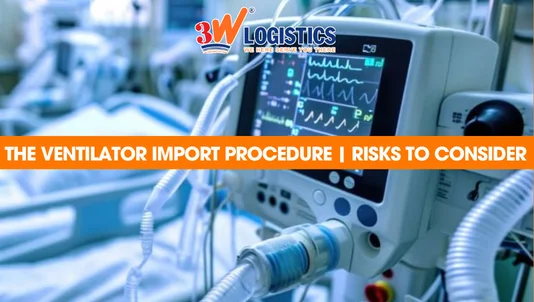
The ventilator import procedure is one of the most complex import processes for medical devices. Ventilators are life-support equipment classified as high-risk medical devices, meaning they cannot be imported commercially like ordinary goods: the device must hold a circulation registration certificate (registration number) issued by the Ministry of Health before the business places an order. Without a registration number, or without an authorization letter from the registration number holder, the entire shipment cannot clear customs even if all commercial documents are complete.
In addition, the ventilator import procedure in 2026 continues to be governed by Decree 98/2021/ND-CP on medical device management (as amended by Decree 07/2023/ND-CP, Decree 96/2023/ND-CP, and Decree 04/2025/ND-CP). The temporary relaxation mechanism for Class C and D devices under Decree 04/2025/ND-CP expired on July 1, 2025. On the tax side, ventilators under heading 9019.20 carry a preferential import duty of 0%, while VAT for medical devices is 5%.
In this article, 3W Logistics presents the complete ventilator import procedure in accordance with current regulations — covering legal conditions, HS codes, duties, documentation, the step-by-step process, and practical risks from the perspective of a freight forwarder with over 10 years of experience handling imported medical equipment and specialized machinery.
1. Legal Conditions for the Ventilator Import Procedure
The legal framework for the ventilator import procedure is based on Decree 98/2021/ND-CP (consolidated document 08/VBHN-BYT of 2026) and Circular 05/2022/TT-BYT (consolidated document 04/VBHN-BYT of 2026). As of the time of writing, Vietnam does not yet have a dedicated Law on Medical Devices; management is primarily based on decrees and amending instruments.
| Condition | Details |
|---|---|
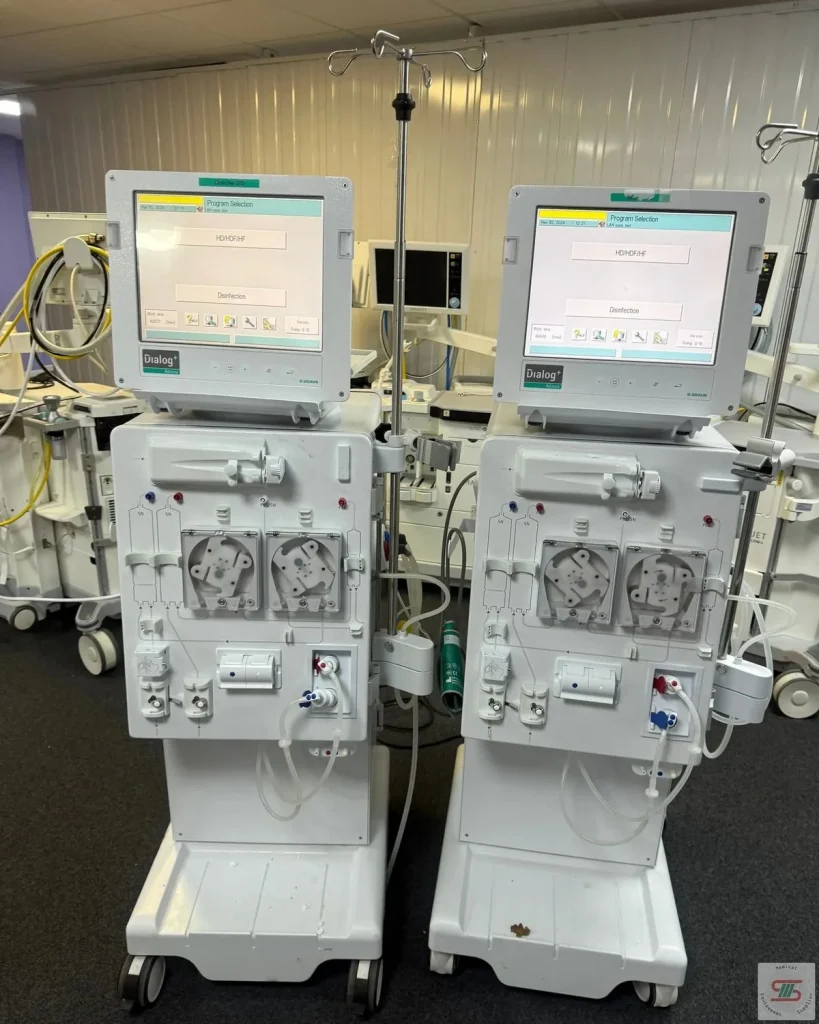
| Medical device classification | Ventilators typically fall under Class C or D by risk level (simple respiratory aids and CPAP devices may be classified lower depending on their specifications). Classification is carried out by the device owner under Article 5 of Decree 98/2021/ND-CP and published on the Ministry of Health’s electronic portal. |
| Registration number — mandatory | Class C and D devices must hold a circulation registration certificate issued by the Ministry of Health. The registration number has no expiry, except for emergency registration numbers issued for epidemic prevention and control purposes. |
| Devices with an existing registration number | Import does not require an import license, but the importer must be the registration number holder or hold a valid authorization letter from the holder (the authorization must be sent to both the registration-issuing authority and customs). |
| Warehousing and transport conditions | The importer must have warehousing and transport facilities that meet medical device storage requirements, or hold a contract with a facility that has the capacity to store and transport medical devices in accordance with Articles 47 and 40 of Decree 98/2021/ND-CP. |
| Devices without a registration number | Where the device falls under one of the cases specified in Clause 1, Article 48 of Decree 98/2021/ND-CP, a Ministry of Health import license must be obtained on a per-shipment basis. From July 1, 2025, the temporary import mechanism based on a classification document no longer applies. |
| Used ventilators | Under Decree 07/2023/ND-CP, the Ministry of Health does not issue import licenses for used medical devices; importation is governed by foreign trade management regulations. Prior confirmation with the regulatory authority and customs is strongly recommended before purchasing used equipment. |
| Product labeling | Imported goods must carry an original label and a Vietnamese supplementary label in accordance with Decree 43/2017/ND-CP and its amending instruments, including the registration number or import license number, lot or serial number, and date of manufacture. |
Practical note: A common mistake in the ventilator import procedure is treating a ventilator as ordinary electronic equipment and preparing only commercial documents. In practice, the registration number is the single most important document and must be secured before placing an order, as the processing time for Class C and D device registration in practice can run for several months. A business that is not the registration number holder and lacks a valid authorization letter also cannot complete the import procedure.
2. HS Code and Import Duty for Ventilators
Ventilators fall under heading 9019 (apparatus for ozone therapy, oxygen therapy, aerosol therapy, artificial respiration, or other therapeutic respiration apparatus), specifically code 9019.20.00. In the ventilator import procedure, the preferential (MFN) import duty for this code is 0% and the standard rate is approximately 5%, meaning import duty is rarely a significant cost.
| Device Type | Reference 8-Digit HS Code | MFN Import Duty | VAT |
|---|---|---|---|
| ICU ventilators, invasive and non-invasive ventilators | 9019.20.00 | 0% | 5% |
| Respiratory aids (CPAP, BiPAP), oxygen concentrators, nebulizers | 9019.20.00 | 0% | 5% |
| Ventilator components and accessories (breathing circuits, masks, humidifiers, etc.) | Refer to tariff schedule | Refer to tariff schedule | Depends on code |
Important note on ventilator HS codes: When declaring goods in the ventilator import procedure, the device type must be described accurately (ICU ventilator, respiratory aid, oxygen concentrator), along with the registration number, manufacturer, and model. Accompanying components and accessories may fall under different codes and may have their own separate registration numbers. The duty rates in the table are for reference only; always cross-check with the current tariff schedule at the time of filing the declaration.
Import Duty Rates for Ventilators by Country of Origin
Since the MFN rate is already 0%, country of origin does not create a significant duty differential in the ventilator import procedure. The standard rate applies only when goods do not qualify for the preferential rate:
| Origin | Applicable C/O | Import Duty | Notes |
|---|---|---|---|
| Countries and territories with normal trade relations (USA, Germany, Japan, South Korea, China, etc.) | Not required to claim MFN rate | 0% | MFN preferential duty applies; a C/O is still recommended to substantiate origin. |
| Goods with preferential C/O (Form E, Form D, Form VK, etc.) | Per applicable agreement | 0% | No further reduction since MFN is already 0%, but the C/O helps substantiate origin. |
| Goods not qualifying for preferential duty | Not applicable | approx. 5% | Standard duty rate applies; verify eligibility conditions before ordering. |
VAT on Ventilators
Medical equipment and instruments are subject to 5% VAT under VAT Law No. 48/2024/QH15. In the ventilator import procedure, the 5% rate applies when the business can demonstrate that the goods are medical devices by providing the registration number or import license and classification document. If this cannot be demonstrated, the goods may be subject to the standard VAT rate (8% through December 31, 2026 under Resolution 204/2025/QH15, then reverting to 10% unless a new extension policy is issued).
| Tax Type | Rate | Tax Base | Notes |
|---|---|---|---|
| Preferential import duty (MFN) | 0% | CIF value | HS code 9019.20.00 |
| Standard import duty | approx. 5% | CIF value | Applies when preferential duty cannot be claimed |
| VAT on medical devices | 5% | CIF + import duty | Must prove the goods qualify as medical devices under applicable regulations |
3. Documentation for the Ventilator Import Procedure
The full document set for the ventilator import procedure consists of two layers: the medical device legal dossier (classification, registration number, authorization) and the standard commercial and customs documents. The device name, model, manufacturer, and registration number must be absolutely consistent across all documents.
| Document | When to Prepare | Key Notes |
|---|---|---|
| Medical device classification document | Before applying for registration number | Classified by the device owner and published on the Ministry of Health’s electronic portal; establishes whether the device is Class C or D. |
| Circulation registration certificate (registration number) | Before placing the order | Issued by the Ministry of Health for Class C and D devices; the single most important document. The registration dossier typically includes technical documentation, ISO 13485, a Certificate of Free Sale (CFS), and manufacturer authorization. |
| Authorization letter from the registration number holder | Before placing the order | Mandatory when the importer is not the registration number holder; the authorization must be submitted to both the registration-issuing authority and customs. |
| Sales Contract | Before placing deposit | Clearly state model, quantity, configuration, registration number, and terms for warranty, installation, training, and provision of technical documentation. |
| Commercial Invoice | Before shipment | Full description of device name, model, serial number, and unit price; must match the registration number. |
| Packing List | Before shipment | Number of packages, dimensions, weight, and itemized list of accessories included with each unit. |
| Bill of Lading / Air Waybill | After goods are handed to the carrier | Goods description and consignee must match the contract, invoice, and authorization letter. |
| Certificate of Origin (C/O) | Before shipment | Does not reduce duty further when MFN is already 0%, but is recommended to substantiate the country of origin. |
| Ministry of Health import license (where applicable) | Before importing the shipment | Applies only when the device does not have a registration number and falls under the cases in Article 48; the license is issued for the specific shipment. |
| Electronic customs declaration (VNACCS) | Once dossier is complete | Declare the correct 8-digit HS code and the registration number or import license number; attach the authorization letter where applicable. |
4. Step-by-Step Ventilator Import Procedure
Below are the six standard steps of the ventilator import procedure that 3W Logistics applies for clients importing respiratory devices into Vietnam:
Step 1: Classify the device and verify the registration number
Before placing an order, the business determines whether the device is Class C or D, checks whether it already has a registration number, and identifies who holds it. This step determines which pathway the ventilator import procedure will follow: if a registration number exists, no import license is needed; if not, the business must either apply for a license or complete registration first.
Step 2: Obtain the registration number or authorization letter
If the device does not yet have a registration number, the owner or an authorized entity submits a registration dossier to the Ministry of Health. If a registration number already exists but the business is not the holder, a valid authorization letter must be obtained and submitted to both the registration-issuing authority and customs. In the ventilator import procedure, this step should be completed before paying any deposit to the supplier.
Step 3: Sign the contract and prepare technical documentation, supplementary labels, and warehouse
At this stage of the ventilator import procedure, the contract should clearly specify the model, registration number, and terms for warranty, installation, and user training. The business prepares Vietnamese supplementary labels, arranges warehousing and transport facilities that meet medical device storage requirements, or enters into a contract with a facility that has the necessary capacity.
Step 4: Ship the ventilators
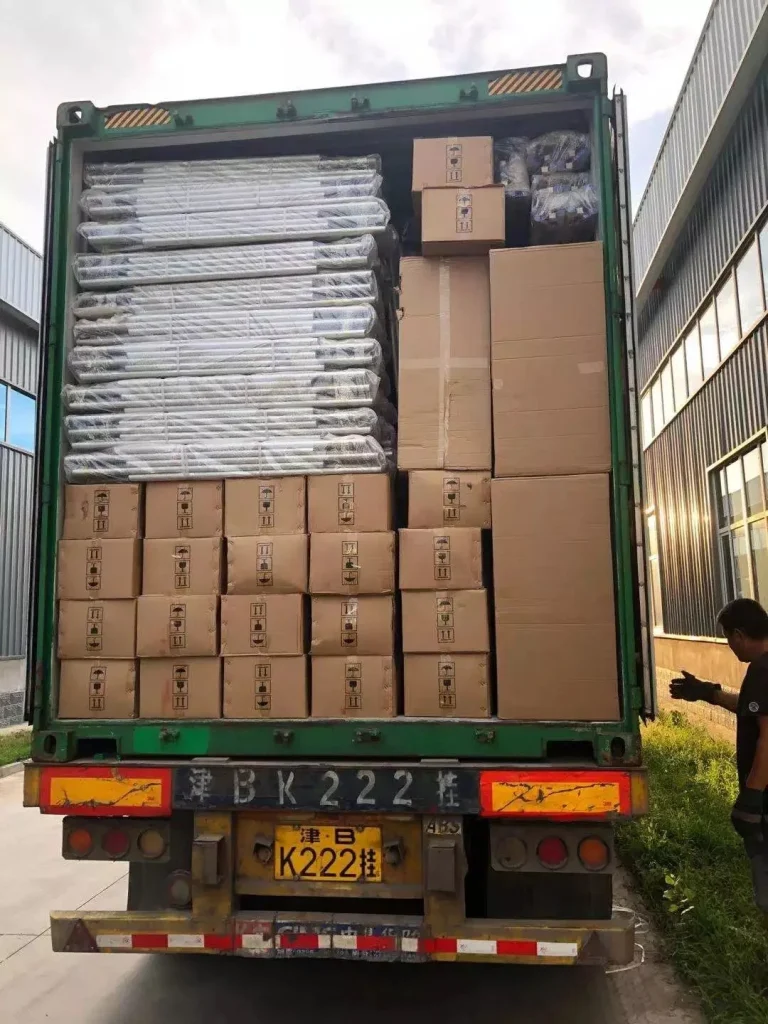
In the ventilator import procedure, ventilators are high-value devices sensitive to shock and moisture, requiring standard packaging with anti-shock and moisture-resistant cushioning. The forwarder advises on air freight for urgent shipments or sea freight for large consignments, and recommends purchasing cargo insurance given the risk of damage to the equipment in transit.
Step 5: File the customs declaration
When goods arrive at port or airport, the forwarder opens a VNACCS declaration with the complete HS code, registration number or import license number, and authorization letter (where applicable). Accurate electronic customs declaration from the outset helps avoid a red-channel assignment and requests for clarification on the device type.
Step 6: Pay duties, clear customs, take delivery, and retain records
Once the dossier is complete, the business pays the applicable duties (5% VAT if the goods qualify as medical devices), collects the Delivery Order, transports the equipment to the warehouse, and carries out installation, training, and warranty servicing as committed. The business retains the full import dossier, registration number, and authorization letter to facilitate inspections by the Ministry of Health. This is the final step of the ventilator import procedure.
5. How to Calculate Import Duties on Ventilators
In the ventilator import procedure, the 0% import duty means the main tax cost is VAT. For a consignment of ventilators (HS 9019.20.00) with a CIF value of VND 1.5 billion, the comparison between demonstrating medical device status (5% VAT) and being subject to the standard 8% VAT rate is as follows:
| Tax / Cost Item | Demonstrated as Medical Device (VAT 5%) | Subject to Standard VAT (8%) |
|---|---|---|
| CIF Value | VND 1,500,000,000 | VND 1,500,000,000 |
| Import duty (MFN 0%) | 0% × 1,500M = VND 0 | 0% × 1,500M = VND 0 |
| VAT | 5% × 1,500M = VND 75,000,000 | 8% × 1,500M = VND 120,000,000 |
| Total tax payable | VND 75,000,000 | VND 120,000,000 |
| Difference | VND 45,000,000 on a VND 1.5 billion shipment — purely from documentation proving medical device status. If the standard VAT rate reverts to 10% from January 1, 2027, the difference will be VND 75 million. | |
In the ventilator import procedure, the greater risk by far is not the tax — it is the absence of a registration number or authorization letter. A shipment without these documents cannot clear customs, accumulates port demurrage charges daily, and may be subject to action under medical device management regulations. These costs typically far exceed the duties payable.
From the practical experience of 3W Logistics: With ventilator shipments, we see two mistakes repeat most often. The first is ordering and paying the supplier before confirming the registration number, then discovering on arrival that the device has not been authorized for circulation. The second is the importer not being the registration number holder but failing to prepare an authorization letter submitted to customs in the prescribed manner, leaving the declaration suspended. Both are entirely avoidable if the ventilator import procedure is reviewed from the very beginning of the device selection process. — Ms. Apple, CCO, 3W Logistics
6. Common Risks in the Ventilator Import Procedure
Based on practical experience handling medical equipment, the following risks appear most frequently in the ventilator import procedure — and all can be prevented with early action:
| Risk | How It Manifests | How to Prevent It |
|---|---|---|
| No registration number at time of ordering | Class C or D device arrives at port without a valid registration number or import license; shipment cannot clear customs and demurrage charges accrue. | Confirm the registration number or complete registration before paying a deposit; check the Ministry of Health’s electronic portal. |
| Missing or incorrect authorization letter | Importer is not the registration number holder but lacks the written authorization submitted to customs; declaration is placed on hold. | Require the registration number holder to provide a written authorization and submit it to both the registration-issuing authority and customs. |
| Incorrect device classification | Class C and Class B are confused, or vice versa; dossier does not match the registration number. | Use the published classification document; seek specialist advisory input before ordering. |
| Importing used ventilators | The Ministry of Health does not issue import licenses for used medical devices; shipment is likely to require detailed explanation and extended physical inspection. | Confirm with the regulatory authority and customs before purchasing; prioritize new equipment when the device will be sold to or used by a medical facility. |
| Incorrect HS code or VAT declaration | Medical device status cannot be demonstrated so standard VAT is applied; or accessories are declared under the ventilator code. | Confirm the 8-digit HS code; attach the registration number and classification document; check each category of accessory separately. |
| Damage or shortage during transit | Screen, sensors, or calibration damaged due to inadequate packaging; disputes with supplier and carrier. | Use standard export crating with anti-shock and moisture-resistant cushioning; photograph the goods at packing; purchase cargo insurance. |
FAQ — Frequently Asked Questions About the Ventilator Import Procedure
Question 1: Does importing ventilators require a Ministry of Health import license?
If the device already has a registration number, no import license is required, but the importer must be the registration number holder or hold a valid authorization letter. An import license is only required when the device does not have a registration number and falls under one of the cases in Article 48 of Decree 98/2021/ND-CP. This is the first point to verify in any ventilator import procedure.
Question 2: What class of medical device is a ventilator, and is a registration number required?
In the ventilator import procedure, ventilators are typically classified as Class C or D by risk level. Class C and D devices must hold a circulation registration certificate issued by the Ministry of Health before commercial importation. Simple respiratory aids and CPAP devices may fall under a lower class depending on their specifications; this must be determined based on the published classification document.
Question 3: What is the import duty on ventilators?
In the ventilator import procedure, ventilators under HS code 9019.20.00 carry a preferential import duty of 0% and a standard rate of approximately 5%. VAT is 5% for medical devices under VAT Law No. 48/2024/QH15 when medical device status can be demonstrated. Businesses should cross-check the current tariff schedule at the time of filing the declaration.
Question 4: Can used ventilators be imported?
Under Decree 07/2023/ND-CP, the Ministry of Health does not issue import licenses for used medical devices, and importation is governed by foreign trade management regulations. Businesses should therefore confirm with the regulatory authority and customs before purchasing used equipment, particularly when the device is intended for resale to a medical facility.
Question 5: How long is a ventilator’s registration number valid?
Medical device registration numbers have no expiry, except for emergency registration numbers issued for epidemic prevention and control purposes. Businesses must nevertheless ensure that device information continues to match the approved dossier and remains subject to Ministry of Health inspection and audit throughout the ventilator import procedure and during the product’s period of circulation.
How Does 3W Logistics Support the Ventilator Import Procedure?
As a freight forwarding company registered as an OTI-NVOCC with FMC bond (Federal Maritime Commission) in the United States and with over 10 years of experience handling imported medical equipment and specialized machinery, 3W Logistics provides end-to-end services for businesses navigating the ventilator import procedure — from HS code and policy advisory through to delivery at warehouse. Businesses may also refer to 3W’s overview article on the medical device import procedure.
- Legal conditions and registration number review: Checking whether the device has a registration number, who holds it, and whether an authorization letter or import license is needed; guiding document preparation so the ventilator import procedure proceeds without interruption.
- HS code advisory and actual duty calculation: Determining the 8-digit HS code and calculating import duty and VAT by device type, giving businesses accurate cost figures before placing an order.
- Coordinating authorization documents and customs paperwork: Preparing and cross-checking the authorization letter, registration number, invoice, and packing list to ensure the declaration is not placed on hold.
- Ocean freight and air freight: Advising on crating, anti-shock, and moisture protection; arranging vessel or flight schedules; tracking the shipment in real time.
- VNACCS electronic customs declaration: Declaring the correct HS code, registration number, and device description; handling supplementary document requests or explanations from customs promptly.
- Cargo insurance advisory: Supporting businesses in obtaining appropriate insurance coverage for high-value medical equipment and coordinating surveys in the event of loss or damage.
Why choose 3W Logistics for your ventilator import shipment? The ventilator import procedure requires managing multiple layers simultaneously: device classification and registration numbers under Decree 98/2021/ND-CP, authorization letters, accurate duty calculation, and safe transport of high-value equipment. A single documentation error can leave a shipment at port for weeks and generate costs far exceeding the duties payable. We are with you from the initial conditions review through to delivery at warehouse. Contact 3W for tailored advice before signing the purchase contract.
Address: 34 Bach Dang, Tan Son Hoa Ward, Ho Chi Minh City
Hotline: +84 28 3535 0087
____________________________
3W Logistics Hanoi Branch
Address: 81A Tran Quoc Toan, Cua Nam Ward, Hanoi
Hotline: +84 24 3202 0482
____________________________
3W Logistics Hai Phong Branch
Address: 8A Lot 28 Le Hong Phong, Gia Vien Ward, Hai Phong
Hotline: +84 225 355 5939
____________________________
3W LOGISTICS CO., LTD — We here serve you there!
Email: info@3w-logistics.com
Website: www.3w-logistics.com

Ms. Apple is the CCO (Chief Commercial Officer) at 3W Logistics, with over 10 years of experience in sales and business operations management.
At 3W Logistics, Ms. Apple is responsible for commercial strategy, corporate customer development, managing a team of more than 50 sales professionals, and improving business performance in the logistics sector.
With practical experience in sales management and market development, Ms. Apple shares professional insights on business logistics solutions, international transportation, freight forwarding, customer management, trade lane development, and growth strategies in the logistics industry.


