

The timber import procedure is a category of forest products with the most distinctive management process among industrial raw material categories, since it requires proving legal origin throughout the entire supply chain under Vietnam’s Timber Legality Assurance System (VNTLAS) — quite different from simply declaring goods to customs and paying tax, as with many other raw material categories.
Not every business fully understands the timber import procedure, especially the classification of the exporting country as a “positive” or “non-positive” geographic zone — a factor that determines the level of documentation required — together with determining whether the wood species falls under CITES management. An error in determining the wood species, HS code, or overlooking a specialized license can result in the shipment being detained, or even confiscated under forest product management regulations.
In this article, 3W Logistics presents the complete timber import procedure under the latest legal regulations and tariff schedule — from legal conditions, HS codes, tax calculation, and required documentation, through the step-by-step process and practical risks, from the perspective of a forwarder experienced in handling imported forest products.
1. Legal conditions for importing timber
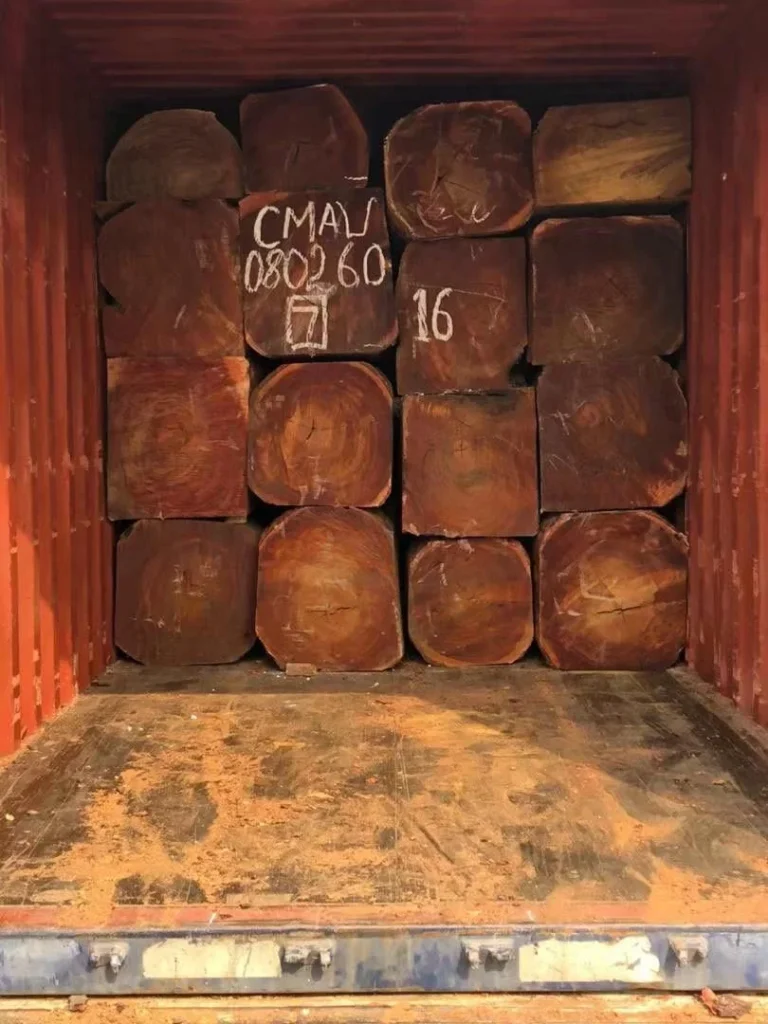
Timber is not on the general list of prohibited import goods, but it must comply with Vietnam’s Timber Legality Assurance System (VNTLAS) — this is what makes the timber import procedure considerably more complex than for many other industrial raw material categories.
| Condition | Detailed Content |
|---|---|
| Timber Legality Assurance System (VNTLAS) | Applied under Decree 102/2020/ND-CP (as amended by Decree 120/2024/ND-CP): imported timber must have documentation proving legal origin, classified by positive or non-positive geographic zone to determine the level of additional documentation required |
| CITES permit | For timber listed under CITES Appendix II or III (rare and precious wood species), an import CITES permit issued by the CITES Management Authority of Vietnam is mandatory before clearance, with a processing time of roughly 15-45 days |
| FLEGT license | For timber imported from a country with a FLEGT Agreement with the EU, a FLEGT export license issued by the exporting country’s competent authority can substitute for certain other origin-proving documentation |
| Phytosanitary quarantine | Under Circular 14/2024/TT-BNNPTNT, round logs, sawn timber, wooden pallets, and sawdust are subject to mandatory phytosanitary quarantine upon import, requiring a Phytosanitary Certificate before clearance |
Practical note: Not every timber shipment is subject to the same level of documentation. In the timber import procedure, businesses need to clearly determine whether the exporting country falls under a positive geographic zone (low risk) or a non-positive zone (high risk) per the VNTLAS classification — timber from a non-positive zone requires a more detailed forest product declaration and may face closer documentation verification before clearance. At the same time, confusing or misdeclaring the scientific name of the wood species can carry the risk of administrative penalties, or even confiscation of the goods, under forest product management regulations.
2. HS code and import tax for timber
Imported timber falls under Chapter 44 (Wood and articles of wood; wood charcoal) in the Import-Export Tariff Schedule; correctly determining the HS code requires assessing the wood species, processing form (round log, sawn timber, plywood), and level of processing.
| Heading/HS Code | Detailed Description | Import Tax (MFN) |
|---|---|---|
| 44.03 — Wood in the rough (round logs), whether or not stripped of bark or sapwood, or roughly squared | ||
| 4403.99.90 | Round logs of various species (excluding coniferous wood and tropical wood specified separately) — the common code for importing raw timber materials | 0% |
| 44.07 — Wood sawn or chipped lengthwise, sliced or peeled, whether or not planed, sanded | ||
| 4407.99.90 | Sawn timber of various species, thickness above 6mm — the most common code used when importing raw material for furniture processing | 0–5% |
| 44.12 — Plywood, veneered panels and similar laminated wood | ||
| 4412.10.00 – 4412.99.90 | Plywood, multi-layer laminated board, MDF/HDF board imported as raw material for furniture manufacturing | 0–15% |
| 44.18 — Builders’ joinery and carpentry of wood, including cellular wood panels, assembled flooring panels | ||
| 4418.71.00 – 4418.79.90 | Wooden flooring and assembled floor panels of various types, imported as construction and furniture material | 0–20% |
Important note on HS codes and tax: Most raw round logs and sawn timber (headings 44.03, 44.07) enjoy a fairly low preferential (MFN) import tax rate, even 0% for many raw timber materials, while deeply processed wood products such as flooring and construction joinery (heading 44.18) carry higher tax to protect the domestic wood processing industry. Regarding VAT, round logs and sawn timber not yet deeply processed, as a primary forest product category, may be subject to a 5% rate under agricultural-forestry product regulations, while processed wood products (plywood, furniture, flooring) are subject to the current standard rate of 8% under Decree 174/2025/ND-CP through December 31, 2026. In the timber import procedure, businesses need to correctly determine the wood species and processing level to apply the correct HS code and corresponding tax rate.
3. Documentation for the timber import procedure
The documentation set for the timber import procedure is considerably more extensive than for ordinary industrial raw materials, per Article 7 of Decree 102/2020/ND-CP (as amended by Decree 120/2024/ND-CP) and Circular 38/2015/TT-BTC (as amended by Circular 39/2018/TT-BTC).
| Document | When to Prepare | Important Note |
|---|---|---|
| Sales Contract | Before deposit | Clearly state the scientific name of the wood species, volume, specifications, and terms for providing documentation proving legal origin |
| Commercial Invoice & Packing List | Before goods are shipped | Fully state the scientific name, volume, and quantity for each wood type, avoiding generic descriptions |
| Bill of Lading | After goods are loaded onto the vessel | Raw timber is typically shipped as bulk cargo or via flat rack container; volume and specifications must be accurately declared |
| Forest product declaration | When goods arrive / after clearance | Prepared per the prescribed form to manage domestic circulation and support inspection by competent authorities under VNTLAS |
| CITES permit (if a regulated species) | Before goods are shipped, apply early due to long processing time | Issued by the CITES Management Authority of Vietnam, with a processing time of 15-45 days; mandatory for timber under CITES Appendix II or III |
| Phytosanitary Certificate | Before clearance | Mandatory for round logs, sawn timber, and wooden pallets under Circular 14/2024/TT-BNNPTNT; register quarantine at the designated authority |
| Electronic customs declaration (VNACCS/VCIS) | Once documentation is complete | Declare the correct HS code under Chapter 44, attaching the forest product declaration and any specialized permits |
4. Step-by-step timber import procedure
Step 1: Determine the wood species and HS code
Accurately determine the scientific name of the wood species and processing form (round log, sawn timber, plywood), and work with the supplier to obtain complete technical documentation, from which the correct HS code under Chapter 44 can be determined and whether the species is listed under CITES.
Step 2: Determine the exporting geographic zone and negotiate the contract
Determine whether the exporting country falls under a positive or non-positive geographic zone per the VNTLAS classification, and sign the timber purchase contract with terms requiring the supplier to provide complete documentation proving legal origin.
Step 3: Apply for a CITES/FLEGT permit if regulated
For timber under a CITES Appendix, submit the CITES import permit application at the CITES Management Authority of Vietnam early, since processing takes 15-45 days; for timber with a FLEGT license from the exporting country, prepare a valid copy.
Step 4: Transport goods to a Vietnamese port and register for quarantine
Register for phytosanitary quarantine before the goods arrive at port for round logs, sawn timber, and wooden pallets under Circular 14/2024/TT-BNNPTNT, in parallel with the transport time to avoid delaying clearance.
Step 5: Customs declaration and clearance
File the VNACCS/VCIS declaration with the full HS code, attaching the forest product declaration, CITES/FLEGT permit (if applicable), and Phytosanitary Certificate. Customs will cross-check origin documentation based on the risk level of the exporting geographic zone.
Step 6: Receive goods, prepare the domestic forest product declaration, and retain records
After clearance, prepare the forest product declaration for domestic circulation management under VNTLAS, receive the goods, and transport them to the warehouse or processing plant. Keep complete documentation on file to support post-clearance inspection if requested by competent authorities.
5. How to calculate import tax on timber
Raw timber is not subject to special consumption tax, only import tax and VAT. As an example, for a shipment of sawn timber imported from Laos (a positive geographic zone, HS code 4407.99.90) with a CIF price of VND 700 million, comparing the case with and without a C/O:
| Tax / Cost Item | Without C/O (ordinary rate 5%) | With C/O ATIGA / MFN (0%) |
|---|---|---|
| CIF price | VND 700,000,000 | VND 700,000,000 |
| Import tax | 5% × 700M = VND 35,000,000 | 0% × 700M = VND 0 |
| VAT (8%, applicable through end of 2026) | 8% × (700+35)M = VND 58,800,000 | 8% × (700+0)M = VND 56,000,000 |
| Total tax payable | VND 93,800,000 (~93.8 million) | VND 56,000,000 (~56 million) |
| Savings with C/O/MFN | ~VND 37,800,000 — not including phytosanitary quarantine costs and other specialized fees; businesses should budget for these additionally when planning import costs. | |
From 3W Logistics’ practical experience: With imported timber, the most common mistake we see in the timber import procedure does not lie in tax or HS codes, but in businesses being slow to determine the exporting geographic zone and apply for a CITES permit (if needed) — since CITES permit processing can take up to 45 days, many businesses are caught off guard when the goods have already arrived at port without a complete permit, leading to significant container and yard demurrage costs. Carefully reviewing the wood species and applying for specialized permits in parallel with the contract negotiation process helps businesses avoid this risk. — Ms. Apple, CCO, 3W Logistics
6. Common risks in the timber import procedure
| Risk | Manifestation | Prevention |
|---|---|---|
| Overlooking a CITES permit | Importing a CITES Appendix-listed wood species without applying for a permit, resulting in the shipment being detained or confiscated | Cross-check the wood species’ scientific name against the CITES list right from the contract negotiation stage, and apply for the permit early |
| Misdeclaring the wood species’ scientific name | Confusion over the scientific name leads to an inaccurate customs declaration, resulting in administrative penalties or confiscation of the goods | Require the supplier to clearly confirm the accurate scientific name, and cross-check against the list of permitted wood species under Decision 5135/QD-BNN-KL |
| Failing phytosanitary quarantine | Timber infested with harmful insects or mold is denied a quarantine certificate, requiring fumigation treatment or re-export | Require the supplier to fumigate/disinfest before export, with a quarantine certificate from the exporting country |
| Missing origin documentation for a non-positive zone | Timber from a non-positive geographic zone, but the business prepares documentation as though for a positive zone, missing the detailed forest product declaration required under VNTLAS | Clearly determine the exporting geographic zone classification before signing the contract, and prepare documentation matching the risk level |
| Misapplying the HS code by wood species and processing level | Confusion between round logs, sawn timber, and plywood within Chapter 44 — customs reclassifies the goods and retroactively collects the tax difference under Decree 128/2020/ND-CP | Request detailed technical documentation from the supplier before declaration; consult a forwarder experienced with the forest products goods category |
FAQ – Frequently asked questions about the timber import procedure
Question 1: What documents are required for the timber import procedure?
The complete documentation set for the timber import procedure includes: Sales Contract; Commercial Invoice and Packing List; Bill of Lading; Forest product declaration; Phytosanitary Certificate; electronic customs declaration (VNACCS/VCIS). Timber under a CITES Appendix additionally requires an import CITES permit; timber from a country with a FLEGT Agreement with the EU additionally requires a FLEGT license.
Question 2: Which timber requires a CITES permit when imported?
Only wood species listed under CITES Appendix II or III (rare, endangered species) require a mandatory import CITES permit issued by the CITES Management Authority of Vietnam. Ordinary plantation-sourced timber not listed under CITES does not need this permit, but must still fully comply with the timber import procedure under VNTLAS.
Question 3: How many types of tax must be paid when importing timber?
Raw timber is subject to only two layers of tax: (1) Import tax calculated on the CIF price, with an MFN rate ranging 0-20% depending on the wood type and processing level, potentially reduced to 0% with a valid C/O; (2) VAT at 5% for primary raw timber or 8% for processed wood products, under Decree 174/2025/ND-CP through December 31, 2026. Timber is not subject to special consumption tax.
Question 4: How long does the timber import procedure take?
For ordinary timber not listed under CITES, the total time from signing the contract to goods arriving at the warehouse is typically 20-35 days depending on the shipping route and phytosanitary quarantine results. For timber subject to CITES management, add 15-45 days waiting for the permit, which can extend the total time to 40-70 days.
How does 3W Logistics support the timber import procedure?
With experience handling a wide range of imported forest products, and registration as an OTI-NVOCC with an FMC Bond (Federal Maritime Commission) in the United States, 3W Logistics provides end-to-end service for businesses on the timber import procedure — from HS code determination consulting through to goods arriving at the processing plant.
Full-package logistics services at 3W Logistics:
- Consulting on accurate HS code determination based on wood species and processing level: Correctly classifying between headings 44.03, 44.07, 44.12, and 44.18, avoiding the risk of reclassification and retroactive tax collection.
- Reviewing the wood species and supporting CITES/FLEGT permit applications: Determining early whether the wood species falls under special management, and supporting timely permit documentation preparation.
- Support with phytosanitary quarantine registration and connecting with quarantine authorities: Preparing documentation and registering early, in parallel with transport time, to shorten waiting time at port.
- Support in preparing the forest product declaration under VNTLAS: Ensuring documentation proving legal origin is complete and in the correct prescribed form.
- Electronic customs declaration via VNACCS/VCIS and resolving issues at the border gate: Declaring the correct HS code and quickly handling any requests for additional documentation.
Why choose 3W Logistics for your imported timber shipment? Because this category of goods must prove legal origin throughout the entire supply chain under VNTLAS, businesses need a partner who thoroughly understands both the customs process and the forest product legality verification process to avoid serious legal risk. We stand alongside you from HS code determination through to goods arriving at the processing plant — helping businesses shorten clearance time and avoid unnecessary added costs. Contact 3W for specific advice before signing your import contract.
Address: 34 Bach Dang, Tan Son Hoa Ward, Ho Chi Minh City
Hotline: +84 28 3535 0087
____________________________
3W Logistics Hanoi Branch
Address: 81A Tran Quoc Toan, Cua Nam Ward, Hanoi
Hotline: +84 24 3202 0482
____________________________
3W Logistics Hai Phong Branch
Address: 8A Lo 28 Le Hong Phong, Gia Vien Ward, Hai Phong
Hotline: +84 225 355 5939
____________________________
3W LOGISTICS CO., LTD – We here serve you there!
Email: info@3w-logistics.com
Website: www.3w-logistics.com

Ms. Apple is the CCO (Chief Commercial Officer) at 3W Logistics, with over 10 years of experience in sales and business operations management.
At 3W Logistics, Ms. Apple is responsible for commercial strategy, corporate customer development, managing a team of more than 50 sales professionals, and improving business performance in the logistics sector.
With practical experience in sales management and market development, Ms. Apple shares professional insights on business logistics solutions, international transportation, freight forwarding, customer management, trade lane development, and growth strategies in the logistics industry.


