

The minerals import procedure covers an extremely broad category with hundreds of different types – from metal ores and concentrates, coal, and limestone to industrial mineral powders – each falling under its own HS code and management policy.
This is also the category carrying the most serious legal risk if businesses fail to carefully check composition, since certain ores may contain radioactive elements – a factor that places the shipment under the special restricted-business goods category.
Not every business fully understands the minerals import procedure, especially the need to check for radioactive composition before importing and to commit to using the minerals strictly for domestic production. There have been real cases of dozens of containers of concentrate containing radioactive elements such as Uranium and Thorium being discovered imported without the proper license – the legal consequences for the business in such a situation are severe.
In this article, 3W Logistics presents the complete minerals import procedure under the latest legal regulations and tariff schedule — from legal conditions, HS codes, tax calculation, and required documentation, through the step-by-step process and practical risks, from the perspective of a forwarder experienced in handling imported minerals.
1. Legal conditions for importing minerals
Minerals are permitted for import into Vietnam if they are not on the prohibited or suspended import list under Decree 69/2018/ND-CP and fully meet any applicable specialized management conditions – this is the most important starting point in the minerals import procedure.
| Condition | Detailed Content |
|---|---|
| Minerals containing radioactive elements | Ore and concentrate containing radioactive elements (such as Uranium and Thorium — commonly found in Monazite ore) fall under the special restricted-business goods category, and must have a license from the Ministry of Science and Technology before import |
| Environmental impact assessment | For minerals with a high pollution risk (e.g. sulphur-bearing ore), an environmental impact assessment (EIA) must be carried out before import, under environmental protection regulations |
| Domestic-use commitment | Businesses must submit a report on their planned use of the minerals after import and commit not to re-export the raw minerals, using them only for domestic production; violations can be fined VND 50-500 million depending on severity |
| Sample analysis certificate | A Sample Analysis Certificate confirming the shipment’s standard and quality is required, issued by a VILAS-accredited testing laboratory — this is also an important basis for correctly determining the HS code |
Practical note: Because the minerals category is extremely broad, there is no single formula that applies across the board. The most important point in the minerals import procedure is that businesses must require the supplier to provide a complete COA (Certificate of Analysis) before signing the contract, with particular attention to checking for any accompanying radioactive element content — since real cases have occurred where dozens of containers of Monazite concentrate containing Uranium and Thorium were discovered by customs to have been imported without the proper license, resulting in severe legal consequences for the importing business. Thoroughly checking composition from the outset is an unskippable step, even when the mineral is offered for sale for an apparently ordinary purpose.
2. HS code and import tax for minerals
The actual HS code for a mineral must be determined based on the COA, composition analysis results, product description, processing specification, and intended use — a difference in content or processing level alone can change the HS code and tax rate entirely.
| Heading/HS Code | Detailed Description | Import Tax (MFN) |
|---|---|---|
| Chapter 25 — Salt; sulphur; earths and stone; plastering materials, lime and cement | ||
| 25.05 | Natural sands of all kinds, including silica sand and quartz sand | 0% |
| 25.07 | Kaolin and other kaolinic clays, whether or not calcined — raw material for the ceramics, paper, and paint industries | 0–3% |
| 25.10 | Natural calcium phosphates, natural aluminium calcium phosphates, and phosphatic chalk (apatite ore) — raw material for fertilizer production | 0% |
| 25.11 | Natural barium sulphate (barytes) and natural barium carbonate (witherite) — used in oil and gas drilling, paint production | 0–3% |
| 25.18 | Dolomite, whether or not calcined or sintered — raw material for metallurgy, refractory material production | 0% |
| 25.21 | Limestone flux; limestone and other calcareous stone used for the manufacture of lime or cement | 0% |
| 25.29 | Feldspar; leucite; nepheline and nepheline syenite; fluorspar — raw material for the ceramics, glass, and metallurgy industries | 0–3% |
| Chapter 26 — Ores, slag and ash | ||
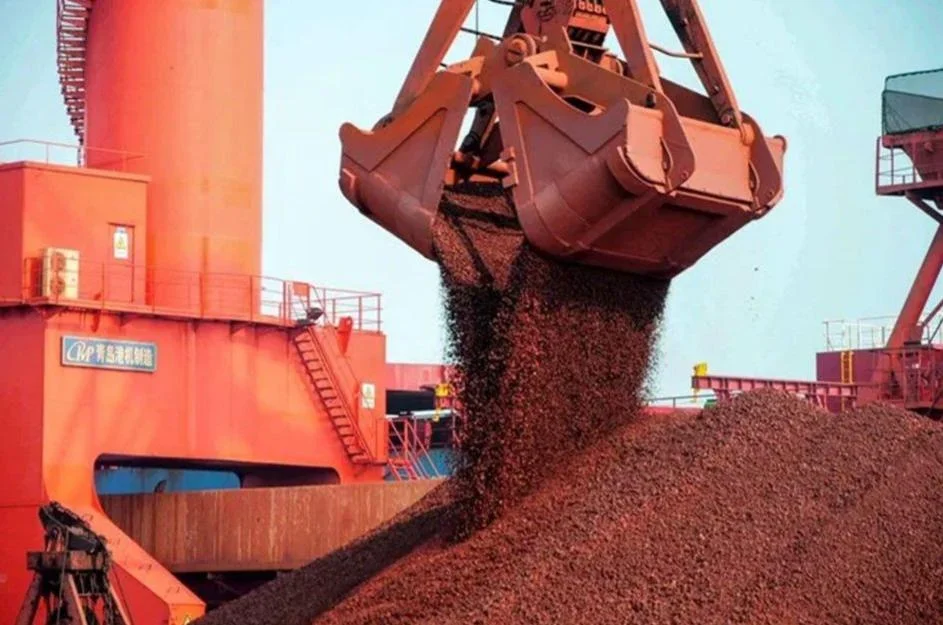
| 26.01 | Iron ores and concentrates, including roasted iron pyrites — the common code for importing metallurgical raw materials | 0% |
| 26.03 | Copper ores and concentrates | 0–5% |
| 26.06 | Aluminium ores and concentrates (bauxite) — raw material for alumina and metallic aluminium production | 0% |
| 26.07 / 26.08 | Lead ores and concentrates; zinc ores and concentrates | 0–5% |
| 26.09 | Tin ores and concentrates | 0% |
| 26.12 | Uranium or thorium ores and concentrates (including Monazite ore) — requires a license from the Ministry of Science and Technology due to the presence of radioactive elements | 0% |
| 26.14 | Titanium ores and concentrates (ilmenite, rutile) — raw material for pigment and titanium alloy production | 0% |
| 26.15 | Niobium, tantalum, vanadium or zirconium ores and concentrates | 0% |
| 26.21 | Slag, ash and other residues from metallurgical industry, including seaweed ash (kelp) | 0% |
| Chapter 27 — Mineral fuels, mineral oils and products of their distillation | ||
| 27.01 | Coal; briquettes, ovoids and similar solid fuels manufactured from coal | 0–3% |
| 27.02 | Lignite, whether or not agglomerated, excluding jet | 0% |
| 27.03 | Peat, including peat litter, whether or not agglomerated | 0% |
| 27.09 | Petroleum oils and oils obtained from bituminous minerals, crude — subject to separate management under petroleum trading regulations | 0% |
| 27.11 | Petroleum gases and other gaseous hydrocarbons, including liquefied natural gas (LNG) — subject to separate management under gas trading regulations | 0–5% |
Important note on HS codes and tax: Because minerals cover such a broad range, most raw metal ores (Chapter 26) enjoy fairly low preferential (MFN) import tax, with many codes at 0%, to encourage importing raw materials for domestic industrial production. For goods with a valid Certificate of Origin (C/O), some remaining codes can also be reduced to 0%. Regarding VAT, minerals as a mining product category are on the exclusion list of the tax reduction policy under Decree 174/2025/ND-CP, so the standard 10% VAT rate applies instead of the preferential 8%. In the minerals import procedure, correctly determining the HS code based on an accurate COA is the most important step, since even a small difference in content or processing level can change the HS code and tax rate entirely.
3. Documentation for the minerals import procedure
The documentation set for the minerals import procedure varies depending on the specific mineral type, per Circular 38/2015/TT-BTC (as amended by Circular 39/2018/TT-BTC) and Decree 69/2018/ND-CP.
| Document | When to Prepare | Important Note |
|---|---|---|
| Sales Contract | Before deposit | Clearly state the mineral type, composition, intended use, and require a detailed COA from the supplier |
| Commercial Invoice & Packing List | Before goods are shipped | Clearly state the mineral name, weight, and processing specification (raw, concentrate, calcined…) |
| Bill of Lading | After goods are loaded onto the vessel | Minerals are typically shipped as bulk cargo, with large weight; weight must be accurately declared |
| COA and Sample Analysis Certificate (VILAS) | Before declaring the HS code | The most important basis for determining the HS code, and for checking whether radioactive elements are present |
| Ministry of Science and Technology license (if radioactive) | Apply early before goods are shipped | Mandatory for ore and concentrate containing radioactive elements; processing time can be extended |
| Post-import mineral use plan report | When completing customs procedures | Submitted to the state management authority, showing the commitment to domestic use and no re-export of raw minerals |
| Electronic customs declaration (VNACCS/VCIS) | Once documentation is complete | Declare the correct HS code per the COA and the mineral’s actual nature, attaching any specialized license |
4. Step-by-step minerals import procedure
Step 1: Request the COA and determine the HS code
Ask the supplier to send the COA, product images, and technical information in advance to assess import feasibility, determine the intended HS code, and check composition, paying particular attention to any accompanying radioactive elements.
Step 2: Check the specialized management status
Cross-check the mineral’s composition against the list of special restricted-business goods; if radioactive elements are present, apply for a license from the Ministry of Science and Technology before proceeding to the next steps.
Step 3: Environmental impact assessment (if needed)
For minerals with a high pollution risk, carry out an environmental impact assessment per regulations before import.
Step 4: Negotiate the contract and prepare documentation
Sign the mineral purchase contract, clearly stating composition, weight, and intended use, and require a C/O in the contract terms.
Step 5: Transport goods to a Vietnamese port and file customs declaration
Minerals are typically shipped as large-volume bulk cargo; file the VNACCS/VCIS declaration with the full HS code and COA, and submit the post-import mineral use plan report.
Step 6: Pay tax, clear customs, and retain records
After fulfilling the tax obligation and specialized procedures, the goods are cleared within roughly 7-15 days depending on the complexity of the mineral type. Keep complete documentation on file, especially the COA and use plan report, to support post-clearance inspection.
5. How to calculate import tax on minerals
Minerals are not subject to special consumption tax (except in certain special cases under separate regulations), only import tax and VAT. As an example, for a shipment of iron ore imported from Australia (HS heading 26.01) with a CIF price of VND 3 billion, comparing the case with and without a C/O:
| Tax / Cost Item | Without C/O (MFN 0%) | With C/O (0%) |
|---|---|---|
| CIF price | VND 3,000,000,000 | VND 3,000,000,000 |
| Import tax | 0% × 3B = VND 0 | 0% × 3B = VND 0 |
| VAT (10%) | 10% × 3B = VND 300,000,000 | 10% × 3B = VND 300,000,000 |
| Total tax payable | VND 300,000,000 (~300 million) — since iron ore under HS heading 26.01 already enjoys 0% MFN, there is no difference whether or not a C/O is provided | |
| Note | For other mineral types with an MFN import tax rate above 0% (such as certain non-metallic ores or deeply processed minerals), obtaining a C/O still produces a significant tax difference; businesses should check separately per the specific HS code. | |
From 3W Logistics’ practical experience: With minerals, the most serious mistake we warn about in the minerals import procedure does not lie in the tax rate but in businesses skipping the radioactive composition check before importing. Many minerals look, on the surface, like ordinary industrial raw materials but actually contain naturally occurring radioactive element content exceeding the permitted threshold, placing the shipment under the special restricted-business goods category and requiring a separate license. Requiring a complete COA — including radioactivity indicators — right from the contract negotiation stage is a mandatory step to avoid serious legal risk for the business. — Ms. Apple, CCO, 3W Logistics
6. Common risks in the minerals import procedure
| Risk | Manifestation | Prevention |
|---|---|---|
| Importing radioactive minerals without a license | Ore containing radioactive elements (Uranium, Thorium) imported without a license from the Ministry of Science and Technology, resulting in severe legal consequences, potential confiscation, and heavy penalties | Require a complete COA including radioactivity indicators before signing the contract, and apply for a license early if content is detected |
| Misapplying the HS code due to product diversity | A difference in content or processing level alone results in an entirely different HS code, leading customs to reclassify the goods and retroactively collect the tax difference under Decree 128/2020/ND-CP | Base the HS code on an accurate COA and composition analysis result; consult a forwarder experienced with the minerals goods category |
| Violating the domestic-use commitment | Re-exporting imported raw minerals in violation of the commitment stated in the use plan report, resulting in a fine of VND 50-500 million | Prepare a clear, accurate mineral use plan before submitting the report to the management authority |
| Missing environmental impact assessment | A mineral with a high pollution risk (sulphur-bearing, etc.) lacking an EIA, resulting in a request for supplementary documentation or denied clearance | Determine in advance whether the mineral type requires an EIA, and prepare environmental documentation early |
| Non-compliant COA | The Sample Analysis Certificate is not issued by a VILAS-accredited testing laboratory, and is not accepted by customs as the basis for determining the HS code | Carefully check whether the COA issuer is VILAS-accredited or equivalent before using it as the basis for declaration |
FAQ – Frequently asked questions about the minerals import procedure
Question 1: What documents are required for the minerals import procedure?
The complete documentation set for the minerals import procedure includes: Sales Contract; Commercial Invoice and Packing List; Bill of Lading; COA and Sample Analysis Certificate (VILAS); post-import mineral use plan report; C/O (if needed); electronic customs declaration (VNACCS/VCIS). Radioactive minerals additionally require a license from the Ministry of Science and Technology.
Question 2: Which minerals require a license when imported?
Ore and concentrate containing radioactive elements (such as Uranium and Thorium) fall under the special restricted-business goods category and require a mandatory license from the Ministry of Science and Technology. Most ordinary industrial raw minerals do not require a license, but businesses still need to carefully check composition before carrying out the minerals import procedure.
Question 3: How many types of tax must be paid when importing minerals?
Ordinary minerals are subject to only two layers of tax: (1) Import tax calculated on the CIF price, with an MFN rate varying by mineral type, with many raw ore codes enjoying a 0% rate; (2) VAT at the standard 10% rate, since minerals — as a mining product category — fall outside the tax reduction scope under Decree 174/2025/ND-CP. Ordinary minerals are not subject to special consumption tax.
Question 4: How long does the minerals import procedure take?
For ordinary minerals not subject to special management, total clearance time is typically 7-15 days depending on the complexity of the mineral type. For radioactive minerals requiring a license from the Ministry of Science and Technology, the timeline can extend significantly depending on the appraisal process.
How does 3W Logistics support the minerals import procedure?
With experience handling a wide range of imported minerals, and registration as an OTI-NVOCC with an FMC Bond (Federal Maritime Commission) in the United States, 3W Logistics provides end-to-end service for businesses on the minerals import procedure — from HS code determination consulting through to goods arriving at the distribution warehouse.
Full-package logistics services at 3W Logistics:
- Consulting on accurate HS code determination based on the COA and composition: Correctly classifying under Chapter 25, 26, or 27 depending on the mineral type, avoiding the risk of reclassification and retroactive tax collection.
- Reviewing radioactive composition before ordering: Carefully checking the COA to identify early whether the mineral requires a special license.
- Support in preparing the mineral use plan report: Ensuring the domestic-use commitment documentation is complete and compliant.
- Expertise in transporting large-volume bulk cargo: Ensuring accurate weight declaration, reducing the risk of a valuation consultation.
- Electronic customs declaration via VNACCS/VCIS and resolving issues at the border gate: Declaring the correct HS code and quickly handling any requests for additional documentation.
Why choose 3W Logistics for your imported minerals shipment? Because this is an extremely broad category carrying serious legal risk if composition is not carefully checked, businesses need a partner who is careful from the COA assessment stage onward to avoid unnecessary legal consequences. We stand alongside you from HS code determination through to goods arriving at the warehouse — helping businesses shorten clearance time and avoid unnecessary added costs. Contact 3W for specific advice before signing your import contract.
Address: 34 Bach Dang, Tan Son Hoa Ward, Ho Chi Minh City
Hotline: +84 28 3535 0087
____________________________
3W Logistics Hanoi Branch
Address: 81A Tran Quoc Toan, Cua Nam Ward, Hanoi
Hotline: +84 24 3202 0482
____________________________
3W Logistics Hai Phong Branch
Address: 8A Lo 28 Le Hong Phong, Gia Vien Ward, Hai Phong
Hotline: +84 225 355 5939
____________________________
3W LOGISTICS CO., LTD – We here serve you there!
Email: info@3w-logistics.com
Website: www.3w-logistics.com

Ms. Apple is the CCO (Chief Commercial Officer) at 3W Logistics, with over 10 years of experience in sales and business operations management.
At 3W Logistics, Ms. Apple is responsible for commercial strategy, corporate customer development, managing a team of more than 50 sales professionals, and improving business performance in the logistics sector.
With practical experience in sales management and market development, Ms. Apple shares professional insights on business logistics solutions, international transportation, freight forwarding, customer management, trade lane development, and growth strategies in the logistics industry.


