
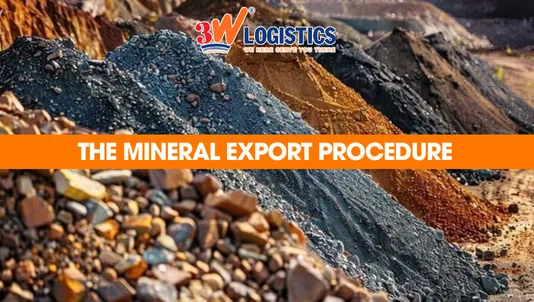
Vietnam’s mineral export procedure has always been one of the more complex customs operations, requiring a high degree of caution from businesses due to strict management aimed at protecting the nation’s natural resources. Thanks to policies encouraging deep processing and refining, Vietnamese mineral products such as limestone, quartz sand, granite, ilmenite, titanium slag, and refined ore are increasingly establishing their quality position in key markets such as China, Japan, South Korea, India, the US, and Europe.
Due to the specific nature directly related to mining licenses, quality standards, legal origin, and resource tax obligations, the mineral export procedure sets out many strict regulations on documentation and specialized inspection. The article below details all the legal basis, HS codes, procedures, costs, and risk notes to help businesses carry out the mineral export procedure accurately, safely, and with optimized transport costs.
1. Potential and Main Mineral Export Markets
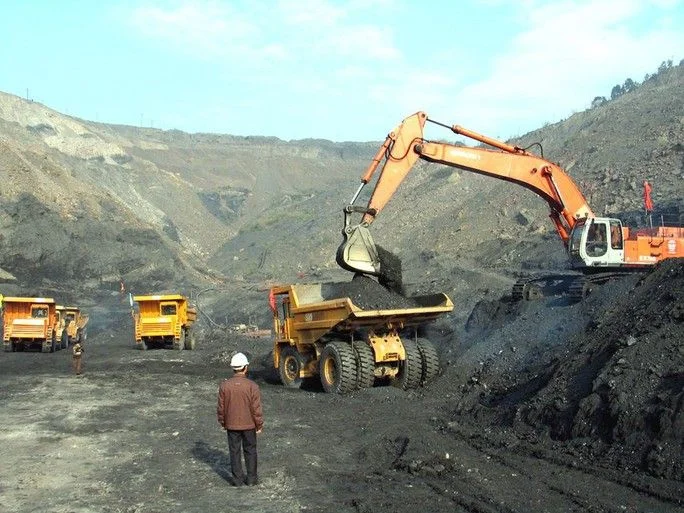
Vietnam possesses abundant mineral resources, stretching from the northern mountainous provinces and central regions to the Central Highlands. The current strategic direction is to minimize the export of raw minerals as much as possible, focusing resources on exporting deeply processed mineral products with high added value.
Each consumption market has its own specific demands and control regulations for imported minerals:
- China & India: Very high import demand for construction limestone, tiling stone powder, quartz sand, and refined iron ore serving the steel, cement, and construction materials manufacturing industries.
- Japan & South Korea: High requirements for stringent technical criteria and high purity for titanium slag, ultra-clean quartz sand, tiling stone, and various non-ferrous metal concentrates.
- US & Europe (EU): Emphasize sustainable origin certification, environmental impact assessment during the mining process, and compliance with chemical safety and toxicity regulations for industrial minerals.
2. Legal Basis Governing the Mineral Export Procedure
When carrying out the mineral export procedure, businesses must cross-check the system of legal documents that directly govern the management, processing, and trading of minerals:
| Legal Document | Main Regulatory Content |
|---|---|
| Minerals Law 2010 (Law No. 60/2010/QH12) | Provides the framework for exploration, mining, processing, and use of minerals; legal management of resource origin. |
| Circular 23/2012/TT-BCT & Circular 14/2013/TT-BCT (Ministry of Industry and Trade) | Regulates the list, quality standards, and export conditions for industrial minerals and metallic minerals. |
| Circular 05/2018/TT-BXD & Circular 04/2021/TT-BXD (Ministry of Construction) | Regulates the list and technical export standards for minerals used as construction materials (limestone, quartz sand, granite, refractory materials…). |
| Decree 69/2018/ND-CP (replaced by Decree 292/2026/ND-CP from September 5, 2026) | Procedures for managing the import-export of goods; exported minerals must be on the list of goods permitted for export and meet the prescribed quality standards. |
| Decree 38/2026/ND-CP & Resolution 36/2026/NQ-CP | Promoting digital transformation, simplifying administrative procedures, and digitizing the process of proving origin and registering specialized quality inspection. |
| Circular 38/2015/TT-BTC (amended by Circular 39/2018/TT-BTC) | Regulations on customs procedures, determining the customs value, and customs inspection for exported minerals. |
Accurately keeping up to date with the specialized circulars (Ministry of Industry and Trade and Ministry of Construction) is a vital factor helping businesses correctly determine whether their mineral product meets export standards.
3. Mandatory Conditions and Documentation Proving Mineral Origin
To carry out the mineral export procedure, the foremost and most important condition is proving the legal mining and trading origin of the minerals.
| Mandatory Condition / Documentation | Competent Authority / Issuer | Detailed Content & Requirements |
|---|---|---|
| Legal Mineral Mining License | Ministry of Natural Resources & Environment / Provincial People’s Committee | Applies to businesses that mine directly. The license must still be valid, matching the correct reserves and mineral type. |
| Financial Invoice & Mineral Sales Contract | Mine / Trading business | Applies to businesses purchasing minerals. Proves the legal trading chain from a licensed mine. |
| Quality and Specification Inspection Certificate (Vilas / ISO 17025) | Designated independent inspection organization (SGS, Vinacontrol…) | Proves the mineral has been processed to meet the technical criteria (content, grain size…) as required by the Ministry of Industry and Trade / Ministry of Construction. |
| Resource Tax Payment Receipt & Environmental Protection Fee | Local Tax Authority | Proves the mining entity has fully fulfilled its tax and fee obligations for the exported volume of minerals. |
4. HS Code and Mineral Export Tax
Exported minerals are primarily classified under Chapter 25 – “Salt; sulphur; earths and stone; plastering materials, lime and cement” and Chapter 26 – “Ores, slag and ash.” Since minerals are a national resource, the export tax policy is very specifically regulated to limit raw exports.
| Mineral Description | Reference HS Code | Vietnam Export Tax | Specialized Management Note |
|---|---|---|---|
| Limestone, granite, marble – cut/processed for tiling | 2515.11 / 2516.12 | 2% – 5% | Must comply with technical regulations under the Ministry of Construction’s Circular. |
| Quartz sand, natural sand that has been screened/processed | 2505.10.00 | 10% – 30% | Requires SiO2 content to meet the minimum technical standard. |
| Titanium slag, titanium concentrate (Ilmenite, Rutile) | 2614.00.10 / 2614.00.90 | 10% – 20% | Controlled under the Ministry of Industry and Trade’s Circular, requiring inspection of TiO2 content. |
| White limestone powder (Calcium Carbonate – CaCO3) | 2517.10.00 / 2521.00.00 | 0% – 5% | Encouraged since it has undergone premium fine-processing. |
Note on tax and customs value: Unlike agricultural or industrial goods with a 0% export tax, minerals typically bear an export tax ranging from 2% to 30% depending on the level of processing. In addition, Customs will very carefully check the customs value (using the transaction value method or applying pricing under the General Department of Customs’ Reference Price Schedule). Businesses need to declare in line with the actual contract when carrying out the mineral export procedure.
5. Technical Standards and Quality Inspection for Exported Minerals
Quality standards are a mandatory factor for Customs to permit clearance of a mineral shipment. Inspection is carried out by a licensed independent inspection organization.
| Mineral Type | Main Technical Criteria Requiring Inspection | Standard-Managing Authority |
|---|---|---|
| Limestone, stone blocks, construction stone | Block dimensions, compressive strength, water absorption, CaCO3 content. | Ministry of Construction (Circular 04/2021/TT-BXD) |
| Quartz sand / Silica sand | SiO2 content (typically required to be ≥ 98%), moisture, grain composition. | Ministry of Construction |
| Titanium concentrate / Titanium slag | TiO2 content (typically ≥ 50%), impurities Fe2O3, SiO2. | Ministry of Industry and Trade (Circular 14/2013/TT-BCT) |
| Refined Iron, Manganese, Lead, Zinc ore | Elemental metal content (Fe, Mn, Pb, Zn), moisture. | Ministry of Industry and Trade |
6. Documentation Set for the Mineral Export Procedure
When carrying out the mineral export procedure, businesses need to prepare a customs documentation set that includes both commercial documents and legal origin documentation:
| Document Name | When to Prepare | Detailed Requirements & Notes |
|---|---|---|
| Export Customs Declaration (VNACCS) | When the goods are gathered at the port/border gate | Declare the correct HS code, trade name, and chemical/technical name of the mineral. |
| Sales Contract | Before carrying out the procedure | Clearly state delivery terms (FOB, CFR, CIF), and technical grade specifications. |
| Commercial Invoice & Packing List | After completing weighing/packaging | Show net weight, gross weight including packaging, and the number of containers or bulk vessel details. |
| Quality & Weight Inspection Certificate | Carried out at the export port | Issued by an independent inspection organization, confirming the technical criteria meet export standards. |
| Documentation Set Proving Legal Origin | Prepared in advance within company records | Copy of the Mineral Mining License, VAT Invoice for purchase from the mine, Resource Tax payment receipt. |
| Certificate of Origin (C/O) | After the goods are loaded onto the vessel | Registering the C/O (Form E, Form AK, Form RCEP…) helps the buyer enjoy tariff preferences. |
7. Step-by-Step Process for the Mineral Export Procedure
Carrying out the mineral export procedure requires close coordination between the cargo owner, the inspection organization, the customs authority, and the logistics provider through 6 standard steps:
Step 1: Check the Legality and Technical Standards of the Minerals
Review the entire origin documentation of the mineral shipment (Mining License/Purchase Invoice from the mine). Compare the actual composition analysis criteria against the list of minerals permitted for export under the Ministry of Industry and Trade’s or Ministry of Construction’s Circulars.
Step 2: Register Quality and Volume Inspection at the Export Port
Contact an independent inspection organization (SGS, Vinacontrol…) to register for inspection. For containerized goods, sampling is carried out during the loading process; for bulk cargo (Bulk Cargo), inspection officers will take representative samples and conduct a Draft Survey directly at the ship’s side.
Step 3: Electronic Customs Declaration on the VNACCS System
The business or forwarding company prepares and transmits the electronic customs declaration. Accurately fill in the HS code, origin, and customs value criteria, and attach the mineral origin documentation to the customs management system.
Step 4: Customs Reviews Documentation and Conducts Physical Inspection (If Yellow/Red Channel)
Export customs proceeds to cross-check the documentation. Since minerals are a commodity with high tax and environmental risk management, shipments are often routed to the Yellow or Red channel:
- Yellow Channel: Customs conducts a detailed review of the origin documentation set, VAT invoices, and inspection certificate.
- Red Channel: Physical inspection of the goods at the port yard, combined with cross-checking inspection samples against the declaration.
Step 5: Pay Export Tax and Clear the Shipment
After Customs accepts the value and documentation, the business proceeds to pay the mineral export tax (if any) into the state budget. Once the tax payment is confirmed on the system, Customs signs off to approve the shipment’s clearance.
Step 6: Load the Goods onto the Vessel, Issue the Bill of Lading, and Process the C/O
Hand over the goods to the shipping line (or bulk vessel owner). Once the vessel departs the port, issue the Bill of Lading, submit documentation to apply for the Certificate of Origin (C/O), and finalize the payment documentation set to send to the foreign partner.
8. Transport Methods and Mineral Logistics Infrastructure
Minerals have the characteristic of being heavy, high-volume cargo with a relatively low value per ton compared to consumer goods. Therefore, choosing the right transport solution helps minimize logistics costs as much as possible:
- Sea transport by bulk cargo (Breakbulk / Dry Bulk Vessel): Applied to large-volume shipments ranging from a few thousand to tens of thousands of tons, such as limestone, quartz sand, and iron ore. Goods are gathered at specialized ports (Cam Pha Port, Nghi Son Port, Vung Ang Port, Phu My Port…) and loaded onto the vessel using conveyor belts or grab cranes.
- Transport by Dry Container: Suitable for premium finely processed minerals (CaCO3 powder, quartz powder, titanium slag packed in 1-1.5 ton Jumbo bags) or stone blocks, cut tiling stone slabs packed in wooden crates. Ensures the goods do not become damp or contaminated.
- Road transport & Inland waterway transport: Uses waterway barges from mines in the Ha Nam, Ninh Binh, and Quang Ninh regions to seaports to optimize costs compared to road transport.
9. Time and Cost in the Mineral Export Procedure
Businesses need to fully account for specialized fees and customs clearance time when developing a mineral export business plan.
| Work Item / Cost | Estimated Time | Reference Cost |
|---|---|---|
| Quality & Weight Inspection (Draft Survey / Sampling) | 1 – 3 days (according to loading progress) | Per the inspection organization’s fee schedule (calculated by ton or by shipment) |
| Export Customs Declaration Cost | 1 – 2 working days | 1,000,000 – 2,000,000 VND/declaration (depending on documentation complexity) |
| Mineral export tax | Paid before customs clearance | As a percentage (%) of the customs value applied per HS code |
| Port loading fees (THC, Port Charges, Conveyor) | Based on actual loading | Per the published price schedule of the export seaport |
| Applying for the Certificate of Origin (C/O) | 1 – 2 working days | 500,000 – 1,000,000 VND/document set |
10. Common Risks and Remediation Solutions When Exporting Minerals
Carrying out the mineral export procedure involves many risks in terms of state management and transport losses. Below is a summary table of risks and prevention solutions:
| Risk Encountered | Actual Consequence | Accurate Prevention Solution |
|---|---|---|
| Actual quality criteria do not meet export standards | Customs refuses clearance, export is halted, incurring costly storage and vessel demurrage fees. | Take samples to test technical criteria at a Vilas laboratory right at the mine/warehouse before dropping the goods at the export port yard. |
| Missing or questionable invoices proving the mine purchase origin | Customs transfers the file to the Post-Clearance Audit department or Economic Police to verify the origin. | Review the entire chain of VAT invoices and sales contracts with the mine owner who holds a still-valid mining license before filing the declaration. |
| Subject to price consultation and rejection of the declared customs value | Tax arrears collection on export tax, delayed release of goods. | Prepare documentation proving the selling price in advance (bank payment records, similar contracts, production cost breakdown). |
| Risk of demurrage penalties for bulk vessels | Costs thousands of USD/day due to the port’s loading speed not keeping pace with the vessel charter schedule. | Plan to gather 100% of the cargo volume at the port before the vessel arrives and choose a professional shipping agent. |
11. FAQ – Frequently Asked Questions About the Mineral Export Procedure
Question 1: Can a trading business without its own mine export minerals?
YES. Trading businesses have full rights to export minerals. However, the business must provide a complete documentation set proving legal purchase of the minerals from an entity holding a legal Mineral Mining License (Sales Contract, VAT Invoice, Resource Tax payment receipt).
Question 2: Does exporting limestone or granite require a license from the Ministry of Construction?
Currently, businesses do not need to apply for an export license for each shipment from the Ministry of Construction. However, exported limestone and granite must strictly meet the standards and technical regulations (dimensions, processing grade) prescribed in the Ministry of Construction’s Circular, and must have an appropriate inspection certificate.
Question 3: What value is the mineral export tax calculated on?
The mineral export tax is calculated using the formula: Export tax = Quantity of goods × Taxable value × Tax rate (%). The taxable value is the FOB/DAF price at the export border gate (excluding freight and international insurance costs), which Customs checks according to price management regulations.
Question 4: How long does mineral quality inspection at the port take?
Sampling and standard lab criteria analysis usually takes from 1 to 3 working days. For complex chemical criteria, businesses should ask the inspection organization to provide preliminary results in time to submit to Customs.
3W Logistics Provides Comprehensive, Cost-Optimized Support for the Mineral Export Procedure
As a leading international freight forwarding company, holding full OTI-NVOCC certification issued by the US Federal Maritime Commission (FMC) along with a direct SCAC Code, 3W Logistics has accompanied and successfully handled hundreds of exported mineral shipments by container and bulk vessel to diverse markets around the world.
3W Logistics brings a comprehensive supply chain solution to help optimize the mineral export procedure:
- Legal consulting & accurate HS Code: A team of experts conducts a detailed review of the mine origin documentation set, advises on HS code classification, accurately calculates the export tax rate, and reviews technical standards before filing the declaration.
- Agent for professional customs declaration: Smoothly handles the VNACCS declaration, represents the business in working with Customs during price consultation, Red-channel physical inspection, and coordination with the independent inspection organization.
- Sea transport solutions for container & Bulk Chartering: Provides competitive freight rates for both dry container cargo (Jumbo bags, packaged goods) and bulk vessel chartering (Breakbulk) for large-volume mineral transport to China, India, Japan, South Korea, the US, and the EU.
- Domestic multimodal transport service: Arranges waterway barges and specialized tractor-trailers to transport minerals from mine warehouses to gathering port yards, ensuring loading and yard-drop schedules are met.
- Direct House Bill issuance & direct AMS/ISF filing: Helps businesses have full control over export documentation for shipments to the US and other demanding markets.
Professional – Transparent – Optimized Resource Costs: “Minerals are a commodity subject to the highest level of legal and tariff scrutiny. At 3W Logistics, we help customers closely review the legality of their origin documentation right from the start, while also proposing an optimal combined barge-and-sea-vessel transport plan. This careful approach ensures our customers’ mineral shipments are always cleared safely, on time, and with minimal risk of unexpected costs.” – Ms. Apple, CCO 3W Logistics
Head Office – 3W Logistics Ho Chi Minh City Branch
Address: 34 Bach Dang, Tan Son Hoa Ward, Ho Chi Minh City
Hotline: +84 28 3535 0087
____________________________
3W Logistics Hanoi Branch
Address: 81A Tran Quoc Toan, Cua Nam Ward, Hanoi
Hotline: +84 24 3202 0482
____________________________
3W Logistics Hai Phong Branch
Address: 8A Lot 28 Le Hong Phong, Gia Vien Ward, Hai Phong
Hotline: +84 225 355 5939
____________________________
3W LOGISTICS CO., LTD – We here serve you there!
Email: quote@3w-logistics.com
Website: www.3w-logistics.com

Ms. Apple is the CCO (Chief Commercial Officer) at 3W Logistics, with over 10 years of experience in sales and business operations management.
At 3W Logistics, Ms. Apple is responsible for commercial strategy, corporate customer development, managing a team of more than 50 sales professionals, and improving business performance in the logistics sector.
With practical experience in sales management and market development, Ms. Apple shares professional insights on business logistics solutions, international transportation, freight forwarding, customer management, trade lane development, and growth strategies in the logistics industry.


