

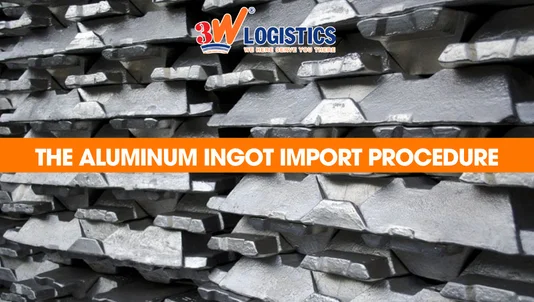
The aluminum ingot import procedure is a category of metal raw materials with a relatively light clearance process in terms of licensing, since it is not on the list of goods subject to specialized management or requiring an import license. However, this is a category subject to close customs scrutiny regarding HS code classification and verification of the goods’ true nature, due to tax rate differences between subheadings and the risk of the category being exploited to import melted aluminum scrap disguised as aluminum ingots.
Not every business fully understands the aluminum ingot import procedure, especially the distinction between pure aluminum ingots and alloyed aluminum ingots for applying the correct HS code, as well as fully preparing documentation proving the goods are newly cast in order to avoid suspicion of being melted scrap. An error in HS code determination, or a missing Mill Test Certificate, can result in the shipment being routed to the red channel for sampling and inspection, extending clearance time.
In this article, 3W Logistics presents the complete aluminum ingot import procedure under the latest legal regulations and tariff schedule — from legal conditions, HS codes, tax calculation, and required documentation, through the step-by-step process and practical risks, from the perspective of a forwarder experienced in handling imported raw metal materials.
1. Legal conditions for importing aluminum ingots
Aluminum ingots are not on the list of prohibited import goods and are not a conditional-business item — this is what makes the aluminum ingot import procedure considerably simpler in terms of licensing than for many other metal raw material categories.
| Condition | Detailed Content |
|---|---|
| Import license | Aluminum ingots (unwrought aluminum in ingot-cast form) are not on the list of goods requiring an import license, and are not subject to specialized inspection during clearance |
| Distinction from aluminum scrap | Aluminum ingots must be 100% newly cast goods, entirely different from aluminum scrap (aluminum shavings, aluminum waste) — a category that requires an Import License for Scrap as Production Raw Material under environmental protection regulations if imported in scrap form |
| Anti-dumping duty (if applicable) | Certain extruded/profiled aluminum products from China are currently subject to anti-dumping duty under Ministry of Industry and Trade decisions; businesses should carefully check the HS code and current anti-dumping decisions to determine whether aluminum ingots fall within the scope |
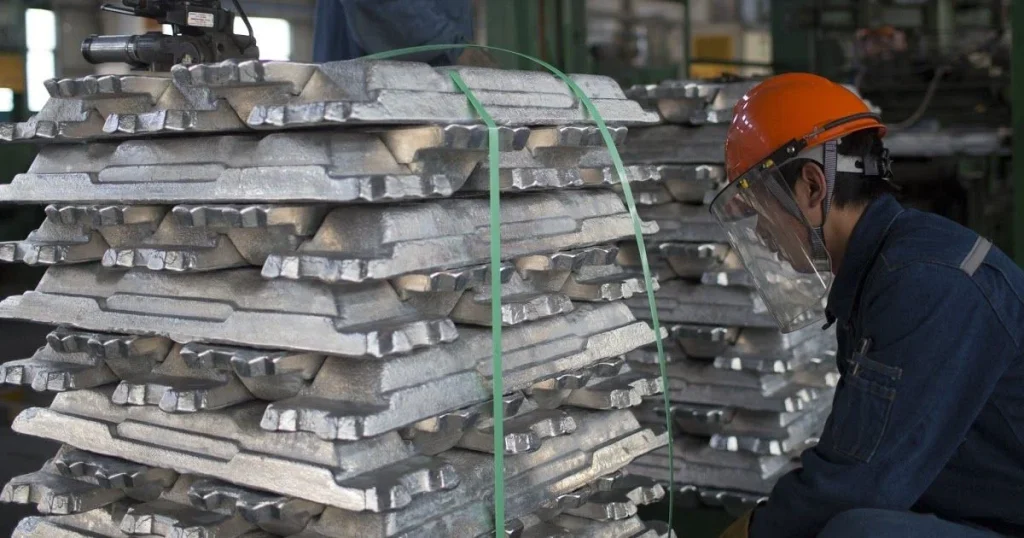
| Quality-proving documentation | A Mill Test Certificate (MTC) is required — a composition analysis certificate from the manufacturer, serving as the basis for determining aluminum content and alloying elements to apply the correct HS code. Sample Mill Test Certificate for aluminum |
Practical note: Because aluminum ingots do not require a specialized license, many businesses assume the aluminum ingot import procedure is entirely as simple as ordinary goods. In fact, this is a “hot spot” category closely monitored by customs to prevent the practice of melting scrap aluminum to evade regulations and then declaring it as aluminum ingots to benefit from a lower tax rate. Businesses should require the supplier to clearly declare the international standard alloy grade (e.g. ADC12, A356) and the phrase “unwrought, in ingot form” on documentation, together with a Mill Test Certificate, to demonstrate transparency and reduce the likelihood of being routed to the red channel for sampling and inspection.
2. HS code and import tax for aluminum ingots
Aluminum ingots fall under heading 76.01 (Unwrought aluminum) in the Import-Export Tariff Schedule, divided between non-alloyed and alloyed aluminum — correctly determining the subheading requires the Mill Test Certificate showing chemical composition.
| Heading/HS Code | Detailed Description | Import Tax (MFN) |
|---|---|---|
| 76.01 — Unwrought aluminum | ||
| 7601.10.00 | Non-alloyed aluminum ingots (pure aluminum, Al content 99% or above) | 3% |
| 7601.20.10 | Aluminum-silicon alloy ingots (Al-Si), typically used for die-casting — the most common code when importing alloyed aluminum ingots | 3% |
| 7601.20.20 | Aluminum-zinc alloy in ingot form (Al-Zn), used in hot-dip galvanizing and alloy casting | 3% |
| 7601.20.90 | Other alloyed aluminum ingots (Al-Mg, Al-Cu…) not classified above | 3% |
Important note on HS codes and tax: The preferential (MFN) import tax rate for aluminum ingots under heading 76.01 is currently commonly 3%. For goods with a valid Certificate of Origin (C/O) — Form E from China, Form D from ASEAN, Form AK from South Korea — import tax is typically reduced to 0%. Regarding VAT, unlike many consumer goods categories currently enjoying the preferential 8% rate under Decree 174/2025/ND-CP, aluminum ingots — as a metal product category — are on the exclusion list of this tax reduction policy, so the standard 10% VAT rate still applies. In the aluminum ingot import procedure, correctly determining the alloy composition via the Mill Test Certificate is important for applying the correct HS code, avoiding reclassification and retroactive tax collection.
3. Documentation for the aluminum ingot import procedure
The documentation set for the aluminum ingot import procedure is relatively light since it is not subject to specialized management, per Circular 38/2015/TT-BTC (as amended by Circular 39/2018/TT-BTC, Clause 5 Article 1 amending Article 16 of Circular 38/2015/TT-BTC).
| Document | When to Prepare | Important Note |
|---|---|---|
| Sales Contract | Before deposit | Clearly state the alloy grade, chemical composition, weight, and terms for providing the C/O and MTC |
| Commercial Invoice & Packing List | Before goods are shipped | Fully state the product name as “alloyed/non-alloyed aluminum ingot, unwrought,” the alloy grade, and weight |
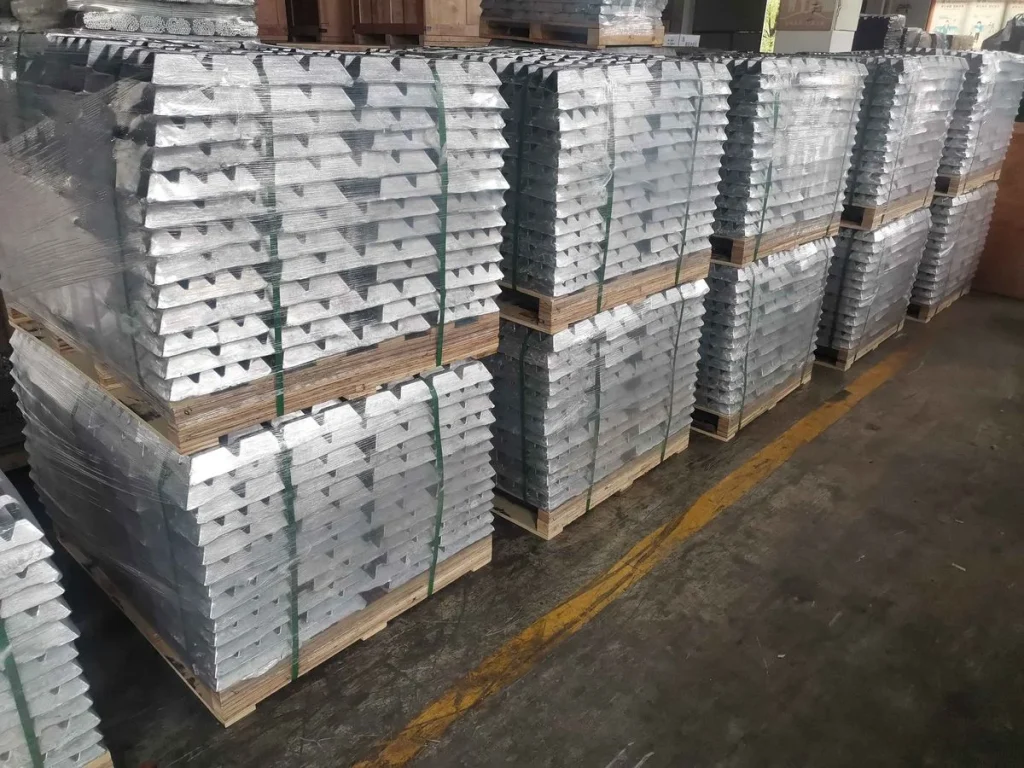
| Bill of Lading | After goods are loaded onto the vessel | Aluminum ingots are typically shipped as bulk cargo or in containers, secured with sturdy steel banding |
| Mill Test Certificate (MTC) | Before declaring the HS code | A composition analysis certificate from the manufacturing plant, the most important basis for applying the correct HS code and proving the goods are newly cast |
| C/O (Certificate of Origin) | Before goods are shipped | Very important to benefit from the 0% special preferential rate (Form E from China, Form D from ASEAN, Form AK from South Korea) |
| Electronic customs declaration (VNACCS/VCIS) | Once documentation is complete | Submit the declaration via ECUS/VNACCS software, declaring the correct HS code under heading 76.01, attaching the MTC and C/O if applicable |
4. Step-by-step aluminum ingot import procedure
Step 1: Check the alloy composition and determine the HS code
Require the supplier to provide a Mill Test Certificate showing the aluminum ingot’s chemical composition, from which the correct HS code — subheading 7601.10 (non-alloyed) or 7601.20 (alloyed) — and the specific subheading by alloy grade can be determined.
Step 2: Negotiate the contract and require a C/O
Sign the aluminum ingot purchase contract, clearly stating the alloy grade and weight, and require an appropriate C/O (Form E, Form D, Form AK…) in the contract terms to benefit from preferential import tax instead of the 3% MFN rate.
Step 3: Check the current anti-dumping duty policy
Review anti-dumping duty decisions from the Ministry of Industry and Trade currently in effect for aluminum products to determine whether the intended HS code falls within scope.
Step 4: Transport goods to a Vietnamese port
Aluminum ingots are typically shipped via container or bulk cargo, secured with sturdy steel banding; ensure packaging and markings on each ingot are clear and consistent with the declared documentation.
Step 5: Customs declaration and clearance
Submit the declaration via ECUS/VNACCS software with the full HS code, MTC, and C/O (if applicable). For the yellow channel, customs checks the validity of documentation, especially the C/O and MTC; for the red channel, customs physically inspects the aluminum ingots’ packaging specifications and markings to verify they are not disguised melted scrap.
Step 6: Pay tax and receive the goods
After fulfilling the tax obligation, the business proceeds to unload the goods to the warehouse or processing plant. Keep complete documentation on file, especially the MTC, to support post-clearance inspection if requested by customs.
5. How to calculate import tax on aluminum ingots
Aluminum ingots are not subject to special consumption tax, only import tax and VAT (unless subject to anti-dumping duty). As an example, for a shipment of ADC12 alloy aluminum ingots imported from China (HS code 7601.20.10) with a CIF price of VND 2 billion, comparing the case with and without a Form E C/O:
| Tax / Cost Item | Without C/O (MFN 3%) | With C/O Form E/ACFTA (0%) |
|---|---|---|
| CIF price | VND 2,000,000,000 | VND 2,000,000,000 |
| Import tax | 3% × 2B = VND 60,000,000 | 0% × 2B = VND 0 |
| VAT (10%, not eligible for reduction) | 10% × (2,000+60)M = VND 206,000,000 | 10% × (2,000+0)M = VND 200,000,000 |
| Total tax payable | VND 266,000,000 (~266 million) | VND 200,000,000 (~200 million) |
| Savings with C/O Form E | ~VND 66,000,000 — for high-volume shipments, the 3% import tax difference creates significant savings; businesses should negotiate for the supplier to assist with obtaining the C/O from the outset. | |
From 3W Logistics’ practical experience: With aluminum ingots, the most common mistake we see in the aluminum ingot import procedure does not lie in the tax rate — which is fairly stable at the 3% MFN level — but in businesses failing to fully prepare the Mill Test Certificate and not clearly declaring the standard alloy grade on documentation. This is precisely the “hot spot” category monitored by customs to prevent scrap-melting fraud designed to evade regulations, so a shipment lacking an MTC or with a vague description is very likely to be routed to the red channel for sampling and classification analysis, extending clearance time and incurring container demurrage costs. Preparing transparent, complete documentation from the outset is the deciding factor for smooth clearance. — Ms. Apple, CCO, 3W Logistics
6. Common risks in the aluminum ingot import procedure
| Risk | Manifestation | Prevention |
|---|---|---|
| Suspected of being disguised melted scrap | A missing Mill Test Certificate or vague goods description leads customs to suspect the shipment is actually melted aluminum scrap, resulting in routing to the red channel for sampling and inspection | Fully prepare the MTC, and clearly declare the international standard alloy grade and the phrase “unwrought, in ingot form” on all documentation |
| Misapplying the HS code between alloyed and non-alloyed | Confusion between pure aluminum ingots (7601.10) and alloyed aluminum ingots (7601.20) — customs reclassifies the goods and retroactively collects the tax difference under Decree 128/2020/ND-CP | Carefully cross-check the chemical composition in the MTC before declaration; consult a forwarder experienced with the metal goods category |
| Running into unexpected anti-dumping duty | Failing to track new anti-dumping decisions from the Ministry of Industry and Trade, resulting in retroactive anti-dumping duty collection after clearance | Carefully check current anti-dumping decisions before each shipment, especially for goods of Chinese origin |
| Failing to track VAT policy changes | Miscalculating costs based on the 8% preferential VAT rate for aluminum ingots, when this item is actually subject to the standard 10% rate as an excluded metal product | Correctly identify the 10% VAT rate right from the import cost planning stage, avoiding confusion with other items enjoying the 8% preference |
| Discrepancy between actual weight and documentation | The actual weight of the aluminum ingots when weighed at port differs from the declared weight, requiring declaration adjustment and additional processing time | Require the supplier to accurately cross-weigh before shipping, and clearly state the permitted tolerance in the contract |
FAQ – Frequently asked questions about the aluminum ingot import procedure
Question 1: What documents are required for the aluminum ingot import procedure?
The complete documentation set for the aluminum ingot import procedure includes: Sales Contract; Commercial Invoice and Packing List; Bill of Lading; Mill Test Certificate; C/O (if needed); electronic customs declaration (VNACCS/VCIS) submitted via ECUS software. Aluminum ingots do not require an import license or specialized inspection.
Question 2: Do aluminum ingots require an import license?
No. Aluminum ingots are not on the list of goods subject to specialized management or requiring an import license; businesses carry out the aluminum ingot import procedure like ordinary goods. However, businesses should be careful to clearly distinguish from aluminum scrap — a category that requires a scrap import license under environmental protection regulations.
Question 3: How many types of tax must be paid when importing aluminum ingots?
Ordinary aluminum ingots are subject to only two layers of tax: (1) Import tax calculated on the CIF price, with a common MFN rate of 3%, potentially reduced to 0% with a valid C/O; (2) VAT at the standard 10% rate, since aluminum ingots — as a metal product category — fall outside the tax reduction scope under Decree 174/2025/ND-CP. Aluminum ingots are not subject to special consumption tax, but anti-dumping duty should be checked separately if applicable.
Question 4: How long does the aluminum ingot import procedure take?
With complete documentation and a shipment routed to the yellow channel, the total time from signing the contract to goods arriving at the warehouse is typically 15-25 days. If the shipment is routed to the red channel for sampling and classification analysis, clearance time can extend by another 5-10 working days waiting for results.
How does 3W Logistics support the aluminum ingot import procedure?
With experience handling a wide range of imported raw metal materials, and registration as an OTI-NVOCC with an FMC Bond (Federal Maritime Commission) in the United States, 3W Logistics provides end-to-end service for businesses on the aluminum ingot import procedure — from HS code determination consulting through to goods arriving at the distribution warehouse.
Full-package logistics services at 3W Logistics:
- Consulting on accurate HS code determination based on alloy composition: Correctly classifying between subheadings 7601.10 and 7601.20, avoiding the risk of reclassification and retroactive tax collection.
- Reviewing current anti-dumping duty regulations: Checking Ministry of Industry and Trade decisions before each shipment, avoiding unexpected added costs.
- Support in preparing transparent documentation to reduce red-channel risk: Guiding businesses in preparing a complete Mill Test Certificate and documentation, reducing the likelihood of sampling and inspection.
- Support in calculating actual tax and optimizing preferences: Advising on obtaining the appropriate C/O to reduce import tax, and keeping up to date on the latest VAT policy.
- Electronic customs declaration via VNACCS/VCIS and resolving issues at the border gate: Declaring the correct HS code and quickly handling any requests for additional documentation.
Why choose 3W Logistics for your imported aluminum ingot shipment? Because this category is closely monitored by customs to prevent disguised-scrap fraud, businesses need a partner experienced in handling heavy metal goods to prepare transparent documentation from the outset, minimizing the risk of prolonged sampling and inspection. We stand alongside you from HS code determination through to goods arriving at the warehouse — helping businesses shorten clearance time and avoid unnecessary added costs. Contact 3W for specific advice before signing your import contract.
Address: 34 Bach Dang, Tan Son Hoa Ward, Ho Chi Minh City
Hotline: +84 28 3535 0087
____________________________
3W Logistics Hanoi Branch
Address: 81A Tran Quoc Toan, Cua Nam Ward, Hanoi
Hotline: +84 24 3202 0482
____________________________
3W Logistics Hai Phong Branch
Address: 8A Lo 28 Le Hong Phong, Gia Vien Ward, Hai Phong
Hotline: +84 225 355 5939
____________________________
3W LOGISTICS CO., LTD – We here serve you there!
Email: info@3w-logistics.com
Website: www.3w-logistics.com

Ms. Apple is the CCO (Chief Commercial Officer) at 3W Logistics, with over 10 years of experience in sales and business operations management.
At 3W Logistics, Ms. Apple is responsible for commercial strategy, corporate customer development, managing a team of more than 50 sales professionals, and improving business performance in the logistics sector.
With practical experience in sales management and market development, Ms. Apple shares professional insights on business logistics solutions, international transportation, freight forwarding, customer management, trade lane development, and growth strategies in the logistics industry.


