

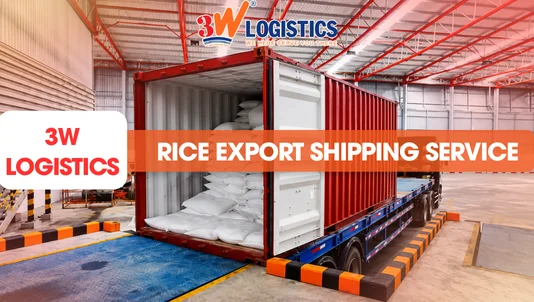
Rice export shipping service requires smooth coordination across many stages — from choosing the packing method and fumigation treatment to preparing specialized documentation and tracking the international shipping journey — entirely different from ordinary agricultural products, since rice is a category with especially specific preservation requirements.
Not every logistics provider can meet the requirements of a rice export shipping service, especially controlling moisture and preventing mold inside a sealed container throughout a long sea voyage. An error in packing or preservation can leave an entire rice shipment damp, moldy, and insect-infested right upon arrival at the destination port, directly damaging the exporting business’s reputation with its partner.
In this article, 3W Logistics introduces the complete rice export shipping service we provide — from service scope and key export markets to shipping methods, packing and preservation requirements, the execution process, and the practical risks businesses need to watch for when shipping rice for export.
1. Rice export shipping service at 3W Logistics
The rice export shipping service at 3W Logistics is a full-package service, so rice exporters don’t have to work with multiple separate contacts (shipping line, fumigation provider, customs, quarantine authority) — just a single point of contact throughout the shipment’s journey.
| Service Component | What We Do |
|---|---|
| Shipping method consulting | Proposing bagged FCL container, bulk container, or a specialized vessel suited to the volume, route, and budget of each shipment |
| Booking and reservation | Working directly with the shipping line, scheduling to fit the delivery timeline, and tracking freight and seasonal surcharge fluctuations |
| Connecting packing and fumigation | Overseeing container stuffing at the warehouse, connecting with a licensed fumigation provider, and controlling moisture and standard-compliant liner bag lining |
| Export documentation support | Guidance and support in obtaining the C/O, Phytosanitary Certificate, and Fumigation Certificate per the specific requirements of each import market |
| Export customs declaration | Filing the VNACCS/VCIS declaration, correctly declaring the HS code by rice type, and quickly handling any shipment routed for inspection |
| Shipment tracking and document handover | Updating the shipment’s status throughout the journey, finalizing and handing over the original document set so the partner can receive the goods at the destination port |
What sets 3W Logistics’ service apart: With OTI-NVOCC registration and an FMC Bond (Federal Maritime Commission) in the United States, together with a branch network in Ho Chi Minh City, Hanoi, and Hai Phong, 3W Logistics proactively coordinates directly with milling facilities and fumigation providers in the Mekong Delta region — where most rice export supply is concentrated — helping shorten preparation time and limit risks arising during the packing stage.
2. Key rice export markets and routes served by 3W Logistics
Vietnamese rice is currently exported to many markets, each with different shipping route characteristics and packing methods. Below are the key markets where 3W Logistics’ rice export shipping service currently operates.
| Market | Route Characteristics | Common Method | Reference Time |
|---|---|---|---|
| Philippines | Vietnam’s largest rice import market, short route, frequent sailings | Specialized bulk carrier, FCL container | ~3-5 days |
| Indonesia, Malaysia | Southeast Asian regional route, typically under contracts consolidating large volumes | Specialized bulk carrier, bulk container | ~5-7 days |
| China | Short route, diverse destination ports, suitable for both small shipments and large volumes | Bagged FCL container | ~2-4 days |
| Africa (Ghana, Ivory Coast, Nigeria…) | Long-haul route, mainly consuming standard white rice and broken rice | Bagged FCL container, specialized vessel | ~25-35 days |
| EU, US, Australia | Long-haul route, mainly high-quality fragrant rice packed under retail brands | Bagged FCL container, strict quality control | ~20-35 days |
Note: The shipping times above are for reference only; actual times depend on vessel schedules, transshipment ports, and the specific shipping date.
3. Rice export shipping methods
Depending on shipment volume, destination market, and partner requirements, businesses can choose one of the following shipping methods within the rice export shipping service.
| Method | Characteristics | Suited For |
|---|---|---|
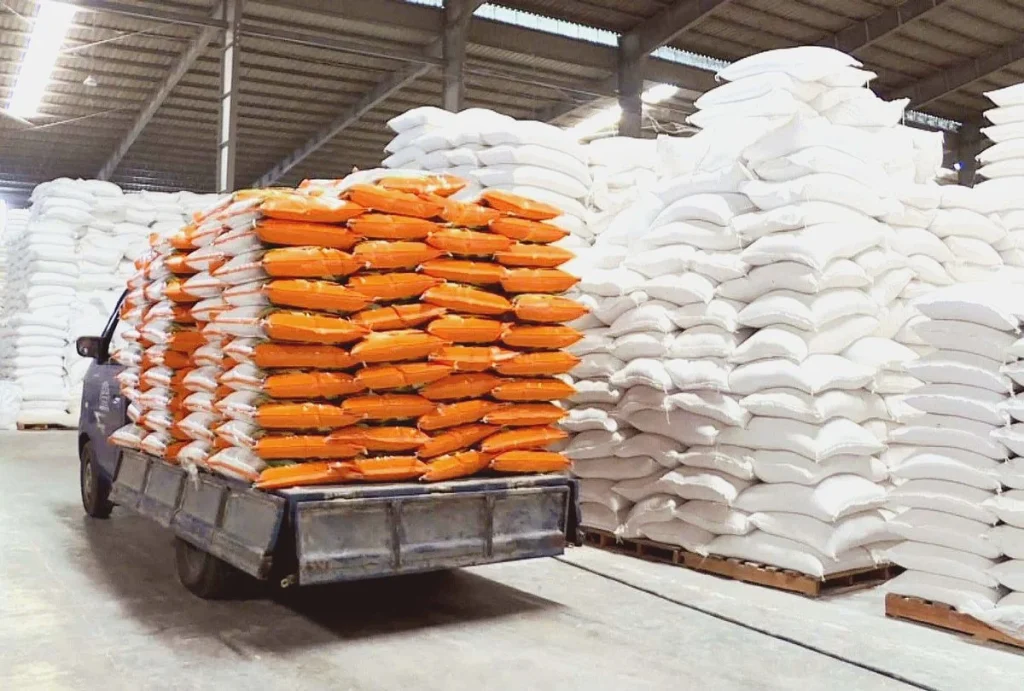
| Bagged FCL container | Rice packed in 25kg, 50kg PP/PE bags, or 1-tonne jumbo bags, loaded in a 20-foot container (~25-27 tonnes) or 40-foot container, with moisture-resistant liner bag lining | Small and medium shipments, branded retail-packaged rice, markets requiring batch-level traceability |
| Specialized bulk carrier | Unbagged loose rice, loaded directly into the ship’s holds, large volumes from a few thousand to tens of thousands of tonnes per voyage | Contracts consolidating large volumes, exports under government-to-government agreements (Philippines, Indonesia, Malaysia) |
| Bulk FCL container | Loose rice loaded directly into a container fitted with a specialized liner bag, no bagging required, while still taking advantage of regular container vessel schedules | Medium-sized shipments needing more flexible scheduling than a dedicated charter vessel |
4. Packing and preservation requirements for rice export shipping
| Item | Technical Requirement |
|---|---|
| Rice moisture content | Controlled below 14% before packing to limit mold developing inside the sealed container over the long voyage |
| Moisture-resistant liner bag | Lining the entire container with a specialized (thick PP/PE) liner bag to prevent condensation from forming on the container walls in direct contact with the rice |
| Fumigation | Fumigation treatment before container stuffing to prevent pests and insects developing during the long sea voyage |
| Stuffing | Stacking rice bags per a technically correct lining diagram, avoiding shifting or tearing of bags during transport and unloading at port |
| Pre-loading container inspection | Ensuring the container is dry, free of unusual odors, and not leaking before loading — especially important for bulk containers |
5. Rice export shipping process at 3W Logistics
Step 1: Receive shipment information and consult on shipping method
Receive shipment information (rice type, volume, destination market, delivery timeline), and advise on the appropriate packing method between bagged FCL container, bulk container, or a specialized vessel.
Step 2: Book and schedule shipping
Work with the shipping line to book according to the delivery timeline, and notify the business of the stuffing schedule and container drop-off time.
Step 3: Oversee packing and fumigation at the warehouse
Connect with a licensed fumigation provider, and oversee moisture control, moisture-resistant liner bag lining, and technically correct stuffing at the warehouse or milling facility.
Step 4: Finalize export documentation
Support obtaining the Certificate of Origin (C/O), Phytosanitary Certificate, Fumigation Certificate, and other documentation per the specific requirements of the destination market.
Step 5: Customs declaration and clearance
File the VNACCS/VCIS electronic customs declaration with the full HS code and related documentation, coordinating fast handling if the shipment is routed for inspection.
Step 6: International shipping and document handover
Track the shipping journey, update the customer on shipment status, and finalize and hand over the complete original document set so the partner can receive the goods at the destination port.
6. Common risks in rice export shipping
| Risk | Manifestation | Prevention |
|---|---|---|
| Rice becoming damp/moldy inside the container | Condensation forming on the container walls due to temperature differences between climate zones over the long voyage | Control rice moisture below 14% before packing, and use standard-compliant moisture-resistant liner bag lining |
| Insect/pest infestation | No fumigation, or substandard fumigation before packing, resulting in pests developing during transport | Proper fumigation at a licensed provider, with a complete fumigation certificate |
| Torn or shifted rice bags during transport | Improper stuffing technique and inadequate lining, causing bags to shift and collide during long-distance transport | Directly oversee the stuffing process, using a packing crew experienced with agricultural cargo |
| Delays due to empty container shortages, seasonal surcharges | Not booking early, especially during peak harvest periods, resulting in space shortages or sudden freight increases | Plan shipping and book early with a forwarder that has a stable freight contract |
| Missing or incorrect documentation at delivery | The document set (C/O, Phytosanitary, Fumigation) does not match the partner’s requirements or the importing country’s regulations, delaying goods receipt at the destination port | Confirm each market’s specific documentation requirements right from the contract negotiation stage |
From 3W Logistics’ practical experience: With rice exports, the most common mistake we see is businesses focusing solely on input rice quality while overlooking moisture control and liner bag lining during container stuffing — resulting in rice becoming damp and partially damaged upon arrival at the destination port, directly harming the relationship with the importing partner. Close coordination between the milling facility, fumigation provider, and forwarder right from the packing preparation stage helps businesses minimize risk throughout the shipping journey. — Ms. Apple, CCO, 3W Logistics
FAQ – Frequently asked questions about rice export shipping service
Question 1: Does 3W Logistics provide full-package support from packing to documentation?
Yes. The rice export shipping service at 3W Logistics includes packing method consulting, connecting with fumigation providers, support in obtaining specialized documentation, customs declaration, and shipment tracking through to handing over documentation to the receiving partner.
Question 2: Should I choose bagged container shipping or a bulk carrier for rice?
For small and medium shipments, or branded retail-packaged rice, a bagged FCL container is preferable for easier batch-level quality control. For large-volume contracts (thousands of tonnes or more), a specialized bulk carrier is typically more cost-optimal.
Question 3: How can rice be prevented from becoming damp/moldy on a long voyage?
Control rice moisture below 14% before packing, line the entire container with standard-compliant moisture-resistant liner bags, and check that the container is dry and not leaking before loading.
Question 4: How long does rice export shipping take?
The time depends on the destination market: nearby Southeast Asian routes (Philippines, Indonesia, Malaysia) typically take 3-7 days, while long-haul routes such as Africa, the EU, and the US can take 20-35 days depending on vessel schedule and transshipment port.
Why choose 3W Logistics’ rice export shipping service? Because rice is a category requiring strict quality control throughout the journey, businesses need a partner who thoroughly understands packing and preservation technique and has a stable network connecting fumigation providers and shipping lines. 3W Logistics stands alongside you from packing method consulting through to the shipment’s arrival at the destination port — helping businesses minimize risk and optimize shipping cost. Contact 3W Logistics for specific advice on your rice export shipment.
Address: 34 Bach Dang, Tan Son Hoa Ward, Ho Chi Minh City
Hotline: +84 28 3535 0087
____________________________
3W Logistics Hanoi Branch
Address: 81A Tran Quoc Toan, Cua Nam Ward, Hanoi
Hotline: +84 24 3202 0482
____________________________
3W Logistics Hai Phong Branch
Address: 8A Lo 28 Le Hong Phong, Gia Vien Ward, Hai Phong
Hotline: +84 225 355 5939
____________________________
3W LOGISTICS CO., LTD – We here serve you there!
Email: info@3w-logistics.com
Website: www.3w-logistics.com

Ms. Apple is the CCO (Chief Commercial Officer) at 3W Logistics, with over 10 years of experience in sales and business operations management.
At 3W Logistics, Ms. Apple is responsible for commercial strategy, corporate customer development, managing a team of more than 50 sales professionals, and improving business performance in the logistics sector.
With practical experience in sales management and market development, Ms. Apple shares professional insights on business logistics solutions, international transportation, freight forwarding, customer management, trade lane development, and growth strategies in the logistics industry.


