
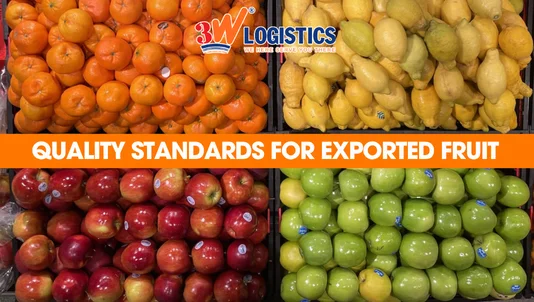
Meeting the correct quality standards for exported fruit is a make-or-break condition for Vietnamese businesses to bring fresh fruit to international markets, since each importing market sets its own requirements for growing area codes, pesticide residue, plant quarantine, and post-harvest treatment.
Fruits and vegetables are the fastest-growing category in Vietnam’s agricultural export sector. In the first 8 months of 2026, fruit and vegetable export turnover reached approximately USD 5.87 billion, up about 21.8% year-on-year, with durian alone earning around USD 1.76 billion in just 7 months.
But alongside that growth come increasingly strict requirements from importing markets: China is tightening post-clearance inspection of growing area codes, the US mandates irradiation for many fruit types, and the EU applies very strict pesticide Maximum Residue Limits (MRLs). A shipment with the wrong growing area code, excessive chemical residue, or missing quarantine treatment can all be returned or destroyed at the destination port.
In this article, 3W Logistics compiles the current system of quality standards for exported fruit – from the national standard, growing area codes and packing facility codes, mandatory technical criteria, market-specific requirements, required international certifications, to the quarantine and certification process – helping businesses proactively prepare documentation and avoid the risk of returned shipments or denied clearance in the importing country.
1. General Standards for Vietnamese Exported Fruit
Overview of the National Standard and Good Agricultural Practices
Unlike processed agricultural products, fresh exported fruit is governed by multiple layers of regulation at once: technical standards for sensory quality, food safety and chemical residue regulations, and the importing country’s plant quarantine requirements. On the technical standard side, TCVN 9017:2011 (Fresh Fruit – Sampling Method at the Production Orchard) is the common basis for sampling and quality assessment right at the orchard, alongside standards specific to each fruit (for example, TCVN standards for dragon fruit, mango, lychee).
On cultivation practices, TCVN 11892-1:2026 (VietGAP – Crop Production) is the latest updated version, built to be more harmonized with regional and international GAP standards such as GlobalGAP. These are the two most common good agricultural practice systems that exported fruit growing areas need to work toward, though not every market requires VietGAP certification as a condition for being granted a growing area code.
Growing Area Codes and Packing Unit Codes (PUC)
The prerequisite for fresh fruit to be officially exported, especially to China, is having a Production Unit Code (P.U.C) for the growing area and a packing facility code, issued by the Department of Crop Production and Plant Protection and approved by the importing country’s quarantine authority (such as GACC). The registration file includes a technical declaration per facility standard 774:2020/BVTV, a list of farming households with their acreage, and VietGAP/GlobalGAP certification or its equivalent (if available). After a field inspection meets the requirements, the P.U.C code is issued and sent to the importing country’s plant quarantine authority.
From 2026, Resolution 36/2026/NQ-CP has simplified the process of issuing and managing growing area and packing facility codes, moving toward a fully online process where businesses self-declare and take self-responsibility, reducing pre-clearance procedures. In exchange, the post-clearance inspection, monitoring, and traceability mechanism has been strengthened; the shipment, quarantine certificate, packaging, and growing area/packing facility data must match each other exactly, since the importing authority (especially GACC) now cross-checks all four layers of information when the goods arrive at the border.
Classification by Quarantine Risk Group
Vietnam’s exported fruit can be divided into three groups by the level of quarantine requirements:
- Group already covered by a bilateral protocol: for example, mangosteen, passion fruit, and durian with China – specific technical requirements (control of fruit flies, mealybugs, heavy metal residue, etc.) are clearly set out in the signed document.
- The “traditional” group exported under an already-permitted list but without its own protocol: bananas, mangoes, lychees, longans, watermelons, dragon fruit, jackfruit, and rambutans to China must still comply with growing area code, packing facility, and plant quarantine requirements, even though a detailed bilateral legal framework like the protocol group is lacking.
- Group requiring additional quarantine treatment for demanding markets: many fruit types exported to the US (pomelo, mango, dragon fruit, longan, lychee, rambutan, star apple, etc.) must be irradiated before clearance, regardless of whether other quality criteria have been met.
2. Mandatory Quality Criteria for Exported Fruit
Fresh exported fruit must simultaneously meet three groups of criteria: sensory-technical, food safety (chemical residue, heavy metals), and plant quarantine (free of pests). The table below summarizes the most important criteria businesses need to control before exporting.
| Criterion | Prescribed Level | Basis |
|---|---|---|
| Size, ripeness, uniformity | Per the specific TCVN for each fruit or as agreed in the contract; fruit must be intact, free of bruising and pests | TCVN 9017:2011 and fruit-specific TCVN standards |
| Pesticide residue (MRLs) | Not exceeding the maximum residue limit under current Vietnamese regulations and the importing country’s regulations (each market has its own MRL list) | The Food Safety Law and its guiding documents; the importing country’s MRL |
| Heavy metals (cadmium, etc.) | Specifically controlled for certain fruits (for example, durian and jackfruit exported to China must be tested for cadmium and Auramine O) | Current food safety regulations; GACC’s specific requirements |
| Quarantine pests | Free of quarantine pests (fruit flies, mealybugs, etc.) of concern to the importing country | The bilateral protocol; the importing country’s quarantine regulations |
| Post-harvest treatment | Irradiation, hot water vapor treatment, or cold treatment, depending on the market and fruit type | The importing country’s quarantine requirements (e.g. APHIS – US) |
| Traceability | The growing area code and packing facility code must be shown on the packaging and on the Phytosanitary Certificate | Resolution 36/2026/NQ-CP; the importing country’s requirements |
Sensory Quality: Size, Ripeness, Uniformity
Each fruit has its own TCVN specifying sensory criteria (shape, color, ripeness, permitted bruising ratio), but the general principle for sampling and assessment at the orchard is set out in TCVN 9017:2011. For fruit without its own TCVN, or when the buyer requires a different specification, specific sensory criteria (diameter, fruit weight, Brix level) are typically stated in the contract rather than applying a common level.
Pesticide Residue and Heavy Metals
This is the criterion group businesses need to control most strictly, since each market has a different Maximum Residue Limits (MRLs) list for the same active ingredient. The EU market is particularly strict on pesticide residue; many shipments are flagged or returned not because of missing documentation but because the detected chemical residue exceeds the EU’s MRL threshold even while still within Vietnam’s permitted threshold. For certain fruits exported to China such as durian and jackfruit, the managing authority also requires additional testing for cadmium and Auramine O – this is an issue that emerged in 2026, and businesses should not apply the experience with this product to other products.
Plant Quarantine and Post-Harvest Treatment
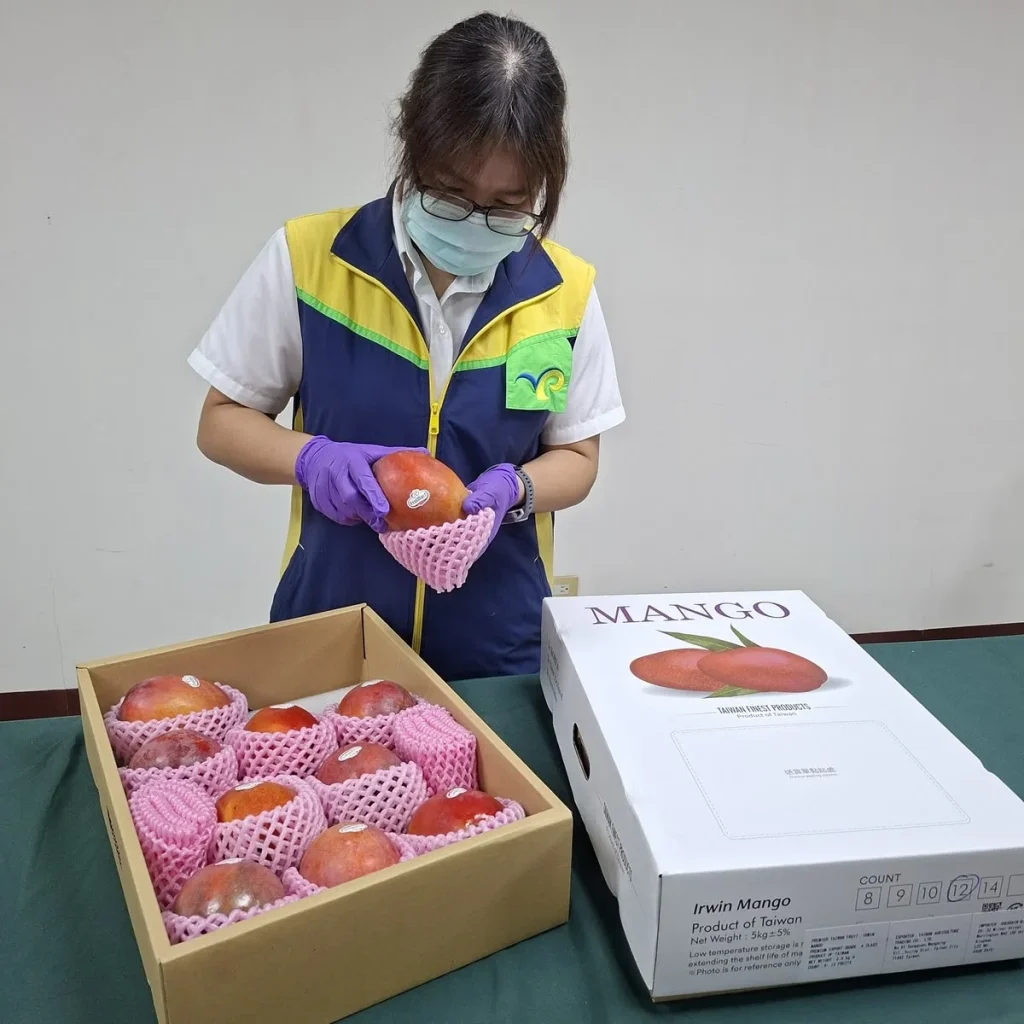
The growing area and packing facility must have appropriate management measures to eliminate the pests of concern to the importing country, such as fruit flies and mealybug species under the requirements in the protocol with China. For the US market, irradiation is a mandatory plant quarantine requirement for many fresh fruits such as pomelo, mango, dragon fruit, longan, lychee, rambutan, and star apple, regardless of whether the shipment has met other quality criteria. Vietnam now has an irradiation facility meeting the standard for treating fruit exported to the US using X-ray and gamma technology, helping ease pressure on the few earlier irradiation facilities during the peak harvest season.
Traceability and Documentation Consistency
A fruit export shipment can be thought of as having four layers of information that must match: the actual goods, the packaging, the quarantine certificate, and the growing area/packing facility data. If any one of the four layers does not match, the importing authority may require further inspection or deny clearance. This is why the growing area code and packing facility code must be accurately shown on both the packaging and the Phytosanitary Certificate, especially now that the management mechanism has shifted to post-clearance inspection under Resolution 36/2026/NQ-CP.
3. Quality Standards for Exported Fruit by Target Market
Beyond the general standard, each importing market sets its own requirements that determine whether a shipment clears customs smoothly. The table below compares the core requirements across the four main market groups for Vietnamese fruit exports.
| Criterion | China | United States | EU | Japan, South Korea |
|---|---|---|---|---|
| Managing authority/regulation | GACC (General Administration of Customs China); bilateral protocol for each fruit type | APHIS (US Animal and Plant Health Inspection Service); FDA on food safety | European Commission; the EU’s MRL database on pesticide residue | Each country’s plant quarantine and food safety authority (MAFF – Japan, MFDS/APQA – South Korea) |
| Pre-export conditions | Mandatory growing area code and packing facility code approved by GACC; certain fruits need their own protocol | The growing area must undergo an APHIS assessment; many fruits require mandatory irradiation before clearance | Facility registration is not mandatory as with China, but MRL and quarantine documentation must be complete | The growing area and packing facility must be recognized by the importing side, similar to the growing area code mechanism |
| Key control focus | Consistency of growing area/packing facility documentation, plant quarantine, heavy metals (certain products) | Plant quarantine, mandatory irradiation, food safety | Pesticide residue (MRLs), sustainability certification, reduced plastic packaging | Chemical residue, freshness, plant quarantine for locally relevant pests |
| Position/scale of Vietnamese fruit | The largest market; durian alone reached about USD 1.76 billion in the first 7 months of 2026, up 47.1% | Still significant room for growth; Vietnam only accounted for about 1.5% of US import turnover in the vegetables, flowers, tubers, and fruit category (first 10 months of 2025) | Vietnam’s fruit and vegetable share of the EU’s extra-bloc imports rose from 0.81% (H1 2025) to about 1% (H1 2026) | Among Vietnam’s major fruit and vegetable export markets, along with South Korea and the Netherlands |
The China Market: Growing Area Codes, Post-Clearance Inspection, and Key Products
China remains Vietnam’s largest fruit market. Vietnam has so far signed a plant quarantine requirements protocol for three fruits (mangosteen, passion fruit, durian), while the group of 8 traditional fruits (banana, mango, lychee, longan, watermelon, dragon fruit, jackfruit, rambutan) to China is still exported under an already-permitted list but without its own protocol. From 2026, the issuance and management of growing area and packing facility codes shifted to a self-declare, self-responsibility mechanism under Resolution 36/2026/NQ-CP, accompanied by tighter post-clearance inspection; GACC continues to approve additional growing area and packing facility lists for certain products (for example, the August 14, 2026 approval round for durian, coconut, jackfruit, and chili), so businesses need to monitor this list regularly rather than assume an existing code is fixed.
The US Market: Mandatory Irradiation and Significant Room for Growth
For many fresh fruits such as pomelo, mango, dragon fruit, longan, lychee, rambutan, and star apple, irradiation is a mandatory plant quarantine requirement before being permitted to export into the US. Per data from the US International Trade Commission (USITC), in the first 10 months of 2025 Vietnam accounted for only about 1.5% of total US import turnover in the vegetables, flowers, tubers, fruit, and processed products category, indicating significant room for growth but requiring post-harvest infrastructure (cold storage, irradiation facilities) to be upgraded accordingly, especially given the seasonal concentration of fruit output.
The EU Market: Pesticide Maximum Residue Limits (MRLs) and Sustainability Standards
EU importers are very strict on pesticide Maximum Residue Limits (MRLs). Products with safety certification such as GlobalGAP or organic certification, meeting sustainable supply chain requirements, and reducing plastic waste or using green packaging have a distinct competitive advantage in this market. Vietnam is currently the EU’s 23rd-largest source of extra-bloc fruit and vegetable supply, with its share of the EU’s total extra-bloc import turnover rising from about 0.81% (H1 2025) to about 1% (H1 2026) – an increase suggesting significant room remains to expand market share, especially for tropical products and deeply processed fruit and vegetables.
The Japan and South Korea Markets: Chemical Residue and Quality Stability
Japan and South Korea are among Vietnam’s major fruit and vegetable export markets, along with the Netherlands. These two markets typically have their own permitted chemical residue lists, stricter than the general Codex threshold, and also require the growing area and packing facility to be recognized by the importing side, similar to China’s growing area code mechanism. Businesses exporting to these two markets need to maintain stable testing records across each crop and avoid using pesticide active ingredients outside the permitted list.
4. International Certifications Required for Exported Fruit
Good Agricultural Practices: VietGAP and GlobalGAP
VietGAP (under TCVN 11892-1:2026, the new version more harmonized with international standards) controls cultivation practices right at the domestic raw material area, while GlobalGAP is a standard required by most European importers and large retail chains as a parallel reference. Having GAP certification is not always a mandatory condition for being granted a growing area code, but it makes the registration file smoother and is an important basis when working with demanding customers.
Organic and Sustainability Certification: Organic, Rainforest Alliance
For the premium segment, especially in the EU and North America, organic certification (USDA Organic, EU Organic) or sustainability certifications such as Rainforest Alliance help Vietnamese fruit compete better on price and more easily enter supermarket chains with environmental and social commitments.
Phytosanitary Certificate
This is a mandatory document for almost every fresh fruit shipment, issued by the Department of Crop Production and Plant Protection after inspecting the shipment and finding it meets quarantine requirements. This certificate must correctly show the growing area code and packing facility code of the shipment for cross-checking against the registered data.
5. Quarantine and Quality Certification Process for Exported Fruit
Step 1: Register and maintain growing area and packing facility codes
Before the harvest season, the growing area and packing facility must have a valid code, while also maintaining cultivation log records, pest control, and production records to support post-clearance inspection.
Step 2: Sampling and quality and residue testing
Fruit samples are taken per the method specified in TCVN 9017:2011 (or the fruit-specific standard), then tested for pesticide residue and heavy metals at an ISO/IEC 17025-accredited laboratory, cross-checked against the target market’s MRL threshold.
Step 3: Post-harvest treatment and plant quarantine
Depending on the importing country’s requirements, the shipment undergoes irradiation, hot water vapor treatment, or cold treatment before packing, then registers for quarantine with the Department of Crop Production and Plant Protection to obtain a Phytosanitary Certificate.
Step 4: Finalize documentation and file the customs declaration
The business cross-checks to ensure the actual goods, packaging, quarantine certificate, and growing area/packing facility data match each other exactly before filing the customs declaration, minimizing the risk of the shipment being held for additional inspection at the border checkpoint.
Frequently Asked Questions About Exported Fruit Standards
Question 1: Why must exported fruit have a growing area code?
The growing area code (P.U.C) helps the authorities monitor and control production and trace product origin. For markets such as China, a shipment from a growing area or packing facility without a GACC-approved code will not be permitted for import, regardless of whether the fruit’s actual quality meets the requirements.
Question 2: What should a business new to exporting fruit prepare first?
A new business should start by building its raw material area toward VietGAP or GlobalGAP, registering a growing area code and packing facility code with the Department of Crop Production and Plant Protection, testing pesticide residue against the target market’s MRL threshold, and learning early about post-harvest treatment requirements (irradiation for the US market) if the exported fruit is on the mandatory list.
Question 3: Why can a shipment with a valid growing area code still be rejected at the border checkpoint?
Most cases of held shipments are not due to a missing code but because the data across the four layers of information – the actual goods, packaging, quarantine certificate, and growing area/packing facility data – do not match, or because chemical residue or heavy metals exceed the target market’s permitted threshold. Since the code management mechanism shifted to post-clearance inspection under Resolution 36/2026/NQ-CP, businesses need to ensure this consistency even more, starting right from the record-keeping at the growing area.
3W Logistics Accompanies Fruit Exporting Businesses
Fully meeting quality standards for exported fruit is only a necessary condition; for a shipment to reach the importing partner on time and at the right quality also requires a professional cold chain logistics process that understands each market’s specific requirements. With experience handling a wide range of exported agricultural products and fresh fruit, and registration as an OTI-NVOCC with an FMC (Federal Maritime Commission) bond in the United States, 3W Logistics provides an end-to-end fruit export service for businesses:
- Documentation consulting by market: Support in preparing documentation matching the specific requirements of China, the US, the EU, or Japan and South Korea.
- Connecting with reputable testing and inspection units: Helping businesses work with independent inspection bodies to obtain quality certificates on time.
- Support with plant quarantine procedures: Assisting from registration through to obtaining a Phytosanitary Certificate that matches the registered growing area data.
- Expertise in cold chain transport for fresh fruit: Controlling the cold chain and transit time suited to each fruit’s characteristics, limiting loss during the journey.
- Electronic customs declaration and handling issues at the border checkpoint: Quickly handling any requests for additional documentation that arise during the export process.
- Sea freight shipping to China, the US, the EU, and other markets: Optimizing routes, transit times, and costs for each market and each fruit type.
Contact 3W Logistics for specific guidance on a path to meeting standards and export procedures for fruit suited to your business’s target market.
Address: 34 Bach Dang, Tan Son Hoa Ward, Ho Chi Minh City
Hotline: +84 28 3535 0087
____________________________
3W Logistics Hanoi Branch
Address: 81A Tran Quoc Toan, Cua Nam Ward, Hanoi
Hotline: +84 24 3202 0482
____________________________
3W Logistics Hai Phong Branch
Address: 8A Lot 28 Le Hong Phong, Gia Vien Ward, Hai Phong
Hotline: +84 225 355 5939
____________________________
3W LOGISTICS CO., LTD – We here serve you there!
Email: info@3w-logistics.com
Website: www.3w-logistics.com

Ms. Apple is the CCO (Chief Commercial Officer) at 3W Logistics, with over 10 years of experience in sales and business operations management.
At 3W Logistics, Ms. Apple is responsible for commercial strategy, corporate customer development, managing a team of more than 50 sales professionals, and improving business performance in the logistics sector.
With practical experience in sales management and market development, Ms. Apple shares professional insights on business logistics solutions, international transportation, freight forwarding, customer management, trade lane development, and growth strategies in the logistics industry.


