

Medicinal herb export procedures are becoming a direction of growing interest for Vietnamese agricultural and pharmaceutical businesses, as the domestic supply of medicinal herbs becomes increasingly diverse with strong potential in international markets.
A distinctive feature of this product category is that most common medicinal herbs (such as senna leaf, fo-ti/tuber fleeceflower root, fern root, Chinese skullcap, etc.) can be exported relatively easily as agricultural products, without a permit from the Ministry of Health; while herbs on the list of rare, precious, or endemic species are subject to strict control and require a permit before export.
This distinction is exactly what causes confusion for many businesses carrying out medicinal herb export procedures, particularly in correctly determining the HS code, classifying whether the herb is subject to control, and preparing the right documentation for each case. The article below compiles the complete legal basis, conditions, HS codes, procedures, costs, and common risks involved in medicinal herb export procedures, updated according to the latest current regulations.
1. Vietnam’s medicinal herb export potential and direction
Vietnam has an abundant supply of medicinal herbs, with thousands of recorded medicinal plant species concentrated in key growing regions such as the Northwest, the Central Highlands, and several central provinces. The Ministry of Health currently encourages businesses to increase exports of domestically available medicinal herbs, in order to build a Vietnamese medicinal herb brand in international markets and raise added value – this is an important direction for the whole industry in carrying out medicinal herb export procedures in the coming period.
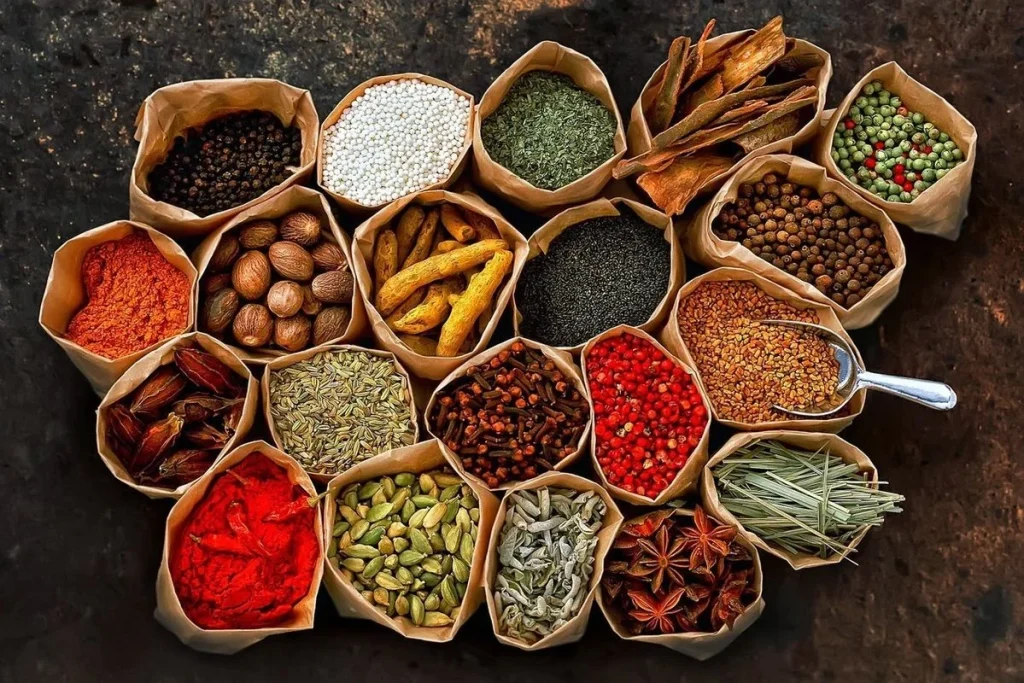
China is Vietnam’s largest market for raw medicinal herbs, thanks to geographic proximity and high demand for traditional medicine ingredients; East Asian markets such as South Korea and Japan are interested in deeply processed herbs and essential oil extracts; while the EU and US are opening up opportunities for herbs that meet GACP-WHO standards for the functional food and cosmeceutical industries.
2. Legal basis governing medicinal herb export procedures
| Legal document | Content regulated |
|---|---|
| Pharmacy Law 2016 (105/2016/QH13) | General regulations on pharmaceutical and medicinal herb management, business conditions, import and export |
| Decree 54/2017/ND-CP | Detailed guidance on implementing certain articles and measures of the Pharmacy Law; regulations on licensing rare and precious medicinal herbs |
| Circular 03/2016/TT-BYT | Regulations on medicinal herb trading activities, export and import conditions |
| Circular 48/2018/TT-BYT | List of medicinal herbs, herbal extracts, and medicinal essential oils with defined HS codes for export and import |
| Circular 38/2015/TT-BTC, amended by Circular 39/2018/TT-BTC | Customs procedures and customs supervision for exported goods |
This is the fundamental legal framework businesses need to understand clearly in order to correctly carry out medicinal herb export procedures, and avoid confusion between common medicinal herbs and herbs subject to control.
3. Classification of medicinal herbs and corresponding export conditions
| Herb group | Export conditions | Note |
|---|---|---|
| Common medicinal herbs (not on the list of rare, precious, or endemic species) | No permit from the Ministry of Health required; declare customs under the standard HS code | Most common herbs today fall into this group, exported similarly to agricultural products |
| Herbs on the list of rare, precious, or endemic species/strains subject to control | Export permit required from the Department of Health or the Ministry of Health | Applied under Decree 54/2017/ND-CP; permit/authorization letter form under Appendix III |
| Herbs on the CITES-managed list | An additional CITES permit is required from Vietnam’s CITES Management Authority | Applies to certain endangered wild fauna and flora species used as medicinal herbs |
| Medicinal herb exporting facility | Certificate of eligibility for pharmaceutical business (medicinal herb scope) | The facility must have a professional manager holding a valid pharmacy practice certificate as required |
4. HS codes and export duty for medicinal herbs
Raw material medicinal herbs (roots, stems, leaves, flowers, fruits of medicinal plants) mainly fall under Chapter 12 – “Oil seeds and oleaginous fruits; industrial or medicinal plants,” heading 12.11; while herbs that have been extracted or processed into pastes or powders may fall under Chapter 13 or Chapter 30 depending on the processing level. Correctly determining the HS code is a mandatory step in medicinal herb export procedures under the regulations of Circular 48/2018/TT-BYT.
| Type of goods | HS code (Vietnam) | VN export duty | Note |
|---|---|---|---|
| Raw medicinal herbs (fresh, dried, cut, crushed, or ground into powder or not) | 1211.90 | 0% | The most common code group for herbs exported as raw material |
| Plant resins, gums, and lacs used as medicinal herbs | 1301.xx | 0% | Applies to certain natural resin- or gum-based herbs |
| Pastes and extracts derived from medicinal herbs | 1302.xx | 0% | Herbs that have been extracted but not yet packaged into doses |
| Medicinal essential oils | 3301.xx | 0% | Needs careful cross-checking against the list in Circular 48/2018/TT-BYT |
Practical note: Vietnam’s export duty on medicinal herbs is currently 0% for most common HS codes. However, applying the HS code to medicinal herbs is fairly complex, since the same herb may be classified differently depending on its processing level (fresh, dried, sliced, ground into powder, or extracted). Businesses should carefully cross-check against Circular 48/2018/TT-BYT and consult the customs authority before declaring, to avoid duty reassessment or delayed clearance.
5. Market-specific requirements for medicinal herb exports

| Market | Key requirements | Note |
|---|---|---|
| China | Standard phytosanitary quarantine; some herbs require registration of a growing-area code | Vietnam’s largest market for raw medicinal herbs |
| South Korea, Japan | Control of pesticide residues; preference for herbs meeting GACP-WHO standards | Strong interest in deeply processed herbs and essential oil extracts |
| EU | Origin certification; strict control of heavy metal and pesticide residues | Suited to herbs used in the functional food and cosmeceutical industries |
| US | FDA facility registration if the herb is used in functional foods | Requires transparent documentation on origin and production process |
| Markets requiring rare/precious herbs | Export permit from the Department of Health/Ministry of Health; CITES permit (if applicable) | Applies regardless of destination market if the herb is on the controlled list |
6. Documentation required for medicinal herb export procedures
| Document | When to prepare | Important note |
|---|---|---|
| Certificate of eligibility for pharmaceutical business (medicinal herb scope) | Before carrying out export activities | A prerequisite condition under Circular 03/2016/TT-BYT |
| Export permit (only for rare, precious, or endemic herbs) | Before export packing | Applied for at the Department of Health or Ministry of Health using the Appendix III form under Decree 54/2017/ND-CP |
| Sales Contract | Before production and packing | Clearly state Incoterms, processing specification, moisture content, and allowable impurities |
| Commercial Invoice and Packing List | After packing, before customs declaration | Value must match the contract and the bill of lading |
| Phytosanitary Certificate | Before the goods reach the port/border checkpoint | Applies to herbs in raw plant material form, depending on the importing country’s requirements |
| Certificate of Origin (C/O) | After obtaining the export declaration | Needed to enjoy preferential tariffs under the FTA applicable to the destination market |
| Export Customs Declaration (VNACCS) | Before customs clearance | Declare the correct HS code per Circular 48/2018/TT-BYT and attach the export permit if the herb is controlled |
7. Medicinal herb export procedure workflow
Step 1: Determine the herb’s classification
The business cross-checks the scientific name and common name of the herb against the list of rare, precious, or endemic species/strains subject to control, to determine whether a permit from the Department of Health/Ministry of Health is required – this is the first and most important step in medicinal herb export procedures.
Step 2: Prepare the business facility conditions
The exporting facility must hold a Certificate of eligibility for pharmaceutical business (medicinal herb scope) and have a professional manager holding a suitable pharmacy practice certificate under Circular 03/2016/TT-BYT.
Step 3: Apply for an export permit (if on the controlled list)
For rare, precious, or endemic herbs, the business submits an application to the Department of Health or Ministry of Health using the prescribed form; if the application is valid, the Ministry of Health publishes information on the licensed herb on its electronic portal within 20 days of the licensing date.
Step 4: Sign the contract and carry out pre-processing and packing
Agree with the importer on the processing specification (fresh, dried, sliced, ground into powder), moisture content, and allowable impurities, then carry out pre-processing and packing according to the agreed specification.
Step 5: Register for phytosanitary quarantine (if applicable)
For herbs in raw plant material form, the business registers for quarantine so the relevant authority can sample, inspect, and issue a Phytosanitary Certificate as required by the destination market.
Step 6: Finalize documentation and declare export customs
The business or its forwarder prepares the Invoice and Packing List, and files the electronic customs declaration on the VNACCS/VCIS system, attaching the export permit (if applicable), the quarantine certificate, and the C/O appropriate to the destination market’s FTA.
Step 7: International shipping and import clearance at the destination
After the declaration is cleared, the goods are handed over to the carrier by sea, road, or air depending on the volume and destination market, coordinating with the local customs authority to complete import procedures.
8. Transport methods for medicinal herbs
Road transport: Common for the Chinese market via the northern border checkpoints, with fast transit times, suited to large-volume raw herbs.
Sea freight: Suited to shipments of dried, pre-processed herbs in large volumes going to distant markets such as the EU and US, without a strict cold-storage requirement.
Air freight: Preferred for fresh herbs, extracts, and essential oils that are high-value or need fast delivery, especially for markets requiring high freshness such as South Korea and Japan.
9. Time and cost involved in medicinal herb export procedures
| Stage | Estimated time | Note |
|---|---|---|
| Applying for an export permit (rare/precious herbs) | A few weeks to a few months | Depends on the product’s nature and testing requirements; amended applications can add another 3-4 months |
| Registration and sampling for phytosanitary quarantine | 0.5 – 1 day | For issuing the Phytosanitary Certificate |
| Export customs declaration (VNACCS) | 0.5 – 1 day | Faster if the declaration is routed to the green channel |
| Road transport (China) | 1 – 3 days | Via the northern border checkpoints |
| Sea freight | 20 – 35 days | Depends on the market: EU, US |
Practical note: The time and costs above are for reference only. For herbs on the rare, precious, or endemic list in particular, businesses should proactively submit their permit applications early, since the review period can be lengthy, to avoid affecting delivery schedules committed to partners.
10. Common risks in medicinal herb export procedures
| Risk | Symptom | Prevention |
|---|---|---|
| Confusing a common herb with a herb subject to control | Goods held at customs due to a missing mandatory export permit | Carefully cross-check the scientific name against the list of rare/precious herbs before signing a contract |
| Incorrect HS code for the processing level | Duty reassessment, delayed clearance, and the need to amend the declaration | Cross-check the HS code with Circular 48/2018/TT-BYT and an experienced customs broker in medicinal herbs |
| Pesticide or heavy metal residue exceeding the threshold | Goods held for inspection or refused import in demanding markets such as the EU | Control the growing area, conduct periodic sample testing before harvest, and work toward GACP-WHO standards |
| Missing CITES permit for an endangered species | Goods confiscated or refused entry at the destination border checkpoint | Carefully verify the herb species’ origin and apply for the CITES permit before export if it is on the managed list |
| Mold or spoilage during storage and transport | Herb quality declines and fails to meet appearance standards upon arrival | Use standard-compliant moisture-proof packaging and control moisture content before dispatch |
FAQ – Frequently asked questions about medicinal herb export procedures
Question 1: Does exporting medicinal herbs always require a permit from the Ministry of Health?
No. Most common medicinal herbs are exported as agricultural products and do not require a permit from the Ministry of Health. Only herbs on the list of rare, precious, or endemic species/strains subject to control require an export permit.
Question 2: Which authority issues the permit for exporting rare or precious medicinal herbs?
Depending on the specific case, the export permit is issued by the Department of Health or the Ministry of Health using the form prescribed in Appendix III of Decree 54/2017/ND-CP; the Ministry of Health is responsible for publishing information on the licensed herb within 20 days of the licensing date.
Question 3: What is the current export duty on medicinal herbs in Vietnam?
Medicinal herbs under the common HS codes in Chapters 12 and 13 enjoy a 0% export duty rate in Vietnam. Businesses should check Circular 48/2018/TT-BYT in detail to determine the correct HS code for each specific herb.
Question 4: How can a business know whether a herb is on the rare/precious list subject to control?
Businesses should cross-check the herb’s scientific name against the list issued by the Ministry of Health, or contact the Department of Health/Ministry of Health directly for confirmation before signing an export contract, to avoid the risk of missing a permit during customs clearance.
Question 5: Do deeply processed herbs (pastes, extracts, essential oils) follow a different procedure than raw herbs?
Basically, deeply processed herbs still follow the same legal framework within medicinal herb export procedures, however the HS code will differ (usually moving to heading 1302 or 3301), and some markets require additional technical documentation on the extraction process and quality standards.
How does 3W Logistics support medicinal herb export procedures?
As a freight forwarding company registered as an OTI-NVOCC with an FMC bond (Federal Maritime Commission) in the US, holding a SCAC Code to self-file AMS/ISF directly, and with experience handling agricultural products and medicinal herb exports to diverse markets, 3W Logistics provides a full-package service for businesses on medicinal herb export procedures – from herb classification consultation through to customs clearance in the importing country.
- Herb classification consultation and export conditions: Help businesses cross-check scientific names against the list of rare/precious herbs, accurately determine the HS code under Circular 48/2018/TT-BYT, and calculate costs and risks in advance so businesses have full figures before signing a contract.
- Support connecting for the Phytosanitary Certificate and export permit (if needed): Guide businesses in preparing correct documentation, coordinate with the quarantine authority and the Department of Health/Ministry of Health so the shipment receives its certificate and permit on time.
- Multimodal transport coordination: Arrange road, sea, or air transport depending on the herb’s characteristics (fresh, dried, extracted) and the destination market’s time requirements.
- International booking and shipping: Arrange transport from Vietnam’s major ports and border checkpoints to destinations worldwide, ensuring suitable packaging and storage conditions for each type of herb.
- Electronic customs declaration (VNACCS) and import procedures at the destination: A professional customs declaration team handles the export declaration and cross-checks the HS code accurately; as an OTI-NVOCC with FMC and SCAC Code, 3W Logistics issues its own House Bill of Lading (HBL) and self-files AMS/ISF directly for shipments to the US.
- Handling issues that arise upon arrival in the importing country: With an agent network across multiple markets, 3W Logistics helps businesses prepare complete documentation and quickly resolve any additional requirements from local customs or quarantine authorities.
Why choose 3W Logistics for medicinal herb export shipments: Unlike many intermediary forwarders that must go through a third-party agent, 3W Logistics is a direct OTI-NVOCC with a bond and FMC certification in the US, holding a SCAC Code that allows it to self-file AMS/ISF – shortening documentation processing time and reducing the risk of delays, which is especially important for medicinal herbs with complex classification and permit requirements. With offices in Ho Chi Minh City, Hanoi, and Hai Phong, and a team with hands-on experience handling agricultural products and medicinal herbs to diverse markets, 3W Logistics is a suitable choice for businesses wanting to ensure their shipment clears customs on time and to standard from their very first export. – Ms. Apple, CCO of 3W Logistics
Head Office – 3W Logistics Ho Chi Minh City Branch
Address: 34 Bach Dang, Tan Son Hoa Ward, Ho Chi Minh City
Hotline: +84 28 3535 0087
____________________________
3W Logistics Hanoi Branch
Address: 81A Tran Quoc Toan, Cua Nam Ward, Hanoi
Hotline: +84 24 3202 0482
____________________________
3W Logistics Hai Phong Branch
Address: 8A Lot 28 Le Hong Phong, Gia Vien Ward, Hai Phong
Hotline: +84 225 355 5939
____________________________
3W LOGISTICS CO., LTD – We here serve you there!
Email: info@3w-logistics.com
Website: www.3w-logistics.com

Ms. Apple is the CCO (Chief Commercial Officer) at 3W Logistics, with over 10 years of experience in sales and business operations management.
At 3W Logistics, Ms. Apple is responsible for commercial strategy, corporate customer development, managing a team of more than 50 sales professionals, and improving business performance in the logistics sector.
With practical experience in sales management and market development, Ms. Apple shares professional insights on business logistics solutions, international transportation, freight forwarding, customer management, trade lane development, and growth strategies in the logistics industry.


