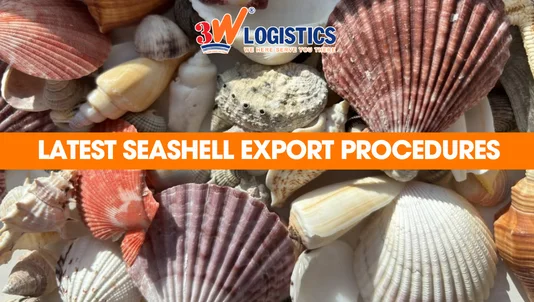
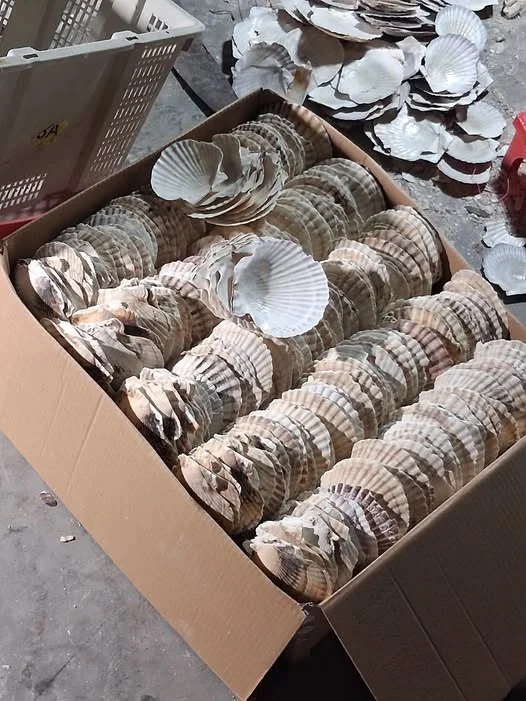
Seashell export procedures in Vietnam require businesses to clearly distinguish between two entirely different product groups in terms of regulatory control: ordinary seashells and snail shells, which can be exported relatively easily as handicraft items.
Versus shells belonging to endangered, rare wildlife species listed under the CITES Convention, which are subject to very strict control and are even absolutely prohibited in certain markets such as the U.S. This is the key distinction that any business or handicraft workshop needs to clearly understand before exporting.
Vietnam has many long-standing traditional craft villages and workshops producing seashell handicrafts, particularly in the Vung Tau, Nha Trang, and Phu Quoc regions, crafting a wide variety of decorative items, souvenirs, and furniture from natural sea shell material. The article below compiles the full legal basis, conditions, HS codes, procedures, costs, and common risks involved in seashell export procedures, updated according to the latest applicable regulations.
1. Potential and characteristics of Vietnam’s seashell export industry
With its long coastline, Vietnam has an abundant supply of natural seashells and snail shells, which have served as raw material for a handicraft industry that has developed over decades in coastal localities. Seashell products are crafted into decorative items, souvenirs, jewelry, and highly aesthetic furniture pieces, serving both the domestic market and seashell export procedures to overseas markets.
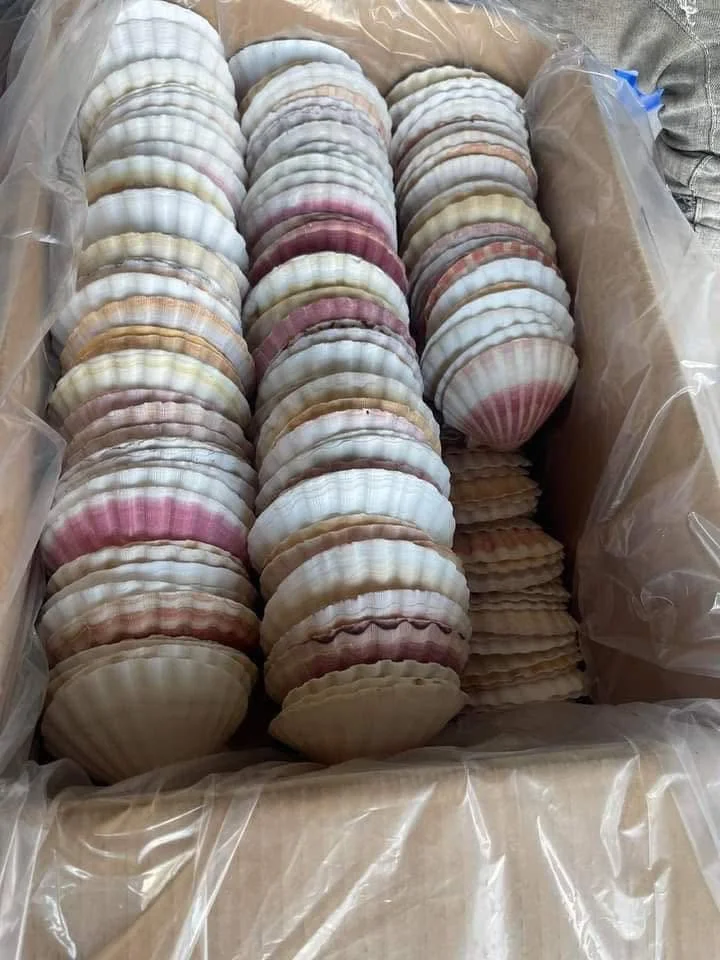
The U.S., the EU, Japan, and South Korea are the main consumer markets for Vietnam’s seashell handicraft products; however, these are also the markets with the strictest regulations on wildlife origin control, particularly the U.S. — where a shipment containing shells from a species listed as CITES-endangered will be confiscated and destroyed immediately at the port of entry.
2. Legal basis governing seashell export procedures
| Legal document | Content regulated |
|---|---|
| Decree 69/2018/ND-CP | Ordinary seashells and snail shells are not on the list of goods requiring an export license or prohibited from export |
| Decree 06/2019/ND-CP, Decree 84/2021/ND-CP | Governs management of endangered, precious, and rare forest flora and fauna, and enforcement of the CITES Convention; applicable to shells of species listed under the CITES Appendices |
| Fisheries Law 2017 (18/2017/QH14) | Regulates the harvesting and protection of aquatic resources, including marine mollusk species used as shell material |
| Circular 38/2015/TT-BTC, amended by Circular 39/2018/TT-BTC | Customs procedures and supervision for exported goods |
This is the fundamental legal framework that businesses need to understand clearly in order to correctly carry out seashell export procedures, especially distinguishing between ordinary species and species subject to CITES control.
3. Classification of seashells and the corresponding export conditions
| Product group | Export condition | Note |
|---|---|---|
| Ordinary seashells and snail shells (not listed under CITES) | No special license required; exported as ordinary handicraft goods | Accounts for the majority of Vietnam’s current shell export volume |
| Giant clam shells (family Tridacnidae) | Mandatory to apply for a CITES permit before export | Listed under CITES Appendix II, strictly controlled in most markets |
| Nautilus shells and certain other rare sea snail species | Mandatory to apply for a CITES permit before export | Businesses need to accurately cross-check the scientific name against the CITES Appendix list |
| Handicraft products made from seashells | Subject to the same principle as the raw material used to make the product | Even after processing, the product must still comply with CITES regulations if made from a controlled species |
Practical note: This is the most important step in seashell export procedures that businesses often overlook. Many handicraft workshops focus only on crafting and packing without carefully checking the scientific name of the shell species used, leading to significant risk when the goods reach strictly controlled markets like the U.S. — where a shipment containing shells from a species listed as endangered will be confiscated and destroyed immediately, with no opportunity for correction.
4. HS codes and export duties for seashells
Raw seashells and snail shells fall under Chapter 05 — “Products of animal origin, not elsewhere specified or included” — heading 05.08, “Coral and similar materials… shells of molluscs, crustaceans or echinoderms.” Handicraft products that have been processed typically shift to Chapter 96. Correctly determining the HS code is an important step in seashell export procedures.
| Product type | HS code (Vietnam) | Vietnam export duty | Note |
|---|---|---|---|
| Raw, unprocessed seashells and snail shells | 0508.00 | 0% | The most common code group for shells exported in raw material form |
| Handicraft and decorative items crafted from seashells | 9601.90 | 0% | Applies to products that have been processed, carved, or polished |
| Jewelry made from seashells and snail shells | 7116.90 | 0% | Applies to bracelets, necklaces, and jewelry made from seashells |
Practical note: Export duty on seashells in Vietnam is currently 0% for most HS codes. Businesses should note that determining the HS code in practice may vary depending on the intended use, the main material composing the product, and the packing format, so it’s advisable to consult an experienced logistics provider or the local customs authority to avoid retroactive tax collection.
5. Documentation package for seashell export procedures
| Document | When to prepare | Important note |
|---|---|---|
| Sales Contract | Before manufacturing and packing | Must clearly state Incoterms, shell species, and processing/packing specifications |
| CITES export permit (for species listed under a CITES Appendix) | Before goods reach the port | Issued by the Vietnam CITES Management Authority; mandatory to submit to customs during procedures |
| Declaration of the shell species’ origin and scientific name | Before signing the export contract | Helps quickly determine whether a CITES permit is required |
| Commercial Invoice and Packing List | Before customs declaration | Value must match the contract and the bill of lading |
| Certificate of Origin (C/O) | After the export declaration is issued | Required to enjoy preferential tariffs under the relevant FTA for the destination market |
| Export customs declaration (VNACCS) | Before customs clearance | Declare the correct HS code for raw shells or processed handicraft products |
6. Seashell export procedure steps
Step 1: Identify the shell species and check the CITES list
The business cross-checks the scientific name of the shell or snail species used as raw material against the CITES Convention’s Appendices — this is the first and most important step in seashell export procedures, determining the entire legal documentation to be prepared afterward.
Step 2: Apply for a CITES permit (if listed under a controlled category)
For shells of species listed under a CITES Appendix, such as giant clams, the business submits an application to the Vietnam CITES Management Authority to obtain an export permit before proceeding with subsequent steps.
Step 3: Sign the contract and craft/pack according to the order
Agree with the importer on design, dimensions, and packing specifications, then proceed with crafting (for handicraft products) or sorting and cleaning (for raw shells) according to the agreed standards.
Step 4: Determine the correct HS code for the specific product
The business coordinates with a logistics provider or the customs authority to accurately determine the HS code based on the intended use, material, and actual packing format of the product.
Step 5: Complete the documentation package and declare customs export
The enterprise or its forwarder prepares the invoice and packing list, and declares the electronic customs declaration on the VNACCS system, attaching the CITES permit (if applicable) and a C/O matching the FTA of the destination market.
Step 6: International transport and import clearance in the destination country
Once the declaration is cleared, the goods are handed over to a sea or air carrier depending on shipment volume. For the U.S. market, the local customs authority inspects wildlife-origin products very strictly before allowing import clearance.
7. Timeline, costs, and common risks in seashell export procedures
| Stage | Estimated time | Note |
|---|---|---|
| Applying for a CITES permit (if listed under a controlled category) | A few weeks to a few months | Depending on the species and the extent of supplementary documentation required |
| Export customs declaration (VNACCS) | 0.5 – 1 day | Faster if the declaration is routed to the green channel |
| Air transport | 3 – 5 days | Suitable for small, compact shipments, gifts, or samples |
| Sea transport | 15 – 35 days | Suitable for businesses exporting large volumes |
| Risk | Manifestation | Prevention |
|---|---|---|
| Missing CITES permit for a controlled species | Goods confiscated and destroyed immediately at the importing country’s border, especially in the U.S. | Carefully check the species’ scientific name before signing the contract, and apply for CITES if needed |
| Incorrect HS code between raw material and crafted product | Retroactive tax collection, delayed customs clearance, need to amend the declaration | Consult a logistics provider experienced in handicraft goods |
| Shells prone to breakage during transport | Product damaged, reducing value upon arrival | Pack with multiple layers of bubble wrap, filling empty spaces tightly inside the carton |
| Product contains coating chemicals exceeding the permitted threshold | Rejected for import in markets with strict chemical controls such as the U.S. | Use gloss-coating chemicals free of lead or other harmful substances above the permitted level |
8. FAQ – Frequently asked questions about seashell export procedures
Question 1: Do all exported seashells and snail shells require a CITES permit?
No. Only shells belonging to species listed under a CITES Convention Appendix (such as giant clams) require a mandatory permit; most ordinary seashells and snail shells are exported as handicraft goods without needing a special license.
Question 2: Which authority issues the CITES permit in seashell export procedures?
The Vietnam CITES Management Authority is the focal point for receiving applications, conducting assessments, and issuing export permits for shell species subject to control under the CITES Convention.
Question 3: What is the current export duty on seashells in Vietnam?
Raw shells (HS code 0508.00) and handicraft products crafted from shells enjoy a 0% export duty rate in Vietnam.
Question 4: What happens if a CITES-listed shell species is exported to the U.S. without a permit?
The shipment will be confiscated and destroyed immediately at the U.S. border, with no opportunity for correction or supplementary documentation, so businesses need to carefully check the species’ origin before carrying out seashell export procedures to this market.
How does 3W Logistics support seashell export procedures?
As a freight forwarding company registered as an OTI-NVOCC with an FMC bond in the United States, holding an SCAC Code to self-file AMS/ISF declarations directly, 3W Logistics supports businesses through the entire seashell export procedure — from species classification and HS code advisory through to customs clearance in the importing country.
Full-package logistics service at 3W Logistics:
- Shell species classification and export condition advisory: Helping businesses cross-check scientific names against the CITES list, accurately determining the correct HS code for each type of product.
- Support connecting to obtain a CITES permit (if needed): Guiding correct documentation preparation and coordinating with the Vietnam CITES Management Authority so shipments are permitted on time.
- Advisory on safe packing for fragile goods: Guiding suitable packing specifications to minimize the risk of damage during long-distance transport.
- Booking vessels and multimodal transport: Arranging sea or air transport depending on volume, to the U.S., EU, and Asian markets.
- Electronic customs declaration (VNACCS): A professional team handles declarations and cross-checks the correct HS code; as an OTI-NVOCC with FMC and an SCAC Code, 3W Logistics directly issues its own HBL and self-files AMS/ISF for shipments bound for the U.S.
Why choose 3W Logistics: With offices in Ho Chi Minh City, Hanoi, and Hai Phong, and a team knowledgeable in CITES regulations and handicraft goods, 3W Logistics ensures seashell shipments clear customs on time and to standard, avoiding the risk of confiscation in demanding markets such as the U.S., right from the very first export. – Ms. Apple, CCO of 3W Logistics
Head Office – 3W Logistics Ho Chi Minh City Branch
Address: 34 Bach Dang, Tan Son Hoa Ward, Ho Chi Minh City
Hotline: +84 28 3535 0087
____________________________
3W Logistics Hanoi Branch
Address: 81A Tran Quoc Toan, Cua Nam Ward, Hanoi
Hotline: +84 24 3202 0482
____________________________
3W Logistics Hai Phong Branch
Address: 8A Lot 28 Le Hong Phong, Gia Vien Ward, Hai Phong
Hotline: +84 225 355 5939
____________________________
3W LOGISTICS CO., LTD – We here serve you there!
Email: info@3w-logistics.com
Website: www.3w-logistics.com

Ms. Apple is the CCO (Chief Commercial Officer) at 3W Logistics, with over 10 years of experience in sales and business operations management.
At 3W Logistics, Ms. Apple is responsible for commercial strategy, corporate customer development, managing a team of more than 50 sales professionals, and improving business performance in the logistics sector.
With practical experience in sales management and market development, Ms. Apple shares professional insights on business logistics solutions, international transportation, freight forwarding, customer management, trade lane development, and growth strategies in the logistics industry.


