

IMO pauses evacuation after a security incident near the Strait of Hormuz
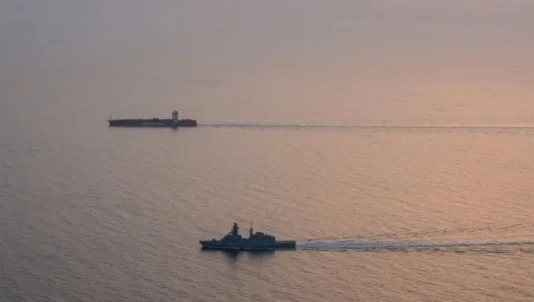
IMO pauses evacuation after a security incident near the Strait of Hormuz.
Just two days after the International Maritime Organization (IMO) launched its emergency escort program to help vessels exit the Persian Gulf, an Evergreen container ship was reportedly attacked near the eastern entrance of the Strait of Hormuz. On June 25, 2026, the organization announced that IMO pauses evacuation operations, escalating concerns over maritime security in one of the world’s most important shipping chokepoints.
This is not the first time Hormuz has become a geopolitical flashpoint. However, with tensions between the United States and Iran reaching their highest level since February 2026, the latest developments carry significant implications for global supply chains and international trade.
Ever Lovely Incident Triggers IMO Decision
On June 25, the container vessel Ever Lovely — a 104,357 DWT ship with a capacity of 9,532 TEU, measuring 335 meters in length and built in 2015 for Evergreen Marine under the Singapore flag — was sailing out of the Persian Gulf alongside two other Evergreen vessels when it was reportedly attacked near the eastern side of the Strait of Hormuz.
According to the UK Maritime Trade Operations (UKMTO), the vessel’s master reported that an unidentified object struck the starboard side of the bridge, causing damage to navigation facilities. The incident occurred approximately 7.5 nautical miles southeast of Dahit Port, Oman. No injuries or environmental pollution were reported.
Security intelligence firms Ambrey and Vanguard Tech suggested the vessel may have been targeted by an unmanned aerial vehicle, although this has not been officially confirmed. Two anonymous U.S. officials told Reuters that Iran could have been involved, while Tehran has not issued any public response.
Notably: Ever Lovely was not part of the IMO escort program. AIS data showed the vessel continued its voyage and was heading toward Fujairah in the UAE following the incident. Evergreen has not released an official statement.
IMO Pauses Evacuation Operations Only 48 Hours After Launch
The response from the organization came quickly. On June 25, IMO Secretary-General Arsenio Dominguez announced that IMO pauses evacuation activities in order to reassess whether adequate safety guarantees remained in place for participating vessels and supporting assets operating in the region.
The IMO-Oman guidance initiative was launched on June 23, 2026, allowing vessels to voluntarily register for assistance when departing the Persian Gulf. Ships could choose between a northern route near Iranian waters or a southern corridor through Omani waters.
Before the suspension, the program had successfully assisted 57 vessels and approximately 1,100 seafarers in leaving the area safely. However, dozens of ships remained waiting for clearance.
Tensions between the organization and Iranian authorities had intensified before the incident. The Islamic Revolutionary Guard Corps (IRGC) publicly rejected the initiative and insisted that only routes approved by Iran could be used. Videos circulating online showed warnings issued to commercial vessels that alternative routes would be taken “at their own risk.”
Industry Perspective: This marks the second major maritime security crisis in less than four years following the Red Sea disruptions during 2023–2024. The recurrence of such events is forcing logistics providers and cargo owners to rethink risk management strategies.
Maersk and Hapag-Lloyd: Who Escaped and Who Remains Inside?
Before the attack, major container carriers had already begun repositioning vessels outside the Persian Gulf.
Maersk confirmed that the vessel Maersk Baltimore successfully exited the Gulf after security assessments conducted with specialized partners. The company still had three vessels operating inside the Gulf and planned at least one additional transit operation.
Of approximately 47,000 containers destined for Gulf markets, Maersk reported that 44,000 had already been delivered, while 3,000 containers remained pending final delivery.
Hapag-Lloyd reported more positive news, confirming that all affected vessels had safely exited the region. Due to security considerations, the carrier declined to disclose ship names, schedules, or specific transit routes.
Important for Vietnamese importers and exporters: Companies with cargo transshipping through Jebel Ali or other Gulf ports should immediately contact their logistics providers to confirm shipment status and discuss contingency plans.
US-Iran Tensions and the 60-Day Diplomatic Window
The situation surrounding the Strait of Hormuz cannot be separated from the broader geopolitical environment. Renewed tensions between Washington and Tehran since February 2026 left hundreds of vessels and thousands of seafarers stranded in the Persian Gulf for several months, ultimately prompting the launch of the IMO emergency initiative.
At the time of the Ever Lovely incident, U.S. Secretary of State Marco Rubio was visiting Gulf countries and stated that Washington would respond appropriately if maritime traffic through Hormuz continued to face threats.
Meanwhile, U.S. Energy Secretary Chris Wright reported that oil flows through the strait had started recovering, reaching approximately 20 million barrels within 24 hours.
Iran maintained its hardline position. On the same day, the IRGC declared that vessels transiting Hormuz without Iranian authorization would be considered in violation of regulations. Senior official Mohammad Baqer Qalibaf also rejected reports suggesting Iran would use unfrozen assets under the ceasefire framework to purchase U.S. agricultural products.
The current agreement provides a 60-day negotiation period for both parties to continue discussions on unresolved issues, including Iran’s nuclear program.
Conclusion: What Should Importers and Exporters Do Now?
With uncertainty continuing to grow and no clear timeline for the resumption of the escort initiative, businesses cannot afford to ignore the risks associated with shipments moving through the Gulf region.
Following the announcement that IMO pauses evacuation operations, importers and exporters should prioritize the following actions:
- Confirm shipment status immediately with freight forwarders or shipping lines if cargo is transiting the region.
- Review insurance coverage, especially whether Institute War Clauses are activated.
- Monitor updates continuously from IMO and ocean carriers regarding navigation assistance programs.
- Prepare contingency plans involving alternative transshipment ports or routing options if disruptions continue.
This article is based on information published by the International Maritime Organization (IMO), UKMTO, and maritime industry sources updated on June 26, 2026.
3W Logistics – Supporting Businesses Through Global Supply Chain Disruptions
As geopolitical risks continue to reshape international shipping routes, 3W Logistics remains committed to helping businesses maintain resilient and flexible supply chains through reliable freight forwarding solutions and proactive risk management support.

Hello, I’m Nguyen Phuong Nhan (Ms. Nina)
I currently serve as Trade Lanes Supervisor at 3W Logistics, with more than 10 years of experience in international logistics and freight forwarding.
My primary responsibility is developing and managing global logistics partnerships, building strategic trade lanes, and working closely with overseas agents to provide reliable and competitive transportation solutions for customers.
I regularly collaborate with agents and logistics partners worldwide to explore new business opportunities, negotiate freight rates, develop trade routes, and support import-export shipments. I also work closely with our sales team to design logistics solutions tailored to specific markets and customer requirements.
My expertise includes Ocean Freight, Air Freight, Trade Lane Development, Global Agent Network Management, International Logistics Solutions, and Import-Export Support.
Through the articles I share on the 3W Logistics website, I aim to provide practical insights into the international logistics industry, global transportation trends, overseas agent cooperation, and effective logistics strategies that help businesses optimize their supply chain operations.
I believe that strong global partnerships and well-developed trade lanes are essential to delivering sustainable logistics solutions and long-term value to customers worldwide.


