

Fresh Coconut Export Procedures to China have officially opened up a major opportunity for Vietnam’s coconut industry since the Protocol on Phytosanitary Requirements for Fresh Coconuts was signed between Vietnam’s Ministry of Agriculture and Rural Development and China’s General Administration of Customs (GACC) on August 19, 2024.
This is an important turning point, officially making China – a market with enormous coconut consumption demand estimated at billions of coconuts per year – a formal export market for Vietnamese fresh coconuts, alongside traditional markets such as the U.S., Japan, and South Korea.
Unlike exporting fresh coconuts to other markets, fresh coconut export procedures to China require businesses to strictly comply with specific conditions under the bilateral Protocol, especially the requirement for growing area codes and packing facility codes approved by both the Ministry of Agriculture and Environment and GACC.
The article below compiles the complete legal basis, conditions, procedures, costs, and common risks involved in fresh coconut export procedures to China, updated according to the latest current regulations.
1. China Market Potential for Vietnamese Fresh Coconuts
Vietnam currently has approximately 200,000 hectares of coconut growing area concentrated across 15 provinces, with an output of about 2 million tons per year, placing it among the countries with significant coconut industry value worldwide.
Before the Protocol, Vietnamese fresh coconuts were mainly exported to the U.S., Japan, and South Korea; the opening of the Chinese market through official channels has created strong momentum for growing areas and packing facilities to proactively register codes and standardize production processes to serve fresh coconut export procedures to China.
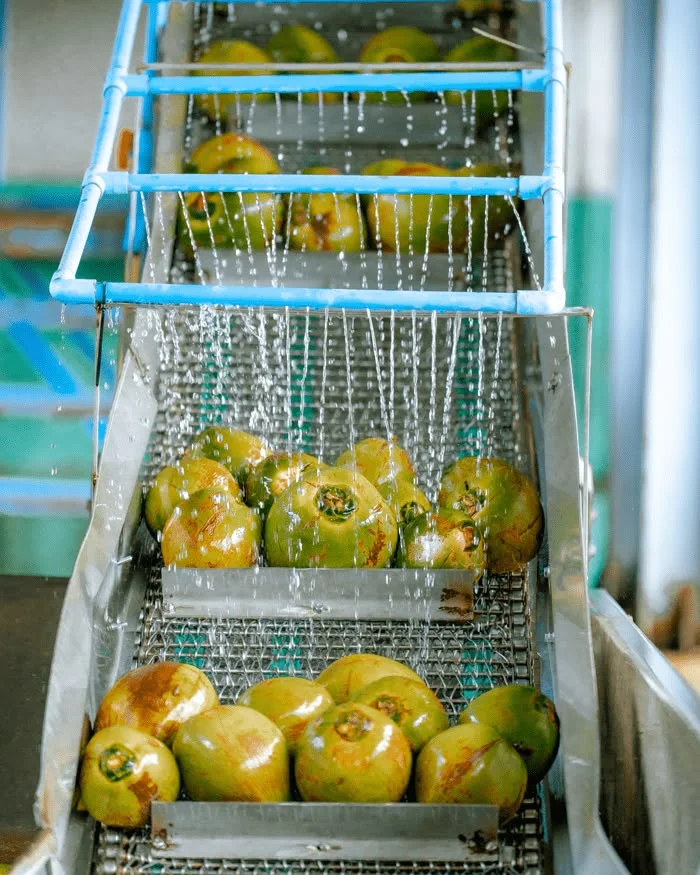
Ben Tre is the leading province, with hundreds of growing areas and dozens of packing facilities already granted export codes, followed by Tra Vinh, Tien Giang, and many other provinces in the Mekong Delta region actively registering to expand their growing area codes.
2. Legal Basis Governing Fresh Coconut Export Procedures to China
| Legal Document | Content Governed |
|---|---|
| Protocol on Phytosanitary Requirements for Fresh Coconut Exports from Vietnam to China (signed August 19, 2024) | A bilateral document consisting of 9 articles and 1 appendix, regulating phytosanitary conditions and requirements for growing area codes and packing facility codes |
| Law on Crop Production 2018, Law on Plant Protection and Quarantine 2013 | General regulations on growing area codes and phytosanitary requirements for exported agricultural goods |
| GACC Decree 248 (Registration Regulations for Overseas Food Producing Enterprises) | Requires fresh coconut packing facilities to register a code with GACC before exporting |
| GACC Decree 249 (Measures for the Administration of Food Import and Export Safety) | Regulations on food safety standards applied to agricultural products imported into China |
| Circular 38/2015/TT-BTC, amended by Circular 39/2018/TT-BTC | Customs procedures, inspection and supervision for exported goods |
This is the fundamental legal framework that businesses need to understand clearly in order to properly carry out fresh coconut export procedures to China, especially the specific terms in the bilateral Protocol.
3. Conditions for Growing Areas and Packing Facilities
| Condition | Issuing/Managing Authority | Notes |
|---|---|---|
| Coconut growing area code | Department of Crop Production and Plant Protection, approved by both the Ministry of Agriculture and Environment and GACC | Absolutely mandatory; a shipment without a growing area code will be rejected immediately at the Chinese border |
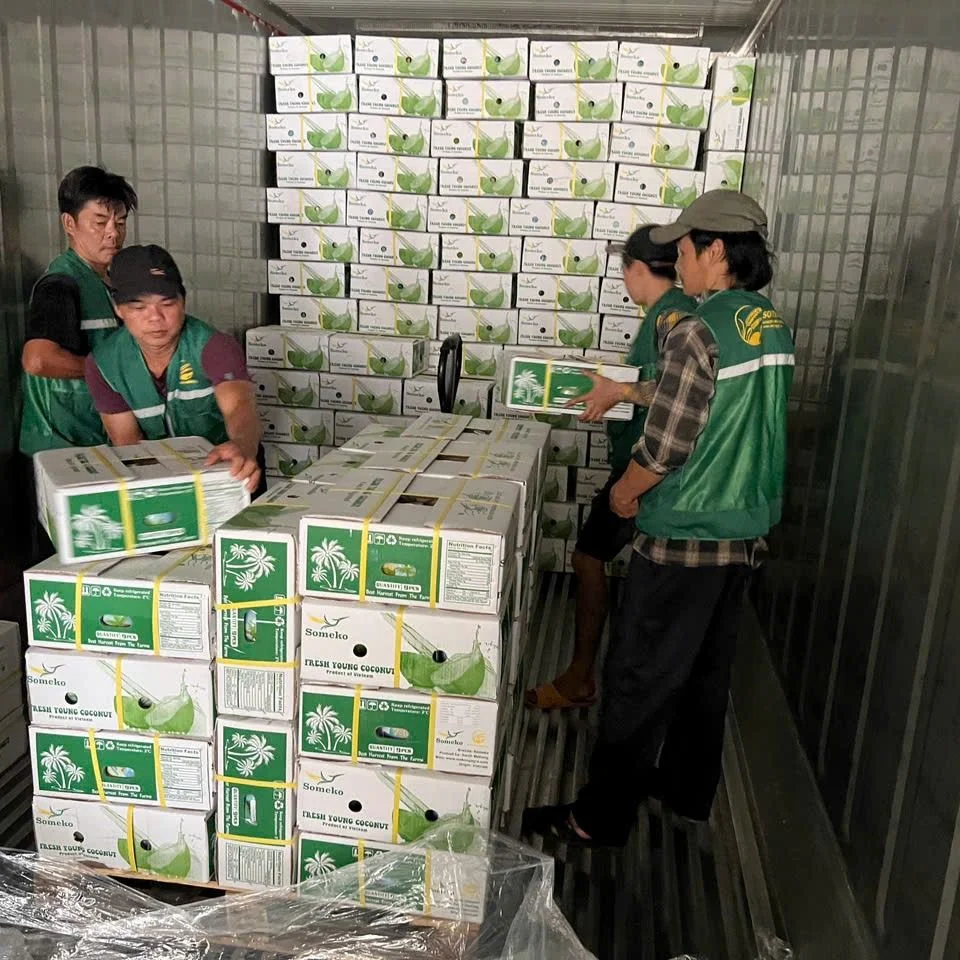
| Packing facility code | Department of Crop Production and Plant Protection, approved by GACC | The packing facility must meet food hygiene and safety conditions, and is subject to periodic inspection, both online and on-site, by the Chinese side |
| Control of the 16 pests of concern to China | Growing areas and packing facilities self-monitor under the guidance of the plant protection authority | Includes the pest species specifically listed in the Protocol’s appendix |
| Exporting enterprise registration under Decree 248 | GACC | Mandatory for enterprises processing and packing goods for official export to China |
4. Specifications for Fresh Coconuts Permitted for Export and HS Codes
Under the Protocol, fresh coconuts exported from Vietnam to China fall into two forms: fresh coconuts with the green husk intact and a stem no longer than 5cm, and husked coconuts. Correctly determining the HS code for each form is an important step in fresh coconut export procedures to China, directly affecting customs declaration.
| Goods Type | HS Code (Vietnam) | VN Export Duty | Notes |
|---|---|---|---|
| Fresh coconut with green husk intact, short stem | 0801.19.10 | 0% | Correct specification permitted by the Protocol, stem no longer than 5cm |
| Husked fresh coconut (“diamond coconut”) | 0801.19.90 | 0% | Applies to coconuts with the green husk trimmed off, the common form for drinking coconut water |
| Dried coconut | 0801.11/0801.12 | 0% | Not covered by the fresh coconut Protocol, subject to separate regulations |
Practical note: Vietnam’s export duty on fresh coconuts is currently 0% for HS codes under heading 0801.19. However, businesses need to pay particular attention to ensuring the product specification matches the description in the Protocol exactly (stem no longer than 5cm for husk-on coconuts), as this is one of the criteria GACC checks and may reject a shipment for failing to meet.
5. Cases Where Shipments Are Rejected When Exporting to China
| Cause | Details |
|---|---|
| Missing growing area/packing facility code | The shipment’s growing area code or packing facility code has not been approved by GACC and the Ministry of Agriculture and Environment, or there is no phytosanitary certificate |
| Pests detected | Detection of a live quarantine pest or a pest new to Vietnam; detection of soil, twigs, leaves, or plant debris mixed in with the shipment |
| Failure to meet food safety standards | The shipment does not meet China’s food safety standard regulations |
6. Documentation Required for Fresh Coconut Export Procedures to China
| Document | When to Prepare | Important Notes |
|---|---|---|
| Sales Contract | Before harvesting and packing | Clearly state Incoterms, coconut specification (husk-on/husked), stem length per regulation |
| Commercial Invoice | After packing, before customs declaration | Value must match the contract and bill of lading |
| Packing List | At the same time as the Invoice | Record the number of packages, net/gross weight, and growing area code for each batch in detail |
| Phytosanitary Certificate | Before the goods leave the port/border gate | Additional declaration content per China’s specific requirements in the Protocol |
| Growing area code and packing facility code (shown on the label/documents) | Before harvesting | Must be cross-checked against the list published by GACC on its website before each shipment |
| Certificate of Origin (C/O form E) | After obtaining the export customs declaration | Needed to enjoy preferential duty rates under ACFTA upon customs clearance in China |
| Export customs declaration (VNACCS) | Before customs clearance | Declare the correct HS code according to the husk-on or husked specification |
7. Fresh Coconut Export Procedure Process to China
Step 1: Register the Growing Area Code and Packing Facility Code
The business coordinates with the local Sub-Department of Crop Production and Plant Protection to register the growing area code and packing facility code; the dossier is sent by the Ministry of Agriculture and Environment to GACC for approval, and GACC will publish the approved list on its website with regular updates.
Step 2: Standardize the Growing Area According to China’s Quarantine Requirements
The growing area implements measures to control the 16 pests of concern to China, under the technical guidance of the plant protection authority, and prepares for online or on-site inspection by a GACC working delegation.
Step 3: Sign the Contract and Determine Packing Specifications
Agree with the importer on the coconut specification (green husk-on with short stem, or husked), and the packing quantity per box/bag, avoiding confusion with regulations intended for other markets.
Step 4: Harvest, Pack, and Register for Phytosanitary Inspection
Harvest coconuts at the correct maturity, pack them at a facility with an approved code, ensuring no soil, twigs, or leaves are mixed in, then register for phytosanitary inspection to obtain the Phytosanitary Certificate.
Step 5: Complete Documentation and Declare Export Customs
The business or a forwarding partner prepares the Invoice and Packing List, declares the electronic customs declaration on the VNACCS system, and attaches the phytosanitary certificate, growing area/packing facility code, and C/O form E to enjoy ACFTA preferential rates.
Step 6: Transport and Import Clearance in China
After the customs declaration is cleared, the goods are handed over to a road carrier crossing the northern border gates, or shipped by sea to Chinese ports. Chinese customs and quarantine authorities check and cross-reference the growing area code and packing facility code before allowing import clearance.
8. Modes of Transport for Fresh Coconuts to China
Road transport (border trade): The most common method thanks to geographic proximity, crossing through the Lang Son, Lao Cai, and Mong Cai border gates, with transit time usually only 1-3 days, ideal for maintaining maximum freshness for fresh coconuts.
Sea transport via refrigerated container: Suitable for large-volume shipments to southern Chinese ports such as Guangzhou and Shenzhen, with transit time much shorter than for distant markets such as the U.S. or the EU.
9. Time and Cost for Fresh Coconut Export Procedures to China
| Stage | Estimated Time | Notes |
|---|---|---|
| Registering the growing area code, packing facility code | Several weeks to several months (one-time) | Includes waiting time for GACC approval and online/on-site inspection |
| Registering and sampling for phytosanitary inspection | 0.5 – 1 day | Issuance of the Phytosanitary Certificate for each shipment |
| Export customs declaration (VNACCS) | 0.5 – 1 day | Faster if the declaration is routed to the green channel |
| Road transport through the border gate | 1 – 3 days | Via the Lang Son, Lao Cai, Mong Cai border gates |
| Sea transport | 3 – 7 days | Depending on the destination port in China |
Practical note: Registering the growing area code and packing facility code only needs to be done once, but requires careful preparation time due to direct or online inspection from GACC. Once the code is obtained, subsequent shipments under fresh coconut export procedures to China will be processed significantly faster. Businesses should proactively register early to avoid missing the market opportunity.
10. Risk Notes in Fresh Coconut Export Procedures to China
| Risk | Manifestation | Prevention |
|---|---|---|
| Growing area/packing facility not yet approved | The shipment is rejected immediately at the Chinese border even though it cleared customs in Vietnam | Cross-check the code against the list published by GACC on its website before each shipment |
| Debris mixed into the shipment (soil, twigs, leaves) | Rejected for import due to violating the Protocol’s phytosanitary requirements | Strictly control the packing stage and clean the product before it leaves the warehouse |
| Coconut stem longer than permitted | Does not match the specification permitted by the Protocol (stem ≤5cm) | Carefully check the stem-trimming specification before packing according to the Protocol’s appendix |
| Live pests present in the shipment | The shipment is destroyed or returned, damaging the growing area’s reputation | Fully implement measures to control the 16 quarantine pests per technical guidance |
| Slow to update changes in GACC regulations | Applying the wrong standard causes goods to be held for additional inspection | Regularly update information from the Department of Plant Protection and an experienced logistics provider |
FAQ – Frequently Asked Questions About Fresh Coconut Export Procedures to China
Question 1: Can a growing area without a code export fresh coconuts to China?
No. This is one of the most common reasons shipments get rejected – growing areas and packing facilities must be approved by both the Ministry of Agriculture and Environment and GACC before official export.
Question 2: What forms of fresh coconut are exported to China?
Under the Protocol, exported fresh coconuts include coconuts with the green husk intact and a stem no longer than 5cm, and husked coconuts (“diamond coconuts”); both forms must comply with phytosanitary regulations.
Question 3: What is the current export duty on fresh coconuts to China?
Fresh coconuts (HS code under heading 0801.19) enjoy a 0% export duty rate in Vietnam. Upon customs clearance in China, businesses should have a C/O form E to enjoy preferential import duty rates under the ACFTA Agreement.
Question 4: How long does it take to register a growing area code and packing facility code?
Registration typically takes several weeks to several months, including the process of submitting the dossier, waiting for GACC approval, and undergoing online or on-site inspection at the growing area and packing facility.
Question 5: How can I check whether a growing area code or packing facility code has been approved by GACC?
Businesses can cross-check directly against the list published and regularly updated by GACC on its official website, or contact the Department of Crop Production and Plant Protection to confirm before planning an export.
How Does 3W Logistics Support Fresh Coconut Export Procedures to China?
As a freight forwarding company registered as an OTI-NVOCC with an FMC bond (Federal Maritime Commission) in the United States, holding an SCAC Code to self-file AMS/ISF declarations directly, along with many years of experience handling agricultural products and fresh fruit exported to China and various other markets, 3W Logistics provides a comprehensive service for businesses regarding fresh coconut export procedures to China – from growing area code consultation and quarantine coordination through to customs clearance at the Chinese border.
- Consulting on export conditions under the Protocol: Guiding businesses, growing areas, and packing facilities to prepare code registration dossiers in accordance with regulations, continuously updating changes from GACC to avoid the risk of shipment rejection.
- Support connecting to obtain the Phytosanitary Certificate: Coordinating with the plant quarantine authority so the shipment is sampled, inspected, and certified on time, ensuring information matches the Invoice and Packing List.
- Cross-checking growing area codes and packing facility codes: Verifying the validity of codes before each shipment against the list published by GACC, minimizing the risk of rejection at the Chinese border.
- Booking vessels and transport across multiple modes: Arranging road transport through border gates or sea transport via refrigerated containers to Chinese ports, ensuring fast delivery time to preserve the coconuts’ freshness.
- Electronic customs declaration (VNACCS) and clearance procedures at the Chinese border: A professional customs declaration team handles export declarations, cross-checks HS codes and growing area codes; as an OTI-NVOCC holding FMC and an SCAC Code, 3W Logistics directly issues its own House Bill of Lading (HBL) and self-files AMS/ISF for shipments to the U.S.
- Handling issues arising when goods reach the Chinese border: With a network of agents in China, 3W Logistics helps businesses prepare complete documentation and quickly handle any additional requirements arising from local customs and quarantine authorities.
Why choose 3W Logistics for fresh coconut export routes to China: Unlike many intermediary forwarders, 3W Logistics is an OTI-NVOCC with a direct FMC bond and certification in the U.S., holding an SCAC Code that allows self-filing of AMS/ISF – helping shorten documentation processing time and reduce delay risks across the entire agricultural goods portfolio. With an office network in Ho Chi Minh City, Hanoi, and Hai Phong, along with a team experienced in handling agricultural products and fresh fruit to China and diverse markets, 3W Logistics is a suitable choice for businesses wanting to ensure their shipment clears customs on time and to standard from the very first export. – Ms. Apple, CCO 3W Logistics
Head Office – 3W Logistics Ho Chi Minh City Branch
Address: 34 Bach Dang, Tan Son Hoa Ward, Ho Chi Minh City
Hotline: +84 28 3535 0087
____________________________
3W Logistics Hanoi Branch
Address: 81A Tran Quoc Toan, Cua Nam Ward, Hanoi
Hotline: +84 24 3202 0482
____________________________
3W Logistics Hai Phong Branch
Address: 8A Lo 28 Le Hong Phong, Gia Vien Ward, Hai Phong
Hotline: +84 225 355 5939
____________________________
3W LOGISTICS CO., LTD – We here serve you there!
Email: quote@3w-logistics.com
Website: www.3w-logistics.com

Ms. Apple is the CCO (Chief Commercial Officer) at 3W Logistics, with over 10 years of experience in sales and business operations management.
At 3W Logistics, Ms. Apple is responsible for commercial strategy, corporate customer development, managing a team of more than 50 sales professionals, and improving business performance in the logistics sector.
With practical experience in sales management and market development, Ms. Apple shares professional insights on business logistics solutions, international transportation, freight forwarding, customer management, trade lane development, and growth strategies in the logistics industry.


