
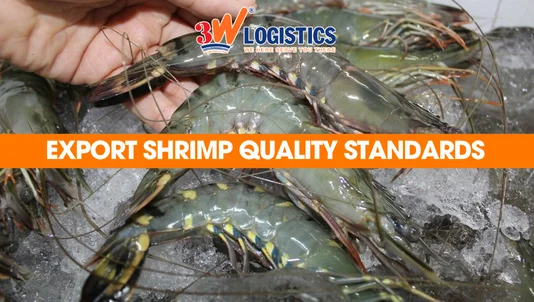
Meeting export shrimp quality standards is essential to ensuring that importers accept shipments and make payment in accordance with the contract, as every container of frozen shrimp must simultaneously satisfy each market’s requirements for sensory characteristics, size, antibiotic residues, and traceability documentation.
In 2025, Vietnam’s shrimp export revenue reached a record of approximately USD 4.6 billion, up 19% from the previous year, remaining a cornerstone of the country’s seafood industry. However, this growth has been accompanied by increasing pressure from technical and trade barriers: anti-dumping duties in the United States, the EU’s IUU yellow card, and facility registration requirements in China. A shipment with excessive antibiotic residues, incorrect sizes, or incomplete traceability records can result in returned goods or lost orders to competitors.
In this article, 3W Logistics summarizes the current framework of export shrimp quality standards – from Vietnamese national standards (TCVN), mandatory technical criteria, market-specific requirements, and necessary international certifications to inspection and certification procedures – to help businesses prepare documentation proactively and reduce the risk of shipment returns or customs clearance refusals.
1. General standards for Vietnamese shrimp exports
Overview of national standards applicable to frozen shrimp
The current foundational technical standard for frozen shrimp exports is TCVN 13768:2023 (Frozen Shrimp), published by the Ministry of Science and Technology. Businesses should note that this standard has replaced four previous standards simultaneously: TCVN 4380:1992, TCVN 4381:2009, TCVN 5109:2002, and TCVN 12614:2019 (Frozen Black Tiger Shrimp and Whiteleg Shrimp).
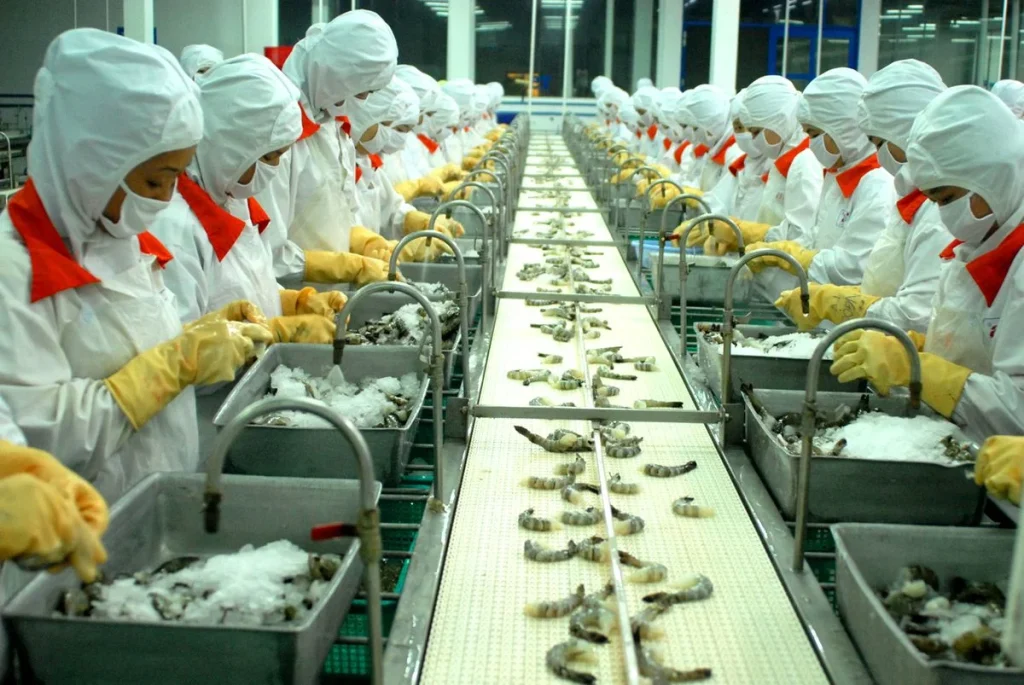
TCVN 13768:2023 was developed with reference to CODEX STAN 92-1981 (Codex Standard for Quick Frozen Shrimps or Prawns) and grading guidelines from the U.S. National Oceanic and Atmospheric Administration (NOAA), bringing most sensory and grading criteria closer to international practices. The standard applies to both raw shrimp and frozen shrimp products (whole, headless, PD, PTO, butterfly-cut shrimp…), while processing and handling must comply with TCVN 5603:2023 on food hygiene practices.
Classification of export shrimp by processing form and freezing method
Vietnamese shrimp exports are classified according to two main criteria that directly determine packaging specifications and selling prices:
- By processing form: HOSO (whole, head-on, shell-on), HLSO (headless, shell-on), PD (peeled, with or without the tail), PTO (peeled, tail-on – Peeled Tail On), Nobashi (straightened shrimp for tempura), Sushi Ebi (back-split shrimp for sushi), and further-processed shrimp (breaded, skewered, rolled).
- By freezing method: Block freezing (frozen as a solid block in a tray, commonly weighing 1.8-2 kg per tray) and IQF – Individually Quick Frozen (each shrimp frozen separately, packed in 1-2 kg retail bags or large 10 kg bags for further processing).
- By species: Primarily whiteleg shrimp (Litopenaeus vannamei) and black tiger shrimp (Penaeus monodon), along with giant freshwater prawns and certain wild-caught marine shrimp species.
2. Mandatory quality criteria for export shrimp
Under TCVN 13768:2023, frozen shrimp for export must simultaneously meet requirements for sensory characteristics, weight and size, glazing, defects, and food safety (microorganisms, heavy metals, and prohibited chemicals and antibiotics). The table below summarizes the most important criteria businesses need to control before export.
| Criteria | Specified Requirements | Reference |
|---|---|---|
| Total defect rate | Maximum 20% of the total sample weight (black spots, loose heads, cracked segments, ruptured hepatopancreas, remaining intestinal tracts, broken tails) | TCVN 13768:2023 |
| Net weight | Maximum deviation of ± 2.5% from the weight stated on the label (after thawing and draining); the average weight across all samples must not be lower than the weight stated on the packaging | TCVN 13768:2023 |
| Size | As specified in production procedures and the contract, allowing no more than 5% of shrimp bodies below the next smaller size grade | TCVN 13768:2023 |
| Glazing | Applicable only to glazed products; the ice glaze must be smooth and completely cover the product’s surface | TCVN 13768:2023 |
| Foreign substances (agar, CMC, starch…) | Not permitted; determined through sensory assessment combined with rapid chemical testing under Annex A | TCVN 13768:2023 |
| Prohibited antibiotics (chloramphenicol, nitrofurans…) | Not detected (ND), determined using ELISA or LC-MS/MS | TCVN 13768:2023; current food safety regulations |
| Storage and transportation temperature | No higher than -18°C throughout transportation and storage | TCVN 13768:2023 |
Sensory requirements and defect rates
Raw shrimp and finished products must have characteristic flesh texture, color, and odor, and be free from foreign substances. TCVN 13768:2023 stipulates that the total weight of defective shrimp (black spots, loose heads, cracked segments, ruptured hepatopancreas, remaining intestinal tracts, broken tails) must not exceed 20% of the total weight of the sampled shrimp. Businesses need to control this criterion from the initial processing stage to avoid downgrading or rejection of the entire shipment.
Size, net weight, and glazing
Shrimp size (number of shrimp per kilogram or pound) must comply with production procedures and contractual terms, allowing no more than 5% of shrimp bodies below the next smaller size grade. Net weight after thawing and draining must not deviate by more than ± 2.5% from the weight stated on the label. For glazed products, the ice layer must be smooth and completely cover the surface. The glazing ratio is usually specified in the contract because it directly affects the actual net weight of the shrimp and frequently triggers buyer complaints if it exceeds the declared percentage.
Food safety criteria: heavy metals, prohibited antibiotics, and microorganisms
Requirements for heavy metals and prohibited chemicals and antibiotics in raw shrimp and finished products are specified in separate criteria tables, with ELISA or LC-MS/MS used for prohibited antibiotics such as chloramphenicol and nitrofurans. Microbiological contamination criteria (total aerobic bacterial count, Salmonella, Vibrio…) must also comply with current food safety regulations. These criteria require the most thorough testing, as most alerts and returned shipments in demanding markets stem from antibiotic residues or injected foreign substances (agar, CMC, starch), rather than sensory defects.
Packaging, labeling, and storage
Frozen shrimp products must be packed in food-grade packaging, labeled in accordance with current regulations, and maintained at a temperature no higher than -18°C throughout transportation. For exports shipped in refrigerated containers, many importers also require a temperature recording device (data logger) to demonstrate that the cold chain remained uninterrupted throughout the journey.
3. Export shrimp quality standards by target market
In addition to national standards, each shrimp importing market has its own requirements for facility registration, tariffs, and origin certification. These factors determine whether shipments clear customs smoothly and retain their profit margins. The table below compares the core requirements across Vietnam’s four major shrimp export markets.
| Criteria | China | United States | EU | Japan |
|---|---|---|---|---|
| Regulatory authorities / regulations | GACC (General Administration of Customs of China) – Decree 248 | DOC (anti-dumping duties), FDA (food safety) | European Commission, IUU regulations, and Catch Certificate requirements | Japan’s Ministry of Health, Labour and Welfare (MHLW) |
| Pre-export requirements | Mandatory processing facility registration with GACC under Decree 248 | Facility registration with the FDA; anti-dumping duties based on periodic administrative review (POR) results | A Catch Certificate is required for marine shrimp, and a Health Certificate is required for every shipment | Testing of antibiotic residues and additives against Japan’s permitted lists |
| Key control priorities | Facility registration numbers, customs declaration information, and antibiotic residues | Company-specific anti-dumping duty rates, traceability, and food safety | Traceability of legally harvested products (combating IUU fishing) and animal welfare in aquaculture | Antibiotic residues, food additives, freshness, and sensory characteristics |
| Market size / position of Vietnamese shrimp | Currently the largest market, accounting for approximately 41% following a decline in exports to the United States; demand for premium shrimp and lobster is growing strongly | A major market facing dual pressure from anti-dumping duties and Section 301 tariffs | Vietnam ranks third, behind Ecuador and India; competition is increasing following India’s completion of an FTA with the EU in early 2026 | A traditional market with consistent requirements for quality and freshness |
The Chinese market: GACC registration and a key growth driver
China is currently the largest importing market for Vietnamese shrimp, accounting for approximately 41% as exports to the United States slow. Under Decree 248 of the General Administration of Customs of China (GACC) on the registration of overseas food production facilities, shrimp processors exporting to China must hold a valid facility registration number and accurately declare product information on customs declarations. Demand for premium shrimp and lobster in China is growing strongly, creating opportunities for Vietnamese businesses to diversify beyond standard whiteleg shrimp products.
The U.S. market: Anti-dumping duties and administrative reviews (POR)
Frozen warmwater shrimp imported into the United States from Vietnam has been subject to anti-dumping duties since 2005 and is currently reviewed periodically through administrative reviews (Periodic Review of Order – POR) conducted by the U.S. Department of Commerce (DOC). On May 8, 2026, the DOC announced the preliminary results of POR20 (covering February 1, 2024-January 31, 2025): the two mandatory respondents received duty rates of 6.30% and 10.76% (some sources report 6.76%); 27 companies that submitted valid applications received an average separate rate of 7.56%; and 132 companies that did not meet the requirements remained subject to the country-wide rate of 25.76%. The final results are expected around November 2026, so businesses exporting to the United States need to monitor these developments closely when negotiating year-end orders.
The EU market: IUU traceability and animal welfare
For wild-caught shrimp, the EU requires a Catch Certificate demonstrating legal origin under regulations against illegal, unreported, and unregulated (IUU) fishing, along with a Health Certificate for every seafood shipment. Vietnam is still working toward lifting the IUU “yellow card,” with a target set for 2026, so catch traceability documentation should be prepared in full from the beginning of the supply chain. The EU is also introducing additional requirements for animal welfare in aquaculture, a trend businesses need to monitor when working with European customers.
The Japanese market: Antibiotic residues and consistent quality
Japan is a traditional market that demands highly consistent quality and strictly controls antibiotic residues and food additives according to its own permitted lists, which are often more stringent than general Codex limits. Businesses exporting to Japan need to maintain testing records for each shipment and avoid using additives or preservatives that are not on the permitted lists.
4. International certifications needed for shrimp exports
Food safety management systems: HACCP and ISO 22000
HACCP is an almost mandatory requirement for frozen shrimp export processing plants, controlling hazards from raw material reception and initial processing through freezing and packaging. ISO 22000 is often additionally adopted by large-scale plants to standardize their entire food safety management system.
Sustainable aquaculture certifications: ASC and BAP
For farmed shrimp, the two certifications most favored by European and North American markets are ASC (Aquaculture Stewardship Council) and BAP (Best Aquaculture Practices). Both assess farming areas against criteria covering the environment, food safety, social responsibility, and traceability, helping certified products gain access to major supermarkets and retail chains more easily than uncertified shrimp.
Farm certifications: VietGAP and GlobalGAP
VietGAP governs good aquaculture practices at domestic raw material production sites, while GlobalGAP is an international standard that many European importers require to be checked alongside ASC. Controlling quality from the farming stage helps prevent antibiotic residues and prohibited chemicals at the source, rather than relying solely on finished-product testing.
Other specialized certifications: Halal, Kosher, BRCGS/IFS
Depending on the target market, businesses may need additional certifications: Halal for Muslim markets; Kosher for Jewish communities in the United States; and GFSI-recognized retail certifications such as BRCGS or IFS when working with major European supermarket chains.
5. Inspection and quality certification procedures for export shrimp
Step 1: Control incoming raw materials
Raw shrimp must be harvested from farming areas that are not subject to bans or suspensions imposed by the competent authorities, accompanied by documentation containing sufficient traceability information as required by TCVN 13768:2023.
Step 2: Test quality criteria at a qualified laboratory
Samples are analyzed for sensory characteristics, weight, defect rates, and food safety criteria (prohibited antibiotics, heavy metals, and microorganisms) at laboratories accredited to ISO/IEC 17025, typically VILAS-accredited laboratories or laboratories designated by NAFIQPM.
Step 3: Obtain health and quarantine certificates
Businesses register with the Department of Quality, Processing and Market Development (NAFIQPM) to obtain a Health Certificate. For wild-caught shrimp exported to the EU, an additional Catch Certificate is required to demonstrate legal origin.
Step 4: Arrange independent inspection and complete export documentation
Once satisfactory test results are available, independent inspection organizations issue a Certificate of Quality/Quantity for the shipment. These certificates complete the documentation package, together with the bill of lading, for export procedures and delivery to the importing partner.
Frequently asked questions about export shrimp standards
Question 1: At what temperature should frozen shrimp for export be stored?
Under TCVN 13768:2023, frozen shrimp must be stored and transported at a temperature no higher than -18°C throughout the journey. Many importers also require a temperature recording device (data logger) inside the refrigerated container to demonstrate that the cold chain remained uninterrupted.
Question 2: Which certifications should new shrimp exporters obtain first?
New exporters should prioritize the following steps in order: establish a HACCP system at the processing plant; register a facility identification code with NAFIQPM to obtain Health Certificates; test antibiotic residues and heavy metals at a qualified laboratory; and, depending on the target market, obtain GACC registration (China), ASC/BAP certification, or GlobalGAP certification (Europe and North America).
Question 3: What anti-dumping duty rates currently apply to Vietnamese shrimp exported to the United States?
According to the preliminary results of the 20th administrative review (POR20) announced by the U.S. Department of Commerce on May 8, 2026, the two mandatory respondents face duty rates of approximately 6.30–10.76%; other companies with valid applications face an average separate rate of approximately 7.56%; and ineligible companies are subject to the country-wide rate of 25.76%. These are preliminary results only. The final results are expected around November 2026 and may differ from the preliminary rates, so businesses should obtain the latest updates from the Trade Remedies Authority of Vietnam before finalizing orders for the U.S. market.
3W Logistics supports shrimp exporters
Fully meeting export shrimp quality standards is only a prerequisite. Ensuring that shipments reach importing partners on time and in the required condition also demands a professional cold chain logistics process and a clear understanding of each market’s specific requirements. With experience handling a wide range of frozen seafood products and OTI-NVOCC registration with an FMC bond (Federal Maritime Commission) in the United States, 3W Logistics provides comprehensive shrimp export services for businesses:
- Market-specific documentation advice: Help prepare documentation that meets the specific requirements of China, the United States, the EU, or Japan.
- Connections with reputable testing and inspection providers: Help businesses work with independent inspection organizations to obtain quality certificates on time.
- Support with quarantine procedures and health certificates: Provide assistance from registration through obtaining all required Health Certificates and Catch Certificates.
- Expertise in long-distance refrigerated transportation: Monitor the -18°C cold chain throughout the journey, reducing the risk of temperature disruptions in reefer containers.
- Electronic customs declarations and resolution of issues at border checkpoints: Respond promptly to requests for additional documentation that may arise during the export process.
- Sea freight to China, the United States, the EU, and other markets: Optimize routes, transit times, and costs for each market and shrimp product segment.
Contact 3W Logistics for specific advice on meeting applicable standards and completing shrimp export procedures for your business’s target market.
Address: 34 Bach Dang Street, Tan Son Hoa Ward, Ho Chi Minh City
Hotline: +84 28 3535 0087
____________________________
3W Logistics Hanoi Branch
Address: 81A Tran Quoc Toan Street, Cua Nam Ward, Hanoi
Hotline: +84 24 3202 0482
____________________________
3W Logistics Hai Phong Branch
Address: 8A, Lot 28, Le Hong Phong Street, Gia Vien Ward, Hai Phong
Hotline: +84 225 355 5939
____________________________
3W LOGISTICS CO., LTD – We here serve you there!
Email: info@3w-logistics.com
Website: www.3w-logistics.com

Ms. Apple is the CCO (Chief Commercial Officer) at 3W Logistics, with over 10 years of experience in sales and business operations management.
At 3W Logistics, Ms. Apple is responsible for commercial strategy, corporate customer development, managing a team of more than 50 sales professionals, and improving business performance in the logistics sector.
With practical experience in sales management and market development, Ms. Apple shares professional insights on business logistics solutions, international transportation, freight forwarding, customer management, trade lane development, and growth strategies in the logistics industry.


