
Export shrimp packaging specifications encompass the requirements for freezing temperatures, packaging formats, weight, and labeling that seafood processing plants must fulfill before shipping their products in refrigerated containers. Frozen shrimp is the most perishable seafood product within the refrigerated cargo category because it is highly sensitive to temperature fluctuations and interruptions in the cold chain. Meanwhile, the three major markets for Vietnamese shrimp today – China, the United States, and the EU – each impose stringent requirements concerning processing facility registration, import duties, and traceability.
In this article, 3W Logistics summarizes all export shrimp packaging specifications under Vietnamese legislation in force as of September 2026 – from the 2010 Law on Food Safety and Decree No. 15/2018/ND-CP, Decree No. 37/2026/ND-CP on goods labeling, to TCVN 12614:2019 on frozen black tiger shrimp and whiteleg shrimp and TCVN 5835:1994 on individually quick-frozen peeled shrimp for export – along with the specific requirements of major importing markets, from the perspective of a freight forwarder with more than 10 years of experience transporting refrigerated export cargo.
1. Why are export shrimp packaging specifications a top priority?
Frozen shrimp must maintain a very low core temperature throughout its journey, from leaving the factory’s cold storage facility and being loaded into a refrigerated container, through a sea voyage lasting 15–35 days depending on the destination market, until arrival at the buyer’s cold storage facility. Even a brief interruption in the cold chain – caused by a container power outage, lengthy customs clearance, or slow handling at a transshipment port – can reduce shrimp quality, cause drip loss, discoloration (black spots), or ice recrystallization, resulting in downgrading or rejection of the shipment.
In addition to cold storage requirements, export shrimp packaging specifications must simultaneously satisfy three groups of requirements:
- Domestic legal requirements: The 2010 Law on Food Safety and Decree No. 15/2018/ND-CP (which remain applicable pending the revised Law on Food Safety); Decree No. 37/2026/ND-CP dated January 23, 2026, on goods labeling; and regulations governing seafood export processing facilities administered by the Department of Quality, Processing and Market Development (Ministry of Agriculture and Environment) under Circular No. 48/2013/TT-BNNPTNT and its amendments.
- Technical standards: TCVN 12614:2019 on frozen black tiger shrimp and whiteleg shrimp, TCVN 5835:1994 on individually quick-frozen peeled shrimp for export, and the HACCP food safety management system required at all seafood export processing plants.
- Importing-country requirements: Registration on the list of approved exporters under Decree 248 of the General Administration of Customs of China (GACC), quarantine and food safety certificates issued by Nafiqpm for shipments to the EU, and compliance with applicable anti-dumping duties for exports to the United States.
Important note: Effective January 23, 2026, Decree No. 37/2026/ND-CP replaces Decree No. 43/2017/ND-CP and Decree No. 111/2021/ND-CP on goods labeling. Commercial packaging printed in compliance with the previous regulations before January 23, 2026, may continue to be used for no more than two years from that date. Businesses holding stocks of cartons printed under the previous labeling format should review their label information before packing new shipments, because even export shrimp packaging specifications that meet technical standards may still lead to rejection by the buyer if the labels do not match the contract and quarantine certificate.
2. Shrimp quality standards before packaging
Export shrimp packaging specifications are meaningful only when the shrimp entering the freezing and packaging stages already meet TCVN 12614:2019 and seafood safety regulations. Many shipments are returned by buyers or require reprocessing because of improper freezing procedures or antibiotic residues exceeding permitted limits.
| Criteria | Required Standards | Grounds for Rejection / Downgrading |
|---|---|---|
| Freezing temperature | Quick-freeze using IQF or block freezing until the product’s core temperature reaches -18°C or below; maintain continuous storage and transportation at -18°C or lower in accordance with TCVN 12614:2019 | The core temperature does not meet the requirement before carton packing, or interruptions in the cold chain during transportation cause ice recrystallization and deterioration in physical and textural quality |
| Sensory characteristics | Uniform size and species; color characteristic of the species; firm, elastic flesh after thawing; no black spots or dehydration (drying) | Black spots (melanosis), mushy flesh, or dehydration – indications of inadequate raw material storage before processing |
| Size grading | Grade by the number of shrimp per pound or kilogram according to standard size categories (e.g., 16/20, 21/25, 26/30, 31/40, 41/50, 51/60, 61/70…); maintain uniformity within each packaging unit | Uneven sizes or discrepancies with the size stated on the label – the buyer may reduce the price or require the entire shipment to be regraded |
| Antibiotic and chemical residues | Meet the importing country’s maximum residue limits (MRLs) for substances such as chloramphenicol, nitrofurans, and total sulfites; obtain a test report from an accredited laboratory for each export shipment | Residues exceeding MRLs are detected – the shipment may trigger an alert, be returned, or lead to intensified inspections of subsequent shipments |
| Glazing percentage | The percentage of the external ice glaze must match the label declaration (e.g., 10%, 20%); the ice layer must cover the entire product evenly | The actual glazing percentage exceeds the declared percentage – this violates net weight requirements and may be considered commercial fraud in many markets |
| Raw material origin | Farmed shrimp must have farming area records, aquaculture facility identification codes, and records of antibiotic and feed use in accordance with the traceability requirements of Nafiqpm and the importing country | Missing farming area records or pond identification codes – the shipment may be ineligible for EU export certification, or GACC may request additional documentation |
3. Packaging standards for frozen shrimp exports
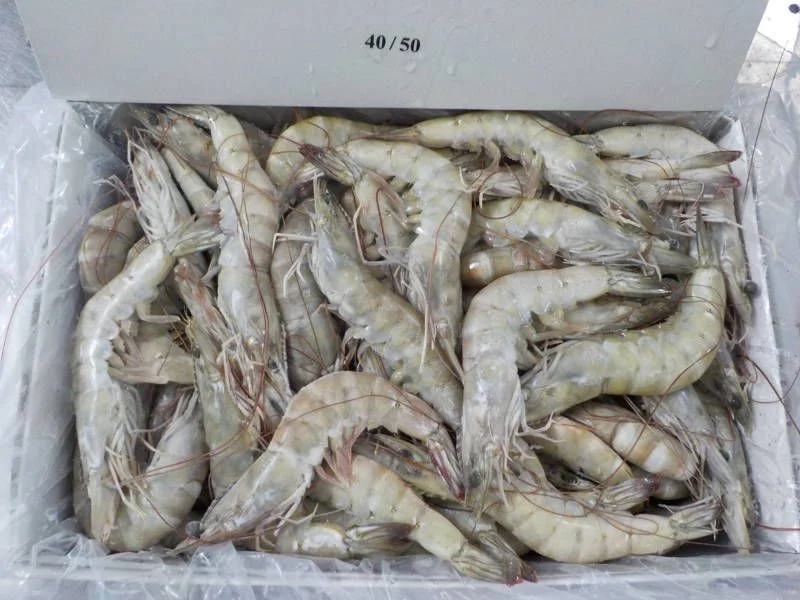
This is the core of export shrimp packaging specifications. Under TCVN 12614:2019 and TCVN 5835:1994, frozen shrimp for export is primarily packed in two forms: block-frozen shrimp (shrimp frozen into a block with water in a tray) or individually quick-frozen (IQF) shrimp (each shrimp frozen separately). Each form has its own packaging and weight specifications as agreed in the contract.
| Packaging Parameters | Specific Requirements | Reasons / Notes |
|---|---|---|
| Block-frozen shrimp | Pack in aluminum trays or plastic molds with clean water, commonly weighing 1.8 kg or 2 kg per tray; wrap in PE bags before placing in cartons | The ice surrounding the shrimp block helps limit oxidation and moisture loss during extended storage, making it suitable for long-distance shipments |
| IQF shrimp (individually quick-frozen) | Pack in airtight or vacuum-sealed PE bags, commonly weighing 1 kg or 2 kg per bag for further-processed products, or in large 10 kg bags for wholesale raw materials | The shrimp remain separate without sticking together, allowing importers to portion them conveniently for retail sale or further processing |
| Outer cartons | Use moisture-resistant cartons with a wax coating or waterproof film; the net weight per carton is commonly 10 kg or 12 kg for block-frozen shrimp, or a multiple of the IQF bag weight; secure with strapping after packing | Cartons with insufficient mechanical strength can soften and collapse when exposed to moisture and melting ice inside refrigerated containers |
| Packaging materials | PE bags and other materials in direct contact with food must be clean, free from oily or other foreign odors, and compliant with food safety and hygiene standards | Foreign odors in packaging materials can transfer to the product during prolonged storage at deep-freezing temperatures |
| Pallet stacking | Stack cartons containing shrimp of the same size and grade on plastic or treated wooden pallets, and wrap them with shrink film to stabilize the load before moving it into cold storage or a container | Helps cold air circulate evenly inside the container and limits localized hot spots that could cause partial thawing of shrimp in certain positions |
| Refrigerated container (reefer) | Set the temperature to -18°C or lower according to the contract; inspect the refrigeration unit, door seals, and temperature data logger before loading; do not stack cargo above the airflow limit line | The data logger provides evidence for comparison in the event of quality disputes caused by cold chain interruptions during transportation |
4. Mandatory labeling requirements for export shrimp packaging
Labels on shrimp packaging must comply simultaneously with Decree No. 37/2026/ND-CP, frozen seafood labeling regulations, and the importing country’s specific requirements. Under Decree No. 37/2026/ND-CP, labels for exported goods must follow the importing country’s laws, the contract, and international treaties to which Vietnam is a party, and must not display images or content concerning sovereignty disputes or other sensitive matters.
| Label Information | Required Content | Practical Notes |
|---|---|---|
| Product name and processing form | Scientific name and commercial name in English (e.g., Frozen Black Tiger Shrimp, Litopenaeus vannamei); processing form (HOSO, HLSO, PD, PUD, PTO, Nobashi…) and size as specified in the contract | Avoid using only the generic name “Frozen Shrimp” – clearly state the scientific name, processing form, and size to match the quarantine certificate and customs documentation |
| Processing facility identification code | The seafood export processing facility code (DL) issued by the competent authority, and the registration number with the importing country’s customs authority when required (e.g., the GACC registration number for China) | A missing or incorrect facility code prevents customs clearance, particularly in markets that maintain lists of approved exporters |
| Country of origin | “Product of Vietnam”; include the farming area code when required by the contract or traceability program | The origin stated on the label must match the C/O, quarantine certificate, and customs documentation to prevent the shipment from being held for cross-checking |
| Net weight and glazing percentage | Net weight must exclude the ice glaze (e.g., “Net weight: 10 kg, Glazing 20%”); gross weight must be clearly displayed | An incorrect or unclear glazing declaration is often one of the first issues identified by customs and quality inspection authorities in the importing country |
| Production date, lot number, and expiry date | Production date, batch/lot code linked to raw material records and the freezing batch, and expiry date based on storage at -18°C | The lot number is the primary reference for traceability in the event of a food safety incident or a buyer’s quality complaint |
| Storage instructions | Clearly state “Store at -18°C or below. Do not refreeze after thawing” or equivalent wording in the importing country’s language | Many retail markets require this food safety warning to appear on frozen food packaging |
5. Export shrimp packaging specifications by market
Export shrimp packaging specifications differ significantly between markets, both in packaging formats and registration procedures. Businesses should agree on these requirements with their partners during contract negotiations to avoid repackaging costs or shipments being held at the destination port.
Exports to China (Registration and Basic Requirements – GACC)
China is currently the largest importing market for Vietnamese shrimp. Processing businesses must be included on the list approved by the General Administration of Customs of China (GACC) under Decree 248, and their registration numbers must appear on labels and electronic customs declarations. In this market, block-frozen packaging is more common than IQF because it suits further processing at importing factories or restaurants.
Exports to the United States (Anti-Dumping Duty Compliance)
Vietnamese frozen warmwater shrimp exported to the United States is subject to anti-dumping duties based on the periodic administrative reviews conducted by the U.S. Department of Commerce (DOC). Duty rates differ between businesses eligible for separate rates and those subject to the country-wide rate, and are updated through annual periods of review (PORs). In addition to meeting packaging standards, businesses need to closely monitor the results of these reviews to calculate costs accurately when preparing quotations and signing contracts.
Exports to the EU (Catch Certificate and Health Certificate)
Shipments to the EU require a Health Certificate issued by Nafiqpm and, for ingredients originating from wild capture, a Catch Certificate under regulations against illegal, unreported, and unregulated (IUU) fishing. Vietnam is still working to address the EU’s IUU “yellow card” warning, so the more complete the raw material traceability records, the smoother the certification process and customs clearance at the destination port.
From 3W Logistics’ practical experience: For frozen shrimp export shipments, the greatest risks arise not from shrimp quality at the factory, but from the cold chain after the cargo leaves cold storage: refrigerated containers set to the wrong temperature or experiencing faults that go undetected, actual glazing percentages that do not match label declarations, and insufficiently detailed farming area records when the destination market requires strict traceability. All three issues can be prevented by inspecting the refrigeration unit, labeling correctly, and preparing documentation while the goods are still at the factory’s warehouse. – Ms. Apple, CCO, 3W Logistics
6. Common mistakes in export shrimp packaging specifications
| Common Mistakes | Practical Consequences | Prevention Measures |
|---|---|---|
| Cold chain interruptions while awaiting loading or customs clearance | Ice recrystallization, reduced elasticity, and deterioration in sensory quality, potentially leading to rejection upon inspection at the destination port | Minimize the time shrimp spend at ambient temperature before entering cold storage or a container; install a data logger to monitor temperature throughout the journey |
| Actual glazing percentage exceeds the label declaration | The actual net weight is lower than declared, which may be considered commercial fraud and result in penalties or rejection of the shipment | Conduct random glazing checks on each production batch and compare the results against the percentage declared in the contract and on the label |
| Container loading that obstructs cold airflow | Localized hot spots inside the container cause partial thawing of some cargo, affecting the quality assessment of the entire shipment at the destination port | Load cargo according to the refrigerated container’s airflow guidelines, leave the required clearances, and do not stack above the safety limit line |
| Missing farming area records or aquaculture facility identification codes | Failure to obtain EU export certificates on time, or requests for additional documents from GACC that delay customs clearance in China | Maintain complete farming area records, pond identification codes, and antibiotic use records from the raw material procurement stage |
| Labels that do not match certificates or still follow the previous regulatory format | Discrepancies between labels and the quarantine certificate, C/O, or contract prolong customs clearance; labels missing information required by the buyer may lead to rejection | Cross-check labels against the contract, certificates, C/O, and Decree No. 37/2026/ND-CP before printing in bulk; address existing stocks of packaging printed under the previous format |
FAQ – Frequently asked questions about export shrimp packaging specifications
Question 1: How do block-frozen shrimp and IQF shrimp differ in packaging?
Block-frozen shrimp are packed with water in trays and frozen into solid blocks. The surrounding ice protects the shrimp against oxidation and moisture loss during long journeys, making this format suitable for large-volume, long-distance shipments. IQF shrimp are individually frozen before bagging, preventing them from sticking together and allowing importers to portion them conveniently for retail sale or further processing. The choice depends on the contractual agreement and the buyer’s intended use.
Question 2: Which decree currently governs labeling for shrimp exports?
Effective January 23, 2026, Decree No. 37/2026/ND-CP replaces Decree No. 43/2017/ND-CP and Decree No. 111/2021/ND-CP on goods labeling. Export labels must follow the importing country’s laws, the contract, and international treaties to which Vietnam is a party, and must not contain images or content concerning sovereignty disputes. Packaging printed in compliance with the previous regulations before January 23, 2026, may continue to be used for no more than two years from that date.
Question 3: What anti-dumping duties currently apply to shrimp exports to the United States?
Anti-dumping duties on Vietnamese frozen warmwater shrimp exported to the United States are determined through periodic administrative reviews (PORs) conducted by the U.S. Department of Commerce (DOC). Rates differ between businesses eligible for separate rates and those subject to the country-wide rate because they have not demonstrated eligibility for a separate rate. As duties change with each review and may be adjusted between preliminary and final determinations, businesses should obtain updates from the Trade Remedies Authority of Vietnam (Ministry of Industry and Trade) or VASEP immediately before preparing quotations and signing contracts.
Question 4: What are the HS codes and current export duty rates for shrimp?
Frozen shrimp falls under HS heading 0306, commonly subheading 0306.17 (other shrimps and prawns, frozen); otherwise prepared or preserved shrimp falls under HS subheadings 1605.21 and 1605.29. Under the current export tariff schedule, shrimp and shrimp products are subject to an export duty rate of 0%. Businesses must apply the correct detailed HS code according to the processing form (whole, peeled, breaded…) to ensure accurate customs declarations and applications for preferential import duties under FTAs in the destination country.
How does 3W Logistics support shrimp exports?
As a freight forwarding company with OTI-NVOCC registration and an FMC bond (Federal Maritime Commission) in the United States and more than 10 years of experience transporting refrigerated export cargo, 3W Logistics provides comprehensive services for processing plants, businesses, and shrimp export traders – from advice on export shrimp packaging specifications through customs clearance and delivery to the buyer’s cold storage facility in the importing country.
Comprehensive export solutions from 3W Logistics:
- Packaging consultation and document checks before loading: Review packaging, glazing percentages, labels, and farming area records before loading the refrigerated container, helping detect issues early instead of discovering them at the destination port.
- Refrigerated container booking and temperature monitoring throughout the journey: Inspect the refrigeration unit, set the temperature according to the contract, and install a data logger to record temperatures as evidence when verification is needed.
- Sea freight to China, the United States, the EU, Japan, and other markets: Optimize routes, transit times, and costs for each market and packaging format.
- Customs declarations and shipping documentation preparation: Assist with quarantine certificates, C/O, food safety certificates, and exporter registration documentation (such as GACC registration) when required by the destination market.
- Shipment traceability documentation and claims handling support: Maintain temperature data, weight records, lot numbers, and shipment documents to resolve buyers’ quality or weight complaints promptly.
Why choose 3W Logistics for your shrimp export shipment? Meeting packaging standards is only a prerequisite. Even a properly packed shrimp shipment can still face claims if the cold chain is interrupted, the glazing percentage does not match the label, or farming area records fail to meet the destination market’s requirements. We manage the entire chain from the factory’s cold storage facility through delivery, going beyond vessel bookings and customs declarations. Contact 3W for specific advice on routes and costs for your next shrimp export shipment.
Address: 34 Bach Dang Street, Tan Son Hoa Ward, Ho Chi Minh City
Hotline: +84 28 3535 0087
____________________________
3W Logistics Hanoi Branch
Address: 81A Tran Quoc Toan Street, Cua Nam Ward, Hanoi
Hotline: +84 24 3202 0482
____________________________
3W Logistics Hai Phong Branch
Address: 8A, Lot 28, Le Hong Phong Street, Gia Vien Ward, Hai Phong
Hotline: +84 225 355 5939
____________________________
3W LOGISTICS CO., LTD – We here serve you there!
Email: info@3w-logistics.com
Website: www.3w-logistics.com

Ms. Apple is the CCO (Chief Commercial Officer) at 3W Logistics, with over 10 years of experience in sales and business operations management.
At 3W Logistics, Ms. Apple is responsible for commercial strategy, corporate customer development, managing a team of more than 50 sales professionals, and improving business performance in the logistics sector.
With practical experience in sales management and market development, Ms. Apple shares professional insights on business logistics solutions, international transportation, freight forwarding, customer management, trade lane development, and growth strategies in the logistics industry.


