
Electrical equipment import procedures according to the latest regulations
Importing electrical equipment is a recurring need for manufacturing, construction, renewable energy, and technical infrastructure businesses in Vietnam from transformers, switchboards, and power cables to circuit breakers and automated control systems.
However, this is also a commodity group where electrical equipment import procedures are significantly more complex than for ordinary goods, because the majority of electrical equipment is subject to mandatory quality control requiring conformity certification or a conformity declaration before it is permitted to circulate in Vietnam.
Many businesses only begin researching electrical equipment import procedures after cargo has already arrived at port, only to discover missing conformity certification, missing CE certificates, or incorrect HS code declarations resulting in customs holding the shipment, requesting physical inspection, and extended container storage costs.
In this article, 3W Logistics presents the complete electrical equipment import procedure process under current regulations from equipment classification, conformity requirements, required documents, HS codes, and tax calculations to the most common real-world risks, as seen from a freight forwarder with over 10 years of experience handling electrical equipment imports.
1. Are Imported Electrical Equipment Subject to Quality Inspection?
This is the first and most important question in the electrical equipment import procedure, and the answer depends on whether the equipment falls within the list of Group 2 products and goods (capable of causing unsafe conditions).
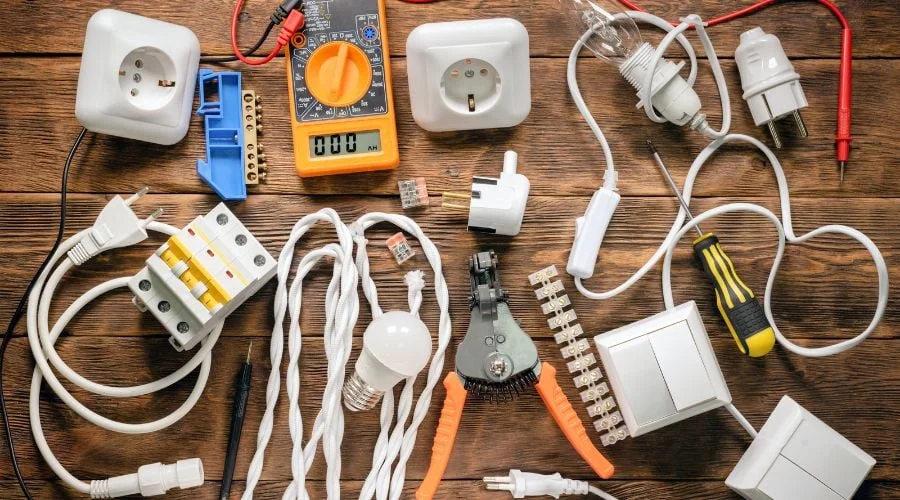
Under Circular 28/2012/TT-BKHCN (as amended by Circular 07/2017/TT-BKHCN and related documents), the majority of household and industrial electrical equipment falls under mandatory quality control requiring conformity certification or a conformity declaration before import and market distribution, similar to the lithium battery import procedure.
| Electrical Equipment Group | Product Examples | Conformity Requirements |
|---|---|---|
| Household electrical appliances | Electric fans, hair dryers, irons, microwave ovens, vacuum cleaners, rice cookers… | Conformity certification (CR) per the applicable QCVN – mandatory before import and market distribution |
| Lighting equipment | LED lights, fluorescent lamps, compact lamps, industrial luminaire sets… | Conformity certification (CR) per QCVN 19:2019/BKHCN and related regulations |
| Industrial electrical equipment (low voltage) | Disconnect switches, circuit breakers (MCB/MCCB), contactors, protection relays, industrial sockets… | Conformity certification (CR) per QCVN 4-1:2011/BKHCN (low-voltage electrical equipment) |
| Transformers and medium/high-voltage equipment | Distribution transformers, power transformers, disconnect switches, high-voltage circuit breakers… | Conformity declaration or certification per the technical regulation prescribed by the Ministry of Industry and Trade / Ministry of Science and Technology |
| Power cables and electrical wiring | Power cables, control cables, residential wiring, underground cables… | Conformity certification (CR) per QCVN 4-2:2011/BKHCN (power cables) |
| Specialized industrial electrical equipment | Inverters (VFD), uninterruptible power supplies (UPS), programmable logic controllers (PLC), HMI displays… | Varies by product – some require mandatory conformity certification, others require only a conformity declaration; confirmation with the Ministry of Science and Technology is needed |
Important note on conformity scope: The list of electrical products subject to mandatory conformity certification or declaration is updated periodically – it is not fixed. Businesses should not self-determine that their product falls outside the conformity requirement; instead, they should check the current list at the Ministry of Science and Technology’s information portal or contact the Conformity Assessment Department under the Directorate for Standards, Metrology and Quality (STAMEQ) directly for confirmation before importing. This is a non-skippable step in the electrical equipment import procedures.
2. HS Codes and Import Duties for Electrical Equipment
Electrical equipment spans many chapters of the import-export tariff schedule – primarily Chapter 85 (Electrical machinery and equipment) but some products fall under Chapters 84, 73, or 74 depending on construction and primary material. Correctly identifying the HS code is a critical factor in the electrical equipment import procedures – an incorrect HS code not only triggers back taxes but also leads to requests for supplementary conformity documents of the wrong type.
Common HS codes for electrical equipment:
- HS Code Power transformers (≤1 kVA): 8504.31.00
- HS Code Power transformers (>1 kVA): 8504.32 / 8504.33 / 8504.34
- HS Code Uninterruptible power supply (UPS): 8504.40.40
- HS Code Inverter / Variable frequency drive (VFD): 8504.40.30
- HS Code Automatic circuit breakers (MCB / MCCB): 8536.20.00
- HS Code Contactors and motor starters: 8536.49.00
- HS Code Distribution switchgear panels: 8537.10.00 / 8537.20.00
- HS Code Power cable (voltage ≤1 kV): 8544.49.10
- HS Code Power cable (voltage >1 kV): 8544.60.10
- HS Code LED lighting fixtures: 9405.40.90
- HS Code Electric motors: 8501.10 / 8501.20 / 8501.51
- HS Code Generators: 8502.11 / 8502.12 / 8502.13
Additionally, each electrical product with a different classification (residential or industrial), material, or function will carry a different HS code – do not attempt to infer the HS code from the product name alone. Official lookup resources include:
- General Department of Vietnam Customs: customs.gov.vn – search by name or code number
- VNACCS/VCIS System: Look up directly when filing electronic declarations
- Commodity Classification Consultation: Businesses may submit a written request to the provincial/city Customs Department for HS code confirmation before shipment to avoid future disputes
- HS Code Lookup Tool: https://caselaw.vn/tra-cuu-ma-hs – search by name or code number
Electrical Equipment Import Duty Rates by Country of Origin
| Country of Origin | Applicable C/O | Import Duty | Notes |
|---|---|---|---|
| China | C/O Form E (ACFTA) | 0% | Largest electrical equipment supply source; most Chapter 85 HS codes reach 0% with a valid C/O Form E |
| Japan | C/O Form JV (VJEPA) | 0% | Precision, high-tech electrical equipment from Japan; 0% under VJEPA for most Chapter 85 electrical equipment |
| South Korea | C/O Form KV (VKFTA) | 0% | LS Electric, Hyundai Electric – Korean electrical equipment widely used in the Vietnamese market; 0% under VKFTA |
| EU (Germany, France, Italy…) | C/O Form EUR.1 (EVFTA) | 0–5% | Siemens, Schneider, ABB, Legrand – premium electrical equipment from the EU; phased reduction under EVFTA |
| USA and non-FTA countries | No FTA C/O | 0–15% (MFN) | Varies by HS code; plus 10% VAT calculated on CIF value plus import duty |
3. Required Documents for Electrical Equipment Import Procedures
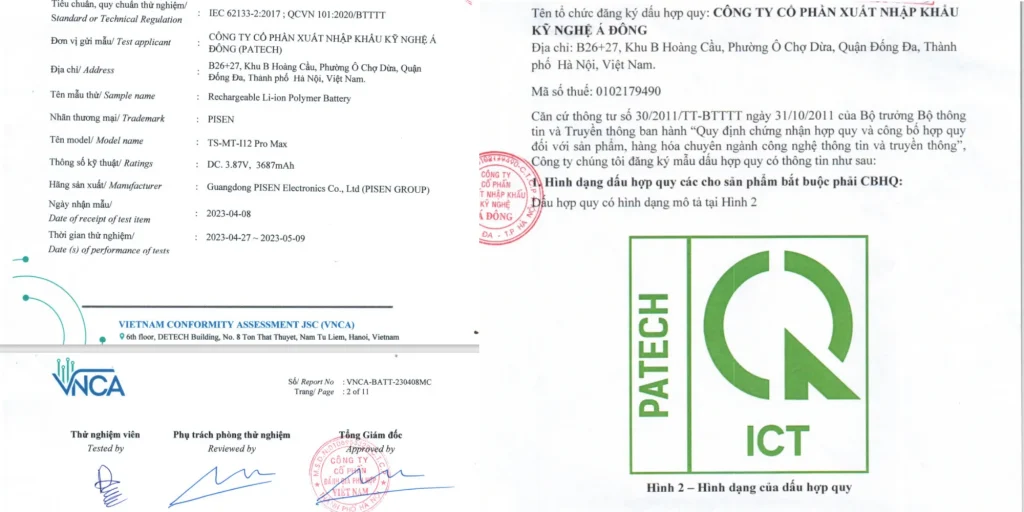
The documentation set for electrical equipment import procedures consists of two parallel layers: commercial documents prepared before cargo is loaded, and conformity certification documents that must be completed before cargo is permitted to clear customs and enter the market. A deficiency in any document within the conformity layer will result in customs holding the cargo – without exception.
| Document | When to Prepare | Important Notes |
|---|---|---|
| Conformity Certificate (CR) or conformity declaration results | Before cargo arrives at port | The most distinctive mandatory document – can be processed based on samples sent in advance; testing and CR issuance typically takes 15–30 working days depending on the equipment type |
| Test results per the applicable QCVN | Before applying for the CR | Testing conducted at a VILAS-accredited or Ministry of Science and Technology-designated laboratory; serves as the basis for issuing the CR Certificate |
| CE / UL / CCC certification or equivalent | Before submitting the CR application file | Vietnamese certification bodies may accept partial test results from internationally recognized CE/UL-certified laboratories to shorten the re-testing period |
| Sales Contract | Before deposit payment | Must clearly state the equipment name, model, technical specifications (voltage, power rating, applicable standard), Incoterms, and the supplier’s obligation to provide C/O and complete technical documentation |
| Commercial Invoice & Packing List | Before cargo departs origin | Equipment name, model, HS code, technical specifications, and value must be consistent with the issued CR and C/O – an incorrect model name is the most common reason customs holds electrical equipment shipments |
| Bill of Lading / AWB | After cargo is loaded | The goods description on the B/L must include sufficient detail – do not list generically as “electrical equipment”; specify the equipment type and model for cross-referencing with the CR |
| C/O (Certificate of Origin) | Before cargo departs origin (supplier to apply) | Determines whether FTA or MFN duty rates apply; must be requested at the contract negotiation stage – cannot be supplemented after cargo leaves the origin port |
| Technical documentation (Datasheet / Manual) | Before cargo departs origin | Customs and certification bodies may request this for technical specification verification; full technical documentation is mandatory for medium and high-voltage electrical equipment |
| Electronic customs declaration (VNACCS) | When full documentation is ready | Accurately declare the HS code, technical specifications, and CR number – a missing CR number will automatically trigger yellow/red channel assignment and a request for supplementary documentation |
4. Step-by-Step Electrical Equipment Import Procedures
Step 1: Check the Conformity Requirement and Identify the HS Code Before Ordering
The first and most important step in the electrical equipment import procedures is determining whether the intended equipment falls under mandatory conformity certification and which QCVN applies to that product. At the same time, identify the correct HS code based on the equipment’s construction, function, and technical specifications – not based on the supplier’s trade name or catalogue. These two pieces of information determine the entire procedural roadmap and the actual import cost.
Step 2: Send a Sample for Testing and Obtain the Conformity Certificate (CR)
For electrical equipment subject to mandatory conformity certification, the business sends a sample to Vietnam before placing the main order for testing at a Ministry of Science and Technology-designated body such as Quatest 1/2/3, Intertek, TÜV Rheinland, or SGS Vietnam. If the sample already holds CE or UL certification from a reputable international laboratory, the Vietnamese certification body may consider accepting partial results to shorten the re-testing period. Total time from sample submission to receiving the CR is typically 15–30 working days depending on the equipment type and complexity.
Step 3: Sign the Contract and Request the C/O from the Supplier
Only after the CR is in hand should the business sign the formal contract and place the order. The C/O requirement under the applicable FTA must be written into the contract terms at this stage – this is the only point at which the supplier can be required to apply for the C/O before cargo is loaded. At the same time, require the supplier to confirm that the model name on the Invoice exactly matches the model name on the issued CR – this is the most common source of complications in the electrical equipment import procedure.
Step 4: Shipping and Receiving the B/L
Electrical equipment is typically shipped by sea as FCL or LCL depending on size and weight. Electrical control equipment, sensors, and electronic circuit boards are sensitive to humidity and static electricity – the supplier must be required to use anti-moisture and anti-static packaging to the appropriate standard. For large equipment such as transformers, switchboards, or generators, confirm the correct container size and lifting/unloading arrangements at the destination port in advance.
Step 5: Customs Declaration and Specialized Inspection at the Port of Entry
When cargo arrives at port, the forwarder files the VNACCS customs declaration with complete equipment technical specifications and CR number. Electrical equipment subject to conformity requirements is always assigned yellow or red channel – customs cross-references the equipment name and model on the Invoice against the information in the issued CR. A minor discrepancy such as an abbreviated model name or an additional character compared to the CR is sufficient grounds for customs to hold the cargo pending verification.
Step 6: Customs Clearance, Tax Payment, Conformity Declaration, and Labeling
After clearance, the business pays taxes and collects the D/O. Before putting the electrical equipment into market distribution, the business must complete the conformity declaration at the Department of Science and Technology (if not done previously) and affix the CR mark to the equipment or packaging as required. Skipping this step can result in market surveillance authority penalties even after customs clearance has been completed.
5. How to Calculate Electrical Equipment Import Taxes
A practical example: a shipment of MCCB automatic circuit breakers imported from China, CIF value USD 30,000, HS code 8536.20.00, MFN duty 10%, ACFTA duty 0%:
| Tax Item | Without C/O Form E (MFN 10%) | With C/O Form E (ACFTA 0%) |
|---|---|---|
| CIF Value | USD 30,000 | USD 30,000 |
| Import duty | 10% × 30,000 = USD 3,000 | 0% × 30,000 = USD 0 |
| VAT (10%) | 10% × (30,000 + 3,000) = USD 3,300 | 10% × (30,000 + 0) = USD 3,000 |
| Total tax payable | USD 6,300 (~VND 160 million) | USD 3,000 (~VND 76 million) |
| Savings with C/O Form E | USD 3,300 (~VND 84 million) – more than 52% of total taxes payable, from a single C/O obtained free of charge from the Chinese supplier. | |
From 3W Logistics’ practical experience: Electrical equipment is the commodity group where we most frequently encounter the situation of a model name on the Invoice not matching the model name on the CR Certificate. The cause is typically that the Chinese supplier adds a version suffix to the model name on the Invoice (for example appending “-V2” or replacing a hyphen with an underscore), while the CR was issued for the model name without that suffix. Customs detects the discrepancy, holds the cargo for verification – adding 5–10 days and significant container storage fees. The prevention is simple: require the supplier to send a proforma invoice with the exact model name before the CR is issued, then cross-check the model name on the CR against the official Invoice before booking the vessel. This 5-minute check saves a full week waiting at port. – Ms. Apple, CCO, 3W Logistics
6. Common Risks in Electrical Equipment Import Procedures
| Risk | How It Manifests | Prevention |
|---|---|---|
| Model name on Invoice does not match the CR | Customs detects a discrepancy – holds cargo for 5–15 days pending verification, incurring significant container and storage fees | Cross-check the model name on the CR against the proforma invoice before booking the vessel; require the supplier to confirm the official model name in writing before the CR is issued |
| Missing CR when cargo arrives at port | Cargo held at port unable to clear customs – container storage fees accumulate while waiting for testing and CR issuance (15–30 days) | Send sample for testing and receive the CR before placing the main order; do not sign high-volume contracts without the CR in hand |
| Incorrect HS code declaration | Customs determines a different HS code – back taxes, administrative fines; for electrical equipment, this also triggers a request for supplementary conformity documents under the new chapter | Consult an experienced forwarder or request an advance ruling from the Customs Department based on the equipment’s actual technical specifications before filing |
| Test sample passes but actual shipment differs from the sample | Supplier changes components or technical specifications compared to the tested sample – the CR no longer applies to the actual shipment | Specify detailed technical parameters (voltage, current, applicable standard) in the contract; require the supplier to confirm in writing that specifications are unchanged from the certified sample before production begins |
| No FTA C/O – paying MFN duty | Must pay MFN duty instead of 0% FTA – for high-value electrical equipment, the difference can reach tens to hundreds of millions of VND | Include the correct FTA C/O requirement in the contract terms; do not pay a deposit if the supplier cannot commit to providing the C/O |
FAQ — Frequently Asked Questions About Electrical Equipment Import Procedures
Question 1: What documents are required for electrical equipment import procedures?
The complete documentation set for electrical equipment import procedures includes: Conformity Certificate (CR) or conformity declaration results per the applicable QCVN; test results from an accredited laboratory; CE/UL certification (if available); Sales Contract, Commercial Invoice, Packing List, Bill of Lading; C/O under the applicable FTA; technical documentation (datasheet, manual); and an electronic customs declaration via VNACCS.
Question 2: Are imported electrical equipment subject to mandatory conformity certification?
The majority of imported household electrical appliances, lighting equipment, low-voltage switching devices, and power cables are subject to mandatory conformity certification under Ministry of Science and Technology regulations. Specialized industrial electrical equipment may require only a conformity declaration depending on the product type. Businesses should confirm with the relevant regulatory authority before importing to avoid cargo being held at the port of entry.
Question 3: How long does electrical equipment conformity certification take?
The time from sample submission to receiving the CR Certificate is typically 15–30 working days depending on the equipment type and certification body. Equipment already holding CE or UL certification from a reputable international laboratory may benefit from a shortened re-testing period. Total time for conformity documentation preparation plus the conformity declaration at the Department of Science and Technology is typically 25–40 days.
Question 4: What is the import duty on electrical equipment from China?
With a valid C/O Form E under the ACFTA agreement, most electrical equipment in Chapter 85 benefits from a 0% import duty. Without C/O Form E, the MFN duty ranges from 0–15% depending on the specific HS code. In addition, 10% VAT applies, calculated on the CIF value plus import duty.
Question 5: How long does the electrical equipment import procedure take in total?
Total time from sending the sample for testing to cargo arriving at the warehouse is typically 45–70 days – comprising 15–30 days for testing and CR issuance, 5–10 days for the conformity declaration, plus production and shipping time. With complete and correctly formatted documentation, actual port clearance time is typically 3–10 working days depending on the assigned channel.
How Does 3W Logistics Support Electrical Equipment Import Procedures?
As a freight forwarding company registered as an OTI-NVOCC with an FMC Bond (Federal Maritime Commission) in the United States and with over 10 years of experience handling electrical equipment imports, 3W Logistics provides end-to-end services for businesses navigating electrical equipment import procedures – from conformity requirement consulting and testing/CR coordination through to equipment arriving at the warehouse or project site.
- Conformity requirement consulting and applicable QCVN identification before ordering: Confirm whether the intended equipment falls under mandatory CR and which QCVN applies; identify the correct HS code based on actual technical specifications; calculate tax costs by country of origin and applicable FTA.
- Sample testing coordination and CR issuance progress tracking: Connect businesses with an appropriate certification body; track the testing process to ensure the CR is in place before the main shipment arrives at port; advise on leveraging CE/UL results to shorten re-testing time in Vietnam.
- Model name consistency check between CR and Invoice before booking: This is a 3W value-added service – cross-checking the model name on the CR against the proforma invoice before signing the formal contract, preventing the risk of cargo being held due to model name mismatches.
- Assistance obtaining the correct FTA C/O from the supplier: Guide Chinese suppliers through the C/O Form E process, Japanese through Form JV, Korean through Form KV, and EU suppliers through EUR.1; verify the C/O before acceptance to ensure 100% consistency with the Invoice and B/L.
- Vessel booking and shipping from major electrical equipment markets: Arrange FCL or LCL from China, Japan, South Korea, the EU, and other markets to Vietnamese ports; advise on anti-moisture and anti-static packaging requirements for sensitive electrical equipment.
- Electronic customs declaration (VNACCS) and specialized inspection handling: Accurately declare the HS code, technical specifications, and CR number; monitor channel assignment and coordinate rapid response when customs requests physical inspection or supplementary documentation.
Why choose 3W Logistics for your electrical equipment import shipments? Electrical equipment import procedures require precision across two parallel layers simultaneously — conformity certification to the correct QCVN and commercial documentation that is consistent down to the smallest detail. A single character difference in a model name, or a technical specification that doesn’t match between the CR and the Invoice, is enough to hold a shipment for weeks. We don’t just book vessels – we cross-check the consistency between the CR, Invoice, and B/L before booking, ensuring cargo clears customs on the first attempt. Contact 3W for specific consultation before signing your equipment purchase contract.
Address: 34 Bach Dang Street, Tan Son Hoa Ward, Ho Chi Minh City
Hotline: +84 28 3535 0087
____________________________
3W Logistics Hanoi Branch
Address: 81A Tran Quoc Toan Street, Cua Nam Ward, Hanoi
Hotline: +84 24 3202 0482
____________________________
3W Logistics Hai Phong Branch
Address: 8A Lot 28 Le Hong Phong Street, Gia Vien Ward, Hai Phong
Hotline: +84 225 355 5939
____________________________
3W LOGISTICS CO., LTD – We here serve you there!
Email: quote@3w-logistics.com
Website: www.3w-logistics.com

Ms. Apple is the CCO (Chief Commercial Officer) at 3W Logistics, with over 10 years of experience in sales and business operations management.
At 3W Logistics, Ms. Apple is responsible for commercial strategy, corporate customer development, managing a team of more than 50 sales professionals, and improving business performance in the logistics sector.
With practical experience in sales management and market development, Ms. Apple shares professional insights on business logistics solutions, international transportation, freight forwarding, customer management, trade lane development, and growth strategies in the logistics industry.


