
Drone import procedures according to the new regulations
Importing drones and flycams into Vietnam falls under one of the strictest specialized-management goods categories today, since these are unmanned aerial vehicles (UAVs) directly tied to national security, defense, and aviation safety – not simply consumer electronics.
As of November 5, 2025, the legal framework for drone import procedures underwent a major shift when the Government issued Decree 288/2025/ND-CP on the management of unmanned aircraft and other aerial vehicles, fully replacing Decree 36/2008/ND-CP, which had been in effect for nearly 20 years.
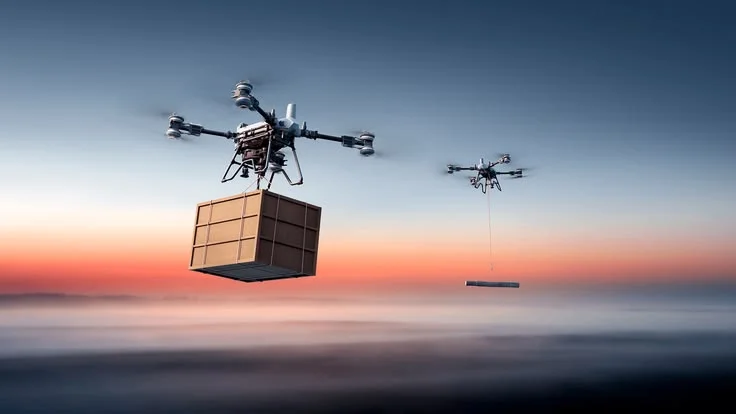
The biggest difference in the drone import procedure compared with ordinary goods is that small personal-use drones/flycams, medium-sized drones for surveying, agriculture, and professional filming, and large drones used to transport goods (cargo drones) are subject to three entirely different levels of control, even though all fall under the same legal framework.
In this article, 3W Logistics presents the full drone and flycam import procedure under the latest 2026 regulations – covering legal conditions, weight-based classification, HS codes, documentation, the step-by-step process, tax calculation, and practical risks, from the perspective of a forwarder experienced in handling imported unmanned aerial vehicles.
1. Legal basis and general conditions for importing drones into Vietnam
Drones and flycams are not on the list of prohibited imports, but they belong to a goods category that directly affects national defense and security, so an import license is mandatory before the goods arrive – this is the prerequisite for the entire drone import procedure. The table below summarizes the legal basis businesses need to know when carrying out the drone import procedure in 2026.
| Legal Basis | Main Content |
|---|---|
| 2024 Law on People’s Air Defense | The root legal document governing the management of unmanned aircraft, serving as the basis for Decree 288/2025/ND-CP |
| Decree 288/2025/ND-CP | Effective from November 5, 2025, replacing Decree 36/2008/ND-CP; regulates the classification, import/export conditions, registration, operation, and pilot licensing for unmanned aircraft and other aerial vehicles |
| Circular 39/2025/TT-BQP | List of technical standards and regulations for unmanned aircraft and other aerial vehicles, issued by the Ministry of National Defense |
| Circular 78/2026/TT-BCA | Effective from July 20, 2026, regulating registration, identification-code issuance, and installation of flight-management devices for drones/flycams after import, managed by provincial police |
| Import-licensing authority | Provincial People’s Committees issue import licenses for aerial vehicles (except those exclusively for national defense/security use), based on input from the Ministry of National Defense (technical standards) and the Ministry of Public Security (organizational/individual conditions, purpose of use, security) |
Practical note: The most important point businesses need to understand when carrying out the drone import procedure in 2026 is that the licensing mechanism has shifted from the old “approval letter from the Ministry of National Defense” under the former Decree 36/2008/ND-CP to a formal license issued by the Provincial People’s Committee based on interagency input, under Decree 288/2025/ND-CP. Within 3 working days of receiving a complete application, the Provincial People’s Committee must send the file to the Ministry of National Defense and the Ministry of Public Security for comment – businesses should proactively submit applications early, and should absolutely not wait until the goods arrive at port to begin the licensing process, as this can easily lead to container demurrage/detention (DEM/DET) charges or a forced re-export requirement.
2. Drone classification by weight – the basis for determining procedures
This is the foundational step of the entire drone import procedure, determining the documentation and level of control applied to each shipment. Under Article 4 of Decree 288/2025/ND-CP, unmanned aircraft are classified by maximum take-off weight into 5 categories, which form the basis for determining the import, registration, and operating conditions applicable to each drone/flycam group in the drone and flycam import procedure.
| Group | Take-off Weight | Typical Application | Level of Control |
|---|---|---|---|
| Small drones/flycams (Classes 1–2) | Class 1: under 0.25 kg Class 2: 0.25 kg – under 2 kg | Personal/recreational photo and video flycams (mainstream lines such as DJI Mini, DJI Flip) | Class 1 (under 0.25 kg) is exempt from a flight permit if operated outside restricted/no-fly zones, but still requires an import license and a valid customs declaration. Class 2 must be registered and fitted with an identification code |
| Medium drones (Class 3) | 2 kg – under 25 kg | Terrain-survey drones, agricultural spraying, professional filming, structural inspection | Import license and vehicle registration required; the operator must hold the corresponding flight-pilot license (visual line-of-sight or device-assisted) |
| Large drones — cargo transport (Classes 4–5) | Class 4: 25 kg – under 150 kg Class 5: 150 kg and above | Delivery cargo drones, internal cargo transport within industrial/logistics parks, dedicated transport aerial vehicles | The strictest level of control — besides the import license, a separate technical-standard certification is required, along with coordination with the civil aviation authority when operating in controlled airspace; registration and operator requirements are markedly higher than the two groups above |
Note on large cargo-transport drones: For the cargo-drone group (Classes 4–5) used for goods transport – a trend gaining increasing interest from logistics companies and industrial parks in 2026 – the drone import procedure does not stop at a standard import license. Because of the large weight and commercial operating purpose, the registration file must include more detailed technical documentation (manufacturer technical specification sheets, certificate of origin, safety-standard certification), and businesses need to work early with local management authorities and aviation consultants to determine a suitable operating airspace before commercial deployment.
3. HS codes and import duty for drones and flycams
Alongside weight-based classification, correctly determining the HS code is a mandatory step in the drone import procedure. Drones and flycams fall under heading 8806 (Unmanned aircraft) – an HS heading added specifically in the Harmonized System (HS 2022), subdivided by maximum take-off weight in a manner similar to the classification in Decree 288/2025/ND-CP.
| Drone Type | HS Code | Detailed Description | Import Duty (MFN) |
|---|---|---|---|
| Drones ≤250g | 8806.21 | Mini handheld flycams, common in the recreational/personal segment | 0–5% |
| Drones >250g – 7kg | 8806.22 | Mainstream and semi-professional drones/flycams, mostly consumer DJI and Autel models | 0–5% |
| Drones >7kg – 25kg | 8806.23 | Agricultural spraying drones, medium-sized industrial survey drones | 0–5% |
| Drones >25kg – 150kg | 8806.24 | Medium-sized cargo drones, small-payload goods-transport drones | 0–5% |
| Drones >150kg | 8806.29 | Large cargo drones, dedicated industrial-scale goods-transport aerial vehicles | 0–5% |
| Drone parts and components | 8806.91–94 | Propellers, frames, controllers, and other components imported separately | 0–10% |
Important note on HS codes: The subdivision of HS heading 8806 by weight serves only tariff-calculation purposes and is entirely separate from the classification under Decree 288/2025/ND-CP used to determine flight and registration conditions. Businesses need to declare correctly under both classification systems in parallel during the drone import procedure – the HS code for calculating duty, and the take-off-weight classification under Decree 288 for determining the import-license documentation and subsequent operating conditions. For goods with a valid C/O from China (ACFTA) – where most commercial drones sold worldwide are manufactured – the special preferential import duty is often reduced to 0%.
4. Documentation for the drone and flycam import procedure
The documentation set for the drone import procedure is considerably more complex than for ordinary electronic equipment, as it requires coordination with multiple specialized management agencies.
| Document | When to Prepare | Important Notes |
|---|---|---|
| Application for import license | Before the goods are shipped, submit as early as possible | Submitted to the Provincial People’s Committee where the business is headquartered or where the aerial vehicle will be installed/operated |
| Aerial vehicle technical file | Together with the application | Manufacturer-issued technical specification sheet, overview photos with serial number/marking, and a list of equipment comprising the aerial vehicle |
| Sale/purchase contract | Before placing a deposit | Copy of the contract signed with the overseas partner, clearly stating the type, quantity, and purpose of use |
| Radio-frequency conformity certificate | Before customs clearance | Issued by the Authority of Telecommunications under the Ministry of Information and Communications, verifying that the controller’s radio signal does not interfere with other systems |
| Commercial Invoice & Packing List | Before the goods are shipped | Clearly state the model, serial number, and take-off weight of each unit, to be cross-checked against the license |
| Bill of Lading/Airway Bill | After the goods are shipped | Small/medium drones usually go by air; large drones/cargo drones may require specialized containers |
| Import license (original) | Before the goods arrive at port | Issued by the Provincial People’s Committee after input from the Ministry of National Defense and the Ministry of Public Security; mandatory for opening the customs declaration |
| Electronic customs declaration (VNACCS/VCIS) | When the goods arrive at port | Declare the correct HS code under heading 8806 and record the import-license number; drones/flycams are often routed to the Red Channel as a security-sensitive item |
5. Step-by-step drone and flycam import procedure
Below is the detailed process of the drone import procedure that businesses need to understand before implementation.
Step 1: Determine drone classification by weight and purpose of use
Determine whether the drone falls into the small, medium, or large cargo-transport category under Decree 288/2025/ND-CP — this step determines the entire documentation set and complexity level of the subsequent drone and flycam import procedure.
Step 2: Prepare documentation and submit the import-license application
Submit the license application to the Provincial People’s Committee along with the complete technical file and sale/purchase contract. This should be done as early as possible, in parallel with contract negotiations with the overseas supplier.
Step 3: Await interagency input from the Ministry of National Defense and Ministry of Public Security
The Provincial People’s Committee sends the application to the Ministry of National Defense (on technical standards) and the Ministry of Public Security (on organizational/individual conditions, purpose of use, and security) within 3 working days of receiving a complete file.
Step 4: Receive the import license and transport the goods to Vietnam
Once the license is issued, proceed with booking transport. Small/medium drones typically go by air to shorten transit time; large drones/cargo drones require a packaging and transport plan suited to their actual size and weight.
Step 5: Customs declaration and physical inspection
Open the VNACCS/VCIS declaration with the full HS code and import-license number. Due to the security-sensitive nature of the goods, drone/flycam shipments are often routed to the Red Channel, where customs will physically inspect the goods against the declared documentation.
Step 6: Customs clearance, vehicle registration, and identification-code installation
After clearance, duty payment, and receipt of the goods, the business/individual must proceed to register the aerial vehicle, apply for an identification code, and install the flight-management device under Circular 78/2026/TT-BCA before putting the drone into actual operation.
6. How to calculate import duty for drones and flycams
The tax portion of the drone import procedure is relatively straightforward compared with the licensing portion. Drones and flycams are not subject to special consumption tax, only import duty and VAT. Take, for example, a shipment of agricultural survey drones (HS code 8806.23) imported from China, with a CIF value of VND 400 million, comparing the scenario with a valid C/O Form E or MFN rate against the scenario without.
| Duty / Cost Item | No C/O & MFN Rate (5%) | With C/O Form E or MFN 0% |
|---|---|---|
| CIF value | VND 400,000,000 | VND 400,000,000 |
| Import duty | 5% × 400M = VND 20,000,000 | 0% × 400M = VND 0 |
| VAT (10%) | 10% × (400+20)M = VND 42,000,000 | 10% × (400+0)M = VND 40,000,000 |
| Total tax payable | VND 62,000,000 (~62 million) | VND 40,000,000 (~40 million) |
| Savings with C/O | ~VND 22,000,000 — however, tax savings do not replace the mandatory import-license requirement; without a license, the shipment cannot clear customs regardless of any tariff preference. | |
From 3W Logistics’ practical experience: The most common mistake we see in the drone import procedure is businesses placing and paying for orders with the supplier before applying for the import license, especially for high-value cargo-drone shipments intended for logistics projects. When the goods arrive at port before the license is issued, container and storage demurrage costs escalate quickly, and in some cases the shipment must be re-exported if the application is not approved. We always advise clients to submit the license application as soon as the contract is signed, in parallel with the manufacturing and shipping timeline from overseas. – Ms. Apple, CCO, 3W Logistics
7. Common risks in the drone and flycam import procedure
Below are the most common risks in the drone import procedure that 3W Logistics has observed from handling shipments for clients in practice.
| Risk | Symptom | Prevention |
|---|---|---|
| Applying for the license after the goods arrive at port | Goods sit at port waiting for the Provincial People’s Committee to gather interagency input — resulting in large DEM/DET charges and possible forced re-export | Submit the import-license application as soon as the contract is signed, without waiting for the goods to be loaded on the vessel |
| Confusing the HS code with the Decree 288 classification | Applying the weight subdivisions of HS heading 8806 to determine flight-license procedures, while the two classification systems use different weight thresholds | Clearly distinguish between the HS code (for tax purposes) and the weight classification under Article 4 of Decree 288/2025/ND-CP (for flight conditions and registration) |
| Missing the radio-frequency conformity certificate | The drone controller has not been tested by the Authority of Telecommunications — customs refuses clearance or requests supplementary documents mid-process | Register for radio-frequency testing in parallel with the import-license application process |
| Insufficiently detailed cargo-drone technical file | For large drones (Classes 4–5), missing safety-standard certification or incomplete technical specifications causes the application to be repeatedly returned | Require the manufacturer to provide complete technical documentation, certificate of origin, and safety-standard certification from the contract-negotiation stage |
| Overlooking the post-import identification-code registration step | Customs clearance is complete, but the vehicle has not been registered and the identification code has not been issued under Circular 78/2026/TT-BCA — the drone cannot be legally operated | Plan for vehicle registration and identification-code application immediately after receiving the goods, before putting them into use |
FAQ – Frequently Asked Questions about the drone and flycam import procedure
Question 1: What documents are required for the drone/flycam import procedure?
A complete file for the drone import procedure includes: Application for import license; Aerial vehicle technical file; Sale/purchase contract; Radio-frequency conformity certificate; Commercial Invoice and Packing List; Bill of Lading/Airway Bill; Import license (original); Electronic customs declaration VNACCS/VCIS.
Question 2: Does a flycam under 250g require an import license?
An import license and valid customs declaration are still required even for Class 1 (under 0.25 kg) under Decree 288/2025/ND-CP. The difference is that Class 1 drones are exempt from a flight permit when operated outside restricted/no-fly zones, but this exemption applies to flight operations only, not to the drone import procedure at the customs stage.
Question 3: Does a cargo drone used for goods transport have a different import procedure from an ordinary drone?
Yes. Cargo drones falling under Classes 4–5 (25 kg and above) are subject to the strictest level of control among the three classification groups, requiring more detailed technical documentation and potentially coordination with the civil aviation authority if operating in controlled airspace, in addition to the general import license that applies to all drone types.
Question 4: How long does the drone/flycam import procedure take?
The total time from application submission to customs clearance is typically 20–35 days for small/medium drones, and can be longer for large cargo drones due to more complex technical documentation. This includes: 10–15 working days for interagency input from the Ministry of National Defense/Ministry of Public Security; 5–10 days for shipping from China; and 3–7 days for clearance and physical inspection, since shipments are often routed to the Red Channel.
How does 3W Logistics support the drone/flycam import procedure?
With experience handling unmanned aerial vehicles and other specialized-management import categories, along with an OTI-NVOCC registration with FMC bond (Federal Maritime Commission) in the United States, 3W Logistics provides an end-to-end service for businesses on the drone and flycam import procedure — from classification consulting through to customs clearance and operational readiness.
- Consulting on drone classification by weight and purpose of use: Accurately identifying whether a drone falls into the small, medium, or large cargo-drone group to prepare the correct documentation from the outset.
- Support in preparing the import-license application: Preparing the technical file, working with the Provincial People’s Committee, and coordinating input from the Ministry of National Defense and Ministry of Public Security in accordance with proper procedure.
- Support for radio-frequency conformity registration: Coordinating with the Authority of Telecommunications to complete certification for the drone controller before clearance.
- Expertise in handling Red Channel shipments: Experience coordinating physical inspections with customs for security-sensitive goods, reducing time spent at port.
- Electronic customs declaration via VNACCS/VCIS and resolving issues at the border gate: Declaring the correct HS code under heading 8806, tracking and promptly supplementing documentation whenever required.
Why choose 3W Logistics for your drone/flycam import shipment? The drone/flycam import procedure requires simultaneous coordination with multiple regulatory agencies — the Provincial People’s Committee, the Ministry of National Defense, the Ministry of Public Security, and the Authority of Telecommunications — amid a legal framework that has recently changed significantly under Decree 288/2025/ND-CP and Circular 78/2026/TT-BCA. We accompany you from drone classification and license preparation through to customs clearance — helping your business avoid unnecessary delays and costs. Contact 3W for specific consultation before signing a drone/flycam import contract.
Address: 34 Bach Dang, Tan Son Hoa Ward, Ho Chi Minh City
Hotline: +84 28 3535 0087
____________________________
3W Logistics Hanoi Branch
Address: 81A Tran Quoc Toan, Cua Nam Ward, Hanoi
Hotline: +84 24 3202 0482
____________________________
3W Logistics Hai Phong Branch
Address: 8A Lot 28 Le Hong Phong, Gia Vien Ward, Hai Phong
Hotline: +84 225 355 5939
____________________________
3W LOGISTICS CO., LTD – We here serve you there!
Email: quote@3w-logistics.com
Website: www.3w-logistics.com

Ms. Apple is the CCO (Chief Commercial Officer) at 3W Logistics, with over 10 years of experience in sales and business operations management.
At 3W Logistics, Ms. Apple is responsible for commercial strategy, corporate customer development, managing a team of more than 50 sales professionals, and improving business performance in the logistics sector.
With practical experience in sales management and market development, Ms. Apple shares professional insights on business logistics solutions, international transportation, freight forwarding, customer management, trade lane development, and growth strategies in the logistics industry.


