Detergent import procedures look, on the surface, like an ordinary consumer goods shipment, but in practice they sit at the intersection of two of the hardest regulatory areas in importing: chemical management and goods labeling. Finished detergent products are not on the prohibited import list and usually do not require a separate import permit. However, the technical documentation – the safety data sheet, composition, and hazardous chemical content – is what actually determines whether the shipment clears customs smoothly.
From January 1, 2026, the 2025 Chemical Law (Law No. 69/2025/QH15) officially took effect, together with Decree 24/2026/ND-CP, Decree 25/2026/ND-CP, Decree 26/2026/ND-CP, and Circular 01/2026/TT-BCT, issued on January 17, 2026.
This set of documents replaces the 2007 Chemical Law and Circular 32/2017/TT-BCT, so businesses still following the old process are very likely to be asked by customs for additional documentation, face delayed clearance, and incur storage fees. Therefore, having a firm grasp of detergent import procedures under the new set of documents is a mandatory requirement for every importer.
In this article, 3W Logistics presents the complete detergent import procedure under regulations in effect as of September 2026 – from legal conditions, HS codes, import tax and VAT, documentation, the step-by-step process, through to practical risks, from the perspective of a forwarder with over 10 years of experience handling imported chemical and consumer goods.
1. Legal Conditions and Management Policy When Importing Detergents
This is the first part businesses need to review in detergent import procedures, based on the 2025 Chemical Law, Circular 01/2026/TT-BCT, and Decree 292/2026/ND-CP (effective from September 5, 2026, replacing Decree 69/2018/ND-CP).
| Condition | Detailed Content |
|---|---|
| General import policy | Finished detergent products (laundry detergent, dishwashing liquid, floor cleaner, washing powder, bleach, etc.) are not on the List of Prohibited Import Goods in Appendix I of Decree 292/2026/ND-CP and do not require a separate import permit. Exception: products containing a hazardous chemical on the Prohibited Chemicals List under the Investment Law, or containing a substance controlled under ozone-layer protection commitments – these fall under prohibited imports |
| Import chemical declaration | Mandatory before customs clearance for chemicals under Chapter 28 and Chapter 29 (raw materials such as caustic soda, acids, etc.), carried out via the National Single Window Portal per Template 13a, Appendix XIII of Circular 01/2026/TT-BCT. Exempted when importing under 10 kg/invoice, or importing a mixture not classified under Chapter 28 or 29 (such as a finished detergent preparation) even if it contains chemicals from those two chapters |
| Chemicals requiring special control | The list is in Appendix III of Decree 24/2026/ND-CP. Group 1 permits are issued by the Department of Chemicals (Ministry of Industry and Trade), Group 2 permits by the provincial People’s Committee; the permit is issued per invoice, valid for 6 months and renewable once for up to 6 months. Household detergent products containing these chemicals are exempt from the permit requirement; raw materials imported separately, or at a concentration at or above the exemption threshold (Group 1 from 1%, Group 2 from 5%), still require a permit |
| Conditional chemicals | The list is in Appendix II of Decree 24/2026/ND-CP. Imported for own use: declare the intended use on the chemical sector database; imported for trading: must have a Certificate of Eligibility for the Production and Trading of Conditional Chemicals |
| Disclosure of hazardous chemicals in products | Appendix XIX of Circular 01/2026/TT-BCT specifies 10 hazardous chemicals that must be disclosed when manufacturing or importing goods containing them – the detergent group relates to acetone, methanol, formaldehyde, and hydrochloric acid. Businesses declare per shipment on the chemical sector database, together with test results from a qualified laboratory |
| Disinfectant preparations | Detergents with a disinfecting function (hand sanitizer, household and medical disinfecting cleaners) fall under the scope of Decree 91/2016/ND-CP (amended by Decree 129/2024/ND-CP): must have a Certificate of Registration for Circulation (valid for 5 years); the registration file for an imported preparation needs a Certificate of Free Sale |
| Goods labeling | Per Decree 37/2026/ND-CP (effective from January 23, 2026): the original label must at minimum state the product name, origin, and the manufacturer’s name and address; before circulation, a Vietnamese-language supplementary label with safety warnings, usage, and storage instructions must be added. Chemicals must be classified under GHS revision 2 (2007) or later |
| Quality inspection | In practice, most ordinary detergents are not subject to mandatory state quality inspection at the border checkpoint; however, customs may request the SDS, catalogue, and technical documentation to determine the nature of the goods and the HS code |
Practical note: The most important dividing line in detergent import procedures is distinguishing between finished products (Chapter 34) and raw chemical materials (Chapter 28, 29). Importing raw materials such as caustic soda or acid requires a chemical declaration before clearance, while importing finished laundry detergent or dishwashing liquid mainly runs into issues with the SDS, supplementary labeling, and content disclosure. Under the transitional provisions, a chemical newly added to the list requiring special control under Decree 24/2026/ND-CP is exempted from presenting an import permit until before December 31, 2026 – businesses should prepare the permit early for shipments from 2027 onward.
2. HS Code and Import Tax on Detergents
Detergents mainly fall under heading 3402 (Chapter 34), with some specialized preparations under Chapter 38. Correctly determining the 8-digit HS code is a step that directly affects the tax rate and the specialized policy in detergent import procedures: goods packaged for retail sale (subheading 3402.50) and goods not packaged for retail sale (subheading 3402.90) are classified differently, while disinfecting preparations under heading 3808 fall under the health sector’s management.
| HS Code | Detailed Description | Import Tax (MFN) |
|---|---|---|
| Heading 3402 – Organic surface-active agents; washing, cleaning, and cleansing preparations | ||
| 3402.50.11 | Surface-active preparations, put up for retail sale, in liquid form | 8% |
| 3402.50.12 | Anionic washing, cleaning, or cleansing preparations (laundry detergent, dishwashing liquid, cleaning liquid, etc.), put up for retail sale, in liquid form | 10% |
| 3402.90.12 | Anionic washing, cleaning, or cleansing preparations, other (not packaged for retail sale, typically for industrial use), in liquid form | 10% |
| 3402.90.13 | Other washing, cleaning, or cleansing preparations, including bleaching, cleaning, or degreasing preparations, in liquid form | Check the current Tariff Schedule |
| Heading 3808 – Disinfecting preparations (under the health sector’s management) | ||
| 3808.94.20 / 3808.94.90 | Disinfecting preparations in liquid form (antiseptic solution, hand sanitizer with a circulation registration number) | Check the current Tariff Schedule |
Important note on detergent HS codes: When declaring customs in detergent import procedures, the product form (liquid, powder, tablet), the type of surface-active agent (anionic, cationic, non-ionic), whether or not it is packaged for retail sale, the main composition, and the intended use must all be fully declared. A generic description such as “detergent chemical” is a common cause of customs reclassification, retroactive tax collection, and penalties. The MFN tax rates in the table are for reference only – check the export-import tariff schedule at the time the declaration is filed.
Detergent Import Tax Rates by Origin
| Origin | Applicable C/O | Import Tax | Notes |
|---|---|---|---|
| ASEAN (Thailand, Indonesia, Malaysia, etc.) | C/O Form D (ATIGA) | 0% | A major source of Vietnam’s imported detergents; goods must meet the ATIGA rule of origin |
| China | C/O Form E (ACFTA) or RCEP C/O | 0% (ACFTA) / 5% (RCEP) | ACFTA should be prioritized if the goods meet the rule of origin |
| South Korea | C/O Form AK, Form KV, or RCEP | 0% / 5% (RCEP) | Choose the most favorable agreement for each shipment |
| Japan | C/O Form AJ, Form VJ, CPTPP, or RCEP | 0% / 5.5% (RCEP) | CPTPP, AJCEP, and VJEPA all give a 0% rate |
| EU, UK | Origin documentation per EVFTA / UKVFTA | 1.2% | Goods must meet the rule of origin under each agreement |
| India | C/O Form AI (AIFTA) | 0% | Applies with a valid C/O |
| United States | No FTA with Vietnam yet | 10% (MFN) | Subject to the MFN rate in the preferential tariff schedule |
The FTA rates in the table are reference levels for code 3402.50.12; goods only qualify for the special preferential rate with a valid origin document and by meeting the agreement’s rule of origin, otherwise the MFN rate applies. Businesses should calculate the tax in advance for each origin right from the start of detergent import procedures to choose the most cost-effective supplier.
3. Documentation for Detergent Import Procedures
The documentation set for detergent import procedures includes the standard customs documents plus a technical layer on the chemicals. Consistency between the product name, composition, CAS number, and content across the SDS, invoice, catalogue, and declaration is a non-negotiable requirement when working with customs.
| Document | When to Prepare | Important Notes |
|---|---|---|
| Sales Contract | Before making a deposit | Clearly state the trade name, main composition, form and packaging specification, Incoterms, and a clause requiring the supplier to provide the SDS and C/O |
| Commercial Invoice and Packing List | Before the goods are shipped | The goods description must be consistent with the SDS: product name, form (liquid/powder), volume or weight per unit, quantity; avoid a generic description such as “detergent chemical” |
| Bill of Lading / AWB | After the goods are loaded onto the vessel or aircraft | The consignee must match the importing business; for dangerous goods, the correct UN number and IMDG class must be shown |
| C/O (Certificate of Origin) | Before the goods are shipped (obtained by the supplier) | Correct form for the relevant agreement to enjoy the preferential rate; check it matches 100% with the Invoice and B/L |
| Safety Data Sheet (SDS) | Before the goods arrive | Per the 16 sections in Appendix I of Circular 01/2026/TT-BCT; a Vietnamese translation is advisable since the chemical declaration and permitting file requires a Vietnamese-language SDS |
| Composition, CAS number, content, and test results | Before the goods arrive | Needed when the product contains a chemical under Appendix XIX, for per-shipment disclosure on the chemical sector database |
| Import chemical declaration information (Template 13a) | Before customs clearance | Applies to raw materials under Chapter 28, 29 from 10 kg/invoice; the commercial invoice with a Vietnamese translation and the SDS attached; the response (Template 13b) is received via the National Single Window Portal |
| Import permit for chemicals requiring special control | Before the goods arrive (if applicable) | Issued per invoice, valid for 6 months; the permit number is stated on the customs declaration |
| Certificate of Registration for Circulation of a disinfecting preparation | Before placing the order (if applicable) | Issued by the competent health authority, valid for 5 years; the registration file for an imported preparation needs a Certificate of Free Sale |
| Original label and Vietnamese supplementary label template | Before the goods are circulated | A supplementary label added per Decree 37/2026/ND-CP, including safety warnings, usage, and storage instructions |
| Electronic customs declaration (VNACCS) | Once the documentation is complete | Declares the correct 8-digit HS code, C/O number, chemical declaration number, or permit number (if applicable) |
The more complete and consistent the documentation, the shorter the time needed to complete detergent import procedures at the border checkpoint.
4. Step-by-Step Detergent Import Procedure
The detergent import procedure below applies to finished product shipments; raw chemical materials and disinfecting preparations need the additional steps described in section 1.
Step 1: Classify the product and review composition before placing the order
This is the step that saves the most cost in detergent import procedures. The business requests the supplier to send the SDS, composition, and CAS number to determine whether the product is a finished product or a raw material, whether it declares a disinfecting function, and whether it contains a chemical under Appendix XIX, a chemical requiring special control, or a substance controlled under ozone-layer protection commitments.
Step 2: Sign the contract, determine the HS code, and require the C/O
After the review, to follow the correct order for detergent import procedures, the business signs a contract clearly stating the trade name, composition, packaging specification, and a clause requiring the SDS and the C/O per the relevant agreement. At the same time, confirm the 8-digit HS code to calculate the actual tax cost in advance – the C/O cannot be requested retroactively after the goods have shipped if it does not meet the agreement’s requirements.
Step 3: Complete the declaration, disclosure, and permit (if applicable)
This is the part most easily overlooked in detergent import procedures under the 2025 Chemical Law. For raw materials under Chapter 28, 29, the business declares the imported chemical on the National Single Window Portal before customs clearance. For products containing a chemical under Appendix XIX, disclosure is carried out per shipment. For chemicals requiring special control, apply for an import permit; for disinfecting preparations, complete the circulation registration before placing the order.
Step 4: Sea freight or air freight transport
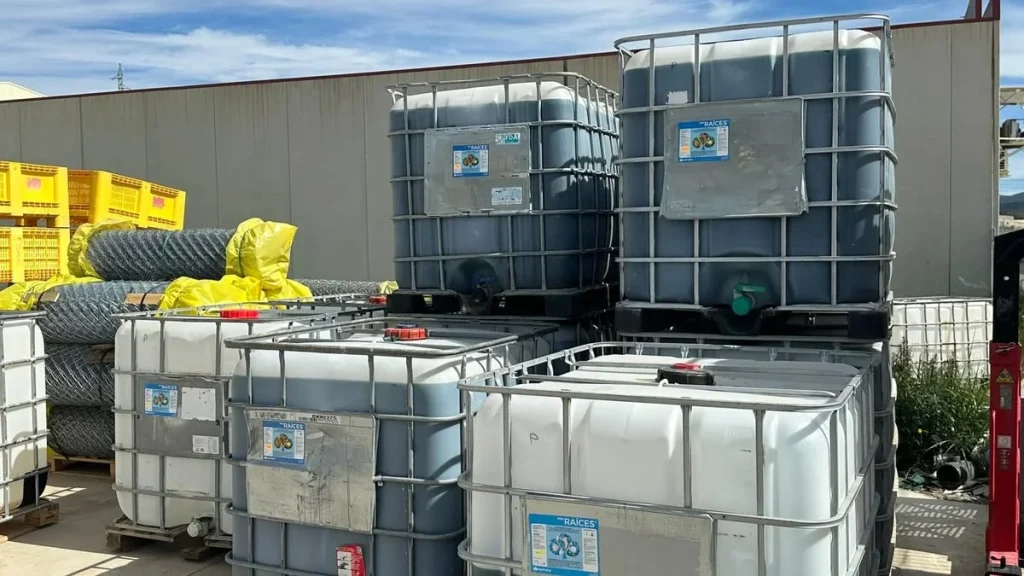
In detergent import procedures, the transport stage significantly affects the shipment’s cost and safety. Liquid detergents are typically packed in bottles, jerry cans, or drums, stacked on pallets inside a 20-foot or 40-foot container; small shipments may go as LCL or by air. If the product is corrosive or flammable (containing strong acid, strong alkali, solvents), it must be declared as dangerous goods under the IMDG Code for sea shipment and IATA DGR for air shipment – the UN number and hazard class information is taken from section 14 of the SDS.
Step 5: Customs declaration, tax payment, and channel processing
This is the core step of detergent import procedures. When the goods arrive at the port or airport, the forwarder files the VNACCS declaration with the full 8-digit HS code, C/O number, chemical declaration number, or permit number (if applicable). For a declaration channeled yellow or red, customs may request additional SDS, catalogue, an explanation of composition, or take a sample for analysis to determine the HS code. Once customs confirms the tax amount, the business pays the import tax and VAT.
Step 6: Clearance, receiving the goods, and completing the supplementary label before circulation
The final step of detergent import procedures does not stop at clearance. After paying the tax and receiving clearance, the business collects the D/O and brings the goods to the warehouse. Before selling on the market, the Vietnamese-language supplementary label must be completed per Decree 37/2026/ND-CP; for goods containing a hazardous chemical subject to disclosure, the composition, content, and usage restriction advisory must be shown on the product label or the product’s website.
5. How to Calculate Detergent Import Tax
Understanding how the tax is calculated helps businesses accurately estimate the cost of detergent import procedures. Detergents are subject to two layers of cumulative tax – import tax and value-added tax (VAT) – and are not subject to special consumption tax. Under Decree 174/2025/ND-CP, VAT was reduced from 10% to 8% from July 1, 2025 through December 31, 2026 – the chemical products category, including detergents, is covered by this reduction; from January 1, 2027, absent a new extension policy, the rate will return to 10%. For example, for a shipment of anionic laundry detergent packaged for retail sale (code 3402.50.12) imported from Thailand, with a CIF price of VND 500 million, compare the case without and with a Form D C/O:
| Tax / Cost Item | Without Form D C/O (MFN 10%) | With Form D ATIGA C/O (0%) |
|---|---|---|
| CIF price | VND 500,000,000 | VND 500,000,000 |
| Import tax | 10% × 500M = VND 50,000,000 | 0% × 500M = VND 0 |
| VAT (8%) | 8% × (500 + 50)M = VND 44,000,000 | 8% × (500 + 0)M = VND 40,000,000 |
| Total tax payable | VND 94,000,000 | VND 40,000,000 |
| Savings with Form D C/O | VND 54,000,000 from a single valid C/O alone. If the shipment clears after January 1, 2027 with VAT at 10%, the total tax would be VND 105 million (without C/O) and VND 50 million (with C/O) respectively – a VND 55 million difference for every VND 500 million of CIF value. | |
From 3W Logistics’ practical experience: With detergent import procedures, we typically see two mistakes causing the most delay. First, documentation describing the goods too generically, missing the SDS and composition – customs lacks sufficient basis to determine the HS code, so the declaration is redirected to a higher channel, an explanation or sample analysis is requested, and the shipment sits at port accruing storage fees. Second, not requesting the C/O right from the contract stage, forcing the business to pay the MFN tax instead of the FTA preferential rate. Both of these mistakes are entirely preventable if the business carefully reviews the technical documentation before placing the order. – Ms. Apple, CCO, 3W Logistics
6. Common Risks in Detergent Import Procedures
| Risk | Symptom | Prevention |
|---|---|---|
| Missing or incorrect SDS, composition | Customs cannot determine the nature of the goods and the HS code, requesting additional documentation or a sample analysis – the shipment sits at port for an extended period | Request the SDS in the correct 16-section format per Appendix I of Circular 01/2026/TT-BCT from the manufacturer before ordering; cross-check the name and composition across all documents |
| Applying the wrong HS code | Confusing retail with non-retail goods, anionic with other forms, or detergent with a disinfecting preparation – resulting in reclassification, retroactive tax collection, and penalties | Confirm the HS code based on composition, product form, and packaging specification before filing the declaration; consult a forwarder experienced in the chemical goods category |
| Missing the chemical declaration or content disclosure | Raw materials under Chapter 28, 29 not yet declared; goods containing acetone, methanol, formaldehyde, or hydrochloric acid not yet disclosed per Appendix XIX | Cross-check the CAS number against Decree 24/2026/ND-CP and Appendix XIX of Circular 01/2026/TT-BCT as soon as the SDS is received |
| A disinfecting preparation without a circulation registration number | The goods cannot be legally put into circulation even after clearance; risk of a violation penalty | Determine whether the product declares a disinfecting function; if so, complete the circulation registration before placing the order |
| No C/O or an invalid C/O | Must pay the MFN tax instead of the FTA preferential rate, significantly increasing the import cost | Include a C/O clause in the contract; check the rule of origin; cross-check that the C/O matches the Invoice and B/L 100% |
| Non-compliant goods labeling | Missing the Vietnamese supplementary label or safety warnings during circulation – resulting in penalties and a mandatory correction | Prepare the supplementary label template per Decree 37/2026/ND-CP before the goods arrive, and affix it before putting the goods on the market |
Most risks in detergent import procedures typically originate from documentation preparation before ordering, not from work done at the port.
FAQ – Frequently Asked Questions About Detergent Import Procedures
Question 1: What documents are needed for detergent import procedures?
A complete documentation set for detergent import procedures includes:
- The sales contract, Commercial Invoice, and Packing List;
- The Bill of Lading or AWB;
- A C/O per the relevant free trade agreement (if claiming a preferential rate);
- The Safety Data Sheet (SDS), composition, and CAS number of the product;
- Import chemical declaration information, a permit, or a circulation registration certificate (if subject to management);
- The original label, the Vietnamese supplementary label template, and the electronic VNACCS customs declaration.
Preparing complete documentation from the start helps detergent import procedures complete quickly and limits unnecessary costs.
Question 2: Does importing detergent require an import permit?
Ordinary finished detergent products do not require a separate import permit, so detergent import procedures are mainly a customs procedure combined with technical documentation. A permit only arises in specific cases: importing a chemical requiring special control in raw material form or at a concentration exceeding the exemption threshold, importing a prohibited chemical, or a preparation with a disinfecting function that requires circulation registration. Raw materials under Chapter 28 and 29 specifically must be declared as a chemical before customs clearance.
Question 3: What is the current detergent import tax rate?
The tax in detergent import procedures has two layers:
- Import tax: calculated on the CIF price, with a reference MFN rate of about 8% to 10% for heading 3402, reduced to 0% – 5.5% with a C/O from agreements such as ATIGA, ACFTA, AKFTA, VKFTA, CPTPP, RCEP (EVFTA and UKVFTA specifically around 1.2%);
- VAT: 8% through December 31, 2026 under Decree 174/2025/ND-CP, calculated on the CIF price plus import tax; returning to 10% from January 1, 2027 absent a new extension policy.
Businesses should calculate the total tax for each supplier in advance before starting detergent import procedures.
Question 4: Does imported detergent need to disclose hazardous chemicals under the 2025 Chemical Law?
Yes, if the product contains a chemical under Appendix XIX of Circular 01/2026/TT-BCT at the specified content level, with the detergent group relating to acetone, methanol, formaldehyde, and hydrochloric acid. The business declares per imported shipment on the chemical sector database, together with test results verifying the composition; the composition, content, and usage restriction advisory must be shown on the label or the product’s website. This review should be carried out as soon as the SDS is received, before completing the detergent import procedures.
How Does 3W Logistics Support Detergent Import Procedures?
As a freight forwarding company registered as an OTI-NVOCC with an FMC (Federal Maritime Commission) bond in the United States, with over 10 years of experience handling imported chemical and consumer goods, 3W Logistics provides an end-to-end service for businesses on detergent import procedures – from technical documentation review and HS code and tax consulting, through to when the goods arrive at the warehouse.
- Reviewing the SDS, composition, and classifying the goods: Checking the SDS, CAS number, and composition to determine which declaration, disclosure, or permit category the goods fall under per the 2025 Chemical Law, so detergent import procedures start on the right track from the moment the business places the order.
- Determining the 8-digit HS code and calculating the actual tax before ordering: Calculating the import tax and VAT for each origin and the relevant agreement – giving the business an accurate cost figure for detergent import procedures before negotiating the contract.
- Support obtaining the correct FTA C/O form from the supplier: Guiding the supplier to obtain the correct C/O form per the agreement (Form D, Form E, Form AK, Form AJ, etc.), checking the C/O before the goods are loaded to ensure validity.
- Consulting on chemical declaration and specialized documentation: Guiding the specialized documentation for detergent import procedures: import chemical declaration, hazardous chemical content disclosure, permits, and circulation registration when the product is subject to management.
- Booking sea freight and transporting dangerous goods: Arranging FCL, LCL, or air transport from major markets to Hai Phong, Da Nang, or Cat Lai port, handling correctly under IMDG regulations for corrosive or flammable goods.
- Electronic customs declaration and handling issues at the border checkpoint: Completing detergent import procedures at the border checkpoint: declaring the correct 8-digit HS code, fully stating the C/O number and chemical declaration number; monitoring the channel and quickly handling any customs request for additional documentation or explanation.
Why choose 3W Logistics for imported detergent shipments? Detergent import procedures require handling multiple layers of issues at once – chemical management under the 2025 Chemical Law, labeling under Decree 37/2026/ND-CP, accurate HS code classification, and optimizing the FTA C/O. A single mistake in the technical documentation or the C/O in detergent import procedures can cause the shipment to be held at port, incurring storage fees and unnecessary tax costs. We accompany the business from the documentation review stage through to when the goods arrive at the warehouse – helping the business avoid the most costly mistakes. Contact 3W for specific guidance before signing the purchase contract.
Address: 34 Bach Dang, Tan Son Hoa Ward, Ho Chi Minh City
Hotline: +84 28 3535 0087
____________________________
3W Logistics Hanoi Branch
Address: 81A Tran Quoc Toan, Cua Nam Ward, Hanoi
Hotline: +84 24 3202 0482
____________________________
3W Logistics Hai Phong Branch
Address: 8A Lot 28 Le Hong Phong, Gia Vien Ward, Hai Phong
Hotline: +84 225 355 5939
____________________________
3W LOGISTICS CO., LTD – We here serve you there!
Email: info@3w-logistics.com
Website: www.3w-logistics.com

Ms. Apple is the CCO (Chief Commercial Officer) at 3W Logistics, with over 10 years of experience in sales and business operations management.
At 3W Logistics, Ms. Apple is responsible for commercial strategy, corporate customer development, managing a team of more than 50 sales professionals, and improving business performance in the logistics sector.
With practical experience in sales management and market development, Ms. Apple shares professional insights on business logistics solutions, international transportation, freight forwarding, customer management, trade lane development, and growth strategies in the logistics industry.


