

Copper export procedures in Vietnam are highly varied, since copper appears in many different forms across the industrial value chain: from copper ore and concentrate, to refined copper in cathode form, to semi-finished products such as bars, rods, wire, tubes, and sheets, and even copper scrap recovered from manufacturing.
Each group of copper products has an entirely different HS code, export duty rate, and management requirement, meaning businesses need to clearly understand the characteristics of each type before exporting.
Vietnam is currently a country that relies heavily on imported copper to supply industrial manufacturing, electrical wiring, and electronic components, with domestic supply mainly coming from the Sin Quyen copper mine (Lao Cai) and the copper smelter operated by TKV – Vimico Mineral Corporation.
For this reason, copper export procedures in Vietnam tend to focus more on the processed, semi-finished, and scrap product groups generated from manufacturing, rather than large-volume exports of raw copper. The article below compiles the full legal basis, HS codes, tax policy, procedures, costs, and common risks involved in copper export procedures, updated according to the latest applicable regulations.
1. Common copper product groups in export activity
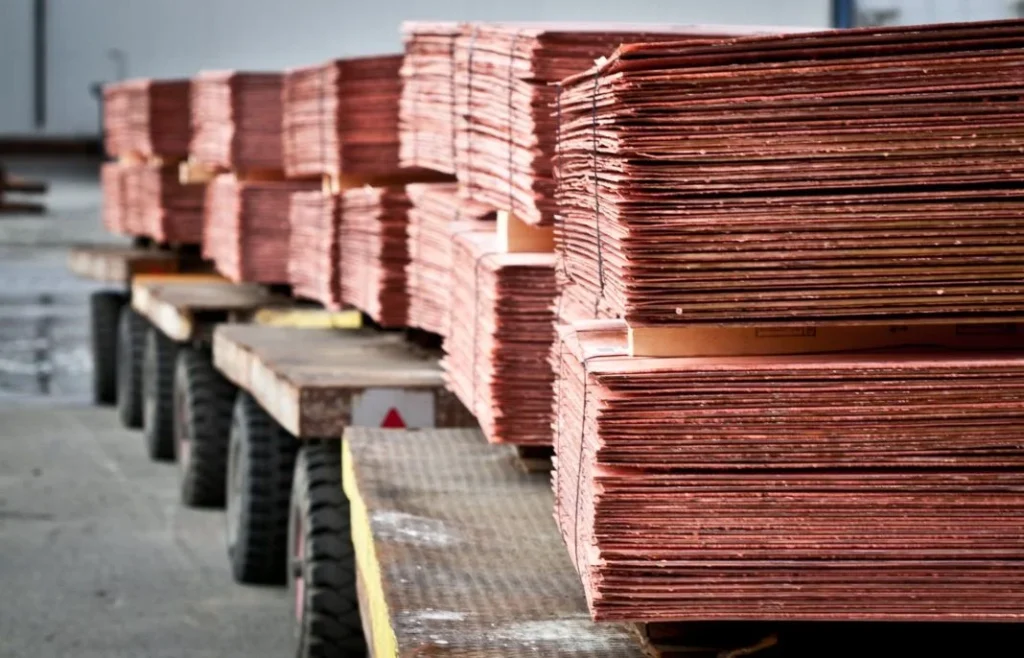
Copper and copper products exported from Vietnam can be divided into several groups: copper ore and concentrate (raw mined material); refined copper in cathode or anode form (post-smelting product); semi-finished copper such as bars, rods, wire, tubes, and sheets (post-rolling/drawing product); and copper scrap and cuttings recovered from manufacturing, machining, and electronics processes. Correctly identifying the product group is the first step that determines the entire documentation set in copper export procedures.
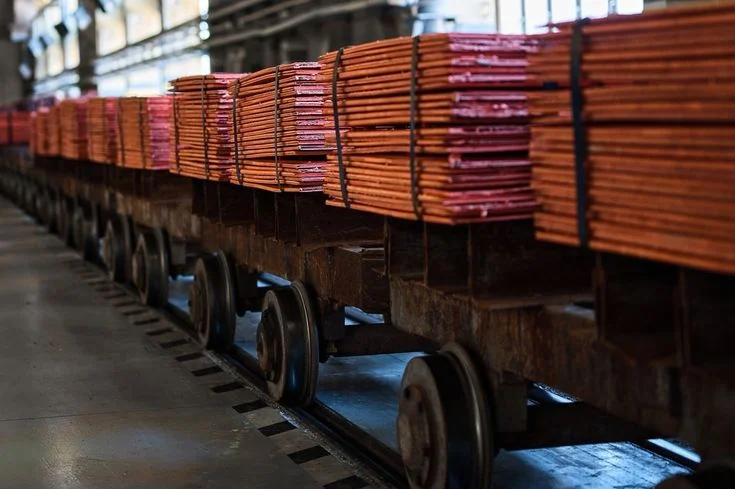
In practice, most current copper export activity by Vietnamese businesses comes from two groups: (1) processing businesses that import refined copper to process into bars, rods, or wire before re-exporting to partner markets; and (2) manufacturing businesses or export-processing enterprises that generate surplus copper scrap or cuttings needing to be exported to recover value.
2. Legal basis governing copper export procedures
| Legal document | Content regulated |
|---|---|
| Decree 69/2018/ND-CP | Copper and copper products are not on the list of goods requiring an export license or prohibited from export |
| Geology and Minerals Law 2024 | Regulates mining, mining licenses, and resource tax obligations; applicable when exporting copper ore and concentrate |
| Decree 26/2023/ND-CP | Export tariff schedule, setting separate duty rates for each subgroup of copper products under Chapter 74 |
| Circular 38/2015/TT-BTC, amended by Circular 39/2018/TT-BTC | Customs procedures, customs documentation, and customs supervision and inspection for exported goods |
| The General Department of Customs’ list of export goods at risk for valuation issues | Certain copper product groups (particularly scrap) fall under this list and may be subject to price consultation during declaration |
This is the fundamental legal framework that businesses need to understand clearly in order to correctly carry out copper export procedures, depending on the specific product group being exported.
3. Conditions by copper product group
| Product group | Export condition | Note |
|---|---|---|
| Copper ore and concentrate | Hold a valid mining license, have completed resource tax obligations | Export volume is limited, as most raw material is prioritized for deeper domestic processing |
| Refined copper (cathode, anode) | No special license required; exported under standard procedures | Must be clearly distinguished from brass and bronze alloys, as the duty rates differ |
| Semi-finished copper (bars, rods, wire, tubes, sheets) | No special license required | For goods processed from imported raw material, this may relate to processing/manufacturing-for-export policy |
| Copper scrap and cuttings | No special license required; however, legal origin must be proven | Falls under the list of goods at valuation risk, carries the highest export duty among the groups |
4. HS codes and export duties for copper by product type
Copper and copper products fall under Chapter 74 — “Copper and articles thereof” — spanning many code groups depending on the level of processing. Correctly determining the HS code based on the product’s form is the single most important step in copper export procedures, as the duty rate differs enormously between groups.
| Product type | HS code (Vietnam) | Vietnam export duty | Note |
|---|---|---|---|
| Refined copper, unwrought (cathode, anode) | 7403.11/7402.00 | 0% | A post-smelting product with high added value |
| Copper bars, rods, and profiles | 7407.10 | 10% | Applies even when manufactured from imported refined copper material |
| Copper wire | 7408.11/7408.19 | 0% – 5% | The specific rate depends on diameter and purity |
| Copper plates, sheets, and strips | 7409.11/7409.19 | 0% | Must be distinguished between refined copper (red copper) and brass/bronze alloys |
| Copper tubes and pipes | 7411.10 | 0% | Common in refrigeration and fire protection industries |
| Copper scrap and cuttings | 7404.00 | ~22% | The highest duty rate among copper product groups, falls under the valuation-risk category |
Practical note: Vietnam’s copper export duty policy is clearly differentiated: the more deeply processed a product is (refined copper, sheets, tubes, finished wire), the lower the duty rate, often 0%, to encourage added value; while raw material and scrap (bars/rods at 10%, scrap at around 22%) carry higher duties to limit the export of unprocessed resources. Businesses need to accurately determine the HS code from the outset to avoid large duty discrepancies when carrying out copper export procedures.
5. Documentation package for copper export procedures
| Document | When to prepare | Important note |
|---|---|---|
| Sales Contract | Before manufacturing and delivery | Must clearly state Incoterms, specifications, copper content, and technical standards |
| Quality and composition assessment certificate (COA) | After manufacturing, before export | Helps quickly determine the correct HS code, limiting classification disputes |
| Documentation proving origin (for scrap or mined ore) | Before customs declaration | Mandatory for copper scrap and domestically mined copper ore |
| Commercial Invoice and Packing List | Before customs declaration | Value must match the contract and the bill of lading; declare reasonably to avoid price consultation |
| Certificate of Origin (C/O) | After the export declaration is issued | Required to enjoy preferential import tariffs under the relevant FTA for the destination market |
| Export customs declaration (VNACCS) | Before customs clearance | Declare the correct HS code for the specific copper product group |
6. Copper export procedure steps
Step 1: Accurately determine the product group and HS code
The business clearly determines whether the product is ore, refined copper, semi-finished product, or scrap, while also distinguishing refined copper (red copper) from brass and bronze alloys — this is the foundational and most important first step in copper export procedures, directly determining the applicable duty rate.
Step 2: Prepare documentation proving origin (if needed)
For domestically mined copper ore or copper scrap, the business fully prepares documentation proving legal origin, a mining license (if applicable), or purchase records for the input material.
Step 3: Sign the contract and manufacture/pack according to the order
Agree with the importer on specifications, copper content, and technical standards, then proceed with manufacturing or sorting and packing according to the agreed standards.
Step 4: Quality assessment and determination of product composition
The business sends samples to an assessment body to obtain a COA confirming composition and copper content — an important basis for accurately determining the HS code and limiting classification disputes with customs.
Step 5: Declare a reasonable value (especially for scrap)
As certain copper product groups, particularly scrap, fall under the list of goods at valuation risk, businesses need to declare a value close to market price to avoid price consultation, which would delay progress.
Step 6: Complete the documentation package and declare customs export
The enterprise or its forwarder prepares the invoice and packing list, and declares the electronic customs declaration on the VNACCS system, attaching the COA and origin documentation (if applicable), and declares and pays the export duty under the correct HS code.
Step 7: International transport and import clearance in the destination country
Once the declaration is cleared, the goods are handed over to a sea carrier depending on volume and product form (bulk, coils, bales, container). The importer coordinates with the local customs authority to complete import procedures.
7. Common risks in copper export procedures
| Risk | Manifestation | Prevention |
|---|---|---|
| Confusion of HS codes between copper product groups | Retroactive tax collection, delayed customs clearance, need to amend the declaration, potentially a huge duty discrepancy (0% vs. 22%) | Consider requesting an advance HS code ruling from the customs authority if uncertain |
| Being flagged for price consultation (especially for scrap) | Delayed customs clearance, need for supplementary explanation to the customs authority | Declare a value close to market price, keep transparent payment records |
| Confusing refined copper with brass or bronze alloys | Incorrect duty rate applied, customs may request re-assessment | Obtain a COA clearly identifying the alloy composition before declaration |
| Missing documentation proving origin of ore or scrap | Unable to complete export procedures, risk of enforcement action for goods of unclear origin | Keep complete invoices, mining licenses, and purchase records through each stage |
8. FAQ – Frequently asked questions about copper export procedures
Question 1: Does exporting copper require a special license?
No. Copper and copper products are not on the list of goods requiring an export license or prohibited from export; businesses only need to meet the general origin requirements (for ore, scrap) and declare customs correctly when carrying out copper export procedures.
Question 2: Why is there such a large duty difference between copper product groups?
This is Vietnam’s policy to encourage businesses to process more deeply and add value before exporting: the more finished the product (refined copper, wire, tubes, sheets), the lower the duty, often 0%, while raw material, simple semi-finished products (bars/rods), and scrap carry significantly higher duties.
Question 3: Are copper bars/rods manufactured from imported refined copper exempt from export duty?
Not automatically. Based on standard customs handling practice, copper bars/rods (HS code 7407) are still subject to an approximately 10% export duty even when the input material is imported refined copper, unless the business can prove eligibility under the separate regulations for processing/manufacturing for export.
Question 4: How can businesses accurately determine the HS code when a shipment contains multiple types of copper products?
Businesses should obtain a COA assessment certificate clearly identifying the composition and form of each product type, and may also request an advance HS code ruling from the customs authority under Circular 38/2015/TT-BTC, to avoid disputes during copper export procedures.
How does 3W Logistics support copper export procedures?
As a freight forwarding company registered as an OTI-NVOCC with an FMC bond in the United States, holding an SCAC Code to self-file AMS/ISF declarations directly, 3W Logistics supports businesses through the entire copper export procedure — from HS code advisory by product group and value declaration through to customs clearance in the importing country.
Full-package logistics service at 3W Logistics:
- Accurate HS code and export duty advisory for each copper product type: Helping businesses distinguish between ore, refined copper, semi-finished product, and scrap to declare correctly from the start.
- Support declaring a reasonable value, reducing the risk of price consultation: Especially important for the copper scrap group under the valuation-risk category.
- Connecting with quality assessment and composition testing providers: Ensuring a complete COA is in hand before declaration, limiting classification disputes.
- Booking vessels and multimodal transport: Arranging sea transport suited to each copper product form, from bulk cargo and wire coils to containers.
- Electronic customs declaration (VNACCS): A professional team handles declarations and accurate export duty reporting; as an OTI-NVOCC with FMC and an SCAC Code, 3W Logistics directly issues its own HBL and self-files AMS/ISF for shipments bound for the U.S.
Why choose 3W Logistics: With offices in Ho Chi Minh City, Hanoi, and Hai Phong, and a team knowledgeable in the copper industry’s specific classification requirements and varied tax policies, 3W Logistics ensures shipments clear customs on time and to standard, avoiding the risk of duty discrepancies and price consultation right from the very first export. – Ms. Apple, CCO of 3W Logistics
Head Office – 3W Logistics Ho Chi Minh City Branch
Address: 34 Bach Dang, Tan Son Hoa Ward, Ho Chi Minh City
Hotline: +84 28 3535 0087
____________________________
3W Logistics Hanoi Branch
Address: 81A Tran Quoc Toan, Cua Nam Ward, Hanoi
Hotline: +84 24 3202 0482
____________________________
3W Logistics Hai Phong Branch
Address: 8A Lot 28 Le Hong Phong, Gia Vien Ward, Hai Phong
Hotline: +84 225 355 5939
____________________________
3W LOGISTICS CO., LTD – We here serve you there!
Email: info@3w-logistics.com
Website: www.3w-logistics.com

Ms. Apple is the CCO (Chief Commercial Officer) at 3W Logistics, with over 10 years of experience in sales and business operations management.
At 3W Logistics, Ms. Apple is responsible for commercial strategy, corporate customer development, managing a team of more than 50 sales professionals, and improving business performance in the logistics sector.
With practical experience in sales management and market development, Ms. Apple shares professional insights on business logistics solutions, international transportation, freight forwarding, customer management, trade lane development, and growth strategies in the logistics industry.


