

Chemical export procedures in Vietnam have just undergone a comprehensive legal reform, as the 2025 Chemical Law (No. 69/2025/QH15) officially took effect on January 1, 2026, completely replacing the 2007 Chemical Law that had been in force for nearly two decades. Alongside this, a series of decrees and implementing circulars were hastily issued in mid-January 2026 to promptly resolve goods congestion at border checkpoints caused by the lack of guiding sub-law documents during the transition period.
As a category of goods that is always tightly managed due to its flammable, toxic, or potentially misusable nature, chemical export procedures require businesses to immediately update the new chemical lists under the 2026 legal framework, especially the group of chemicals requiring special control and industrial precursors. The article below compiles all legal grounds, HS codes, procedures, costs, and common risks in chemical export procedures, updated according to regulations in effect as of September 2026.
1. Characteristics and Classification of Exported Chemicals in Vietnam
Chemicals are a diverse category of goods serving many purposes: industrial raw materials, solvents, food and cosmetic additives, detergents, fertilizers, plant protection products, and more. Under the 2025 Chemical Law, the managed chemical lists have been redefined in Decree 24/2026/ND-CP, comprising four main groups that form the basis for chemical export procedures.
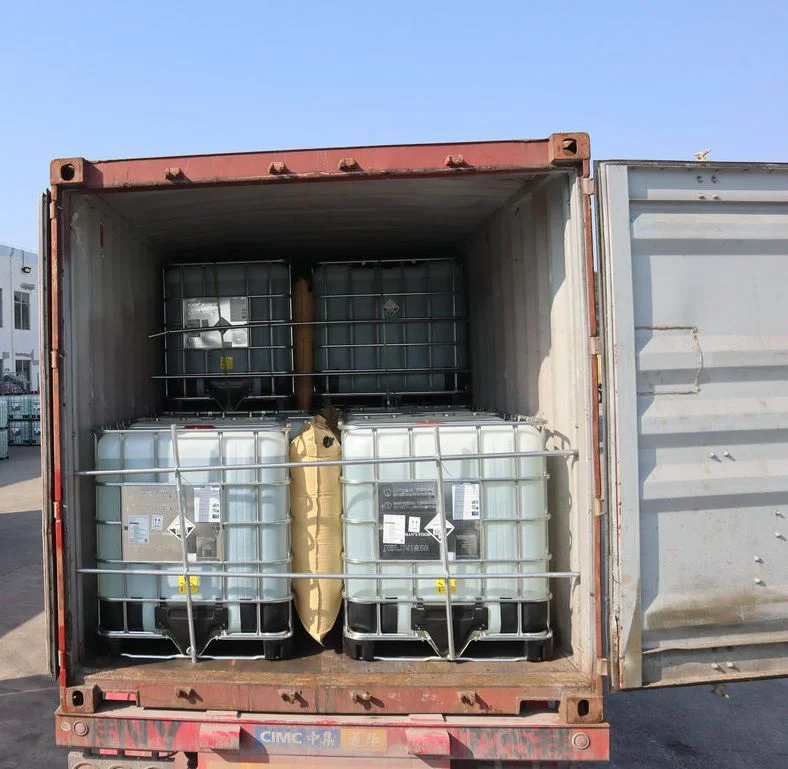
Chemical exporters must clearly determine which list their product falls under in order to apply the correct obligations: basic chemicals belonging to key industrial sectors (Appendix I), conditional production and trading chemicals (Appendix II), chemicals requiring special control including industrial precursors (Appendix III), and chemicals requiring a Chemical Incident Prevention and Response Plan (Appendix IV).
2. Legal Basis Governing Chemical Export Procedures
| Legal Document | Regulated Content |
|---|---|
| 2025 Chemical Law (No. 69/2025/QH15, effective January 1, 2026) | Replaces the entire 2007 Chemical Law; regulates the management of chemical activities, development of the chemical industry, and chemical safety and security |
| Decree 24/2026/ND-CP (January 17, 2026) | Sets out the chemical lists within the scope of regulation: basic chemicals, conditional chemicals, chemicals requiring special control, and chemicals requiring an incident response plan |
| Decree 25/2026/ND-CP, Decree 26/2026/ND-CP (January 17, 2026) | Provide detailed guidance on chemical industry development and chemical safety and security; management of chemical activities and hazardous chemicals contained in products and goods |
| Circular 01/2026/TT-BCT (January 17, 2026) | Provides detailed guidance for implementing the Chemical Law and Decree 26/2026/ND-CP on the management of chemical activities and disclosure of hazardous chemical content in products |
| Decree 292/2026/ND-CP (effective from September 5, 2026, replacing Decree 69/2018/ND-CP) | Chemicals are one of the goods groups subject to conditional export (Appendix III, Section III), requiring compliance with specialized regulations before export |
| Decree 42/2020/ND-CP | Regulates the transport of dangerous goods, applicable to chemicals in the flammable, corrosive, or toxic substance groups |
Important new point: Because the decrees and circulars implementing the 2025 Chemical Law were only issued and took effect on January 17, 2026 – nearly three weeks after the Law itself took effect – many chemical export and import shipments became stuck at border checkpoints due to a lack of legal grounds for carrying out procedures. The Ministry of Industry and Trade issued an urgent notice requiring businesses to re-declare shipments made during this “gap period” in accordance with the new regulations. Businesses should also note: chemical Table permits, precursor permits, and restricted-chemical permits issued previously remain valid until the expiration date stated on the permit, while the obligation to declare the type of chemical and intended use for special-control chemical activities must be completed before March 1, 2026.
3. Requirements for Businesses and Chemical Export Products
| Requirement | Issuing/Managing Authority | Notes |
|---|---|---|
| Chemical declaration prior to export | Department of Chemicals, Ministry of Industry and Trade | Carried out via the National Single Window Portal, applicable to most industrial chemicals |
| Export permit for Table chemicals and Group 2 industrial precursors | Ministry of Industry and Trade | Mandatory for chemicals under the List of Chemicals Requiring Special Control (Appendix III, Decree 24/2026/ND-CP) |
| Safety Data Sheet (MSDS/SDS) | Prepared by the business according to the prescribed template | Mandatory to accompany the shipment; should be prepared bilingually in Vietnamese and English |
| Dangerous goods transport permit | Specialized management authority depending on the mode of transport | Applicable to chemicals in the hazardous group when transported domestically to the port/airport |
4. HS Codes and Export Tax on Chemicals
Chemicals span many chapters of Vietnam’s Export-Import Goods Nomenclature, most commonly Chapter 28 – “Inorganic chemicals,” Chapter 29 – “Organic chemicals,” and Chapter 38 – “Miscellaneous chemical products.” Correctly determining the HS code based on composition and chemical formula is an important step in chemical export procedures.
| Type of Goods | HS Code (Vietnam) | Vietnam Export Tax | Notes |
|---|---|---|---|
| Inorganic acids and compounds (NaOH, HCl, H2SO4…) | 2806-2853 | 0% | Must cross-check concentration and packaging specifications against the specific 8-digit subheading |
| Organic chemicals, industrial solvents | 2901-2942 | 0% | Some solvents fall under the precursor list and require a separate permit |
| Detergents, surfactants | 3402.11/3402.90 | 0% | A common consumer chemical group, subject to less stringent management |
| Pesticides and plant protection chemicals | 3808.91/3808.94 | 0% | May require an additional specialized permit under plant protection regulations, if applicable |
Practical note: Vietnam’s chemical export tax is currently 0% for most HS codes under Chapters 28, 29, and 38. Businesses should pay particular attention to the fact that the HS code is only one part of the documentation set – determining whether a chemical falls under the List of Chemicals Requiring Special Control in Appendix III of Decree 24/2026/ND-CP is the decisive factor in whether a separate export permit is required, or whether standard declaration is sufficient.
5. Documentation Required for Chemical Export Procedures
| Document | When to Prepare | Important Notes |
|---|---|---|
| Chemical declaration form | Before the first export shipment | Carried out via the National Single Window Portal, linked to the Department of Chemicals |
| Safety Data Sheet (MSDS) | Before packing the shipment | Attached with the shipment; should be prepared bilingually |
| Export permit (for Table chemicals/industrial precursors) | Before signing the export contract | Applied for at the Ministry of Industry and Trade using the template prescribed under Decree 26/2026/ND-CP |
| Commercial contract, invoice, packing list | Before customs declaration | Must clearly state Incoterms, concentration, and packaging specification (drums, ISO tanks) |
| Certificate of Origin (C/O) | After the export declaration is issued | Needed to qualify for preferential tax treatment under the relevant FTA with the destination market |
| Export customs declaration (VNACCS) | Before customs clearance | Must declare the correct HS code and attach the MSDS and permit (if applicable) |
6. Chemical Export Process
Step 1: Determine which management list the chemical falls under
Businesses cross-check their product against the four appendices of the chemical lists in Decree 24/2026/ND-CP to determine whether it is a basic chemical, a conditional chemical, a chemical requiring special control, or a chemical requiring an incident response plan – this is the foundational first step in chemical export procedures.
Step 2: Complete the chemical declaration
Businesses declare the chemical via the National Single Window Portal, which connects directly to the Department of Chemicals, before proceeding to the next steps.
Step 3: Apply for an export permit (if subject to special control)
For Table chemicals and Group 2 industrial precursors under the List of Chemicals Requiring Special Control, businesses submit an export permit application to the Ministry of Industry and Trade in accordance with Decree 26/2026/ND-CP and Circular 01/2026/TT-BCT.
Step 4: Prepare the Safety Data Sheet (MSDS)
Businesses prepare a complete MSDS covering properties, fire and explosion hazards, and incident response measures, prepared bilingually to meet international requirements.
Step 5: Production, packaging, and domestic transport
Products are manufactured and packaged according to the specifications agreed with the importer; for hazardous chemicals, businesses engage a transport provider licensed to carry dangerous goods to move the shipment from the factory to the port or airport.
Step 6: Complete documentation and file the export customs declaration
The business or its forwarder prepares the invoice and packing list, files the electronic customs declaration on the VNACCS system, and attaches the MSDS, chemical declaration form, export permit (if applicable), and a C/O matching the FTA of the destination market.
Step 7: International transport and import clearance at the destination country
Once the declaration is cleared, the goods are handed over to a carrier qualified to transport dangerous goods by sea or air. The importer coordinates with the local customs authority to complete the import procedures.
7. Common Risks in Chemical Export Procedures
| Risk | Symptom | Prevention |
|---|---|---|
| Not yet updated to the new chemical lists under Decree 24/2026/ND-CP | Applying the wrong procedure; goods held at the border checkpoint due to a missing permit | Review the entire product list against the four new appendices, updating regularly from the Department of Chemicals |
| Failure to complete the declaration obligation before the March 1, 2026 deadline | Considered a violation of the transitional regulations, affecting future export activities | Complete the chemical type and intended-use declaration within the prescribed deadline |
| Missing a dangerous goods transport permit | Transport vehicle fined, delays in delivering goods to port/airport | Only work with transport providers holding a valid dangerous goods transport permit |
| Incorrect HS code among similar chemical groups | Subject to back-taxation, customs clearance delays, and required declaration amendments | Carefully cross-check the HS code with an experienced chemical-goods customs broker |
FAQ – Frequently Asked Questions About Chemical Export Procedures
Question 1: What is the latest Chemical Law currently in effect?
The latest Chemical Law currently in effect is the 2025 Chemical Law (No. 69/2025/QH15), passed by the National Assembly on June 14, 2025, and officially effective from January 1, 2026, completely replacing the 2007 Chemical Law.
Question 2: Does exporting chemicals require a special permit?
It depends on the type of chemical. Ordinary chemicals only require a chemical declaration prior to export, while Table chemicals and industrial precursors under the List of Chemicals Requiring Special Control (Appendix III, Decree 24/2026/ND-CP) must have an export permit issued by the Ministry of Industry and Trade.
Question 3: Are chemical permits issued before 2026 still valid?
Yes. Table chemical permits, precursor permits, and restricted-chemical permits issued previously continue to be used until the expiration date stated on the permit; certificates of eligibility for the production and trading of conditional chemicals remain valid until December 31, 2027.
Question 4: What is the current chemical export tax rate in Vietnam?
Chemicals under Chapters 28, 29, and 38 enjoy a 0% export tax rate in Vietnam for most common HS codes, regardless of whether the new or old Chemical Law applies.
How Does 3W Logistics Support Chemical Export Procedures?
As a freight forwarding company registered as an OTI-NVOCC with an FMC bond in the United States, holding an SCAC Code to self-file AMS/ISF declarations directly, and with experience handling chemical and dangerous goods exports to a wide range of markets, 3W Logistics supports businesses through the entirety of chemical export procedures – from classification consulting under the 2025 Chemical Law, to chemical declaration, through to customs clearance in the importing country.
- Consulting on updated chemical lists under Decree 24/2026/ND-CP: Helping businesses review which of the 4 new chemical list appendices their products fall under.
- Support with chemical declaration and MSDS preparation: Guiding the declaration process via the National Single Window Portal and building a compliant, bilingual MSDS.
- Connecting with carriers specialized in dangerous goods: Ensuring chemical shipments are transported safely and in compliance with regulations from the factory to the port or airport.
- Booking vessels and shipping dangerous goods: Arranging sea and air transport that meets international standards for chemical goods.
- Electronic customs declaration (VNACCS): A professional team handling declarations; as an OTI-NVOCC with FMC and SCAC Code, capable of self-issuing HBLs and self-filing AMS/ISF for shipments to the United States.
Why choose 3W Logistics: With offices in Ho Chi Minh City, Hanoi, and Hai Phong, and a team that stays closely updated on the major changes from the 2025 Chemical Law and its 2026 implementing decrees, 3W Logistics ensures chemical shipments clear customs on time, meet all standards, and are transported safely from the very first export. – Ms. Apple, CCO of 3W Logistics
Head Office – 3W Logistics Ho Chi Minh City Branch
Address: 34 Bach Dang, Tan Son Hoa Ward, Ho Chi Minh City
Hotline: +84 28 3535 0087
____________________________
3W Logistics Hanoi Branch
Address: 81A Tran Quoc Toan, Cua Nam Ward, Hanoi
Hotline: +84 24 3202 0482
____________________________
3W Logistics Hai Phong Branch
Address: 8A Lot 28 Le Hong Phong, Gia Vien Ward, Hai Phong
Hotline: +84 225 355 5939
____________________________
3W LOGISTICS CO., LTD – We here serve you there!
Email: info@3w-logistics.com
Website: www.3w-logistics.com

Ms. Apple is the CCO (Chief Commercial Officer) at 3W Logistics, with over 10 years of experience in sales and business operations management.
At 3W Logistics, Ms. Apple is responsible for commercial strategy, corporate customer development, managing a team of more than 50 sales professionals, and improving business performance in the logistics sector.
With practical experience in sales management and market development, Ms. Apple shares professional insights on business logistics solutions, international transportation, freight forwarding, customer management, trade lane development, and growth strategies in the logistics industry.


