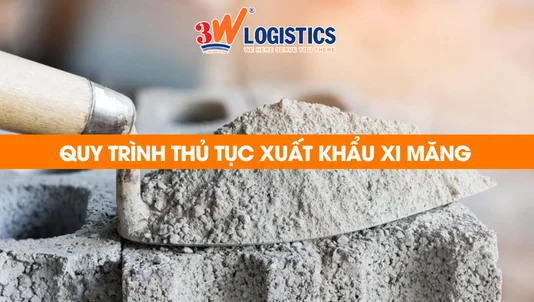
Vietnam’s cement export procedure is currently supported by an important tariff policy in effect through the end of 2026: the export tax rate on cement clinker – the semi-finished product of cement – has just been reduced from 10% to 5% under Decree 108/2025/ND-CP, aimed at helping the domestic cement industry handle inventory amid a construction market still facing many difficulties. This is information businesses need to pay particular attention to, as this tax rate will revert to 10% starting January 1, 2027.
As one of the heavy industries with large output, the cement export procedure requires businesses to fully understand the difference between finished cement (which enjoys a 0% export tax) and clinker – an intermediate material still subject to export tax – while also fully complying with quality standards and inspection documentation before shipment. The article below summarizes all the legal basis, HS codes, tax policy, procedures, costs, and common risks in the cement export procedure, updated according to regulations current as of September 2026.
1. Potential and Main Cement Export Markets
Vietnam is one of the countries with large cement output in the world, with dozens of large cement plants spread from North to South, particularly concentrated in provinces with abundant limestone sources such as Hai Phong, Ninh Binh, Thanh Hoa, Ha Nam, and Quang Ninh. This is the foundation enabling the industry to carry out the cement export procedure at a large scale to many international markets.
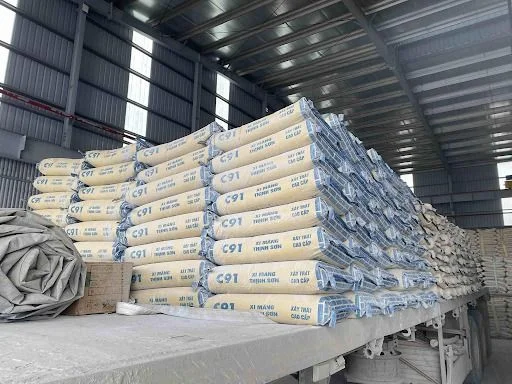
The Philippines, Bangladesh, African countries, and some South American countries like Peru are major consumption markets for Vietnamese clinker and cement, thanks to high infrastructure construction demand while their domestic production capacity remains limited. In addition, Australia, Taiwan, and several Southeast Asian countries also import finished cement in significant volumes.
2. Legal Basis Governing the Cement Export Procedure
| Legal Document | Regulatory Content |
|---|---|
| Decree 292/2026/ND-CP (effective from September 5, 2026, replacing Decree 69/2018/ND-CP) | Cement and clinker are not on the list of goods banned from export or requiring an export license, and are exported under standard procedures |
| Decree 26/2023/ND-CP | Export tariff schedule, specifying the HS code and export tax rate for cement clinker (heading 2523.10) |
| Decree 108/2025/ND-CP (effective from May 19, 2025 through December 31, 2026) | Reduces the cement clinker export tax from 10% to 5%, applied temporarily to help the cement industry handle inventory |
| Circular 05/2018/TT-BXD, Circular 04/2021/TT-BXD (Ministry of Construction) | Regulates the technical standards and quality regulations for exported cement and clinker |
| Circular 38/2015/TT-BTC, amended by Circular 39/2018/TT-BTC | Customs procedures, customs inspection and supervision for exported goods |
Important new point to note: Under Decree 108/2025/ND-CP, the export tax rate for cement clinker under the two codes 2523.10.10 (used for producing white cement) and 2523.10.90 (other clinker types) is currently only 5%, instead of the 10% previously specified under Decree 26/2023/ND-CP. This is a time-limited policy, applicable only through December 31, 2026; from January 1, 2027, the clinker export tax rate will automatically revert to 10% unless a new extension or adjustment document is issued. Businesses should take advantage of this preferential period to boost exports and clear inventory.
3. Conditions for Businesses and Exported Cement Products
| Condition | Issuing/Managing Authority | Notes |
|---|---|---|
| Compliance with national technical regulations (TCVN, QCVN) | Ministry of Construction | Cement and clinker must meet criteria for compressive strength, setting time, and fineness according to the declared standard |
| Quality and quantity inspection certificate | Independent inspection organization (Vinacontrol, SGS…) | Confirms chemical composition and technical criteria meet export standards under the contract |
| Conformity declaration for cement products | Local Department of Construction | Applies to domestic production facilities under the national technical regulation on cement products |
| No specialized export license required | Not applicable | Cement and clinker are freely exportable goods under Decree 292/2026/ND-CP |
4. HS Code and Cement/Clinker Export Tax
Cement and clinker fall under Chapter 25 – “Salt; sulphur; earths and stone; plastering materials, lime and cement,” heading 25.23 – “Portland cement, aluminous cement, slag cement, supersulphate cement and similar hydraulic cements, whether or not colored or in the form of clinker.” Clearly distinguishing clinker from finished cement is the most important step in the cement export procedure, as the tax rate between these two groups differs significantly.
| Product Type | HS Code (Vietnam) | Vietnam Export Tax | Notes |
|---|---|---|---|
| Clinker used to produce white cement | 2523.10.10 | 5% (through end of 2026) | Rises to 10% from January 1, 2027 per the timeline in Decree 108/2025/ND-CP |
| Other cement clinker | 2523.10.90 | 5% (through end of 2026) | The most common code group, accounting for the majority of Vietnam’s clinker export turnover |
| Finished Portland cement (white/ordinary) | 2523.21/2523.29 | 0% | Export encouraged since it has undergone complete processing, with high added value |
| Slag cement, pozzolanic cement, and similar types | 2523.30/2523.90 | 0% | Applies to cement blended with special additives |
Practical note: The export tax on finished cement in Vietnam is currently 0%, while clinker – the semi-finished product of cement – still bears a 5% export tax (temporarily through the end of 2026, then rising to 10%). This is a consistent policy aimed at encouraging businesses to further process clinker into finished cement before exporting, rather than exporting the raw intermediate material abroad. Businesses need to carefully cross-check the contract and technical catalogue to accurately determine which HS code the product falls under before declaring.
5. Documentation Set for the Cement Export Procedure
| Document | When to Prepare | Important Notes |
|---|---|---|
| Sales Contract | Before production and delivery | Clearly state Incoterms, technical criteria (compressive strength, fineness), volume, and delivery method |
| Quality and Quantity Inspection Certificate (Draft Survey) | At the export port, during loading | Issued by an independent inspection organization, especially important for bulk vessel shipments |
| Commercial Invoice and Packing List | Before customs declaration | The value must match the contract and the bill of lading |
| Product Conformity Declaration Form | Before the first export shipment | Proves the product meets national technical regulations as required by the Ministry of Construction |
| Certificate of Origin (C/O) | After the export declaration is issued | Necessary to enjoy import tax preferences under the FTA corresponding to the destination market |
| Export Customs Declaration (VNACCS) | Before customs clearance | Declare the correct HS code distinguishing clinker from finished cement, declaring the correct tax rate |
6. Cement Export Procedure Step by Step
Step 1: Accurately Determine Whether the Product Is Clinker or Finished Cement
The business clearly determines whether the exported product is clinker (semi-finished, subject to a 5% tax) or fully blended Portland cement (finished product, 0% tax) – this is the foundational first step in the cement export procedure, directly affecting export costs.
Step 2: Quality Control and Product Conformity Declaration
The business ensures the product meets TCVN standards and national technical regulations on cement, completing the conformity declaration documentation as required by the Ministry of Construction before producing the export shipment.
Step 3: Sign the Contract and Determine Delivery Terms
Agree with the importer on technical criteria, volume, and delivery method (usually under FOB or CFR terms at major seaports).
Step 4: Register Quality and Volume Inspection at the Export Port
For shipments exported by bulk vessel (Bulk Cargo), the business contacts an independent inspection organization to carry out a Draft Survey and take representative samples during loading; for bagged goods in containers, sampling is carried out alongside the packaging process.
Step 5: Finalize the Documentation Set and File the Export Customs Declaration
The business or forwarding company prepares the Invoice and Packing List, files the electronic customs declaration on the VNACCS system, attaches the inspection certificate, declares and pays the export tax (if clinker), and prepares the appropriate C/O for the destination market’s FTA.
Step 6: Load the Goods, Issue the Bill of Lading, and Complete Import Clearance at the Destination Country
Once the declaration clears customs, the goods are handed over to a bulk carrier or loaded into containers depending on the shipment volume, the Bill of Lading is issued, and the payment documentation set is finalized to send to the partner. The importer coordinates with the local customs authority to complete import procedures.
7. Cement and Clinker Transport Methods
Sea transport by bulk vessel: Most common for large-volume clinker and cement shipments, departing from specialized ports such as Hai Phong, Nghi Son, and Vung Ang, using conveyor belts or grab cranes to load the goods onto the vessel.
Container transport: Suitable for bagged cement (25kg, 50kg) or jumbo bags serving the retail market, ensuring the goods do not become damp during transport.
8. Time, Cost, and Common Risks
| Stage | Estimated Time | Notes |
|---|---|---|
| Product conformity declaration | Done once per product line | Carried out at the production facility before the first shipment |
| Quality and quantity inspection | 1 – 3 days | Depends on loading progress, especially for bulk vessels |
| Export customs declaration (VNACCS) | 1 – 2 working days | Includes declaring and paying export tax (if clinker) |
| Sea transport | 5 – 25 days | Depends on the destination market: nearby Asia is quicker, Africa and South America take longer |
| Risk | Manifestation | Prevention Method |
|---|---|---|
| Confusing the HS code between clinker and finished cement | Under-declaring the 5% export tax, resulting in tax arrears collection and penalties | Carefully cross-check the catalogue and technical documentation with the customs authority before declaring |
| Missing the window to take advantage of the 5% preferential tax rate before it expires | Bearing the higher 10% tax rate from January 1, 2027, if export timing is delayed | Plan exports and book early during the period the tax preference is still in effect |
| Quality not meeting the declared standard | The importer refuses to accept the goods or demands a price reduction | Strictly control quality at the plant, take test samples before dropping the goods at the export port yard |
| Delayed loading causing demurrage penalties | Costly expenses arise because the loading speed cannot keep pace with the vessel charter schedule | Prepare sufficient goods at the port before the vessel arrives, coordinate closely with the shipping agent |
9. FAQ – Frequently Asked Questions About the Cement Export Procedure
Question 1: Does exporting cement require a special license?
No. Cement and clinker are not on the list of goods banned from export or requiring an export license under Decree 292/2026/ND-CP; businesses carry out the cement export procedure under standard customs procedures.
Question 2: What is the current clinker export tax, and when will it change?
The clinker export tax (HS codes 2523.10.10 and 2523.10.90) is currently 5% under Decree 108/2025/ND-CP, applicable through December 31, 2026. From January 1, 2027, the tax rate will automatically increase back to 10% unless a new adjustment regulation is issued.
Question 3: Is finished cement subject to export tax like clinker?
No. Finished Portland cement and other finished hydraulic cements (HS codes 2523.21, 2523.29, 2523.30, 2523.90) enjoy a 0% export tax; only clinker – the semi-finished product of cement – is subject to export tax.
Question 4: Why is an inspection certificate needed when exporting cement and clinker by bulk vessel?
The Quality and Quantity Inspection Certificate (Draft Survey) helps confirm the correct technical criteria and the actual volume loaded onto the vessel, serving as a basis for cross-checking against the commercial contract and customs documentation, avoiding future disputes with the importer.
How Does 3W Logistics Support the Cement Export Procedure?
As a freight forwarding company registered as an OTI-NVOCC with an FMC bond in the US, holding a SCAC Code to self-file AMS/ISF directly, along with experience handling construction materials and mineral exports by both container and bulk vessel, 3W Logistics supports businesses through the entire cement export procedure – from HS code consulting and tax policy updates to the goods clearing customs at the importing country.
- Consulting on distinguishing clinker from finished cement and accurate tax rates: Provides timely updates on the clinker export tax timeline under Decree 108/2025/ND-CP, so businesses can proactively plan their business.
- Support connecting quality and quantity inspection: Coordinates with reputable inspection organizations such as Vinacontrol and SGS so shipments have complete certificates on time.
- Booking and transport for bulk/container cargo: Provides competitive freight rates for both bagged goods in containers and bulk vessel chartering to markets such as the Philippines, Bangladesh, Africa, and South America.
- Electronic customs declaration (VNACCS): A professional team handles the declaration and accurately declares the export tax; as an OTI-NVOCC with FMC and SCAC Code status, independently issues HBLs and self-files AMS/ISF for shipments to the US.
Why choose 3W Logistics: With offices in Ho Chi Minh City, Hanoi, and Hai Phong, along with a team that stays closely updated on changes to clinker and cement export tax policy, 3W Logistics ensures shipments clear customs on time and to standard, helping businesses make the most of the tax preference period before it expires at the end of 2026. – Ms. Apple, CCO 3W Logistics
Head Office – 3W Logistics Ho Chi Minh City Branch
Address: 34 Bach Dang, Tan Son Hoa Ward, Ho Chi Minh City
Hotline: +84 28 3535 0087
____________________________
3W Logistics Hanoi Branch
Address: 81A Tran Quoc Toan, Cua Nam Ward, Hanoi
Hotline: +84 24 3202 0482
____________________________
3W Logistics Hai Phong Branch
Address: 8A Lot 28 Le Hong Phong, Gia Vien Ward, Hai Phong
Hotline: +84 225 355 5939
____________________________
3W LOGISTICS CO., LTD – We here serve you there!
Email: info@3w-logistics.com
Website: www.3w-logistics.com

Ms. Apple is the CCO (Chief Commercial Officer) at 3W Logistics, with over 10 years of experience in sales and business operations management.
At 3W Logistics, Ms. Apple is responsible for commercial strategy, corporate customer development, managing a team of more than 50 sales professionals, and improving business performance in the logistics sector.
With practical experience in sales management and market development, Ms. Apple shares professional insights on business logistics solutions, international transportation, freight forwarding, customer management, trade lane development, and growth strategies in the logistics industry.


