Vietnam’s animal feed export procedure | Risks to consider
Vietnam’s animal feed export procedure is witnessing a positive transformation thanks to the strong development of the agricultural processing industry and the production of feed for livestock, poultry, and aquaculture. Thanks to increasingly improved production capacity, Vietnamese animal feed products not only meet domestic demand well but are also expanding strongly into regional markets such as ASEAN and China, as well as demanding markets in the US, Japan, and Europe.
However, as a commodity group that directly affects food safety, livestock health, and biosecurity, the animal feed export procedure requires businesses to strictly comply with legal regulations on quarantine, quality standards, and self-declaration procedures. The article below summarizes all the legal basis, HS codes, procedures, costs, and important notes to help businesses carry out the animal feed export procedure accurately and optimally.
1. Potential and Main Animal Feed Export Markets
The animal feed production industry in Vietnam now has a modern scale, with the participation of many FDI enterprises and large domestic corporations. Key export product lines include compound feed for livestock and poultry, feed supplements, blending materials, and especially aquaculture feed (for shrimp and pangasius).
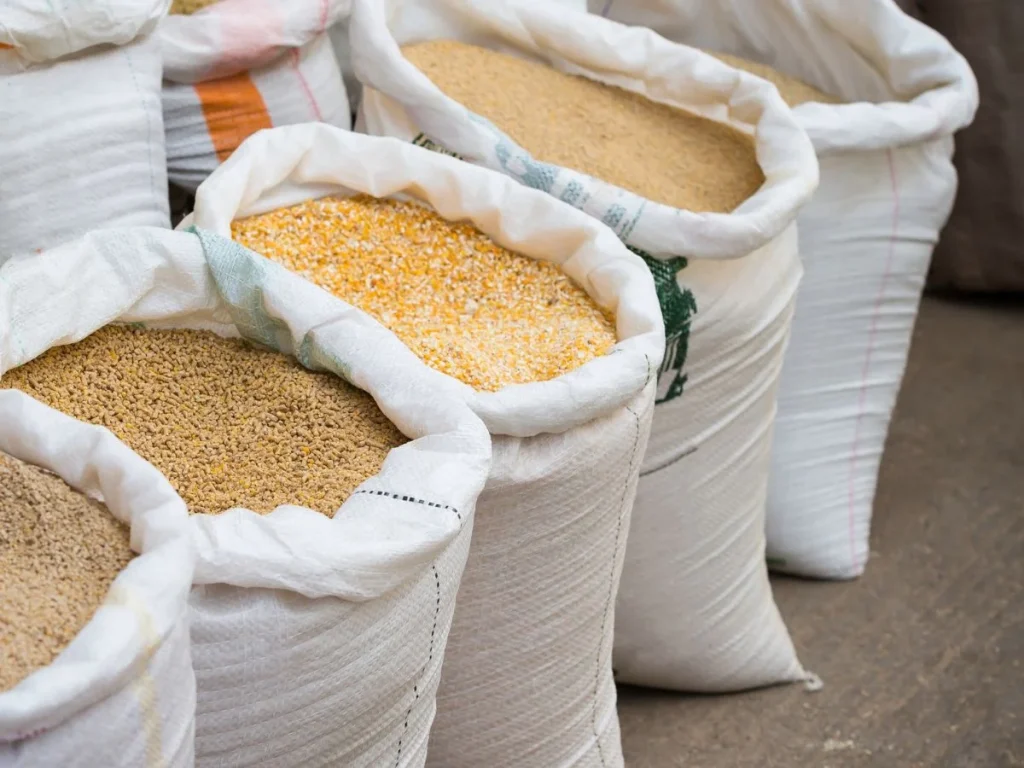
Each importing market has its own characteristics regarding consumption trends and technical barriers:
- ASEAN market (Cambodia, Laos, Myanmar, Indonesia): Vietnam’s largest traditional consumption market thanks to geographic advantages, low transport costs, and tariff preferences under the ATIGA Agreement.
- China: Very high demand for imported animal feed and blending materials, however registration requirements for exporting businesses and biosecurity control are extremely strict.
- Premium markets (US, Japan, South Korea, EU): Require stringent quality management certifications such as HACCP, ISO 22000, GLOBALG.A.P, along with strict control of chemical residues, heavy metals, and genetically modified organisms (GMOs).
2. Legal Basis Governing the Animal Feed Export Procedure
Businesses operating in this field need to be well-versed in the system of legal documents that directly govern trade activities and quality control for animal feed:
| Legal Document | Regulatory Content |
|---|---|
| Livestock Law 2018 (Law No. 32/2018/QH14) | Provides the framework for quality management, production conditions, trading, and import-export of animal feed. |
| Decree 13/2020/ND-CP (amended and supplemented by Decree 46/2022/ND-CP) | Provides detailed guidance for the Livestock Law on classification, self-declaration of product information, quality inspection registration, and production facility conditions. |
| Decree 69/2018/ND-CP (replaced by Decree 292/2026/ND-CP from September 5, 2026) | Commercial animal feed is not on the list of goods banned from export; exports are carried out based on demand and in compliance with the quarantine/quality regulations of the importing market. |
| Decree 38/2026/ND-CP & Resolution 36/2026/NQ-CP | Reducing and simplifying administrative procedures, digitizing the process for issuing Certificates of Free Sale (CFS) and specialized inspection. |
| Circular 38/2015/TT-BTC (amended and supplemented by Circular 39/2018/TT-BTC) | Regulations on customs procedures, customs inspection and supervision for exported goods. |
Carefully cross-checking the legal basis helps businesses proactively prepare accurate documentation for the animal feed export procedure, avoiding the risk of delays at the customs clearance stage.
3. Mandatory Conditions for Exported Animal Feed Facilities and Products
To successfully carry out the animal feed export procedure, production and trading businesses need to ensure the following basic conditions:
| Requirement / Condition | Managing/Issuing Authority | Description & Notes |
|---|---|---|
| Certificate of eligibility for animal feed production | Department of Livestock Production / Local Department of Agriculture and Rural Development | Mandatory for factories producing directly in Vietnam. Requires mandatory inspection of facility and equipment conditions. |
| Product information declaration on the Department of Livestock Production’s information portal | Department of Livestock Production | Products circulated domestically or exported need to complete quality information self-declaration as required. |
| Certificate of Free Sale (CFS) | Department of Livestock Production (Ministry of Agriculture and Rural Development) | Issued upon the request of the importing partner. Serves as proof that the product is legally produced and circulated in Vietnam. |
| Animal/Plant Quarantine Certificate (Phytosanitary / Health Certificate) | Department of Animal Health / Department of Plant Protection | Depends on the raw material composition (animal or plant origin) to register with the corresponding quarantine authority. |
4. HS Code and Animal Feed Export Tax
Animal feed is primarily classified under Chapter 23 – “Residues and waste from the food industries; prepared animal fodder” or Chapters 29, 30, 38 for pure supplement substances.
| Item Description | Reference HS Code | Vietnam Export Tax | Import Tax Notes |
|---|---|---|---|
| Food for dogs or cats, put up for retail sale | 2309.10.10 / 2309.10.90 | 0% | Preferential tax rates apply under ATIGA, CPTPP, EVFTA agreements with a valid C/O. |
| Compound feed for livestock and poultry | 2309.90.11 / 2309.90.13 | 0% | Enjoys a 0% import tax rate in many key markets. |
| Feed for aquaculture (shrimp, fish) | 2309.90.20 | 0% | The ASEAN market applies a special preferential tax rate of 0%. |
| Supplement preparations (Premix, Vitamins, Minerals) | 2309.90.90 | 0% | Requires accurately determining the micronutrient content to classify the appropriate HS code. |
Note on export tax: Currently, the export tax on animal feed preparations under heading 23.09 in Vietnam is 0%. However, applying the correct HS code directly determines the import tax rate at the destination country and the conditions for issuing the Certificate of Origin (C/O). Businesses should proactively consult with customs or a reputable logistics provider before carrying out the animal feed export procedure.
5. Quarantine Requirements and Specific Standards by Importing Market
When carrying out the animal feed export procedure, the biggest technical barrier is the quarantine regulations and food safety and hygiene standards of the importing country.
| Market | Mandatory Standards & Certifications | Quarantine Characteristics & Notes |
|---|---|---|
| China | Business registration on the CIFER system (GACC), CFS certification, Health Certificate. | The factory must be on GACC’s approved list. Products are strictly controlled for Salmonella bacteria and mold toxins. |
| Southeast Asia (ASEAN) | CFS certification, Animal/Plant Quarantine, C/O Form D certification. | Procedures are relatively straightforward. Some countries like Indonesia and Malaysia require additional Halal certification for related ingredients. |
| US (US FDA) | FDA Food Facility Registration, compliance with FSMA (Food Safety) regulations. | Strict control of animal-origin ingredients to prevent dangerous diseases (BSE, African Swine Fever). |
| Europe (EU) | GMP+, FAMI-QS, HACCP standards, GMO control, and traceability. | Applies the world’s highest technical standards on antibiotic residues, heavy metals, and banned chemicals. |
6. Documentation Set for the Animal Feed Export Procedure
For a shipment to clear customs smoothly, the documentation set for the animal feed export procedure needs to be fully prepared and kept consistent across commercial documents and specialized management documents.
| Document Name | When to Prepare | Detailed Requirements |
|---|---|---|
| Sales Contract | Directly upon finalizing the order | Clearly specify Incoterms, technical standards, packaging specifications, and moisture content. |
| Commercial Invoice & Packing List | After packaging is complete | Detail quantity, Gross/Net Weight, and production Batch No. |
| Certificate of Free Sale (CFS) | Apply for before exporting the goods | Issued by the Department of Livestock Production, confirming the product is permitted for free circulation in Vietnam. |
| Quarantine Certificate (Health / Phytosanitary Certificate) | Register before the goods are loaded into the container | The animal health/plant protection authority takes samples for testing to standard before issuing the certificate. |
| Certificate of Analysis (CoA) | Per each production batch | Issued by a testing laboratory accredited under ISO/IEC 17025, showing nutritional, moisture, and microbiological criteria. |
| Certificate of Origin (C/O) | After customs clearance and the Bill of Lading are obtained | Register the corresponding Form (Form D, E, EUR.1, CPTPP…) so the customer can enjoy tariff preferences. |
| Export Customs Declaration (VNACCS) | When the goods are dropped at the export yard/port | Transmit the electronic declaration, attaching specialized documents as required. |
7. Step-by-Step Process for the Animal Feed Export Procedure
To help businesses clearly visualize the entire operational process, below is the standard 6-step animal feed export procedure currently applied by professional logistics providers:
Step 1: Check the Importing Country’s Regulations and the Factory’s Capacity
Before signing a contract, the business must verify whether its animal feed product is on the list permitted for import into the destination country. Check the conditions for factory registration (such as the CIFER code for China, FDA for the US) and the quality standards required by the destination country.
Step 2: Prepare the Product and Apply for the Certificate of Free Sale (CFS)
Proceed with production and packaging of the product according to the correct specifications. If the importing partner requires a CFS, the business submits documentation to the Department of Livestock Production via the National Single Window Portal to obtain the Certificate of Free Sale.
Step 3: Register Animal/Plant Quarantine for the Shipment
Depending on the nature of the product (e.g., fish meal and meat-and-bone meal fall under animal quarantine; rice bran, corn, and soybean fall under plant quarantine), the business registers for quarantine on the single-window system. The specialized authority will send officers to physically inspect the shipment and take samples for safety testing.
Step 4: File the Export Customs Declaration on the VNACCS System
The exporting unit or logistics company prepares the electronic customs declaration, cross-checking the HS code and shipment value. Once the channel classification result (Green, Yellow, Red) is available, the business presents the quarantine documentation and related paperwork to Customs to complete clearance.
Step 5: International Transport and Issuance of Export Documents
Hand over the goods to the shipping line or airline. Once the goods are loaded onto the carrier, finalize the issuance of the Bill of Lading, Certificate of Origin (C/O), and apply for the original Quarantine Certificate (Health/Phytosanitary Certificate).
Step 6: Send the Documentation Set to the Importer and Track Clearance at the Destination Country
Send the complete set of original documents (or electronic versions) to the foreign partner to carry out import procedures. Coordinate to resolve quickly if the destination country’s quarantine authority requests traceability information or additional documentation.
8. Transport Methods and Conditions for Animal Feed
Animal feed is a commodity sensitive to moisture and microorganisms. Therefore, the choice of transport method and packaging plays a decisive role in product quality upon delivery to the customer:
- Sea transport by Dry Container: Applied to bagged goods (25kg, 50kg) or Jumbo Bags (1 ton). Requires tarps, sturdy strapping, and sufficient desiccant bags placed inside the container to prevent “container sweat” that causes mold.
- Bulk cargo transport: Suitable for large-volume blending material shipments (bran, broken rice, flour) ranging from a few thousand to tens of thousands of tons. Requires the ship’s cargo hold to be dry, clean, and sanitized and disinfected to standard before loading.
- Intermodal road transport (trucks / container tractors): Very common for export routes to Cambodia, Laos, and southern China via land border gates. Optimizes time and cost for provinces bordering these countries.
9. Time and Cost in the Animal Feed Export Procedure
Businesses need to accurately account for time and cost to ensure delivery schedules and business efficiency.
| Work Item | Estimated Time | Reference Cost |
|---|---|---|
| Applying for the CFS Certificate (Department of Livestock Production) | 5 – 7 working days | State fee as regulated (~1,000,000 VND/product) |
| Sampling and issuing the Animal/Plant Quarantine Certificate | 1 – 3 working days | Depends on quantity & testing criteria (from 1,500,000 – 3,500,000 VND/shipment) |
| Export customs procedures (VNACCS) | 0.5 – 1 day | 800,000 – 1,500,000 VND/declaration (brokerage service) |
| Applying for the Certificate of Origin (C/O) | 1 – 2 working days | 500,000 – 1,000,000 VND/document set |
| International freight (Sea/Road) | Depends on the route (3 – 30 days) | Actual quote depends on timing and delivery method |
Practical note: Testing costs and freight rates can vary significantly depending on the microbiological criteria that need testing and the shipping market conditions. Businesses should proactively contact specialized logistics providers to get a comprehensive quote before finalizing a commercial contract.
10. Common Risks and Prevention Methods When Exporting Animal Feed
During the process of carrying out the animal feed export procedure, businesses often face several risks that result in cost and time losses:
| Risk Encountered | Actual Consequence | Accurate Prevention Measure |
|---|---|---|
| Product molds or spoils due to excessive moisture | Customer refuses to accept the goods, leading to contract compensation or destruction at the destination port. | Control product moisture below 12-13% before packaging. Use high-quality moisture-resistant packaging and place sufficient desiccant bags in the container. |
| Quarantine sample fails to meet criteria (tests positive for Salmonella) | The Quarantine Certificate is not issued, and the shipment gets stuck at the export port. | Conduct internal testing before registering for official quarantine. Strictly comply with facility hygiene procedures. |
| Information discrepancy between CFS, Health Cert, and C/O | Customs at the importing country refuses clearance, disqualifying FTA tariff preferences. | Cross-check the product name, HS Code, and manufacturer name consistently across all documents before issuing the originals. |
| Missing facility registration code at the importing country (e.g., China’s CIFER) | Goods are confiscated or forced to be re-exported as soon as they arrive at the destination port. | Complete the steps to register the exporting factory on the destination country’s competent authority list before shipping the goods. |
11. FAQ – Frequently Asked Questions About the Animal Feed Export Procedure
Question 1: Is a CFS Certificate mandatory for exported animal feed?
The Certificate of Free Sale (CFS) is not mandatory under Vietnamese law for every export shipment. However, whether a CFS is required depends on the regulations of the competent authority in the importing country. If a partner requires a CFS to register the product, the business must carry out the application procedure at the Department of Livestock Production.
Question 2: Can a trading company without a factory carry out the animal feed export procedure?
Yes. Trading companies have full rights to export animal feed. However, the exported product must be purchased from factories that have been issued a Certificate of eligibility for animal feed production and have completed self-declaration of the product as required.
Question 3: Is animal feed quarantine managed by the Department of Animal Health or the Department of Plant Protection?
Quarantine authority is based on the product’s main raw material composition:
- Products of animal origin (fish meal, meat-and-bone meal, animal fat…): Under the quarantine authority of the Department of Animal Health.
- Products of plant origin (rice bran, corn, soybean, cassava…): Under the quarantine authority of the Department of Plant Protection.
Question 4: What is the validity period of the Quarantine Certificate?
The Quarantine Certificate (Health Certificate / Phytosanitary Certificate) is typically valid for a specific shipment and is tied to that shipment’s transport journey from the port of departure to the destination port.
How Does 3W Logistics Support the Animal Feed Export Procedure?
As a leading international freight forwarding company, holding full OTI-NVOCC certification registered with the FMC (Federal Maritime Commission) and a direct SCAC Code, 3W Logistics is a trusted strategic partner for many corporations and agricultural/animal feed production factories in Vietnam.
We provide comprehensive supply chain solutions that help optimize the animal feed export procedure:
- Legal consulting & accurate HS Code determination: An experienced team of experts directly assesses documentation, advises on HS code classification, and checks export conditions for each target market, helping businesses proactively prevent risks.
- Agent for quarantine & CFS procedures: On behalf of the business, carries out the complete registration for animal/plant quarantine sampling and CFS registration at the Department of Livestock Production, ensuring fast customs clearance time.
- Professional electronic customs declaration service: Smoothly handles VNACCS declaration transmission and customs explanations, ensuring the shipment clears customs on schedule without incurring storage costs.
- Competitive international freight rates: Provides sea transport solutions (FCL/LCL), intermodal road transport to Cambodia, Laos, and China with optimized freight rates and a commitment to ensuring goods quality throughout transport.
- Direct HBL issuance & direct AMS/ISF filing: As an official OTI-NVOCC, 3W Logistics independently issues House Bills of Lading and transmits AMS/ISF data directly for shipments to the US, helping save on intermediary costs and increase control over the shipment.
Accompanying the development of Vietnamese agriculture: “Animal feed is a commodity group that demands strict timing and storage conditions. At 3W Logistics, we don’t just handle plain customs procedures – we bring a comprehensive logistics solution, from consulting on quarantine documentation, choosing the right packaging method, to arranging clean containers that meet food safety standards. This proactive approach helps businesses optimize costs and ensure absolute credibility with international partners.” – Ms. Apple, CCO 3W Logistics
Head Office – 3W Logistics Ho Chi Minh City Branch
Address: 34 Bach Dang, Tan Son Hoa Ward, Ho Chi Minh City
Hotline: +84 28 3535 0087
____________________________
3W Logistics Hanoi Branch
Address: 81A Tran Quoc Toan, Cua Nam Ward, Hanoi
Hotline: +84 24 3202 0482
____________________________
3W Logistics Hai Phong Branch
Address: 8A Lot 28 Le Hong Phong, Gia Vien Ward, Hai Phong
Hotline: +84 225 355 5939
____________________________
3W LOGISTICS CO., LTD – We here serve you there!
Email: info@3w-logistics.com
Website: www.3w-logistics.com

Ms. Apple is the CCO (Chief Commercial Officer) at 3W Logistics, with over 10 years of experience in sales and business operations management.
At 3W Logistics, Ms. Apple is responsible for commercial strategy, corporate customer development, managing a team of more than 50 sales professionals, and improving business performance in the logistics sector.
With practical experience in sales management and market development, Ms. Apple shares professional insights on business logistics solutions, international transportation, freight forwarding, customer management, trade lane development, and growth strategies in the logistics industry.


