
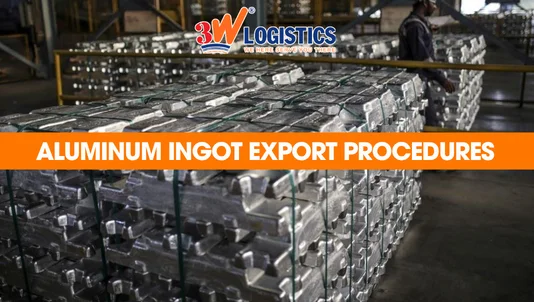
Aluminum ingot export procedures in Vietnam are standing at a historic turning point: on July 26, 2026, at the Nhan Co Industrial Park (Lam Dong province), Vietnam officially unveiled its first batch of domestically produced aluminum ingots made using alumina electrolysis technology, achieving a purity of 99.71%.
This product comes from the Dak Nong Aluminum Electrolysis Plant, invested in by Tran Hong Quan Metallurgy Co., Ltd., and after 11 years of development, it marks the first time Vietnam has fully mastered a closed-loop value chain – from bauxite mining and alumina processing to metal aluminum smelting.
This event carries special significance for aluminum ingot export procedures, since until now Vietnam has had to almost entirely import raw aluminum for manufacturing and processing. With Phase 1 capacity reaching 150,000 tons per year, expected to rise to 300,000 tons by Q4 2026 and reach the maximum designed capacity of 450,000 tons per year by Q1 2027,
domestic aluminum ingot supply will not only help reduce import turnover by roughly USD 1.5 billion per year, but will also open up the potential for “Made in Vietnam” aluminum ingots to be exported to international markets in the near future. The article below compiles the full legal basis, HS codes, procedures, costs, and common risks involved in aluminum ingot export procedures, updated according to the latest applicable regulations.
1. Context of Vietnam’s aluminum industry after the historic milestone at the Dak Nong Aluminum Electrolysis Plant
The Dak Nong Aluminum Electrolysis Plant, located at Nhan Co Industrial Park in Lam Dong province, has a total investment of nearly VND 28,000 billion across 128 hectares, and has been identified as a key project in the national aluminum industry development strategy through 2030, with a vision to 2045. The project uses electrolysis technology with a current intensity of 500kA, closing the bauxite–alumina–metal aluminum value chain, with the Vietnam National Coal – Mineral Industries Group (TKV) supplying high-quality alumina.
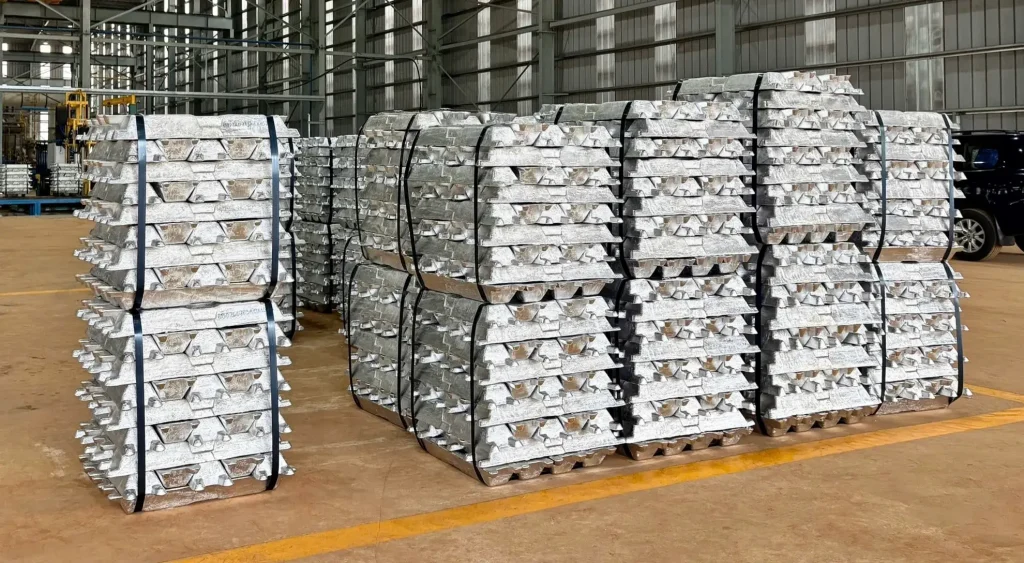
Once all three phases are fully operational at a combined capacity of 450,000 tons per year, annual aluminum ingot production value could reach approximately USD 1.35-1.4 billion, creating direct and indirect employment for around 3,500 workers. This forms the foundation for domestic businesses to gradually gain control over their aluminum ingot raw material supply, while also opening the opportunity for aluminum ingot export procedures to become a real, active line of business rather than remaining limited to importing raw materials as before.
2. Legal basis governing aluminum ingot export procedures
| Legal document | Content regulated |
|---|---|
| Decree 69/2018/ND-CP | Aluminum ingots are not on the list of goods requiring an export license or prohibited from export, and can be freely exported |
| Decree 26/2023/ND-CP | Preferential export and import tariff schedule, setting a separate export duty rate for unwrought aluminum under heading 7601 |
| Circular 38/2015/TT-BTC, amended by Circular 39/2018/TT-BTC | Customs procedures, customs supervision and inspection, and export declaration channel classification rules |
| Section 232 of the U.S. Trade Expansion Act of 1962 | Applies an additional duty specifically to steel and aluminum imports into the U.S., currently ranging from 25-50%, and not subject to exemption under the general reciprocal tariff package |
Important update: With domestically produced aluminum ingots now available for the first time, experts predict Vietnam will have additional room to diversify its supply for the aluminum processing industry and gradually engage more deeply in the aluminum product export value chain. However, businesses need to be particularly aware that aluminum and aluminum products exported to the U.S. currently do not qualify for exemption from the reciprocal tariff package, and are instead subject to a fairly high Section 232 duty, ranging from 25% to 50% depending on the applicable period.
3. HS codes and export duties for aluminum ingots
Aluminum ingots fall under Chapter 76 — “Aluminum and articles thereof” — heading 76.01, “Unwrought aluminum.” Correctly determining the HS code based on whether the product is non-alloy or alloy aluminum is an important step in aluminum ingot export procedures, as this is also the basis customs authorities use to determine the applicable duty rate.
| Product type | HS code (Vietnam) | Vietnam export duty | Note |
|---|---|---|---|
| Aluminum ingots, non-alloy | 7601.10 | 0% | Similar to the first aluminum ingot batch at the Dak Nong Plant, high purity |
| Aluminum alloy ingots | 7601.20 | 0% – 5% | The specific rate depends on the alloy type and is often subject to more detailed classification analysis |
| Aluminum waste and scrap | 7602.00 | Per separate regulation | Entirely different from new aluminum ingots, easily confused when declaring |
Practical note: Export duty on aluminum ingots in Vietnam currently ranges from 0% to 5% depending on whether the product is non-alloy or alloy aluminum. Businesses need to be especially aware that customs authorities will cross-check very closely to distinguish newly produced aluminum ingots from “re-melted” aluminum waste or scrap, as a way of preventing tax-evasion practices — the more transparent the origin and quality documentation, the smoother the customs clearance process.
4. Customs inspection characteristics for aluminum ingots
| Item | Detail |
|---|---|
| Declaration channel classification | Businesses exporting a product under heading 7601 for the first time are typically routed to the red channel, requiring a physical inspection of the goods |
| Counting and sampling for assessment | Customs cuts the seal, counts the number of aluminum blocks, and takes samples to send for classification analysis, in order to accurately determine whether it is genuine aluminum ingot or re-melted scrap |
| Waiting time for assessment results | Approximately 3-7 working days; businesses may request to bring the goods back into storage, or export it ahead of time with a tax guarantee at the highest applicable rate |
| Specialized inspection | No specialized export license is required for standard aluminum ingots |
5. Documentation package for aluminum ingot export procedures
| Document | When to prepare | Important note |
|---|---|---|
| Sales Contract | Before manufacturing and delivery | Must clearly state Incoterms, purity, and packing specifications (ingot/billet) |
| Quality assessment certificate and proof of manufacturing origin | After manufacturing, before export | The more transparent this is, the shorter the customs classification analysis time |
| Commercial Invoice and Packing List | Before customs declaration | Value must match the contract and the bill of lading |
| Certificate of Origin (C/O) | After the export declaration is issued | Required to enjoy preferential import tariffs under the relevant FTA for the destination market |
| Export customs declaration (VNACCS) | Before customs clearance | Declare the correct HS code for non-alloy/alloy aluminum, and be prepared for the red channel |
6. Aluminum ingot export procedure steps
Step 1: Accurately determine the aluminum type and HS code
The business clearly determines whether the product is non-alloy or alloy aluminum ingot, cross-checking the chemical composition to select the correct HS code — this is the foundational first step in aluminum ingot export procedures, directly affecting the duty rate and the likelihood of being subject to in-depth inspection.
Step 2: Prepare documentation proving product origin and quality
The business prepares complete documentation on manufacturing origin and aluminum composition test results, to avoid being suspected of exporting re-melted scrap — a common issue when customs authorities inspect products under heading 7601.
Step 3: Sign the contract and pack according to export specifications
Agree with the importer on ingot casting specifications, weight per unit, and required purity, then proceed with packing, labeling, and seal application according to the agreed standards.
Step 4: Submit the export customs declaration
The enterprise or its forwarder declares the electronic customs declaration on the VNACCS system; businesses exporting a heading-7601 product for the first time should be prepared for the declaration to be routed to the red channel and require a physical inspection of the goods.
Step 5: Coordinate physical inspection and sample collection for assessment
Customs cuts the seal, counts the number of aluminum blocks, and takes samples to send for classification analysis; while waiting for the results (typically 3-7 days), the business may request to bring the goods back into storage or export ahead of time with a tax guarantee at the highest applicable rate.
Step 6: Pay the export duty and complete customs clearance
Once the assessment results confirm the declared aluminum ingot type is correct, customs finalizes the official HS code, and the business pays the corresponding export duty (if applicable) to complete customs clearance.
Step 7: International transport and import clearance in the destination country
Once cleared, the goods are handed over to a sea carrier. For the U.S. market, businesses need to carefully factor in the Section 232 duty (25-50%) when planning their selling price, as aluminum is not exempt from the general reciprocal tariff package.
7. Common risks and FAQ
| Risk | Manifestation | Prevention |
|---|---|---|
| Suspected of being re-melted scrap used to evade duty | Goods held for sample assessment, extending customs clearance time | Prepare complete origin documentation and transparent composition test results |
| Incorrect HS code between alloy and non-alloy aluminum | Retroactive tax collection, delayed customs clearance, need to amend the declaration | Carefully cross-check chemical composition with a customs unit experienced in metal cargo |
| Not fully factoring in Section 232 duty when exporting to the U.S. | Actual costs higher than expected, affecting profit margins | Check the current Section 232 rate before quoting a price to a U.S. partner |
Question 1: Does Vietnam now producing its own aluminum ingots affect aluminum ingot export procedures?
The successful production of the first aluminum ingot batch at the Dak Nong Aluminum Electrolysis Plant on July 26, 2026 does not change the legal export regulations, but it does open up a domestic raw material supply, helping processing businesses become more self-sufficient and laying the groundwork for “Made in Vietnam” aluminum ingots to become more deeply integrated into export chains in the coming period.
Question 2: Does exporting aluminum ingots require a specialized license?
No. Aluminum ingots are not on the list of prohibited or restricted export goods; businesses do not need to apply for a specialized export license when carrying out aluminum ingot export procedures.
Question 3: Why are first-time aluminum ingot export shipments often routed to the red channel?
This is a customs control measure aimed at preventing the practice of declaring re-melted aluminum waste or scrap as aluminum ingots in order to benefit from a lower duty rate, so businesses exporting a heading-7601 product for the first time will almost certainly go through the physical inspection and sample assessment process.
How does 3W Logistics support aluminum ingot export procedures?
As a freight forwarding company registered as an OTI-NVOCC with an FMC bond in the United States, holding an SCAC Code to self-file AMS/ISF declarations directly, 3W Logistics supports businesses through the entire aluminum ingot export procedure — from HS code advisory and coordinating physical inspection/assessment through to customs clearance in the importing country.
- HS code advisory and preparation of origin documentation: Helping businesses clearly distinguish between alloy and non-alloy aluminum ingots, minimizing the risk of being flagged as suspected duty evasion.
- Support handling the red channel, physical inspection, and assessment: Hands-on experience handling heavy metal cargo, helping shorten the wait time for classification analysis results.
- Booking vessels and container transport: Arranging sea transport to international markets, optimizing costs for bulky metal cargo.
- Electronic customs declaration (VNACCS): A professional team handles declarations; as an OTI-NVOCC with FMC and an SCAC Code, 3W Logistics directly issues its own HBL and self-files AMS/ISF for shipments bound for the U.S., staying closely updated on the current Section 232 duty rate.
Why choose 3W Logistics: With offices in Ho Chi Minh City, Hanoi, and Hai Phong, and a team knowledgeable in the specific customs inspection process for metal products like aluminum ingots, 3W Logistics stands alongside businesses as Vietnam’s aluminum industry enters a new chapter, ensuring shipments clear customs on time and to standard, right from the very first export. – Ms. Apple, CCO of 3W Logistics
Head Office – 3W Logistics Ho Chi Minh City Branch
Address: 34 Bach Dang, Tan Son Hoa Ward, Ho Chi Minh City
Hotline: +84 28 3535 0087
____________________________
3W Logistics Hanoi Branch
Address: 81A Tran Quoc Toan, Cua Nam Ward, Hanoi
Hotline: +84 24 3202 0482
____________________________
3W Logistics Hai Phong Branch
Address: 8A Lot 28 Le Hong Phong, Gia Vien Ward, Hai Phong
Hotline: +84 225 355 5939
____________________________
3W LOGISTICS CO., LTD – We here serve you there!
Email: info@3w-logistics.com
Website: www.3w-logistics.com

Ms. Apple is the CCO (Chief Commercial Officer) at 3W Logistics, with over 10 years of experience in sales and business operations management.
At 3W Logistics, Ms. Apple is responsible for commercial strategy, corporate customer development, managing a team of more than 50 sales professionals, and improving business performance in the logistics sector.
With practical experience in sales management and market development, Ms. Apple shares professional insights on business logistics solutions, international transportation, freight forwarding, customer management, trade lane development, and growth strategies in the logistics industry.


