
Vietnam’s exports to the United States continue to set new records in 2026. According to Vietnam Customs data, in the first 10 months of 2026 alone, Vietnam’s goods exports to the United States reached nearly US$159.4 billion – up 26.2% year on year and already exceeding the full-year 2025 total (US$153.1 billion). The US remains Vietnam’s No. 1 export market, accounting for about 32.4% of the country’s total export turnover more than 2.2 times the second-largest market, China.
The standout feature of 2026 is a sharp shift in export structure: computers, electronics and components have climbed to nearly one-third of Vietnam’s total exports to the US, reflecting Vietnam’s growing role in the global technology supply chain. The top 5 product groups alone contributed over US$113 billion – equal to 70.6% of total exports to this market.
In this article, 3W Logistics gives a complete overview of what Vietnam exports to the United States, the latest monthly figures for 2026, the key export products, and what businesses need to prepare when shipping goods to the United States.
1. Overview of Vietnam’s Export to the United States
Vietnam – US trade relations have come a long way: from the Bilateral Trade Agreement (BTA) taking effect in 2001, to the upgrade to a Comprehensive Strategic Partnership in 2023, and 2025 marking 30 years of normalized diplomatic relations. This journey has lifted export turnover from a few hundred million USD to the successive record highs seen today.
>> See also: Container transit time from Vietnam to the US
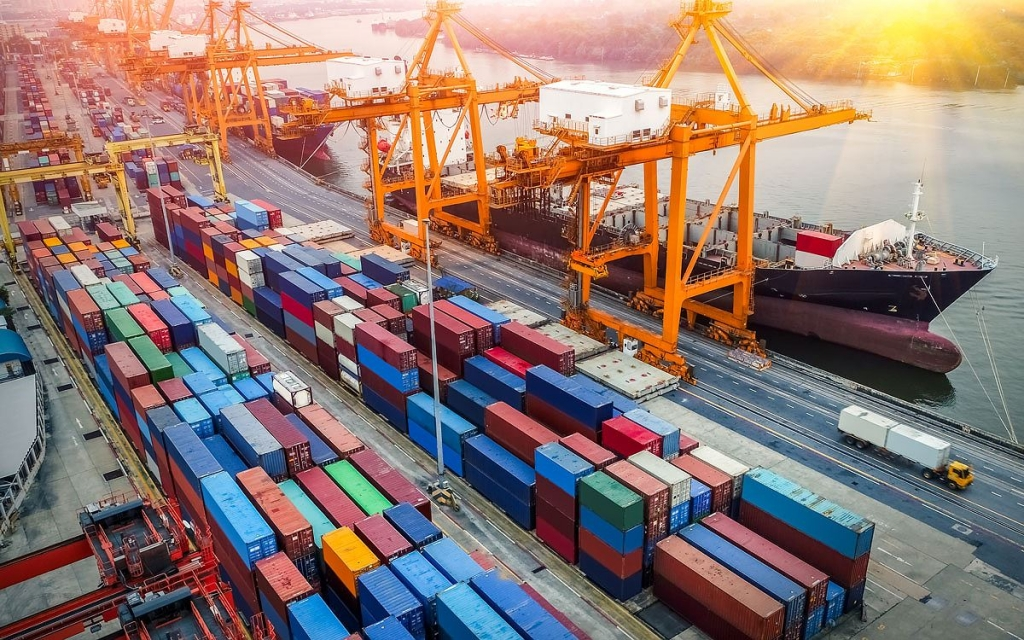
The US is Vietnam’s No. 1 export market, accounting for over 32% of the country’s total export turnover in 2026
| Year / Period | Vietnam’s Exports to the US | Notes |
|---|---|---|
| 2024 | ~US$119.5 billion (+23.1%) | 15 product groups exceeded US$1 billion; the top 3 groups accounted for 51.4% of total turnover |
| 2025 | US$153.1 billion (+28%) | New record; the US accounted for ~32.6% of Vietnam’s total exports; the bilateral trade surplus continued to widen |
| 2026 (10 months) | ~US$159.4 billion (+26.2%) | Already surpassed full-year 2025; the US accounts for 32.4% of Vietnam’s exports; 2.2 times the second-largest export market (China); full-year 2026 expected to exceed US$190 billion |
The factors driving this sustained growth include: the supply chain shift away from China (China+1), the Vietnam–US Comprehensive Strategic Partnership upgraded in 2023, strong FDI inflows into Vietnam from major technology groups such as Samsung, Intel, LG and Foxconn, and Vietnam’s increasingly important role in the global electronics supply chain.
Note on the 2026 context: The tariff policies of President Donald Trump continue to affect Vietnam’s exports to the US. From August 15, 2026, quartz stone exported from Vietnam is officially subject to a safeguard measure under a tariff-rate quota mechanism. The US is also stepping up trade remedy investigations into wood, metals and textiles & garments. Businesses should closely monitor US trade policy developments, diversify their markets, and focus on genuinely increasing local content to reduce risk. 3W Logistics continually tracks policy changes in order to advise on the most suitable shipping routes for customers.
2. What Does Vietnam Export to the United States? Top Export Product Groups in 2026
Based on data published by Vietnam Customs in November 2026 (cumulative for the first 10 months of 2026), these are the product groups with the largest export value to the US:
Computers, Electronic Products and Components
This is the clear leader, with export value to the US reaching US$53.47 billion in the first 10 months of 2026, up 56.5% year on year – the fastest growth among all product groups. This group accounts for nearly one-third of Vietnam’s total exports to the US and on its own contributed about 64% of the total increase in export value.
This surge reflects Vietnam’s increasingly central role in the global technology supply chain, especially as Samsung, Intel, LG, Foxconn and many other technology groups continue to expand production in Vietnam.
Machinery, Equipment, Tools and Spare Parts
The second-largest group by export value, reaching US$26.24 billion in the first 10 months of 2026, up 33.5%. Together, electronics and machinery account for more than US$79 billion – nearly 50% of Vietnam’s total exports to the US. This is clear evidence of the strong shift in Vietnam’s export mix from traditional goods to high-value processed manufactured products.
Textiles and Garments
Textiles and garments rank third with US$15.3 billion in the first 10 months of 2026, with exports to the US making up about 46% of Vietnam’s total textile and garment export turnover. The US remains the No. 1 priority market for Vietnam’s textile and garment industry.

Textile and garment exports to the US reached US$15.3 billion in the first 10 months of 2026
A notable trend is the shift toward higher value-added products: protective workwear, technical textiles, sportswear and fast fashion. American consumers are also increasingly prioritizing sustainable products, opening opportunities for Vietnamese businesses that invest in green technology. However, note that the US is stepping up investigations into the origin of textile products to prevent trade fraud.
Mobile Phones and Components
Phones and components reached US$10.16 billion in the first 10 months of 2026 – a sharp increase year on year. Samsung Vietnam and the component supply chain for Apple are the largest contributors to this group.
Footwear
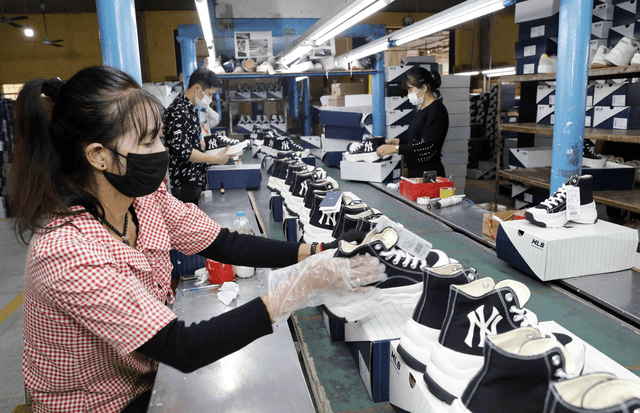
Footwear reached US$7.92 billion in the first 10 months of 2026, with steady growth. Footwear exports to the US account for nearly 39% of Vietnam’s total footwear export turnover. Vietnam is currently the world’s third-largest footwear producer and the second-largest exporter globally, behind only China.

The US is Vietnam’s largest footwear export market, accounting for nearly 39% of the industry’s total export turnover
Wood and Wood Products
Wood and wood products reached nearly US$7.6 billion in the first 10 months of 2026, up about 6% year on year – a recovery after the slowdown at the beginning of the year. This is a positive sign after the wood industry faced pressure from tariff concerns early in the year.

Vietnamese wood and wood products remain a billion-dollar export item to the US in 2026
Businesses exporting wood to the US need to pay special attention to legal timber certification (VNTLAS), the Lacey Act, and supply chain transparency to avoid legal risks. The US is increasing trade remedy investigations into this product group.
Agricultural Products, Seafood and Other Agro-Forestry-Fishery Goods
The agro-forestry-fishery group recorded positive results in the first 10 months of 2026: seafood reached US$1.62 billion, cashew nuts US$870 million, and fruit and vegetables US$556 million. The US is also an important destination for Vietnamese coffee, pepper and spices.
>> See also: Seafood export procedures
The key to exporting agricultural products and seafood to the US is meeting FDA standards, USDA quarantine requirements and traceability requirements and, a new point to note from 2026, the stricter US controls on food additives.
| Rank | Export Product Group | Export Value, 10M/2026 | Growth / Trend |
|---|---|---|---|
| 1 | Computers, electronics and components | US$53.47 billion | +56.5% YoY; ~1/3 of total exports to the US; fastest-growing group |
| 2 | Machinery, equipment, tools, spare parts | US$26.24 billion | +33.5% YoY; electronics + machinery together make up ~50% of total turnover |
| 3 | Textiles and garments | US$15.3 billion | ~46% of national textile and garment exports; the US remains the industry’s No. 1 market |
| 4 | Mobile phones and components | US$10.16 billion | Strong growth; Samsung Vietnam and the Apple supply chain are the main drivers |
| 5 | Footwear | US$7.92 billion | Stable; ~39% of national footwear exports; Vietnam is the world’s 2nd-largest footwear exporter |
| 6 | Wood and wood products | ~US$7.6 billion | +6% YoY; recovering; legal timber origin certification required (VNTLAS, Lacey Act) |
| 7 | Seafood | US$1.62 billion | Growing; watch shrimp anti-dumping duties (POR20) and FDA food additive controls |
| 8 | Cashew nuts, fruit and vegetables, and other agricultural products | US$1.43 billion (cashew + fruit and vegetables) | Large potential; FDA, USDA, traceability and APHIS irradiation requirements |
Source: Vietnam Customs Department, cumulative figures for the first 10 months of 2026 (published November 2026). The top 5 groups account for 70.6% of Vietnam’s total exports to the US.
3. Legal Requirements for Exporting Goods to the United States
The US has one of the most complex and strict regulatory systems in the world. Below are the requirements Vietnamese businesses cannot overlook:
| Requirement | Details |
|---|---|
| AMS / ISF Filing | The Automated Manifest System (AMS) and the Importer Security Filing (ISF – 10+2 rule) are two mandatory filings for all goods imported into the US by sea. AMS must be filed 24 hours before the vessel departs the port of loading; ISF must be filed 24 hours before the vessel departs the port. Late or missing filings can result in penalties of up to USD 5,000 per violation and cargo being held for inspection. 3W Logistics is an OTI-NVOCC with its own FMC Bond and SCAC Code, and can file AMS/ISF directly on behalf of customers – with no intermediary – saving time and reducing costs. |
| CBP – US Customs | U.S. Customs and Border Protection (CBP) requires a complete Commercial Invoice (product description, quantity, unit price, origin, HS code); some products require Entry Summary Form 7501; shipments valued above USD 2,500 must go through formal customs clearance (Formal Entry). The US is stepping up inspections for “wash labeling” – goods made in another country but labeled as Vietnamese to avoid tariffs. |
| FDA – Food, Pharmaceuticals, Cosmetics | Food, seafood, agricultural products, pharmaceuticals, medical devices and cosmetics exported to the US must be registered with the FDA. Food shipments require Prior Notice at least 2–8 hours before arrival. 2026 note: the FDA is tightening controls on food additives in imported goods – businesses should review the additives they use before exporting. |
| USDA – Agricultural Quarantine | Agricultural products, fresh fruit and plants must have a Phytosanitary Certificate. Some Vietnamese fruits (lychee, longan, dragon fruit, mango, etc.) enter the US subject to irradiation or vapor heat treatment (APHIS) before export. |
| Lacey Act – Wood | Wood and wood products imported into the US must declare the scientific name of the timber species, the country of harvest and the quantity; the timber must be legally sourced. Violations of the Lacey Act result in heavy fines and seizure of goods. Vietnamese exporters need VNTLAS (Vietnam Timber Legality Assurance System) certification. The US is stepping up trade remedy investigations into wood products in 2026. |
| Product Labeling and Origin | Goods must clearly state “Made in Vietnam” in the correct position and size as required by CBP. Textiles and garments must state fiber content under the Textile Fiber Products Identification Act; electronics must carry FCC labels; food must carry the standard FDA Nutrition Facts Panel. Requirements to prove genuine origin are becoming increasingly strict in order to combat wash labeling. |
| Tariffs and Trade Remedies | Vietnam has no FTA with the US and is subject to MFN (Most-Favored-Nation) tariffs. Some products (shrimp, pangasius, steel, solar panels, etc.) are subject to anti-dumping (AD) or countervailing (CVD) duties. From August 15, 2026, Vietnamese quartz stone is subject to a tariff-rate quota safeguard measure. Businesses should check the specific tariff rate by HS code in the USITC HTS before exporting. |
4. Challenges of Exporting to the United States in 2026
Although the US is the largest potential market, Vietnamese businesses also face many practical challenges in the 2026 context:
Legal and compliance barriers: The US legal system is complex, with dozens of specialized regulatory agencies (FDA, USDA, CBP, FTC, CPSC, etc.). Compliance, testing and certification costs are high. Failing to understand the regulations can lead to goods being held, returned or destroyed.
Increasing trade remedy investigations: The US is actively expanding trade remedy investigations into many Vietnamese products, especially wood, metals, textiles & garments and seafood. In August 2026, quartz stone was officially placed under a tariff-rate quota. Businesses need to monitor developments proactively and prepare documentation to respond.
Strict origin verification requirements: The US closely scrutinizes “wash labeling” – goods made in another country (especially China) but labeled as Vietnamese to avoid tariffs. Vietnamese businesses must ensure genuine local content and complete, clear origin documentation.
Increasingly demanding quality, safety and environmental standards: American consumers have high expectations for product safety, packaging, labeling and social responsibility across the supply chain. In 2026, the US is tightening controls on food additives and applying stricter environmental standards to imported goods.
“3W Logistics usually advises customers to check three things carefully before shipping their first consignment to the US: the correct HS code to avoid misclassification and back-payment of duties; origin documentation strong enough to pass CBP review and avoid trade fraud investigations; and timely AMS/ISF filing so that the container is not held at the port. Handling these three points well will save a great deal of cost and time later.” – Ms. Apple, CCO, 3W Logistics
5. Why Choose 3W Logistics to Export Goods to the US
With more than 10 years of experience in shipping goods to the US, 3W Logistics provides end-to-end services from the warehouse in Vietnam to the destination port in the US, including:
- OTI-NVOCC with its own FMC Bond and SCAC Code: 3W Logistics is licensed by the Federal Maritime Commission (FMC) and can issue its own House Bill of Lading (HBL) and file AMS and ISF directly – with no intermediary agents – saving costs and shortening document processing time.
- Competitive freight rates: Direct partnerships with leading shipping lines on the Vietnam–US route: Maersk, MSC, ONE, CMA-CGM, Evergreen, Cosco, Hapag-Lloyd, OOCL, Yang Ming, Wanhai, KMTC, SITC.
- Specialized cargo expertise: Practical experience with many product groups exported to the US: agricultural products and seafood (FDA/USDA quarantine advice), wood and furniture (Lacey Act, VNTLAS), textiles and garments (C/O Form B, CPTPP), machinery and electronic equipment, and dangerous goods (IMDG).
- Comprehensive support: Advice on certificates of origin (C/O), quarantine, wooden pallet packing and fumigation; support with customs declarations and cargo insurance; real-time shipment tracking. Advice on responding to trade remedy investigations and preparing origin documentation to CBP requirements.
- US-based agents: A network of agents at major US ports (Los Angeles, Long Beach, New York, Savannah, Houston) helps resolve issues quickly at the destination port.
FAQ – Frequently Asked Questions About Exporting to the US
Question 1: What does Vietnam export the most to the US in 2026?
According to Vietnam Customs data (first 10 months of 2026), the top 5 export products to the US by value are: (1) Computers, electronics and components – US$53.47 billion; (2) Machinery, equipment and spare parts – US$26.24 billion; (3) Textiles and garments – US$15.3 billion; (4) Phones and components – US$10.16 billion; (5) Footwear – US$7.92 billion. These 5 groups alone account for 70.6% of Vietnam’s total exports to the US.
Question 2: What is Vietnam’s total export value to the US in 2026?
In the first 10 months of 2026, Vietnam’s exports to the US reached nearly US$159.4 billion, up 26.2% year on year – already surpassing the full-year 2025 total (US$153.1 billion). The US remains Vietnam’s No. 1 export market, accounting for about 32.4% of total national export turnover and more than 2.2 times the second-largest market, China. Full-year 2026 exports are expected to exceed US$190 billion.
Question 3: What documents are required to export goods to the US?
The basic set of documents includes: Commercial Invoice, Packing List, Bill of Lading (HBL/MBL), Certificate of Origin (C/O Form B), and, depending on the product group: quarantine certificates (agricultural products and seafood), food safety certification (FDA), Phytosanitary Certificate (plants), and timber origin certification (Lacey Act Declaration). In particular, AMS and ISF must be filed electronically before the vessel departs the port in Vietnam.
Question 4: Does Vietnam have an FTA with the US? Do Vietnamese goods exported to the US get tariff preferences?
Currently, Vietnam does not have a Free Trade Agreement (FTA) with the US. Vietnamese goods exported to the US are subject to MFN (Most-Favored-Nation) tariffs under WTO rules. Some products such as shrimp, pangasius, steel and solar panels are also subject to anti-dumping (AD) or countervailing (CVD) duties. From August 2026, quartz stone is subject to a tariff-rate quota. Businesses should check the specific tariff rate by HS code in the USITC HTS before exporting.
Question 5: What are AMS and ISF? Do Vietnamese exporters have to handle them themselves?
AMS (Automated Manifest System) is the filing of cargo data into the US customs system before the vessel leaves the port; ISF (Importer Security Filing) is the import security filing (10+2 rule). Both are mandatory and must be filed 24 hours before the vessel departs the port. Vietnamese exporters usually authorize a forwarder or an NVOCC with a SCAC Code (such as 3W Logistics) to file on their behalf. If filings are late or missing, cargo may be held for inspection and penalties of up to USD 5,000 per violation may apply.
Question 6: How long does shipping from Vietnam to the US take?
Sea freight transit time from Vietnamese ports (Cat Lai, Hai Phong, Cai Mep) to the US averages 18 – 32 days depending on the destination port: the West Coast (Los Angeles, Long Beach) takes about 18 – 22 days; the East Coast (New York, Savannah, Houston) via the Panama Canal takes about 25 – 32 days. Air freight takes only 1 – 3 days but costs much more, and suits urgent or high-value cargo.
Address: 34 Bach Dang, Tan Son Hoa Ward, Ho Chi Minh City
Hotline: +84 28 3535 0087
____________________________
3W Logistics Hanoi Branch
Address: 81A Tran Quoc Toan, Cua Nam Ward, Hanoi
Hotline: +84 24 3202 0482
____________________________
3W Logistics Hai Phong Branch
Address: 8A Lot 28 Le Hong Phong, Gia Vien Ward, Hai Phong
Hotline: +84 225 355 5939
____________________________
3W LOGISTICS CO., LTD – We here serve you there!
Email: info@3w-logistics.com
Website: www.3w-logistics.com

Mr. William, Vietnamese name Vu Van Nho, is the CEO of 3W Logistics. In his leadership role, he is responsible for strategic development, business operations, and improving the company’s logistics service quality.
He has experience in logistics, import-export operations, and international transportation, especially in sea freight, air freight, inland transportation, customs procedures, and supply chain solutions for businesses.
With a practical business mindset and a customer-focused approach, Mr. William aims to develop 3W Logistics into a reliable, professional, and efficient logistics service provider for import-export companies in Vietnam.