

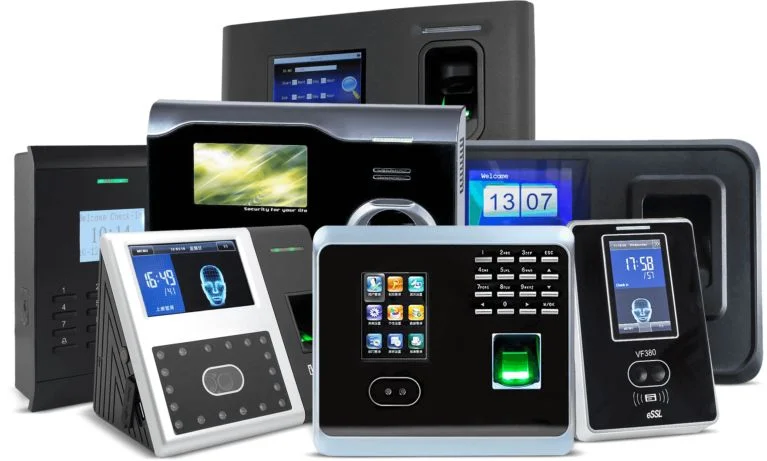
Time attendance machine import procedures are often considered straightforward because the equipment is relatively low in value, import duties are low, and no import permit is required. In practice, modern time attendance machines are multi-function electronic devices: they read RFID cards, connect via Wi-Fi, Bluetooth, and 4G networks, and perform fingerprint and facial recognition. A model with even a single wireless module can trigger conformity certification and declaration requirements before the goods may be placed on the market.
In addition, time attendance machine import procedures in 2026 are affected by a risk-based quality management mechanism that has applied since 01/7/2026 under Circular 36/2026/TT-BKHCN from the Ministry of Science and Technology, as well as the VAT reduction to 8% through 31/12/2026 under Resolution 204/2025/QH15. Declaring the wrong HS code, omitting conformity documentation, or providing a vague description of the machine’s functions can all result in a shipment being held at the border.
This article presents the complete time attendance machine import procedure under current regulations – covering legal requirements, HS codes, taxes, required documents, step-by-step process, and real-world risks, from the perspective of a freight forwarder with over 10 years of experience handling imported electronics and office equipment.
1. Legal Requirements for Time Attendance Machine Import Procedures
Time attendance machines are not on the prohibited import list and do not require a separate import permit. The key issue in the time attendance machine import procedure is therefore whether the machine integrates a wireless transmitting or transceiving module, as this determines whether conformity certification and declaration under the information and communications technology sector regulations is required.
| Requirement | Details |
|---|---|
| Importer qualifications | Business with a valid registration, tax code, digital signature, and active VNACCS electronic customs account; no import permit is required for time attendance machines. |
| Basic time attendance machines | Machines using paper cards, magnetic cards, or standalone fingerprint readers with no integrated wireless module: imported as ordinary goods — only a customs dossier and correct HS code declaration are required. |
| Models with RFID, Wi-Fi, Bluetooth, or 4G | Devices that transmit or receive wireless signals (RFID card readers, Wi-Fi, Bluetooth, mobile network) must be checked against Circular 36/2026/TT-BKHCN (effective 01/7/2026) by HS code, product description, frequency band, and transmission power to determine whether conformity certification and declaration is required. |
| Risk-based management mechanism | Products in the medium-risk category must self-declare standards, carry out conformity assessment against the applicable QCVN, and publish a conformity declaration before placing goods on the market; high-risk products are subject to stricter pre-clearance inspection. |
| Encryption and security devices | Models with data encryption or network security functions should additionally be reviewed against cybersecurity and civilian cryptography regulations if the device falls within the applicable scope. |
| Used machines | Time attendance machines fall under Chapter 91 and are therefore outside the scope of Circular 56/2026/TT-BKHCN (which applies only to machinery and equipment under Chapters 84 and 85); however, used machines are more likely to be subject to detailed inspection and clarification requests, so importing brand-new machines is strongly preferred. |
| Goods labeling | Imported goods must carry the original manufacturer’s label and a supplementary label in Vietnamese containing all required information under the goods labeling regulations (Decree 43/2017/NĐ-CP and its amendments). |
Practical note: The most commonly overlooked point in the time attendance machine import procedure is that the name “time attendance machine” does not reflect any wireless function. A fingerprint time attendance machine with Wi-Fi or an RFID card reader may be subject to conformity requirements even though its HS code falls under Chapter 91. Additionally, fingerprint and facial data constitute sensitive personal data under the Law on Personal Data Protection (effective 01/01/2026): this does not affect customs clearance, but businesses selling and deploying these machines should be aware when advising their customers.
2. HS Code and Import Duty for Time Attendance Machines
Time attendance machines fall under heading 9106 of Chapter 91, covering time-recording apparatus and apparatus for measuring, recording, or otherwise indicating intervals of time (for example, time-register apparatus). In the time attendance machine import procedure, the two most commonly used codes are 9106.10.00 (traditional time-recording/time-register machines) and 9106.90.90 (other types, covering many fingerprint, proximity card, and facial recognition machines).
| Machine Type | Reference 8-Digit HS Code | Reference Preferential Import Duty (MFN) | Sector Regulation |
|---|---|---|---|
| Traditional paper card or magnetic card time recorders (time-register) | 9106.10.00 | 0% – 5% | Generally none |
| Fingerprint, proximity card, and facial recognition time attendance machines | 9106.90.90 | approx. 5% | Check conformity requirements if RFID, Wi-Fi, or Bluetooth is present |
| Security guard patrol time recorders | 9106.90.90 | approx. 5% | Check conformity requirements if a wireless module is present |
| Access control devices whose primary function is not time attendance | Check tariff schedule | Check tariff schedule | Determined by primary function |
Important note on time attendance machine HS codes: When declaring in the time attendance machine import procedure, the declaration must accurately describe the machine type (fingerprint, proximity card, facial recognition), primary function, connectivity method (LAN, Wi-Fi, USB, 4G), and whether a wireless module is present. Devices whose primary function is access control or facial recognition cameras may be classified under a different heading. The HS codes and duty rates in the table above are for reference only and must be verified against the current tariff schedule at the time of customs declaration.
Import Duty and VAT for Time Attendance Machines
Unlike some categories of office equipment that carry a 0% duty, code 9106.90.90 is subject to a preferential import duty (MFN) of approximately 5% and a standard import duty of 7.5%. In the time attendance machine import procedure, a valid preferential C/O (Form D, Form E, Form AK, Form VK, etc.) can therefore reduce the import duty to 0% where the eligibility conditions are met. Under Resolution 204/2025/QH15, VAT has been reduced to 8% from 01/7/2025 through 31/12/2026; time attendance machines are not in the excluded categories such as telecommunications, finance, real estate, metal products, mining, or goods subject to special consumption tax.
| Tax Type | Rate | Taxable Base | Notes |
|---|---|---|---|
| Preferential import duty (MFN) | approx. 5% | CIF value | Applies when no special preferential C/O is available. |
| Special preferential import duty (FTA) | potentially 0% | CIF value | Requires a C/O in the correct form and meeting origin requirements; check per applicable agreement. |
| Standard import duty | 7.5% | CIF value | Applies when preferential duty cannot be claimed. |
| VAT | 8% (through 31/12/2026) | CIF + import duty | Returns to 10% from 01/01/2027 unless the reduction is extended. |
3. Documents Required for Time Attendance Machine Import Procedures
The full dossier for the time attendance machine import procedure consists of standard customs documents plus, for models with wireless modules, a supplementary set of conformity documents. Specifications on the catalogue, invoice, and customs declaration must be consistent with regard to model, function, and connectivity method.
| Document | When to Prepare | Key Notes |
|---|---|---|
| Sales Contract | Before placing deposit | Must clearly state the model, quantity, identification type (fingerprint, card, facial recognition), presence or absence of Wi-Fi, RFID, and Bluetooth, and the supplier’s obligation to provide technical documentation and test reports. |
| Commercial Invoice | Before shipment | Full description of goods, model, and unit price; avoid generic terms such as “time recorder” when the machine has biometric recognition functions. |
| Packing List | Before shipment | Number of packages, quantity of machines, and included accessories (cards, adapters, door locks, software); cross-referenced during physical inspection. |
| Bill of Lading / Air Waybill | After goods are handed to the carrier | Cargo description and consignee must match the contract and invoice. |
| Catalogue, datasheet, technical documentation | Before customs clearance | Serves as the basis for HS code classification and for determining whether the machine has a wireless module; frequency band and transmission power should be clearly stated. |
| Certificate of Origin (C/O) | Before shipment | Required to claim special preferential duty (Form D, Form E, Form AK, etc.); the difference in import duty between having and not having a C/O can amount to 5% of the shipment value. |
| Test report, conformity certificate, and conformity declaration (if applicable) | Before placing goods on the market | Required under the applicable QCVN for each wireless function; conformity must be declared before market distribution for products covered by Circular 36/2026/TT-BKHCN. |
| Original label and draft supplementary label in Vietnamese | Before goods arrive | Label must state the product name, country of origin, and manufacturer; affix the conformity mark where the machine falls within the applicable scope. |
| Electronic customs declaration (VNACCS) | Once dossier is complete | Declare the correct 8-digit HS code and full machine type and function description; enter the C/O reference number if claiming preferential duty. |
4. Step-by-Step Time Attendance Machine Import Procedure
Below are the six standard steps of the time attendance machine import procedure that 3W Logistics follows for customers importing time attendance equipment into Vietnam:
Step 1: Classify the machine and determine the HS code
The business reviews the catalogue for each model to identify the machine type (fingerprint, card, facial recognition), connectivity method, and whether a wireless module is present. This classification step determines whether the time attendance machine import procedure follows the standard import route or the route requiring a conformity dossier.
Step 2: Review technical regulations for wireless modules
For models with RFID, Wi-Fi, Bluetooth, or 4G, the business checks the machine against Circular 36/2026/TT-BKHCN by HS code, product description, frequency band, and transmission power to determine whether conformity certification and declaration is required. This is the most frequently overlooked step in the time attendance machine import procedure, particularly for the latest generation of facial recognition time attendance machines.
Step 3: Obtain a test report, conformity certificate, and publish a conformity declaration (if applicable)
At this step of the time attendance machine import procedure, the business works with a testing laboratory and certification body to obtain a test report and conformity certificate under the applicable QCVN, then prepares and publishes the conformity declaration before placing the goods on the market. This should be completed before the goods arrive to avoid extended storage delays.
Step 4: Transport the time attendance machines
In the time attendance machine import procedure, equipment should be packed in its original carton boxes with shock-absorbing and moisture-resistant padding. For small, high-value shipments where fast delivery is needed, the forwarder recommends air freight; for large volumes, sea freight optimizes shipping costs. Cargo insurance is recommended as electronics are prone to damage from impact.
Step 5: Customs declaration
When the goods arrive at the port or airport, the forwarder files a VNACCS declaration with the correct HS code, full cargo description, and C/O reference number (if applicable). Accurate electronic declaration from the outset helps avoid a red-channel examination and requests to clarify the machine’s actual functions.
Step 6: Pay taxes, clear customs, and place goods on the market
Once the dossier is complete, the business pays import duty (if any) and VAT, receives the delivery order, and brings the machines to the warehouse. For products subject to conformity requirements, the business must complete the conformity declaration, affix the conformity mark, and retain the dossier on file before selling to the market. This is the final step of the time attendance machine import procedure.
5. How to Calculate Tax on a Time Attendance Machine Import
In the time attendance machine import procedure, since the preferential import duty is approximately 5%, the C/O genuinely affects the cost. Using a fingerprint time attendance machine (HS 9106.90.90) with a CIF value of VND 300 million as an example, the table below compares the scenario with no preferential C/O (MFN duty of 5%) and the scenario with a valid special preferential C/O (assumed duty of 0%), both at 8% VAT:
| Tax / Cost Item | Without preferential C/O (MFN 5%) | With preferential C/O (assumed 0%) |
|---|---|---|
| CIF value | VND 300,000,000 | VND 300,000,000 |
| Import duty | 5% × VND 300M = VND 15,000,000 | 0% × VND 300M = VND 0 |
| VAT (8%) | 8% × (300 + 15)M = VND 25,200,000 | 8% × (300 + 0)M = VND 24,000,000 |
| Total tax payable | VND 40,200,000 | VND 24,000,000 |
| Saving with C/O | VND 16,200,000 on a VND 300-million shipment. If VAT returns to 10% from 01/01/2027, the VAT on the C/O shipment would rise to VND 30,000,000. | |
In the time attendance machine import procedure, the cost that typically exceeds the tax amount is conformity compliance and shipment detention time: if a model with a wireless module lacks a test report and conformity certificate, the goods cannot be placed on the market, resulting in storage charges, warehouse fees, and delayed delivery to customers.
From 3W Logistics’ practical experience: For time attendance machines, we see two mistakes repeat most often. The first is treating time attendance machines as ordinary goods – importing models with Wi-Fi or RFID without reviewing conformity requirements, only to be caught during a market inspection. The second is failing to request a C/O in the correct form from the supplier at the outset, forfeiting the preferential import duty on the entire shipment. Both are entirely avoidable if the time attendance machine import procedure is reviewed from the very beginning of the model selection stage. — Ms. Apple, CCO, 3W Logistics
6. Common Risks in Time Attendance Machine Import Procedures
Based on our experience handling electronic equipment, the following risks appear most frequently in time attendance machine import procedures – and all can be mitigated with early preparation:
| Risk | How It Manifests | How to Prevent It |
|---|---|---|
| Missing conformity documentation for wireless modules | Model has RFID, Wi-Fi, Bluetooth, or 4G but lacks a test report, conformity certificate, or published conformity declaration; goods cannot be placed on the market and are subject to penalties on inspection. | Obtain the technical datasheet before ordering; cross-reference Circular 36/2026/TT-BKHCN by HS code, frequency band, and transmission power. |
| Incorrect HS code declaration | Confusion between 9106.10.00, 9106.90.90, or access control equipment and facial recognition camera headings; incorrect duty rate and regulatory treatment. | Describe the primary function and connectivity method; consult an experienced forwarder or seek a binding classification ruling before filing. |
| No C/O or incorrect C/O form | Preferential import duty is lost; MFN duty of approximately 5% applies instead of 0%. | Require the C/O in the purchase contract; verify the form and origin conditions before the goods are shipped. |
| Vague cargo description | Invoice description is generic and does not reflect the fingerprint, facial recognition, or wireless module functions; customs requests clarification and physical inspection. | Provide a full model and function description; attach the catalogue; ensure consistent descriptions across all documents. |
| Importing used machines | Used machines are more likely to raise questions about value, origin, and function, prolonging physical inspection. | Prioritize importing brand-new machines; if importing used machines, confirm the requirements with customs in advance and prepare supporting documentation. |
| Missing supplementary Vietnamese label or transit damage | Goods label does not meet content requirements; screens or sensors are damaged due to inadequate packaging. | Prepare the supplementary label in advance; use original carton packaging with shock-absorbing padding; purchase cargo insurance. |
FAQ – Frequently Asked Questions about Time Attendance Machine Import Procedures
Question 1: Is an import permit required for time attendance machines?
Time attendance machines do not require an import permit. However, models with wireless modules such as RFID, Wi-Fi, or Bluetooth may be required to undergo conformity certification and declaration under Circular 36/2026/TT-BKHCN. This is the first point to verify when carrying out the time attendance machine import procedure.
Question 2: What is the import duty on time attendance machines?
Time attendance machines fall under heading 9106; the reference preferential import duty (MFN) ranges from 0% to approximately 5% depending on the code, and the standard duty is approximately 7.5% for code 9106.90.90. Shipments with a valid special preferential C/O may qualify for a reduced duty rate. VAT is 8% through 31/12/2026, after which it reverts to 10% unless the reduction is extended.
Question 3: Do fingerprint or facial recognition time attendance machines require a conformity declaration?
It depends on the model. If the machine has an RFID card reader, Wi-Fi, Bluetooth, or mobile connectivity, the business must check it against Circular 36/2026/TT-BKHCN by HS code, frequency band, and transmission power to determine whether it falls within the mandatory conformity scope. Machines that connect only by wire (LAN, USB) and have no wireless module generally do not trigger this requirement in the time attendance machine import procedure.
Question 4: Can used time attendance machines be imported?
In the time attendance machine import procedure, time attendance machines fall under Chapter 91 and are therefore outside the scope of Circular 56/2026/TT-BKHCN on used machinery and equipment (which applies to Chapters 84 and 85). However, used machines are more likely to be subject to detailed physical inspection and disputes over value, so businesses should prioritize brand-new machines or confirm requirements with customs in advance.
Question 5: Does fingerprint or facial data affect the import procedure?
It does not directly affect customs clearance. However, fingerprint and facial data constitute sensitive personal data under the Law on Personal Data Protection (effective 01/01/2026), so businesses purchasing and deploying these machines must implement appropriate data protection measures. This is supplementary guidance to provide after completing the time attendance machine import procedure.
How 3W Logistics Supports Time Attendance Machine Import Procedures
As a freight forwarding company registered as an OTI-NVOCC with FMC Bond (Federal Maritime Commission) in the United States and with over 10 years of experience handling imported electronics and office equipment, 3W Logistics provides end-to-end services for businesses navigating time attendance machine import procedures – from HS code and regulatory advice through to delivery at your warehouse.
- Machine classification and 8-digit HS code determination: Cross-referencing the catalogue, recognition type, and connectivity method to select the correct HS code and identify the applicable import route.
- Conformity requirement review for wireless modules: Checking models with RFID, Wi-Fi, Bluetooth, and 4G against Circular 36/2026/TT-BKHCN; connecting clients with testing laboratories and certification bodies when needed.
- Tax calculation and C/O optimization: Computing the full import duty and VAT by origin, and advising suppliers on the correct C/O form to secure special preferential duty.
- Sea freight and air freight: Advising on packaging and shock-absorbing cushioning; arranging vessel or flight bookings; real-time shipment tracking.
- Electronic customs declaration (VNACCS): Filing with the correct HS code, cargo description, and C/O reference number; rapid response when customs requests supplementary documents or clarification.
- Cargo insurance advisory: Assisting clients in obtaining appropriate insurance for electronic equipment and coordinating inspection in the event of loss or damage.
Why choose 3W Logistics for your time attendance machine shipment? The time attendance machine import procedure requires managing multiple layers simultaneously: classifying each model correctly by function, reviewing conformity requirements for wireless modules, optimizing the C/O, and calculating taxes accurately. A single documentation error can leave a shipment in the warehouse for days and generate costs that far exceed the tax amount. We accompany you from the model selection stage through to delivery at your warehouse. Contact 3W for specific advice before signing the purchase contract.
Address: 34 Bach Dang, Tan Son Hoa Ward, Ho Chi Minh City
Hotline: +84 28 3535 0087
____________________________
3W Logistics Hanoi Branch
Address: 81A Tran Quoc Toan, Cua Nam Ward, Hanoi
Hotline: +84 24 3202 0482
____________________________
3W Logistics Hai Phong Branch
Address: 8A Lot 28 Le Hong Phong, Gia Vien Ward, Hai Phong
Hotline: +84 225 355 5939
____________________________
3W LOGISTICS CO., LTD – We here serve you there!
Email: info@3w-logistics.com
Website: www.3w-logistics.com

Ms. Apple is the CCO (Chief Commercial Officer) at 3W Logistics, with over 10 years of experience in sales and business operations management.
At 3W Logistics, Ms. Apple is responsible for commercial strategy, corporate customer development, managing a team of more than 50 sales professionals, and improving business performance in the logistics sector.
With practical experience in sales management and market development, Ms. Apple shares professional insights on business logistics solutions, international transportation, freight forwarding, customer management, trade lane development, and growth strategies in the logistics industry.


