
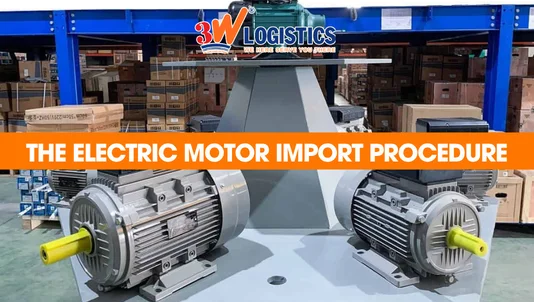
Importing electric motors into Vietnam falls under the category of conditional import goods, subject to the specialized management of the Ministry of Industry and Trade (with energy efficiency now managed by the Ministry of Science and Technology) in addition to standard customs procedures.
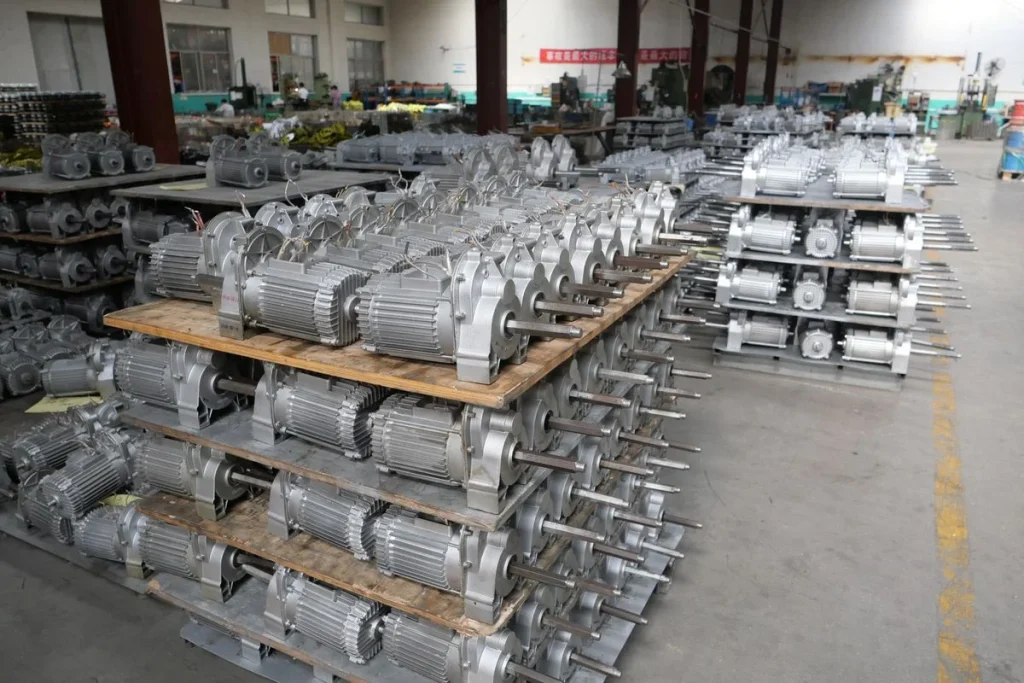
Unlike many other industrial equipment categories, most electric motors with a power rating between 0.75 kW and 150 kW must undergo a minimum energy performance standard (MEPS) test and register for energy labeling before being permitted for commercial circulation.
One major change businesses need to be aware of when carrying out the electric motor import procedure concerns the timing of energy labeling: under Official Letter 306/BCT-TCNL, businesses are no longer required to complete energy labeling before customs clearance as before — a supplementary commitment letter is now sufficient.
In this article, 3W Logistics presents the complete electric motor import procedure under the current legal regulations and the latest tariff schedule — from legal conditions, HS codes, tax calculation, documentation, a step-by-step process, to real-world risks, from the perspective of a forwarder experienced in handling imported electrical equipment and industrial machinery.
1. Legal conditions for importing electric motors into Vietnam
Electric motors are not on the list of goods prohibited from import; however, they are a conditional import product subject to specialized management under Decision 04/2017/QD-TTg and the 2007 Law on Product and Goods Quality.
| Condition | Detailed Content |
|---|---|
| Minimum Energy Performance Standard (MEPS) inspection | Mandatory for three-phase squirrel-cage induction AC motors with a power rating from 0.75 kW to 150 kW, under standard TCVN 7540-1:2013 and Decision 04/2017/QD-TTg |
| Energy labeling registration | Carried out under Circular 36/2016/TT-BCT; since Official Letter 306/BCT-TCNL took effect, businesses are no longer required to affix the label before clearance — only a supplementary commitment letter for later certification is needed |
| Cases exempt from energy performance inspection | Motors under 0.75 kW or over 150 kW; motors already integrated into other equipment (pumps, fans, compressors) that cannot be disassembled for individual testing |
| Used electric motors | Must comply with Decision 18/2019/QD-TTg: the equipment’s age, from the year of manufacture to the time of import, must be no more than 10 years |
| Product labeling | Under Decree 43/2017/ND-CP and 111/2021/ND-CP: a Vietnamese supplementary label clearly stating power rating, voltage, frequency, origin, and manufacturer/importer |
Practical note: The most important point in the electric motor import procedure is correctly determining from the outset whether the motor to be imported falls within the mandatory energy performance inspection scope. Many businesses confuse standalone motors (which require individual testing) with motors already integrated into a complete piece of equipment such as a water pump or industrial fan (which are typically exempt from individual testing since they cannot be disassembled), leading to incorrectly prepared documentation or unnecessary time spent applying for an exemption.
2. HS codes and import duty for electric motors
Electric motors fall under heading 8501 of the export-import tariff schedule (Chapter 85), classified by current type (DC/AC), number of phases, and power rating.
| Heading/HS Code | Detailed Description | Import Duty (MFN) |
|---|---|---|
| 85.01 — Electric motors and generators (excluding generating sets) | ||
| 8501.10 | Motors of an output not exceeding 37.5W (mini motors used in household appliances, toys) | 0–5% |
| 8501.20 | Universal AC/DC motors of an output exceeding 37.5W | 0–5% |
| 8501.31 | DC motors, of an output not exceeding 750W | 0% |
| 8501.32 | DC motors, of an output exceeding 750W but not exceeding 75kW | 0% |
| 8501.33 / 8501.34 | DC motors of an output exceeding 75kW but not exceeding 375kW / exceeding 375kW (large industrial motors) | 0% |
| 8501.40 | Other single-phase AC motors | 0–5% |
| 8501.51 | Other multi-phase AC motors, of an output not exceeding 750W | 0% |
| 8501.52 | Other multi-phase AC motors, of an output exceeding 750W but not exceeding 75kW — the most common industrial motor group (pumps, fans, conveyors, compressors) | 5% |
| 8501.53 | Other multi-phase AC motors, of an output exceeding 75kW (large industrial motors) | 0% |
| 8501.61 – 8501.64 | AC generators (alternators), classified by power output | 0–5% |
| 8501.71 – 8501.80 | Motors/generators integrated with a photovoltaic system (an extended subheading group under the current tariff schedule) | 0–5% |
Important note on tax: Unlike import duty, which has mostly dropped to 0% for most HS codes under heading 8501 in the current MFN tariff schedule, VAT on electric motors applies the standard 10% rate — it is not eligible for the reduced tax treatment applied to certain agricultural goods categories. This is an important point for businesses to note when budgeting costs for the electric motor import procedure, since most of the tax cost incurred will come from VAT rather than import duty.
3. Documentation for the electric motor import procedure
The documentation package for the electric motor import procedure includes an additional layer — energy performance inspection documentation — compared to ordinary industrial equipment not subject to energy management regulations.
| Document | When to Prepare | Important Note |
|---|---|---|
| Sales Contract | Before placing a deposit | Must clearly state model, power rating, voltage, frequency, origin, and provision terms for the technical datasheet |
| Commercial Invoice & Packing List | Before the goods are shipped | Must fully state the model, power rating (kW/HP), and quantity for each motor type |
| Bill of Lading | After the goods are loaded onto the vessel | Electric motors are typically shipped in containers; large motors may require a flat rack container or bulk shipment |
| Technical catalogue/datasheet | Before the goods are shipped | Necessary to accurately determine the HS code and serves as the basis for energy performance inspection registration |
| MEPS inspection registration | When the goods reach port | Send a test sample to an organization designated by the Ministry of Industry and Trade (Quatest 1, Quatest 3, etc.) if the motor falls within the 0.75-150kW range |
| Supplementary commitment letter for energy label certification | When opening the declaration | Per Official Letter 306/BCT-TCNL, replacing the previous requirement to have the energy label ready before clearance |
| C/O (Certificate of Origin) | Before the goods are shipped | To enjoy special preferential import duty under the relevant FTA if the agreement’s conditions are met |
| Electronic customs declaration (VNACCS/VCIS) | Once documentation is complete | Declare the correct HS code under heading 8501 based on the motor’s actual power rating and current type |
4. Step-by-step electric motor import procedure
Step 1: Determine the energy performance inspection scope
Cross-check the power rating of the motor to be imported against the 0.75-150kW threshold; determine whether the motor falls within the mandatory energy performance inspection and labeling scope, or is exempt (integrated into other equipment, outside the power threshold).
Step 2: Negotiate the contract and determine the HS code
Sign the contract to purchase the electric motor, requesting the supplier to provide a complete technical datasheet (power rating, voltage, number of phases, current type) to correctly determine the HS code under heading 8501; require a C/O in the contract terms if seeking FTA preference.
Step 3: Transport the goods to a Vietnamese port
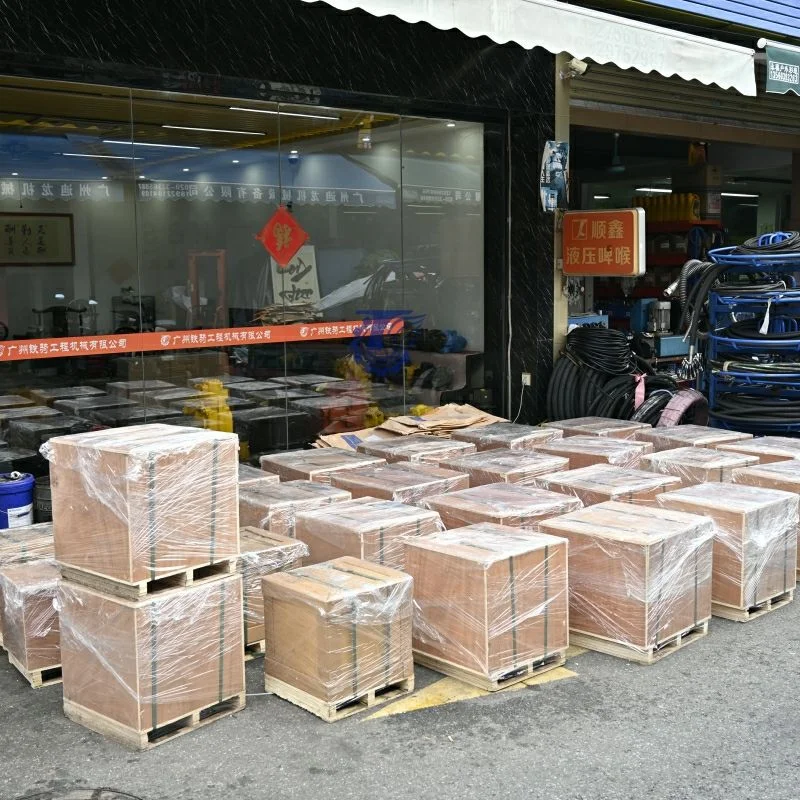
Electric motors are typically packed in standard containers; large, bulky motors may require a flat rack or open-top container, and need reinforcement against impact and moisture during long-distance transport.
Step 4: Customs declaration and submitting the supplementary energy label commitment
Open the VNACCS/VCIS declaration with the complete HS code; if the motor falls within the energy management scope, submit the supplementary commitment letter for energy label certification per Official Letter 306/BCT-TCNL to obtain clearance without waiting for test results.
Step 5: Register for the energy performance inspection (if mandatory)
Send a test sample to an organization designated by the Ministry of Industry and Trade to measure actual energy performance, comparing it against the minimum threshold under TCVN 7540-1:2013, as the basis for applying for the energy label certificate.
Step 6: Complete the energy label certification and release the goods for circulation
Once test results confirm compliance, the business registers and applies the energy label per the prescribed template, submitting the previously committed documentation to complete the entire process, and the motor is officially permitted to circulate on the market.
5. How to calculate import duty for electric motors
Electric motors are not subject to special consumption tax, only import duty and 10% VAT. For example, take a shipment of 55kW three-phase AC motors imported from China (HS code 8501.52, MFN rate 5%), with a CIF value of VND 1.5 billion, comparing the case with and without a valid C/O:
| Tax / Cost Item | No C/O (MFN 5%) | With a valid C/O (0%) |
|---|---|---|
| CIF Value | VND 1,500,000,000 | VND 1,500,000,000 |
| Import duty | 5% × 1.5B = VND 75,000,000 | 0% × 1.5B = VND 0 |
| VAT (10%) | 10% × (1,500+75)M = VND 157,500,000 | 10% × (1,500+0)M = VND 150,000,000 |
| Total tax payable | VND 232,500,000 (~232.5 million) | VND 150,000,000 (~150 million) |
| Savings with a C/O | ~VND 82,500,000 — a significant difference for large-power motor shipments, especially important for HS codes within heading 8501 that still carry a 5% MFN rate, such as 8501.52. | |
From 3W Logistics’ real-world experience: With electric motors, the most common mistake we see is businesses assuming the entire heading 8501 is exempt from import duty, when in fact many common codes — such as multi-phase AC motors in the 750W-75kW range (8501.52) — still carry a 5% MFN rate without a valid C/O, leading to significant cost estimation discrepancies if the step of obtaining a C/O from the supplier is skipped. In addition, not being aware of the new regulation on the supplementary energy label commitment under Official Letter 306/BCT-TCNL also causes many businesses to unnecessarily wait for test results before clearance. – Ms. Apple, CCO, 3W Logistics
6. Common risks in the electric motor import procedure
| Risk | Manifestation | Prevention |
|---|---|---|
| Overlooking the energy performance inspection requirement | Importing a motor within the 0.75-150kW range without registering for inspection, only discovering the issue when customs requests supplementary documentation | Determine the motor’s power rating and type right at the contract negotiation stage, cross-checking against the energy management list |
| Missing the supplementary energy label commitment letter | Missing the commitment letter per Official Letter 306/BCT-TCNL when opening the declaration, causing the goods to be held pending submission | Prepare the commitment letter template in advance before customs declaration, submitting it together with the declaration |
| Wrong HS code within heading 8501 | Confusion between DC and AC motors, or between single-phase and multi-phase motors — customs reclassifies and collects the duty difference retroactively | Cross-check the actual technical datasheet (current type, number of phases, power rating) before declaring the HS code |
| Importing a used motor exceeding the permitted age | A used motor with an equipment age over 10 years — not eligible for import under Decision 18/2019/QD-TTg | Require the supplier to confirm the year of manufacture via the nameplate or original catalogue before signing the contract |
| Impact or moisture damage during transport | Motor shaft misaligned, winding corroded due to substandard packing in the container on a long journey | Require the supplier to use moisture-proof packing with impact cushioning, and purchase full cargo insurance before shipment |
FAQ – Frequently asked questions about the electric motor import procedure
Question 1: What documents does the electric motor import procedure require?
The complete documentation package for the electric motor import procedure includes: the Sales Contract; Commercial Invoice and Packing List; Bill of Lading; technical catalogue/datasheet; C/O (if seeking FTA preference); a supplementary commitment letter for energy label certification (if mandatory); and the VNACCS/VCIS electronic customs declaration.
Question 2: Which electric motors require mandatory energy labeling?
Three-phase squirrel-cage induction AC motors with a power rating from 0.75 kW to 150 kW are subject to mandatory minimum energy performance inspection and energy labeling under Decision 04/2017/QD-TTg.
Motors under 0.75kW, over 150kW, or already integrated into other equipment that cannot be disassembled for individual testing are typically exempt — this is a core point businesses need to clearly determine before importing in the electric motor import procedure.
Question 3: Is energy labeling mandatory before customs clearance?
No longer mandatory. Under Official Letter 306/BCT-TCNL, businesses only need to submit a commitment letter for a supplementary Energy Label Certification Decision or energy performance test result form when opening the declaration, instead of having to complete labeling before clearance as previously required — significantly shortening the time goods sit at port.
Question 4: How many types of tax must be paid when importing electric motors?
Electric motors are subject to only two layers of tax: (1) Import duty, calculated on the CIF value — most HS codes under heading 8501 are already at 0% MFN, with some codes still at 5% depending on the type; this can drop to 0% with a valid FTA C/O for codes still carrying a duty rate; and (2) VAT at the standard 10% rate, calculated on the total CIF plus import duty. Electric motors are not subject to special consumption tax.
How does 3W Logistics support the electric motor import procedure?
With experience handling a wide range of imported electrical equipment and industrial machinery, and registered as an OTI-NVOCC with an FMC bond (Federal Maritime Commission) in the United States, 3W Logistics provides a full-package service for businesses on the electric motor import procedure — from energy management scope advisory through to the goods arriving at the distribution warehouse.
Full-package logistics service at 3W Logistics:
- Advisory on determining the energy performance inspection scope: Cross-checking power rating and motor type against the energy management list to determine whether it’s mandatory or exempt.
- HS code determination and actual duty calculation under the latest tariff schedule: Accurately distinguishing each subheading within 8501 by current type, number of phases, and power rating to avoid duty rate discrepancies.
- Support preparing the supplementary energy label commitment letter: Correctly applying the regulation under Official Letter 306/BCT-TCNL to shorten customs clearance time.
- Support obtaining the correct FTA-form C/O from the supplier: Guiding Chinese, ASEAN, and EU suppliers in applying for the appropriate C/O to optimize import duty costs.
- Electronic customs declaration via VNACCS/VCIS and resolving issues at the border: Declaring the correct HS code, coordinating to submit energy performance inspection documentation on time.
Why choose 3W Logistics for your electric motor import shipment? The electric motor import procedure requires a clear understanding of energy performance regulations, accurately distinguishing HS code subheadings, and staying up to date with changes to the energy labeling timeline. We stand alongside you from the energy management scope determination step through to the goods arriving at the warehouse — helping your business shorten customs clearance time and avoid unnecessary additional costs. Contact 3W for specific advice before signing your import contract.
Address: 34 Bach Dang, Tan Son Hoa Ward, Ho Chi Minh City
Hotline: +84 28 3535 0087
____________________________
3W Logistics Hanoi Branch
Address: 81A Tran Quoc Toan, Cua Nam Ward, Hanoi
Hotline: +84 24 3202 0482
____________________________
3W Logistics Hai Phong Branch
Address: 8A Lot 28 Le Hong Phong, Gia Vien Ward, Hai Phong
Hotline: +84 225 355 5939
____________________________
3W LOGISTICS CO., LTD – We here serve you there!
Email: info@3w-logistics.com
Website: www.3w-logistics.com

Ms. Apple is the CCO (Chief Commercial Officer) at 3W Logistics, with over 10 years of experience in sales and business operations management.
At 3W Logistics, Ms. Apple is responsible for commercial strategy, corporate customer development, managing a team of more than 50 sales professionals, and improving business performance in the logistics sector.
With practical experience in sales management and market development, Ms. Apple shares professional insights on business logistics solutions, international transportation, freight forwarding, customer management, trade lane development, and growth strategies in the logistics industry.


