
Importing a synchronized production line is one of the most complex customs operations a manufacturing business can face, since the goods in question aren’t a single product but a collection of many machines and pieces of equipment designed to operate seamlessly as one unified system.
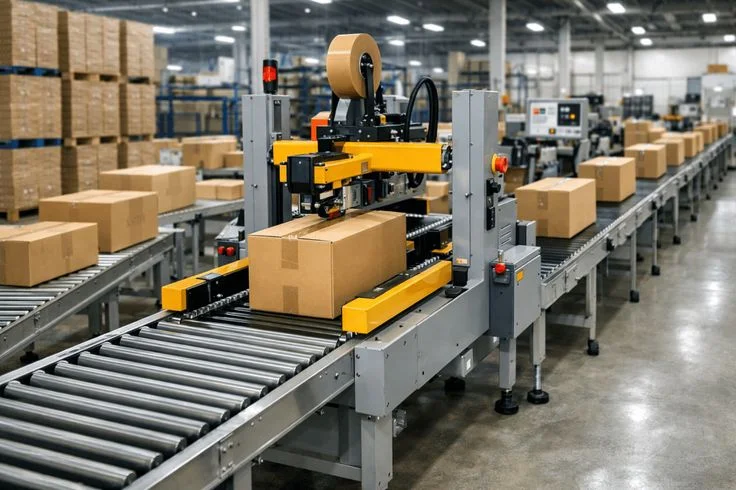
From a customs legal standpoint, a synchronized production line – whether imported in one shipment or broken down into multiple shipments and containers – is still treated as a single complete piece of equipment or system; only the shipping method differs.
However, not every business fully understands the synchronized production line import procedure, particularly how to demonstrate “technical synchronization” to customs authorities. Many businesses mistakenly assume that simply buying multiple machines from different manufacturers and grouping them together is enough to qualify for declaration as a synchronized line.
In this article, 3W Logistics presents the complete synchronized production line import procedure under current regulations – from the concept and legal conditions, HS code classification, documentation, the step-by-step process, tax calculation, to real-world risks, from the perspective of a forwarder experienced in handling imports of industrial machinery and equipment.
1. Legal conditions and criteria for identifying a synchronized production line
The primary legal basis for the synchronized production line import procedure is Article 7 of Circular 14/2015/TT-BTC on the classification of combination machines or machine assemblies, together with Circular 38/2015/TT-BTC (as amended by Circular 39/2018/TT-BTC) on general customs procedures.
| Criterion | Details |
|---|---|
| No independent use value | The imported components/machines cannot operate individually to deliver independent use value – this is the core criterion for recognition as a synchronized production line |
| Purpose of forming a single system | The import purpose is to assemble a single piece of equipment or a single production line, not to purchase multiple independent machines for separate use |
| Tightly linked technical structure | Demonstrated through catalogues, technical drawings, and process flow diagrams – proving the equipment is designed to operate seamlessly, with no part dispensable from the cycle |
| Conditions for used production lines | Decision 18/2019/QĐ-TTg (as amended by Decision 28/2022/QĐ-TTg) on service life, and safety – environmental – energy efficiency standards for used machinery and technology lines, applies in addition |
Practical note: In the synchronized production line import procedure, customs authorities do not assess synchronization based on the number of containers or the number of import shipments, but on the technical structure shown in the documentation, how the goods are described in the foreign trade contract, and the consistency maintained throughout the entire import lifecycle. From practical experience, a rice-processing business that planned to buy cleaning, drying, husking, polishing, and packaging machines from different manufacturers and group them together to apply as a synchronized line was required by the authorities to supplement an overall design drawing and a technical expert’s confirmation to prove technological synchronization before approval was granted.
2. Registering the machinery and equipment list and HS code classification
Before the goods arrive at port, the business is required to register a Machinery and Equipment List using Form No. 01/ĐKDMTB/2015 as stipulated in Circular 14/2015/TT-BTC – this is the single most important step, determining the entire subsequent course of the synchronized production line import procedure.
| Registration Content | Details |
|---|---|
| Business information | Name of the customs declarant, tax code, address of the factory where the production line will be installed |
| Technical information description | Detailed description of each type of machinery in the line, together with actual photos, technical drawings, or process flow diagrams |
| Representative HS code based on the primary function | Applying the classification principle for combination machines/machine assemblies – the entire line may be declared under the HS code of the equipment handling the primary function, or each piece of equipment may be declared separately with an explanation demonstrating technical synchronization |
| Deduction tracking slip | Applies when importing across multiple shipments – each shipment that arrives is gradually deducted from the registered list until the entire line is complete |
Important note on HS codes: One of the most common mistakes in the synchronized production line import procedure is choosing an HS code that fails to reflect the technical synchronization of the entire system, causing customs to separate each piece of equipment and calculate duty under a higher individual HS code instead of applying the combination-machine principle. Insufficiently detailed equipment descriptions in the registration file, or a poorly prepared machinery and equipment list, are also common reasons why customs rejects recognition of the goods as a synchronized line – resulting in higher duty payments than anticipated or a requirement to amend the declaration midway through the process.
3. Documentation required for the synchronized production line import procedure
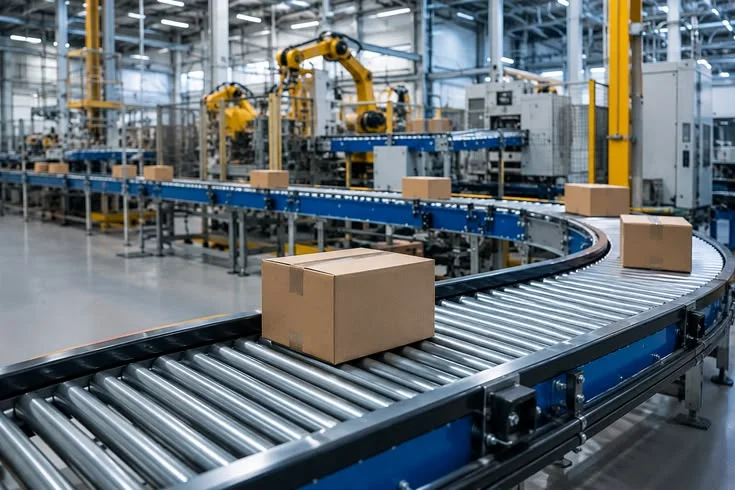
The documentation set for the synchronized production line import procedure requires a much higher level of detail than ordinary goods, since it must prove the technical connection between the pieces of equipment.
| Document | When to Prepare | Key Notes |
|---|---|---|
| Sales Contract | Before registering the list | The goods description must clearly show this is a single, unified line/system, not a disjointed listing as if purchasing multiple independent machines |
| Machinery and Equipment List (Form 01/ĐKDMTB/2015) | Before goods arrive at port | Registered online through the customs system; serves as the basis for deduction tracking across multiple shipments |
| Technical documentation (Catalogue, drawings, process flow diagrams) | Before registering the list | Clearly shows the functional connection between the equipment, helping customs track each part as belonging to the same line |
| Commercial Invoice & Packing List | Before each shipment is shipped | Clearly state the equipment name matching the registered list, and the number of packages per shipment if importing disassembled across multiple shipments |
| Bill of Lading | After goods are loaded | Large production lines usually require multiple containers/vessel voyages; consistency of goods information across shipments must be ensured |
| Synchronization assessment certificate (if needed) | When goods arrive at port | Not mandatory in every case, but is often the deciding factor for customs to accept applying the disassembled synchronized-goods mechanism |
| Quality inspection/conformity certificate (if any equipment falls under specialized management) | Before goods arrive at port | If the line includes equipment under the management list of the Ministry of Industry and Trade or the Ministry of Information and Communications, that specific piece of equipment must be registered for inspection separately |
| Electronic customs declaration (VNACCS/VCIS) | As each shipment arrives | Declare under the determined HS code, referencing the list registration number and applying the corresponding deduction for each shipment |
4. Step-by-step synchronized production line import procedure
Step 1: Determine synchronization and prepare technical documentation
Work with the supplier to confirm that the entire line is designed to operate seamlessly, and gather catalogues, technical drawings, and process flow diagrams that clearly show the functional connection between the pieces of equipment.
Step 2: Register the Machinery and Equipment List
Submit the list registration file using Form 01/ĐKDMTB/2015 through the electronic customs system before the goods arrive at port, together with full technical documentation for customs review and approval.
Step 3: Determine the HS code and product policy for each piece of equipment
Determine the representative HS code based on the line’s primary function, or a separate code for each piece of equipment. At the same time, review whether any equipment in the line falls under quality inspection, energy efficiency, or conformity requirements to register separately before the goods arrive.
Step 4: Ship the goods in shipments (if disassembled)
For large production lines, goods are typically shipped in multiple containers/voyages. The goods description on each bill of lading must be consistent with the registered list to avoid issues during cross-referencing.
Step 5: Synchronization assessment (if needed) and customs declaration
If required by customs, carry out a synchronization assessment at an independent inspection organization. File the VNACCS/VCIS declaration for each shipment, referencing the list registration number and applying the corresponding deduction.
Step 6: Clearance and installation of the production line
After the final shipment is cleared and the entire registered list has been fully deducted, the business receives all the equipment and proceeds to install and operate the production line at the factory.
5. How import duty on a synchronized production line is calculated
Import duty on a synchronized production line is calculated using the representative HS code (usually the equipment handling the primary function), applied to the entire value of the line, rather than aggregating the highest duty rate for each individual piece of equipment. For example, take an automatic packaging line imported from Germany with a total CIF value of VND 3 billion, comparing the scenario where synchronization is recognized versus where each piece of equipment is classified separately:
| Duty / Cost Item | Classified separately by equipment (average 10%) | Recognized as synchronized (primary-machine code, 0% under C/O) |
|---|---|---|
| CIF value | VND 3,000,000,000 | VND 3,000,000,000 |
| Import duty | 10% × VND 3B = VND 300,000,000 | 0% × VND 3B = VND 0 |
| VAT (10%) | 10% × (3,000+300)M = VND 330,000,000 | 10% × (3,000+0)M = VND 300,000,000 |
| Total duty payable | VND 630,000,000 (~630 million) | VND 300,000,000 (~300 million) |
| Difference | ~VND 330,000,000 – proving and obtaining recognition of synchronization, combined with a valid C/O for the primary-machine code, delivers significant savings compared to having each piece of equipment classified separately under a higher duty rate. | |
From 3W Logistics’ practical experience: Many businesses carrying out the synchronized production line import procedure focus only on choosing a good equipment supplier without adequately preparing the technical documentation to prove synchronization from the outset – so when customs requests supplementary documents, the business has to go back to the overseas manufacturer for drawings and process flow diagrams, generating a very long wait while the goods are already sitting at port. For high-value production lines, a single error in the HS code or the list registration file can result in a duty difference of hundreds of millions of VND, which is why we always recommend clients prepare full technical documentation and work with an experienced consulting unit right from the contract negotiation stage. – Ms. Apple, CCO, 3W Logistics
6. Common risks in the synchronized production line import procedure
| Risk | Symptom | Prevention |
|---|---|---|
| Poorly prepared registration list | Equipment descriptions lack sufficient detail, missing drawings/process flow diagrams – customs rejects recognition as a synchronized production line | Prepare full catalogues, technical drawings, and process flow diagrams clearly showing the functional connection before registering the list |
| Unable to prove synchronization | Purchasing equipment from different manufacturers and grouping it together for declaration – treated as importing multiple independent machines, losing the synchronized HS code benefit | Require a technical expert’s confirmation and an overall design drawing proving the equipment operates as a continuous system |
| Incorrect HS code | Misapplying the representative HS code or the individual equipment codes – resulting in higher duty payments or a requirement to amend the declaration midway through the process | Consult a forwarder experienced with industrial machinery and equipment, and consider applying for advance goods classification |
| Overlooking equipment under specialized management | The line includes equipment on the quality inspection/conformity management list but it isn’t registered separately – the entire shipment is held at port | Review each piece of equipment in the line against the management lists of the relevant specialized ministries before the goods arrive |
| Inconsistent information across shipments | The goods description on the invoice and bill of lading doesn’t match the registered list when importing disassembled across multiple voyages | Ensure absolute consistency of documentation throughout the entire import lifecycle, from the list down to each detailed declaration |
FAQ – Frequently Asked Questions about the Synchronized Production Line Import Procedure
Question 1: What documents are needed for the synchronized production line import procedure?
The full documentation set for the synchronized production line import procedure includes: Sales Contract; Machinery and Equipment List (Form 01/ĐKDMTB/2015); Technical documentation (catalogue, drawings, process flow diagrams); Commercial Invoice and Packing List; Bill of Lading; Synchronization assessment certificate (if needed); Quality inspection/conformity certificate for equipment under management (if applicable); Electronic customs declaration (VNACCS/VCIS).
Question 2: Is a synchronization assessment mandatory when importing?
It’s not mandatory in every case, but in practice it’s often the deciding factor for customs to accept applying the disassembled synchronized-goods mechanism within the synchronized production line import procedure. If the technical documentation (catalogue, drawings) is already convincing enough, the business may not need an additional assessment; conversely, for a complex line or one assembled from multiple suppliers, it’s advisable to proactively carry out an assessment to avoid the risk of the file being rejected.
Question 3: How is import duty calculated for a synchronized production line?
If recognized as a synchronized production line, import duty is calculated using the representative HS code (usually the equipment handling the primary function), applied to the entire value of the line, rather than aggregating the HS code and highest duty rate of each individual piece of equipment. VAT is applied uniformly at 10% on the total dutiable value. If synchronization cannot be proven, each piece of equipment is classified under its own HS code, usually resulting in a higher total duty payable.
Question 4: How long does the synchronized production line import procedure take?
The total time depends heavily on the scale of the line and the number of shipments, typically 45-90 days or longer for a large line imported across multiple voyages. Of this: preparing technical documentation and registering the list takes 10-20 days; the synchronization assessment (if needed) takes 7-15 days; shipping and clearing each shipment happens in parallel throughout the import process until the entire registered list has been fully deducted.
How 3W Logistics supports the synchronized production line import procedure
With experience handling industrial machinery and equipment import projects and its registration as an OTI-NVOCC with an FMC bond (Federal Maritime Commission) in the US, 3W Logistics provides a full-package service for businesses on the synchronized production line import procedure – from consulting on proving synchronization through to the line being installed at the factory.
- Consulting on building documentation to prove technical synchronization: Support in preparing properly formatted catalogues, drawings, and process flow diagrams to increase the likelihood of customs recognizing the goods as a synchronized line on the first attempt.
- Registering the Machinery and Equipment List and determining the HS code: Support registration under Form 01/ĐKDMTB/2015, determining the representative HS code that optimizes duty cost under the correct combination-machine classification principle.
- Coordinating the synchronization assessment when needed: Work with reputable inspection organizations to ensure the file is approved quickly.
- Managing deduction slips for disassembled shipments: Closely track the progress of multi-voyage imports, ensuring information consistency throughout until the entire line is complete.
- Electronic customs declaration via VNACCS/VCIS and resolving issues at the border gate: Declare the correct HS code for each shipment and quickly handle any supplementary documentation requests that arise.
Why choose 3W Logistics for your synchronized production line import project? The synchronized production line import procedure requires deep experience in combination-machine classification, the ability to build a convincing technical documentation file, and tight management of the import schedule across multiple high-value shipments. A single error in the HS code or the list registration file can cost the business hundreds of millions of VND in additional duty. We accompany you from the technical documentation preparation stage through to the line being fully installed at the factory. Contact 3W for specific advice before signing your import contract.
Address: 34 Bach Dang, Tan Son Hoa Ward, Ho Chi Minh City
Hotline: +84 28 3535 0087
____________________________
3W Logistics Hanoi Branch
Address: 81A Tran Quoc Toan, Cua Nam Ward, Hanoi
Hotline: +84 24 3202 0482
____________________________
3W Logistics Hai Phong Branch
Address: 8A Lo 28 Le Hong Phong, Gia Vien Ward, Hai Phong
Hotline: +84 225 355 5939
____________________________
3W LOGISTICS CO., LTD – We here serve you there!
Email: quote@3w-logistics.com
Website: www.3w-logistics.com

Ms. Apple is the CCO (Chief Commercial Officer) at 3W Logistics, with over 10 years of experience in sales and business operations management.
At 3W Logistics, Ms. Apple is responsible for commercial strategy, corporate customer development, managing a team of more than 50 sales professionals, and improving business performance in the logistics sector.
With practical experience in sales management and market development, Ms. Apple shares professional insights on business logistics solutions, international transportation, freight forwarding, customer management, trade lane development, and growth strategies in the logistics industry.


