

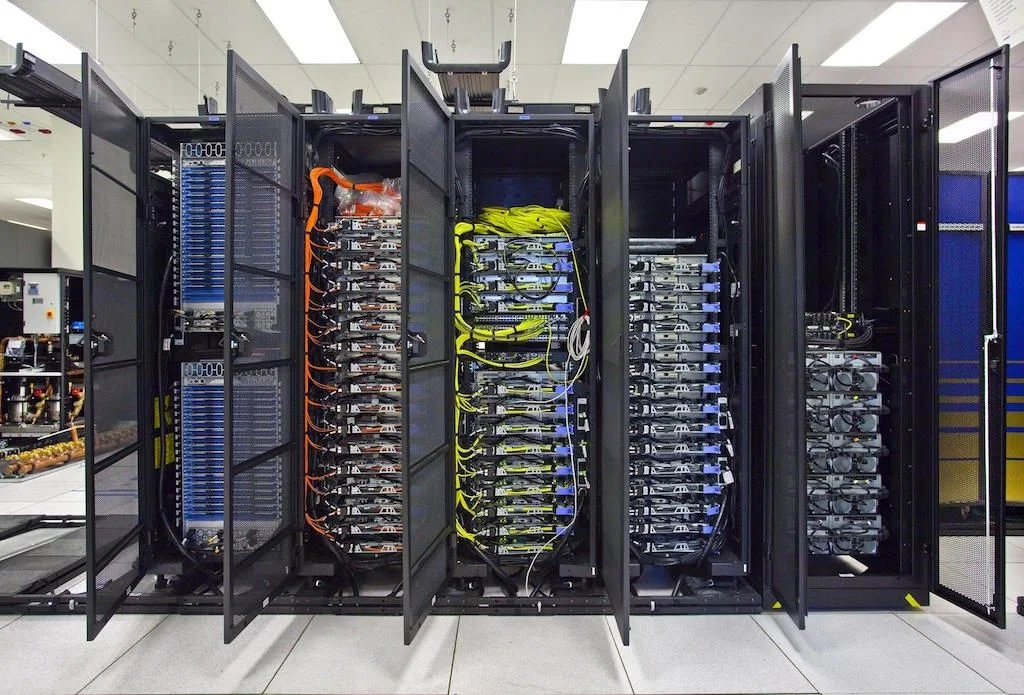
A server is a device that processes, stores, and provides resources for an enterprise’s information technology system. When importing, it is necessary to determine the actual configuration, condition of the goods, and integrated functions, especially for security systems or devices with cryptographic features.
Server import procedures can encounter obstacles when businesses use the supplier’s HS code without cross-referencing it in Vietnam, mistakenly import refurbished goods, or apply specialized management documents that have been replaced. Discrepancies affect implementation schedules and investment budgets.
3W Logistics guides you through server import procedures from policy review, HS code and tax determination to document preparation, customs declaration, and delivery. The content focuses on new commercially imported servers; used goods, refurbished goods, and cryptographic products are distinguished separately.
1. Legal conditions when carrying out server import procedures
Ordinary new servers do not require a separate import license simply because they are named “server”. However, businesses need to cross-check policies according to the functions and configuration of each model; commercial names are not sufficient to conclude that goods are imported under standard procedures.
| Case | Handling Direction | Points to Check |
|---|---|---|
| New servers, standard data processing | Perform customs procedures and tax obligations; review specialized policies by model. | Catalog, configuration, main functions, new condition, and origin. |
| Devices with controlled cryptographic functions | Cross-reference Decree 341/2026/ND-CP, especially the import and export list subject to licensing. | Do not equate all servers with security functions to products requiring a license. |
| Devices with radio functions or subject to quality management lists | Cross-reference Circular 36/2026/TT-BKHCN and corresponding technical standards. | Simultaneously review product name, description, HS code, and integrated functions. |
| Used equipment | Check the list of used IT products prohibited from import under Circular 11/2018/TT-BTTTT. | Do not apply new machine import procedures to used, second-hand, or previously operated equipment. |
| Refurbished equipment or imported for special purposes | Must correctly identify exception mechanisms or refurbished goods import mechanisms according to relevant regulations. | Refurbished, renewed, or recertified labels do not prove the equipment is new. |
Updated cyber cryptography regulations from September 2026
From September 1, 2026, the new legal basis is Decree 341/2026/ND-CP. When conducting server import procedures with cryptographic functions, it is necessary to cross-check the list and technical descriptions in this Decree, instead of continuing to rely solely on guidance under Decree 32/2023 or Decree 211/2025.
Before carrying out server import procedures, models serving key generation, key management, or data security must be reviewed. For products subject to licensing, business conditions, conformity requirements, and corresponding import licenses must be met. Procedures are updated in Decision 5097/QD-BQP dated September 17, 2026; dual-use products featuring both civil cryptography and cybersecurity capabilities require additional verification under separate licensing mechanisms.
Is conformity declaration mandatory for servers?
Circular 36/2026/TT-BKHCN took effect on July 1, 2026, invalidating Circular 29/2025/TT-BKHCN. The new catalog distinguishes goods by risk level and corresponding management requirements.
After cross-referencing the catalog, there is no basis to conclude that all rack or tower servers must undergo conformity declaration like desktop personal computers. This is a conclusion drawn from analyzing the catalog scope; individual configurations must still be verified separately, especially when integrating wireless features or belonging to managed description groups. Do not use the term “computer” to apply general procedures to all servers.
Note on used goods: Businesses must inspect the condition of machines before making a deposit. If importing goods from the prohibited list for special-use, research, or processing purposes, separate allowance mechanisms must be satisfied, including Circular 26/2025/TT-BKHCN and current decentralization regulations. The fact that equipment looks visually new or comes with a warranty does not automatically confer commercial import rights.
2. HS code and duties in server import procedures
Data processing servers are generally considered under heading 8471. It is essential to distinguish between separately imported processing units and complete server systems, while also determining whether the primary function is data processing or another specialized purpose.
| Goods Configuration | Reference HS Code | MFN Import Duty | Classification Notes |
|---|---|---|---|
| Server processing units, other than those of subheading 8471.41 or 8471.49 | 8471.50.90 | 0% | Examine actual structure, input, output, storage units, and presentation upon import. |
| Other data processing machines, imported in system form | 8471.49.90 | 0% | Only applies if subheading descriptions are met; do not default all server setups to this system code. |
| Storage drives, power supplies, components, networking gear imported separately | Determine per item | Individual lookup | Do not automatically group everything under the server HS code merely because they share a contract or package. |
The tariff reference schedule is Decree 26/2023/ND-CP and amending legal texts effective at the time of declaration registration. The codes above serve as reference guidelines for server import procedures and do not replace classification results based on technical documentation and physical goods inspections.
Is server VAT currently 8% or 10%?
According to Decree 174/2025/ND-CP, eligible goods qualify for a VAT reduction from 10% to 8% during the period from July 1, 2025 to December 31, 2026, applied consistently at the import stage. The information technology sector is no longer entirely excluded as was the case prior to July 1, 2025.
For standard data processing servers not on the exclusion list, the applicable VAT rate during this period is 8%. Specialized equipment or shipments containing multiple product categories must be cross-checked line by line; do not apply the server tax rate to all accompanying accessories and services.
Is C/O mandatory to obtain 0% import duty?
A preferential C/O is not required in every scenario to enjoy 0%. If the goods meet MFN conditions and the corresponding HS code carries a 0% rate, lacking an FTA C/O will not automatically increase the import duty. A C/O may still be required to claim special preferences, meet origin rules, or satisfy regulatory audit requirements.
Budgeting tip: In server import procedures, “0% import duty” does not mean exemption from VAT or logistics expenses. Merchandise value, taxes, freight, insurance, and port handling charges must be itemized clearly.
3. Documentation required for server import procedures
To prepare for server import procedures, procurement teams should collect technical files when requesting quotes. Waiting until goods arrive to request catalogs or condition confirmations may cause operational delays while waiting for supplementary documents.
| Document / File | Preparation Timeline | Role and Notes |
|---|---|---|
| Commercial Invoice | Before customs declaration | Indicates seller, buyer, product description, model, quantity, unit price, total value, and Incoterms. |
| Ocean Bill of Lading or Air Waybill | After handing over goods to carrier | Verifies consignee, package count, weight, and routing info; used according to transport mode. |
| Electronic Customs Declaration | When full declaration data is ready | Accurately declare regime code, HS code, description, customs value, origin, and tax rates. |
| Packing List and serial number list | Before goods leave supplier warehouse | Supports tallying, identifying units per package, and cross-checking upon receipt; not mandatory for submission with every declaration. |
| Sales Contract, proof of payment | From order placement | Retain for transaction management, custom valuation justification, and commercial terms verification if requested. |
| Catalog, datasheet, order configuration | Before finalizing HS code | Shows CPU, RAM, storage, interface ports, power supply, model, and integrated features; avoid relying solely on general promotional fliers. |
| Proof of Origin (C/O) | Depending on applicability | Prepare when applying for preferential tariffs or when legally required to prove origin. |
| Licenses and specialized dossiers | Before mandatory policy deadlines | Applies only to managed items; check model scope, quantity, validity, and applicant entity name. |
In server import procedures, businesses should distinguish between documents submitted to customs and internal files used for reconciliation or explanation. Do not assume that contracts, packing lists, catalogs, and C/Os are mandatory submissions in every single case; specific requirements depend on customs entry type, commodity policy, and inspection results.
4. Step-by-step server import process
Step 1: Confirm model, configuration, and equipment condition
Request the supplier to provide the purchase configuration, label photos, warranty information, and confirmation of brand-new condition. For custom-built servers, clarify which components are pre-installed inside the chassis and which are packaged separately; cross-check part numbers on quotations against actual delivered configurations.
At the beginning of server import procedures, clarify the intended use and integrated functions. A standard data processing server and a dedicated security device may share rack-mount hardware while being subject to entirely different regulatory requirements.
Step 2: Review HS codes, duties, and specialized requirements
Classify each item line based on catalogs and physical shipment methods. Check cryptographic lists, quality control catalogs, and used equipment restrictions. When regulatory scope remains uncertain, consult specialized government bodies before finalizing shipment schedules.
Concurrently, calculate import duty and VAT based on the expected declaration date. Person in charge of server import procedures should maintain a reference table comparing models, HS codes, tax bases, and licensing requirements for internal alignment across departments.
Step 3: Complete licensing and align document details
If products require licenses, complete applications under current mechanisms and double-check permit details against shipment data. According to procedures published under Decision 5097/QD-BQP, the processing timeline for reviewing and issuing civil cryptography import/export licenses is 06 working days from receipt of a complete and valid application; this does not represent total import lead time.
For standard goods, focus on aligning product names, models, origin, quantities, and values across all documents. Do not alter descriptions to bypass specialized regulations; any configuration changes made post-order must undergo re-evaluation.
Step 4: International packaging and freight transport
Select air freight or ocean freight depending on project deadlines and shipment size. High-value servers require shockproof packaging, moisture barriers, corner protection, and proper cargo securing. Clearly define responsibilities for packaging, insurance, tallying, and damage handling within the contract.
If batteries are included or installed in the equipment, supply battery specifications to the carrier to verify acceptance conditions. In server import procedures, accurate cargo dimensions and details help minimize amendments to bookings, bills of lading, and freight costs.
Step 5: Customs declaration and routing processing
Transmit the electronic customs declaration once all data is verified. Descriptions should clearly identify the server, brand, model, main configuration, condition, and intended use; specialized details are declared as required.
- Green Channel: Proceed according to automated system release, fulfilling tax and remaining requirements.
- Yellow Channel: Prepare physical document sets for customs review and provide explanations upon request.
- Red Channel: Coordinate physical inspection of goods, matching models, quantities, labels, and configurations.
There is no basis to guarantee green channel clearance for every shipment. The progress of server import procedures depends on document completeness, routing results, and regulatory compliance.
Step 6: Duty payment, cargo release, and delivery
Fulfill tax obligations, clearance conditions, and pickup procedures at the warehouse or port. During physical handover in server import procedures, verify serial numbers, inspect packaging condition, execute handover minutes, and immediately record any signs of impact, moisture, or missing accessories.
Prior to commercial distribution, complete Vietnamese supplementary labeling and conformity requirements if applicable. The complete file for server import procedures should be archived alongside payment vouchers, tax receipts, and delivery reports for accounting, warranty, and post-clearance audit purposes.
5. Calculating import taxes and costs for servers
For standard servers in the example below, assuming only import duty and VAT apply, with no additional tax surcharges:
- Import Duty = Import Assessable Value × Import Duty Rate.
- Import VAT = (Import Assessable Value + Import Duty) × VAT Rate.
Suppose an enterprise imports a batch of new servers with an established assessable value of VND 500,000,000, eligible for 0% MFN duty and 8% VAT. This example serves budgeting purposes for server import procedures and does not constitute a formal quotation.
| Calculation Item | Formula / Assumption | Amount |
|---|---|---|
| Import assessable customs value | Includes mandatory additions according to the assumed case | VND 500,000,000 |
| Import duty | 500,000,000 × 0% | VND 0 |
| Import VAT | (500,000,000 + 0) × 8% | VND 40,000,000 |
| Total import-stage taxes | Import duty + VAT | VND 40,000,000 |
| Assessable value plus import duty and VAT | 500,000,000 + 40,000,000 | VND 540,000,000 |
The 540 million VND figure does not represent total landed cost at the warehouse. Businesses must still account for actual expenses omitted from the customs value, such as destination terminal handling charges, warehousing, customs clearance services, and domestic trucking, while avoiding double-counting international freight.
When preparing budgets for server import procedures, do not use EXW or FOB invoice prices directly as assessable customs values if adjustment items exist. Customs exchange rates must also be correctly determined at the time of declaration filing.
Cost management perspective: Upfront VAT payable upon import and final recognized cost are two separate issues. Input VAT deductions depend on corporate eligibility and valid tax documentation; coordinate with accounting before locking project budgets.
6. Common risks in server import procedures
| Risk | Potential Consequences | Preventive Measures |
|---|---|---|
| Confusing new equipment with refurbished units | Encountering used goods import restrictions, requiring formal explanations or regulatory handling of the shipment. | Request condition confirmation, label photos, equipment history, and seller liability clauses. |
| Applying a single HS code to all equipment | Incorrect classification of servers, network switches, storage arrays, or separately shipped spare parts. | Separate itemized lists and verify primary functions, configuration, and presentation of each item. |
| Overlooking cryptographic features | Lacking permits or conformity files if actual products fall under specialized regulation. | Review technical literature for the exact model and version; clarify prior to dispatch. |
| Applying expired legal documents | Preparing incorrect form templates, misinterpreting quality requirements, or submitting to wrong authorities. | Cross-reference active legal texts and transitional provisions at the execution date. |
| Overly generic invoice descriptions | Insufficient grounds for identification, classification, or customs valuation justification. | State exact product names, models, key configurations, and condition; prepare serial lists for reconciliation. |
| Inadequate packaging | Equipment damage, delayed acceptance, and insurance claim disputes. | Agree on packaging standards, capture pre-shipment photos, and inspect immediately upon arrival. |
Risk management in server import procedures should start from quotation and contracting stages. Identifying configuration discrepancies prior to dispatch allows businesses to proactively adjust paperwork and timelines far more effectively than troubleshooting at customs ports.
FAQ – Frequently asked questions about server import procedures
Question 1: Does importing new servers require a permit?
Standard new servers generally do not require a standalone import permit based solely on their name. However, cryptographic functions, wireless features, and model-specific policies must be verified to identify additional file requirements.
Question 2: What taxes apply to imported servers?
Normally, import duty and VAT must be determined. Reference HS codes 8471.50.90 and 8471.49.90 carry 0% MFN import duty; eligible standard servers qualify for an 8% VAT rate through December 31, 2026. Do not automatically extrapolate this rate to all bundled items.
Question 3: Can used or refurbished servers be imported for resale?
Standard server import procedures for new goods do not apply. Importers must cross-reference prohibited lists and exemption mechanisms, or refurbished goods import frameworks under international trade agreements if qualified. Seller warranty commitments do not replace statutory requirements.
Question 4: How long do server import procedures take?
Turnaround time for server import procedures varies by shipment. Total duration includes permit processing (if applicable), transit, declaration, inspection, and local delivery. Statutory permit review times start only upon receiving valid dossiers, excluding overall sourcing and transport time.
Question 5: Will import duty increase without a C/O?
In server import procedures, duties do not automatically increase if goods qualify for 0% MFN status. However, importers must still declare origin accurately and furnish documents when required by law.
How 3W Logistics supports server import procedures
3W Logistics provides international freight forwarding and customs clearance services, assisting enterprises from initial documentation preparation to final equipment delivery. When seeking consultation for server import procedures, businesses are encouraged to provide model details, catalogs, machine condition, origin, quantity, value, and target deployment schedules.
- Shipment data review: Supporting configuration checks, document verification, and clarifying key points prior to import.
- HS code & cost estimation: Assisting with classification orientation, tax calculations, and logistics fee estimates based on actual scenarios.
- Ocean freight & tailored shipping solutions: Coordinating delivery schedules, cargo metrics, and equipment protection requirements.
- Customs clearance & document advisory: Assisting with declaration data compilation and coordinating required explanations.
- Domestic delivery: Coordinating handover, serial tallying, and archiving documents for acceptance sign-offs.
Proper preparation before ordering: Consistent server import procedures documentation grants businesses greater control over project timelines and cash flow. Contact 3W Logistics today to discuss server import procedures tailored to your specific configuration, shipping route, and deployment goals.
Head Office – 3W Logistics Ho Chi Minh Branch
Address: 34 Bach Dang Street, Tan Son Hoa Ward, Ho Chi Minh City
Hotline: +84 28 3535 0087
____________________________
3W Logistics Hanoi Branch
Address: 81A Tran Quoc Toan Street, Cua Nam Ward, Hanoi
Hotline: +84 24 3202 0482
____________________________
3W Logistics Hai Phong Branch
Address: 8A Lot 28 Le Hong Phong Street, Gia Vien Ward, Hai Phong
Hotline: +84 225 355 5939
____________________________
3W LOGISTICS CO., LTD – We here serve you there!
Email: info@3w-logistics.com
Website: www.3w-logistics.com

Ms. Apple is the CCO (Chief Commercial Officer) at 3W Logistics, with over 10 years of experience in sales and business operations management.
At 3W Logistics, Ms. Apple is responsible for commercial strategy, corporate customer development, managing a team of more than 50 sales professionals, and improving business performance in the logistics sector.
With practical experience in sales management and market development, Ms. Apple shares professional insights on business logistics solutions, international transportation, freight forwarding, customer management, trade lane development, and growth strategies in the logistics industry.


