

The quartz sand import procedure is an industrial minerals category with a fairly unique legal snag that few other products encounter: the same HS code is described differently across two legal documents issued by two different ministries, leading to a real-world dispute over whether specialized quality inspection applies.
Not every business fully understands the quartz sand import procedure, especially the inconsistency between the product name used in the Ministry of Construction’s specialized management list and the name used in the Ministry of Finance’s Vietnam Export-Import Goods Nomenclature.
An error in determining the sand’s actual intended use, or overlooking documentation proving its composition, can result in the entire shipment getting caught up in an unnecessary quality inspection dispute.
In this article, 3W Logistics presents the complete quartz sand import procedure under the latest legal regulations and tariff schedule — from legal conditions, HS codes, tax calculation, and required documentation, through the step-by-step process and practical risks, from the perspective of a forwarder experienced in handling imported industrial minerals.
1. Legal conditions for importing quartz sand
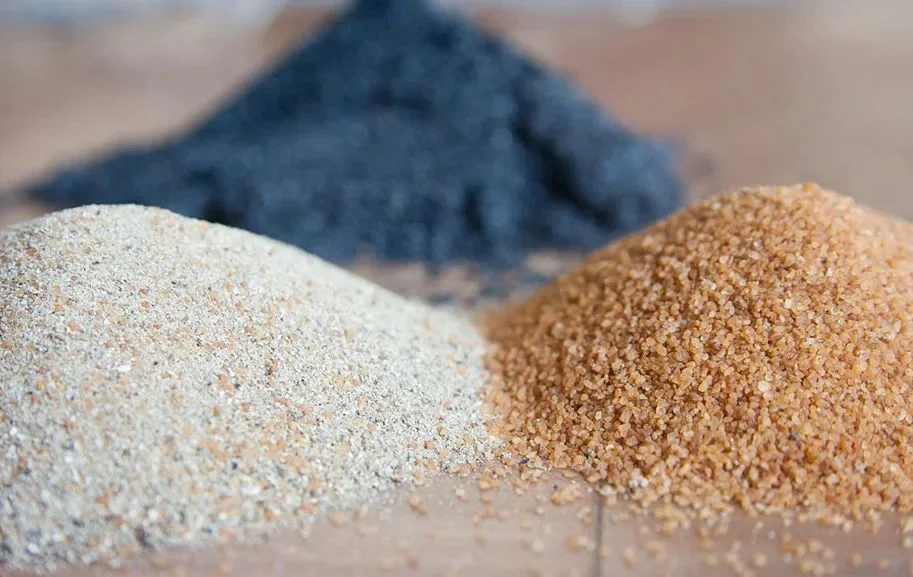
Quartz sand is not on the list of prohibited import goods, but the key point in the quartz sand import procedure lies in the overlap between two legal documents that both classify it under HS code 2505.10.00.
| Condition | Detailed Content |
|---|---|
| Naming overlap between two documents | Circular 04 of the Ministry of Construction specifies that “natural sand used for concrete and mortar” (HS code 2505.10.00) is subject to import quality inspection; meanwhile, the Vietnam Export-Import Goods Nomenclature issued with Circular 31/2022/TT-BTC of the Ministry of Finance describes the same code 2505.10.00 as “silica sand and quartz sand” — two names that do not fully align, causing practical difficulty at clearance |
| Quartz sand for other industrial uses | Quartz sand used in glass production, ceramics, water filtration, or industrial mold casting has an entirely different intended use from construction sand (used for concrete, mortar), even though it shares the same HS code — businesses need to clearly demonstrate the actual intended use through technical documentation |
| Other natural sand | Natural sand that is not silica sand/quartz sand, HS code 2505.90.00, is not subject to quality inspection under the Ministry of Construction’s Circular 04 |
| Product labeling | A Vietnamese supplementary label under Decree 43/2017/ND-CP: product name, composition, origin, importer — together with warning labels for handling and transport, since this is a large-volume bulk commodity |
Practical note: This is a genuine issue that has been documented and reported by customs departments in certain localities: a business importing quartz sand for the glass or ceramics industry — entirely unrelated to concrete or mortar — may still be required to undergo the import quality inspection meant for construction materials, simply because it shares HS code 2505.10.00 with “natural sand used for concrete and mortar” under the Ministry of Construction’s Circular 04. In the quartz sand import procedure, businesses should fully prepare composition analysis documentation (SiO2 content, grain size) and a clear statement of industrial intended use to work with customs, avoiding the misapplication of an inspection requirement that doesn’t match the goods’ actual nature.
2. HS code and import tax for quartz sand
Quartz sand falls under heading 25.05 (Natural sands of all kinds, whether or not coloured, other than metal-bearing sands of Chapter 26) in the Import-Export Tariff Schedule.
| Heading/HS Code | Detailed Description | Import Tax (MFN) |
|---|---|---|
| 25.05 — Natural sands of all kinds, whether or not coloured, other than metal-bearing sands of Chapter 26 | ||
| 2505.10.00 | Silica sand and quartz sand — the most common code when importing quartz sand for the glass, ceramics, and mold casting industries | 0% |
| 2505.90.00 | Other natural sand, not silica sand/quartz sand | 0% |
Important note on HS codes and tax: Both HS codes under heading 25.05 currently enjoy a preferential (MFN) import tax rate of 0%, so the difference between having and not having a C/O is practically negligible for import tax. Regarding VAT, quartz sand is subject to the standard 10% rate, since it is an unprocessed mineral/material category excluded from the tax reduction under Decree 174/2025/ND-CP. Note that quartz sand should not be confused with quartz stone (quartz in boulder or block form) — this item falls under heading 25.06 with HS code 2506.10.00, subject to a different process and management policy. In the quartz sand import procedure, clearly distinguishing the sand (loose granular) form from the stone (block/boulder) form is the first step to determine before declaration.
3. Documentation for the quartz sand import procedure
The documentation set for the quartz sand import procedure follows Circular 38/2015/TT-BTC (as amended by Circular 39/2018/TT-BTC), with additional documentation needed to prove intended use and avoid quality inspection disputes.
| Document | When to Prepare | Important Note |
|---|---|---|
| Sales Contract | Before deposit | Clearly state the intended use (glass industry, ceramics, water filtration…), SiO2 content, and grain size |
| Commercial Invoice & Packing List | Before goods are shipped | Clearly state the product name as “quartz sand for [specific industrial use]…” with the specific intended use, avoiding a generic “natural sand” description |
| Bill of Lading | After goods are loaded onto the vessel | Quartz sand is typically shipped as bulk cargo or in jumbo bags, with a large weight |
| Certificate of Analysis | Before declaring the HS code | Shows SiO2 content, impurities, and grain size — an important basis for proving the shipment’s industrial nature, distinct from construction sand |
| C/O (Certificate of Origin) | Before goods are shipped | Does not significantly affect import tax (already 0%), but still worth preparing as a backup for origin verification if needed |
| Electronic customs declaration (VNACCS/VCIS) | Once documentation is complete | Declare the correct HS code 2505.10.00 or 2505.90.00, clearly stating the intended use on the declaration to avoid confusion with construction sand |
4. Step-by-step quartz sand import procedure
Step 1: Check composition and determine the HS code
Require the supplier to provide a Certificate of Analysis (SiO2 content, grain size) to accurately determine the correct HS code — heading 2505.10.00 (quartz sand) or 2505.90.00 (other natural sand).
Step 2: Clearly establish the industrial intended use
Clearly state in the contract and documentation the sand shipment’s actual intended use (glass, ceramics, water filtration, mold casting…) to have a basis for working with customs if the construction-materials quality inspection is requested.
Step 3: Negotiate the contract and prepare documentation
Sign the quartz sand purchase contract, clearly stating composition, grain size, and weight, and require a C/O in the contract terms.
Step 4: Transport goods to a Vietnamese port
Quartz sand is typically shipped as bulk cargo or in jumbo bags due to its large weight; moisture protection and avoiding contamination with impurities during long-distance transport must be ensured.
Step 5: Customs declaration and addressing quality inspection status (if requested)
File the VNACCS/VCIS declaration with the full HS code and related documentation. If quality inspection under construction-materials regulations is requested, have the composition analysis documentation and the contract clearly showing industrial intended use ready to explain the situation.
Step 6: Pay tax, clear customs, and apply labeling
After fulfilling the tax obligation and resolving any quality inspection dispute (if applicable), the goods are cleared. Apply the Vietnamese supplementary label, receive the goods, and keep complete documentation on file to support post-clearance inspection.
5. How to calculate import tax on quartz sand
Quartz sand is not subject to special consumption tax, only import tax and VAT. As an example, for a shipment of quartz sand for the glass industry imported from China (HS code 2505.10.00) with a CIF price of VND 500 million:
| Tax / Cost Item | How It Is Calculated | Amount |
|---|---|---|
| CIF price | Goods value + freight + international insurance | VND 500,000,000 |
| Import tax | 0% × 500M (code 2505.10.00 enjoys 0% MFN) | VND 0 |
| VAT (10%) | 10% × (500+0)M | VND 50,000,000 |
| Total tax payable | Import tax + VAT | VND 50,000,000 (~50 million) |
| Note | Since import tax is already at 0%, businesses do not need to place heavy emphasis on obtaining a C/O to reduce tax — the real cost and risk focus for this item lies in the quality inspection step, not the tax rate. | |
From 3W Logistics’ practical experience: With quartz sand, the most common mistake we see in the quartz sand import procedure does not lie in tax — since import tax is already 0% — but in businesses failing to prepare documentation proving industrial intended use in advance, resulting in confusion when asked to comply with the quality inspection requirement meant for construction sand. Having a Certificate of Analysis and a contract clearly showing intended use ready from the start helps businesses proactively explain the situation to customs, significantly shortening clearance time. — Ms. Apple, CCO, 3W Logistics
6. Common risks in the quartz sand import procedure
| Risk | Manifestation | Prevention |
|---|---|---|
| Misapplied construction-materials quality inspection requirement | Industrial-use quartz sand is asked to undergo quality inspection under Circular 04 (Ministry of Construction) simply because it shares an HS code with “natural sand for concrete, mortar” | Prepare composition analysis documentation and a contract clearly showing industrial intended use to explain the situation to customs |
| Confusing quartz sand with quartz stone | Mistakenly declaring HS code 2505.10.00 (sand) instead of 2506.10.00 (stone) — customs reclassifies the goods and retroactively collects the tax difference under Decree 128/2020/ND-CP | Clearly determine the physical form (loose granular versus block/boulder) before declaration; consult a forwarder experienced with the minerals goods category |
| Declared value discrepancy triggering a valuation consultation | The declared value does not match the actual documentation, or is unusually low compared to the market benchmark, resulting in customs flagging it for a valuation consultation | Ensure the declared value fully matches the contract, invoice, and payment documentation |
| Goods lost or damaged due to missing warning labels | Failing to affix handling and transport warning labels leaves large-volume bulk cargo prone to loss or contamination during handling | Apply complete labeling under Decree 43/2017/ND-CP, together with clear handling instructions |
| Missing documentation if a preferential C/O applies | Lacking a valid C/O leaves the business unable to benefit from a special tax preference (if the policy changes in the future) and affects proving origin when needed | Still request a C/O from the supplier even though import tax is currently 0%, as a backup for future verification requests |
FAQ – Frequently asked questions about the quartz sand import procedure
Question 1: What documents are required for the quartz sand import procedure?
The complete documentation set for the quartz sand import procedure includes: Sales Contract; Commercial Invoice and Packing List; Bill of Lading; Certificate of Analysis; C/O (if needed); electronic customs declaration (VNACCS/VCIS). It’s advisable to also prepare documentation clearly showing industrial intended use, as a backup in case quality inspection is requested.
Question 2: Is quartz sand required to undergo quality inspection when imported?
This point is not entirely clear-cut due to the naming discrepancy between Circular 04 (Ministry of Construction) and the Vietnam Export-Import Goods Nomenclature (Ministry of Finance), both under HS code 2505.10.00. In the quartz sand import procedure, businesses should proactively demonstrate industrial (not construction) intended use to avoid the misapplication of the quality inspection requirement meant for construction materials.
Question 3: How many types of tax must be paid when importing quartz sand?
Quartz sand is subject to only two layers of tax: (1) Import tax calculated on the CIF price, currently at an MFN rate of 0% for both HS codes under heading 25.05; (2) VAT at the standard 10% rate, since it is an unprocessed mineral excluded from the tax reduction under Decree 174/2025/ND-CP. Quartz sand is not subject to special consumption tax.
Question 4: How long does the quartz sand import procedure take?
For a shipment not caught up in a quality inspection requirement, the total time from signing the contract to goods arriving at the warehouse is typically 15-25 days depending on the shipping route. If quality inspection under construction-materials regulations is requested, the timeline can extend by another 5-10 working days to explain the situation and resolve it.
How does 3W Logistics support the quartz sand import procedure?
With experience handling a wide range of imported industrial minerals, and registration as an OTI-NVOCC with an FMC Bond (Federal Maritime Commission) in the United States, 3W Logistics provides end-to-end service for businesses on the quartz sand import procedure — from HS code determination consulting through to goods arriving at the distribution warehouse.
Full-package logistics services at 3W Logistics:
- Consulting on accurate HS code determination based on composition and intended use: Correctly classifying between 2505.10.00 and 2505.90.00, avoiding the risk of reclassification and retroactive tax collection.
- Support in explaining the situation when an inappropriate quality inspection is requested: Preparing documentation proving industrial intended use, working with customs to avoid the misapplication of construction-materials regulations.
- Expertise in transporting large-volume bulk cargo: Ensuring proper packaging and handling to standard, reducing the risk of loss or contamination.
- Support in calculating actual tax: Accurate advice on import tax and VAT, keeping up to date on the latest policy.
- Electronic customs declaration via VNACCS/VCIS and resolving issues at the border gate: Declaring the correct HS code and quickly handling any requests for additional documentation.
Why choose 3W Logistics for your imported quartz sand shipment? Because this product carries a genuine legal snag between specialized management documents, businesses need a partner who clearly understands this distinction to proactively prepare explanatory documentation and avoid wasting time at port. We stand alongside you from HS code determination through to goods arriving at the warehouse — helping businesses shorten clearance time and avoid unnecessary added costs. Contact 3W for specific advice before signing your import contract.
Address: 34 Bach Dang, Tan Son Hoa Ward, Ho Chi Minh City
Hotline: +84 28 3535 0087
____________________________
3W Logistics Hanoi Branch
Address: 81A Tran Quoc Toan, Cua Nam Ward, Hanoi
Hotline: +84 24 3202 0482
____________________________
3W Logistics Hai Phong Branch
Address: 8A Lo 28 Le Hong Phong, Gia Vien Ward, Hai Phong
Hotline: +84 225 355 5939
____________________________
3W LOGISTICS CO., LTD – We here serve you there!
Email: info@3w-logistics.com
Website: www.3w-logistics.com

Ms. Apple is the CCO (Chief Commercial Officer) at 3W Logistics, with over 10 years of experience in sales and business operations management.
At 3W Logistics, Ms. Apple is responsible for commercial strategy, corporate customer development, managing a team of more than 50 sales professionals, and improving business performance in the logistics sector.
With practical experience in sales management and market development, Ms. Apple shares professional insights on business logistics solutions, international transportation, freight forwarding, customer management, trade lane development, and growth strategies in the logistics industry.


